Q7.1Multiple choice
For which of the following does the centre of mass lie outside the body?
Show answerHide answer
Correct option: D
Show solutionHide solution
Worked solution
The correct answer is d) a bangle
Your cart is empty.
Practice each question, then open the answer or worked solution.
For which of the following does the centre of mass lie outside the body?
The correct answer is d) a bangle
Which of the following points is the likely position of the centre of mass of the system shown in the figure

The correct answer is c) C
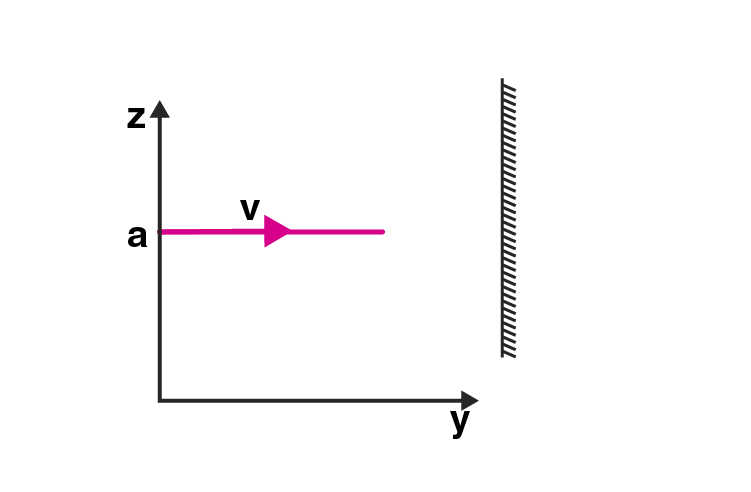
A particle of mass m is moving in yz-plane with a uniform velocity v with its trajectory running parallel to +ve y-axis and intersecting z-axis at z = a. The change in its angular momentum about the origin as it bounces elastically from a wall at y = constant is
a)

b)

c)

d)

The correct answer is b)

When a disc rotates with uniform angular velocity, which of the following is not true?
The correct answer is d) the angular acceleration is non-zero and remains same
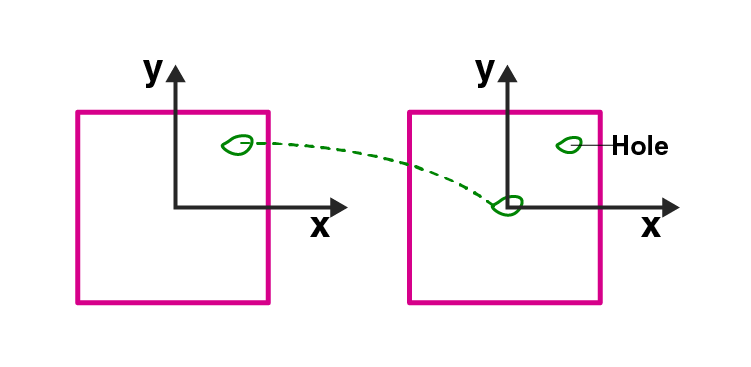
A uniform square plate has a small piece Q of an irregular shape removed and glued to the centre of the plate leaving a hole behind. The moment of inertia about the z-axis is then
a) increased
b) decreased
c) the same
d) changed in an unpredicted manner
The correct answer is b) decreased
In problem 7.5. the CM of the plate is now in the following quadrant of the x-y plane
a) I
b) II
c) III
d) IV
The correct answer is c) III
The density of a non-uniform rod of length 1 m is given by
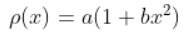 where a and b are constant and 0 ≤ x ≤ 1. The centre of mass of the rod will be at
a)

b)

c)

d)

The correct answer is a)

A merry-go-round, made of a ring-like platform of radius R and mass M, is revolving with angular speed ω. A person of mass M is standing on it. At one instant, the person jumps off the ground, radially away from the centre of the round. The speed of the round afterwards is
a) 2ω
b) ω
c) ω/2
d) 0
The correct answer is a) 2ω
Multiple Choice Questions IIChoose the correct alternatives:
The correct answer is
a) for a general rotational motion, angular momentum L and angular velocity ω need not be parallel
c) for a general translational motion, momentum p and velocity v is always parallel
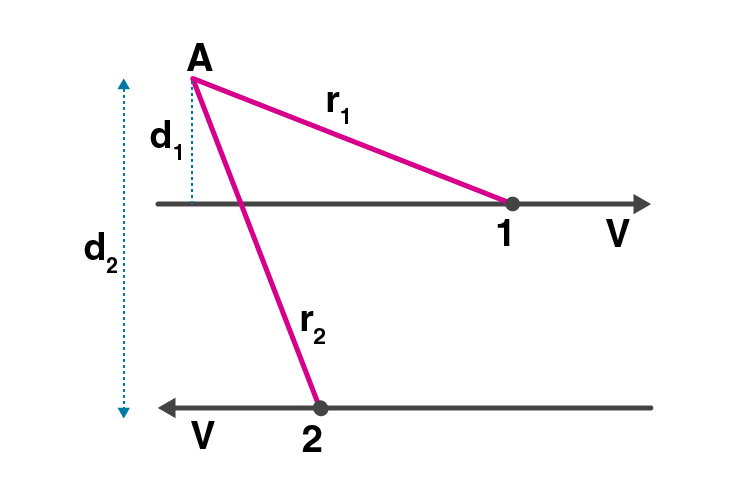
Figure shows two identical particles 1 and 2, each of mass m, moving in opposite directions with the same speed v along parallel lines. At a particular instant, r1 and r2 are their respective positions vectors drawn from point A which is in the plane of the parallel lines. Choose the correct options:
The correct answer is
a) angular momentum l1 of particle 1 is about A is l1 = mvd1
b) angular momentum l2 of particle 2 about A is l2 = mvx2