My Cart
Your Cart 0

    Your cart is empty.

  • Total (Amount) ₹0.00
NCERT Exemplar · Class 11 · Physics

Chapter 12: Thermodynamics

Practice each question, then open the answer or worked solution.

Questions

27 questions
Q12.1Multiple choice

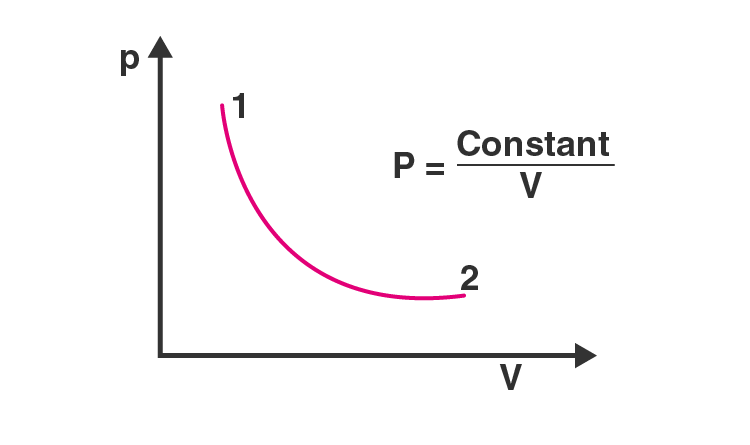
An ideal gas undergoes four different processes from the same initial state. Four processes are adiabatic, isothermal, isobaric, and isochoric. Out of 1, 2, 3, and 4 which one is adiabatic
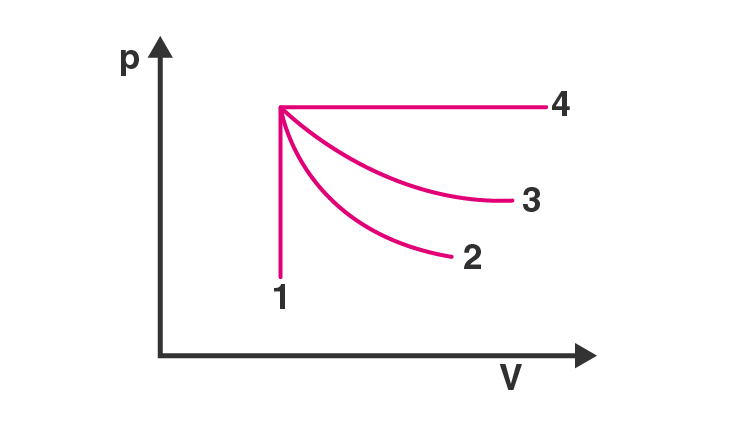
Exemplar Solutions Class 11 Physics Chapter 12 - 1

Show answerHide answer
Correct option: C
Show solutionHide solution
Worked solution

The correct answer is c) 2
Q12.2Written answer

If an average person jogs, he produces 14.5 × 10³ cal/min. This is removed by the evaporation of sweat. The amount of sweat evaporated per minute is assuming 1 kg requires 580 × 103 cal for evaporation

a) 0.25 kg

b) 2.25 kg

c) 0.05 kg

d) 0.20 kg

Show solutionHide solution
Worked solution

The correct answer is a) 0.25 kg

Q12.3Written answer

Consider P-V diagram for an ideal gas shown in the figure.

Exemplar Solutions Class 11 Physics Chapter 12 - 2

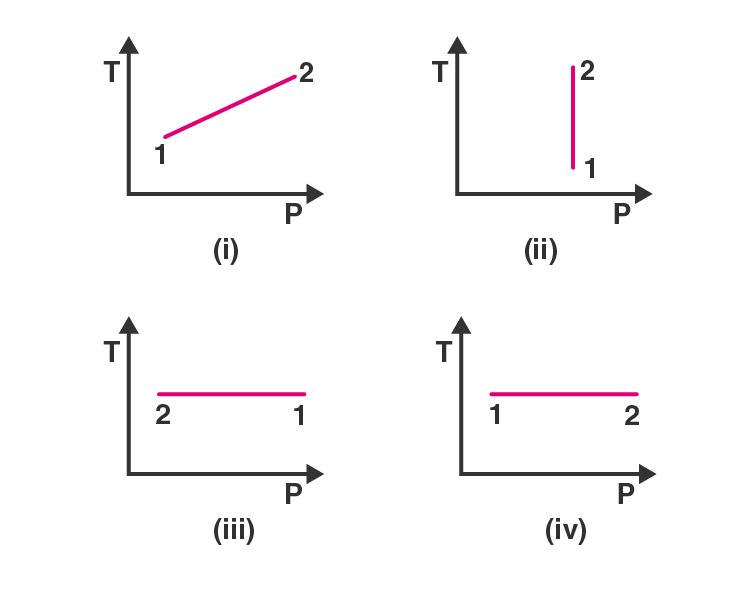
Out of the following diagrams, which represent the T-P diagram?

Exemplar Solutions Class 11 Physics Chapter 12 - 3

a) iv

b) ii

c) iii

d) i

Show solutionHide solution
Worked solution

The correct answer is c) iii

Q12.4Written answer

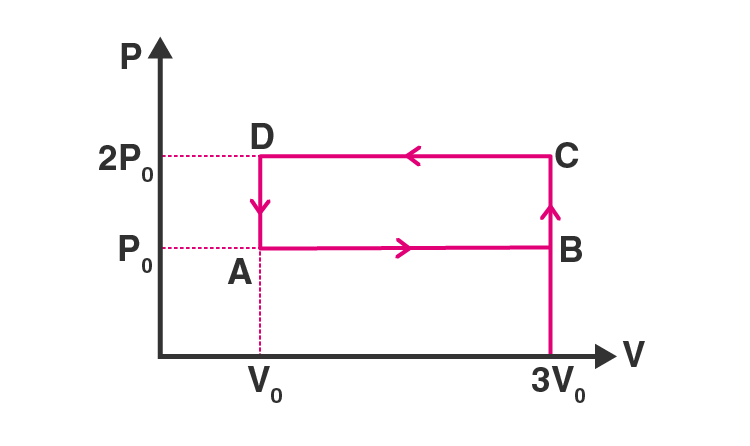
An ideal gas undergoes cyclic process ABCDA as shown in the given P-V diagram. The amount of work done by the gas is

Exemplar Solutions Class 11 Physics Chapter 12 - 4

a) 6P0V0

b) -2P0V0

c) +2P0V0

d) +4P0V0

Show solutionHide solution
Worked solution

The correct answer is d) +4P0V0

Q12.5Written answer

Consider two containers A and B containing identical gases at the same pressure, volume, and temperature. The gas in container A is compressed to half of its volume isothermally while the gas in the container B is compressed to half of its original value adiabatically. The ratio of final pressure of a gas in B to that of gas in A is

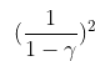
a)

Exemplar Solutions Physics Class 11 Chapter 12 Img 1

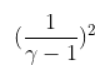
b)

Exemplar Solutions Physics Class 11 Chapter 12 Img 2

c)

Exemplar Solutions Physics Class 11 Chapter 12 Img 3

d)

Exemplar Solutions Physics Class 11 Chapter 12 Img 4

Show solutionHide solution
Worked solution

The correct answer is a)
Exemplar Solutions Physics Class 11 Chapter 12 Img 5

Q12.6Written answer

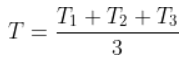
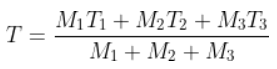
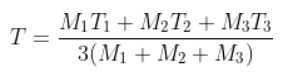
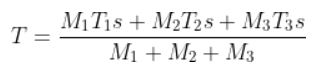
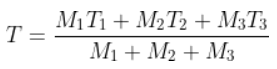
Three copper blocks of masses M1, M2, and M3 kg respectively are brought into thermal contact till they reach equilibrium. Before contact, they were at T1, T2, T3 (T1 > T2 > T3). Assuming there is no heat loss to the surroundings, the equilibrium temperature T is

a)

Exemplar Solutions Physics Class 11 Chapter 12 Img 6

b)

Exemplar Solutions Physics Class 11 Chapter 12 Img 7

c)

Exemplar Solutions Physics Class 11 Chapter 12 Img 8

d)

Exemplar Solutions Physics Class 11 Chapter 12 Img 9

Show solutionHide solution
Worked solution

The correct answer is b)
Exemplar Solutions Physics Class 11 Chapter 12 Img 10

Multiple Choice Questions II
Q12.7Multiple choice

Which of the process described below are irreversible?

Show solutionHide solution
Worked solution

The correct answers are

a) the increase in temperature of an iron rod by hammering it

b) a gas in a small container at a temperature T1 is brought in contact with a big reservoir at a higher temperature T2 which increases the temperature of the gas

d) an ideal gas is enclosed in a piston-cylinder arrangement with adiabatic walls. A weight W is added to the piston resulting in compression of gas

Q12.8Multiple choice

An ideal gas undergoes isothermal process from some initial state I to final state f. Choose the correct alternatives

Show solutionHide solution
Worked solution

The correct answers are

a) dU = 0

d) dQ = dW

Q12.9Written answer

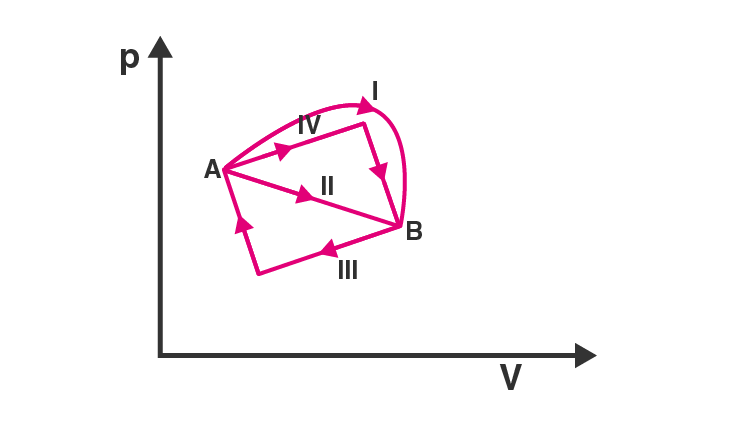
Figure shows the P-V diagram of an ideal gas undergoing a change of state from A to B. Four different parts I, II, III, and IV as shown in the figure may lead to the same changes of state.

Exemplar Solutions Class 11 Physics Chapter 12 - 5

a) change in internal energy is the same in IV and III cases, but not in I and II

b) change in internal energy same in all the four cases

c) work done is maximum in case I

d) work done is minimum in case II

Show solutionHide solution
Worked solution

The correct answers are

b) change in internal energy same in all the four cases

c) work done is maximum in case I

Q12.10Written answer

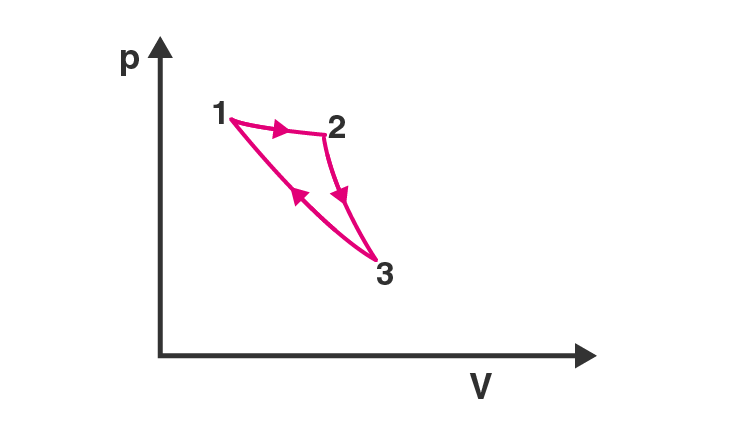
Consider a cycle followed by an engine

Exemplar Solutions Class 11 Physics Chapter 12 - 6

1 to 2 is isothermal

2 to 3 is adiabatic

3 to 1 is adiabatic

Such a process does not exist because

a) heat is completely converted to mechanical energy in such a process, which is not possible

b) mechanical energy is completely converted to heat in this process, which is not possible

c) curves representing two adiabatic processes don’t intersect

d) curves representing an adiabatic process and an isothermal process don’t intersect

Show solutionHide solution
Worked solution

The correct answers are

a) heat is completely converted to mechanical energy in such a process, which is not possible

c) curves representing two adiabatic processes don’t intersect