Q4.1Written answer
The angle between
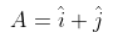 and
and
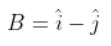 is
is
a) 40o
b) 90o
c) -45o
d) 180o
Show solutionHide solution
Worked solution
The correct answer is b) 90o
Your cart is empty.
Practice each question, then open the answer or worked solution.
The angle between
and
is
a) 40o
b) 90o
c) -45o
d) 180o
The correct answer is b) 90o
Which one of the following statements is true?
The correct answer is d) a scalar quantity has the same value for observers with different orientations of the axes
Figure shows the orientation of two vectors u and v in the XY plane.
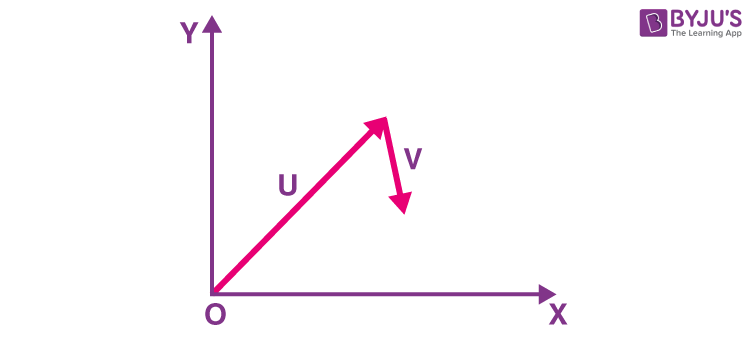
If
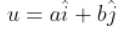 and
and
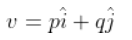 which of the following is correct?
a) a and p are positive while b and q are negative
b) a, p, and b are positive while q is negative
c) a, q, and b are positive while p is negative
d) a, b, p, and q are all positive
The correct answer is b) a, p, and b are positive while q is negative
The component of a vector r along X-axis will have maximum value if
a) r is along positive Y-axis
b) r is along positive X-axis
c) r makes an angle of 45o with the X-axis
d) r is along negative Y-axis
The correct answer is b) r is along positive X-axis
The horizontal range of a projectile fired at an angle of 15o is 50 m. If it is fired with the same speed at an angle of 45o, its range will be
a) 60 m
b) 71 m
c) 100 m
d) 141 m
The correct answer is c) 100 m
Consider the quantities pressure, power, energy, impulse gravitational potential, electric charge, temperature, area. Out of these, the only vector quantities are
a) impulse, pressure, and area
b) impulse and area
c) area and gravitational potential
d) impulse and pressure
The correct answer is b) impulse and area
In a two dimensional motion, instantaneous speed v0 is a positive constant. Then which of the following are necessarily true?
The correct answer is d) equal path lengths are traversed in equal intervals
In a two dimensional motion, instantaneous speed v0 is a positive constant. Then which of the following are necessarily true?
The correct answer is d) the particle must be undergoing a uniform circular motion
Three vectors A, B, and C add up to zero. Find which is false
a) vector (A×B)C is not zero unless vectors B, C are parallel
d) vector (A×B).C is not zero unless vectors B, C are parallel
c) if vectors A, B, C define a plane, (A×B)C is in that plane
d) (A×B).C =
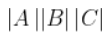 such that C2 = A2 + B2
The correct answer is c) if vectors A, B, C define a plane, (A×B)C is in that plane and d) (A×B).C =
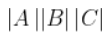 such that C2 = A2 + B2
It is found that
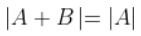 . This necessarily implies
a) B = 0
b) A, B are antiparallel
c) A, B are perpendicular
d) A.B ≤ 0
The correct answer is a) B = 0
Multiple Choice Questions II