Difficulty distribution
How the classified questions are distributed by difficulty.
180questions
Not classified
180
100%
Your cart is empty.
Practice Organic Chemistry - Chemistry previous year questions organised from real papers, with year-wise coverage and clear topic navigation.
Every graph below is calculated only from this selection.
Year-wise coverage for Organic Chemistry. Each bar uses a separate theme-derived color.
How the classified questions are distributed by difficulty.
MCQ, numerical, multiple-select and other formats found in these papers.
Top subjects by unique question coverage.
Top topics across the included previous year papers.
Top subtopics inside this exact selection.
Question coverage for the most populated papers. Every active PYP paper remains listed below.
Open a focused page built from the same verified paper data.
Explore previous-paper coverage, trends and focused practice for Alcohol Phenols And Ethers.
Explore previous-paper coverage, trends and focused practice for Compounds Containing Nitrogen.
Explore previous-paper coverage, trends and focused practice for Biomolecules.
Explore previous-paper coverage, trends and focused practice for Aldehyde And Ketone.
Explore previous-paper coverage, trends and focused practice for Haloalkanes And Haloarenes.
Explore previous-paper coverage, trends and focused practice for Hydrocarbons.
Explore previous-paper coverage, trends and focused practice for Polymers.
Explore previous-paper coverage, trends and focused practice for Carboxylic Acids And Its Derivatives.
Explore previous-paper coverage, trends and focused practice for Chemistry In Everyday Life.
Explore previous-paper coverage, trends and focused practice for Isomerism.
Explore previous-paper coverage, trends and focused practice for General Organic Chemistry.
Explore previous-paper coverage, trends and focused practice for Iupac Nomenclature.
Explore previous-paper coverage, trends and focused practice for Practical Organic Chemistry.
Newest papers appear first. Sort by year, question coverage or name.
| Paper | Year / session | Questions in this view | Open |
|---|---|---|---|
| KCET 2025 | 2025 | 22 | View paper |
| KCET 2024 | 2024 | 18 | View paper |
| KCET 2023 | 2023 | 20 | View paper |
| KCET 2022 | 2022 | 19 | View paper |
| KCET 2021 | 2021 | 19 | View paper |
| KCET 2020 | 2020 | 19 | View paper |
| KCET 2019 | 2019 | 20 | View paper |
| KCET 2018 | 2018 | 24 | View paper |
| KCET 2017 | 2017 | 19 | View paper |
A varied preview from the papers represented in this selection, with every available option.
The number of \(\pi\)-bonds and \(\sigma\)-bonds present in naphthalene are respectively
In the reaction,

The number of possible isomers for the organic compound X is
A compound \('A' \left(\mathrm{C}_7 \mathrm{H}_8 \mathrm{O}\right)\) is insoluble in \(\mathrm{NaHCO}_3\) solution but dissolve in \(\mathrm{NaOH}\) and give a characteristic colour with neutral \(\mathrm{FeCl}_3\) solution. When treated with bromine water compound '\(A\)' forms the compound \(B\) with the formula \(\mathrm{C}_7 \mathrm{H}_5 \mathrm{OBr}_3\). '\(A\)' is


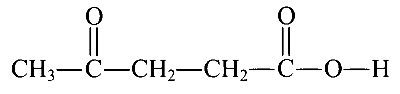
The IUPAC name for