My Cart
Your Cart 0

    Your cart is empty.

  • Total (Amount) ₹0.00
NCERT Exemplar · Class 11 · Physics

Chapter 4: Motion

Practice each question, then open the answer or worked solution.

Questions

37 questions
Q4.31Written answer

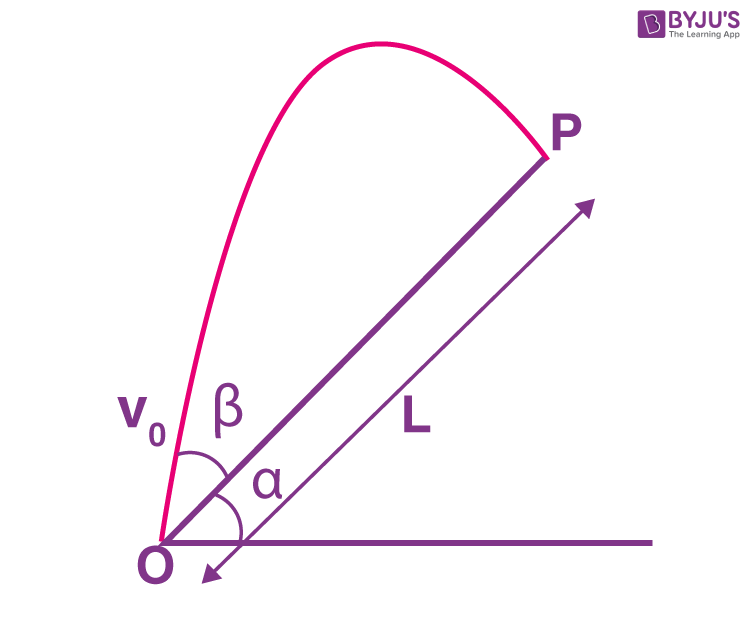
A particle is projected in air at an angle β to a surface which itself is inclined at an angle α to the horizontal.

a) find an expression of range on the plane surface

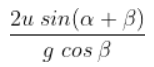
b) time of flight

c) β at which range will be maximum

Show solutionHide solution
Worked solution
Exemplar Solutions Class 11 Physics Chapter 4 - 19

a) Time of flight, T =

Physics Class 11 Chapter 4 - 24

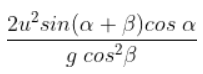
b) Range down an inclined plane, R =

Physics Class 11 Chapter 4 - 25

c) Maximum grange down an inclined plane, Rmax =
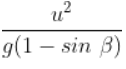
Physics Class 11 Chapter 4 - 26

Q4.32Written answer

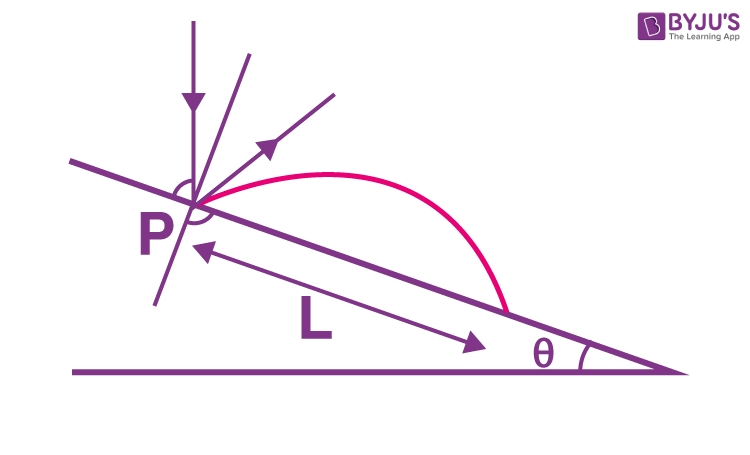
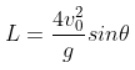
A particle falling vertically from a height hits a plane surface inclined to horizontal at an angle θ with speed v0 and rebounds elastically. Find the distance along the plane where it will hit second time.

Exemplar Solutions Class 11 Physics Chapter 4 - 20

Show solutionHide solution
Worked solution

Exemplar Solutions Class 11 Physics Chapter 4 - 21

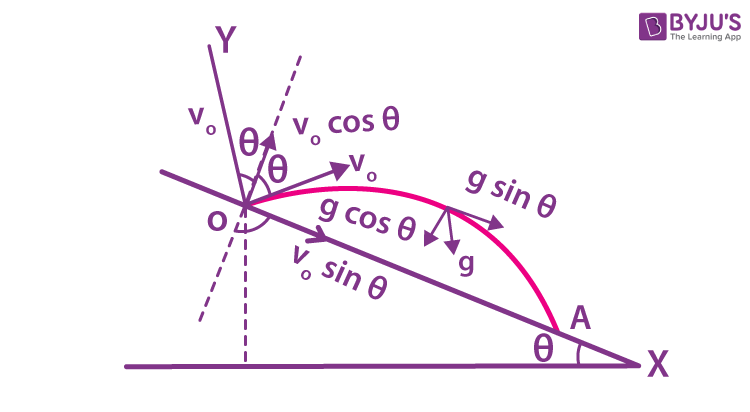
When x and y axes are selected as shown in the diagram, the motion of projectile from O to A is

y = 0

uy = vo cos θ

ay = -g cos θ

t = T

With the help of kinematics for y-axis

y = uyt + 1/2 ayt2

T = 2vo cos θ/g cos θ

With the help of kinematics for x-axis

x = uxt + 1/2 axt2

Physics Class 11 Chapter 4 - 27

Q4.33Written answer

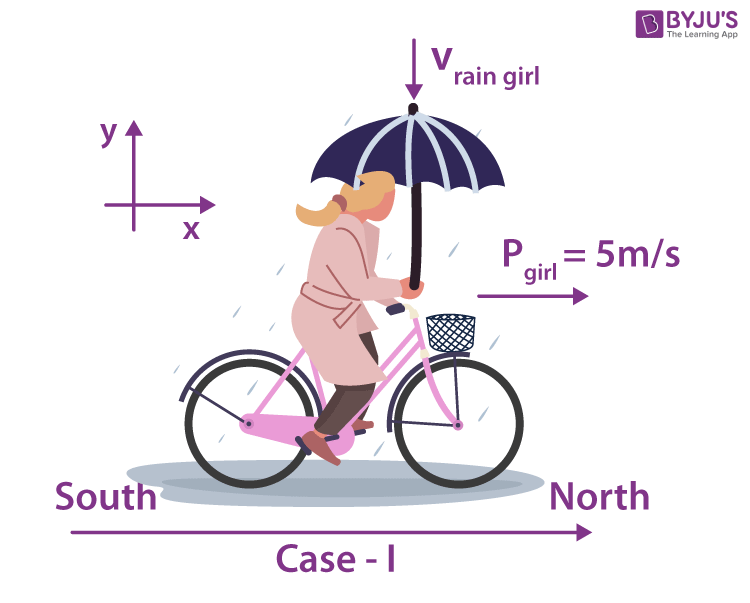
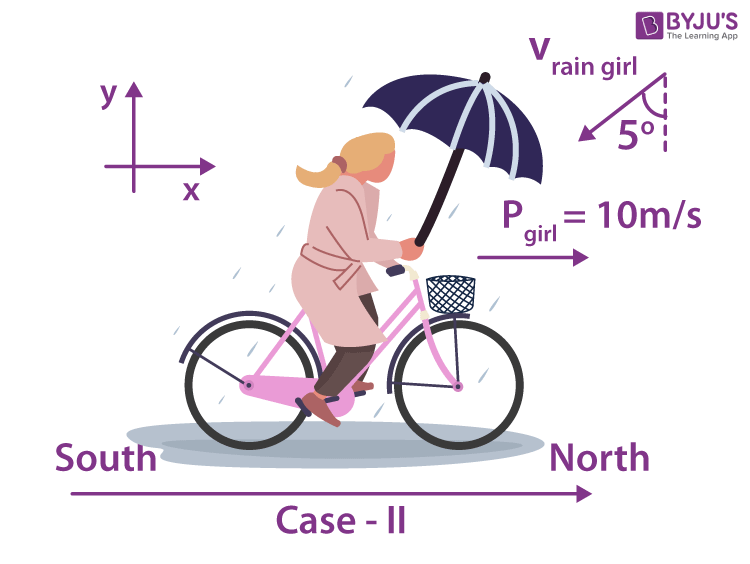
A girl riding a bicycle with a speed of 5 m/s towards north direction, observes rain falling vertically down. If she increases her speed to 10 m/s, rain appears to meet her at 45o to the vertical. What is the speed of the rain? In what direction does rain fall as observed by a ground based observer?

Show solutionHide solution
Worked solution

Let Vrg be the velocity of the rain drop that appears to the girl.

All the vectors are drawn in reference to the frame from the ground.

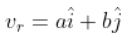
Let the velocity of rain be:

Physics Class 11 Chapter 4 - 28

Case I

According to the problem, the velocity of girl = vg

Let vrg be the velocity of rain with respect to the girl

The equation which is used for determining a is:

Physics Class 11 Chapter 4 - 29

Therefore, a = 5

Exemplar Solutions Class 11 Physics Chapter 4 - 22

Case II

Now the velocity of the girl has increased = vg

Following is the equation that is used for determining the value of b at tan 45o.

Physics Class 11 Chapter 4 - 30

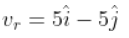
Therefore, the velocity of rain is:

Physics Class 11 Chapter 4 - 31

Speed of rain is:

Physics Class 11 Chapter 4 - 32

Exemplar Solutions Class 11 Physics Chapter 4 - 23

Q4.34Written answer

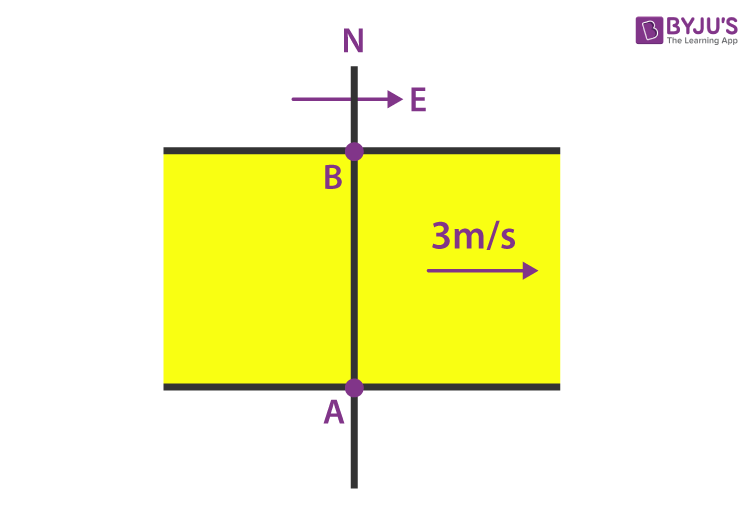
A river is flowing due east with a speed 3 m/s. A swimmer can swim in still water at a speed of 4 m/s.

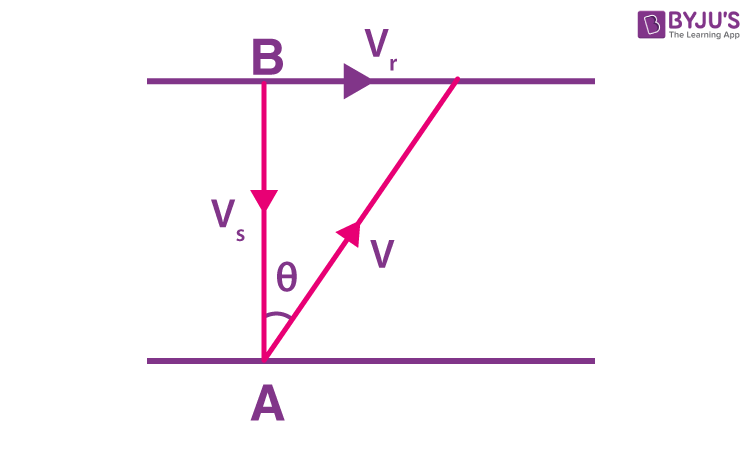
a) if swimmer starts swimming due north, what will be his resultant velocity?

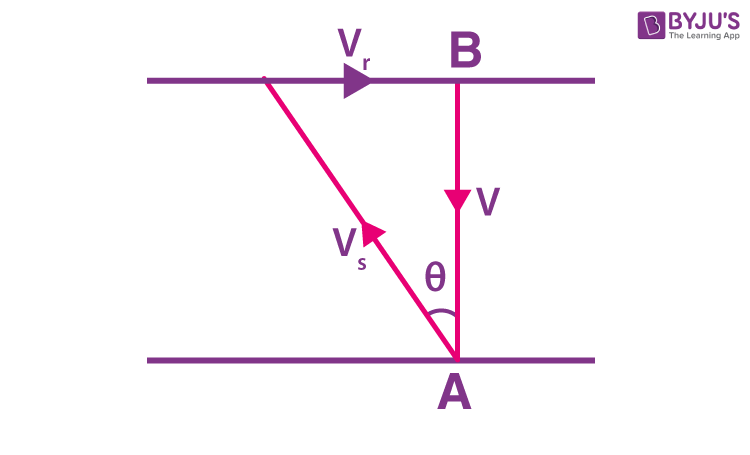
b) if he wants to start from point A on south bank and reach opposite point B on north bank,

i) which direction should he swim?

ii) what will be his resultant speed?

c) from two different cases as mentioned in a) and b) above, in which case will he reach opposite bank in shorter time?

Exemplar Solutions Class 11 Physics Chapter 4 - 24

Show solutionHide solution
Worked solution

Given,

Speed of the river, vr = 3 m/s

Velocity of swimmer, vs = 4 m/s

a) When the swimmer swims due north, the y-component has the velocity 4 m/s and x-component will have 3 m/s. following is the resultant velocity with respect to tan θ

Exemplar Solutions Class 11 Physics Chapter 4 - 25

Physics Class 11 Chapter 4 - 33

θ = 37oN

b) Following is the resultant speed of the swimmer when he wants to reach the point which is directly opposite ti him and which is with respect to tan θ

Exemplar Solutions Class 11 Physics Chapter 4 - 26

Physics Class 11 Chapter 4 - 34

θ = tan-1(3/√7) of north

c) Time taken in case a) is d/4 sec

Time taken in case b) is d/√7

As d/4 < d/√7, time taken in case a) is shorter than case b).

Q4.35Multiple choice

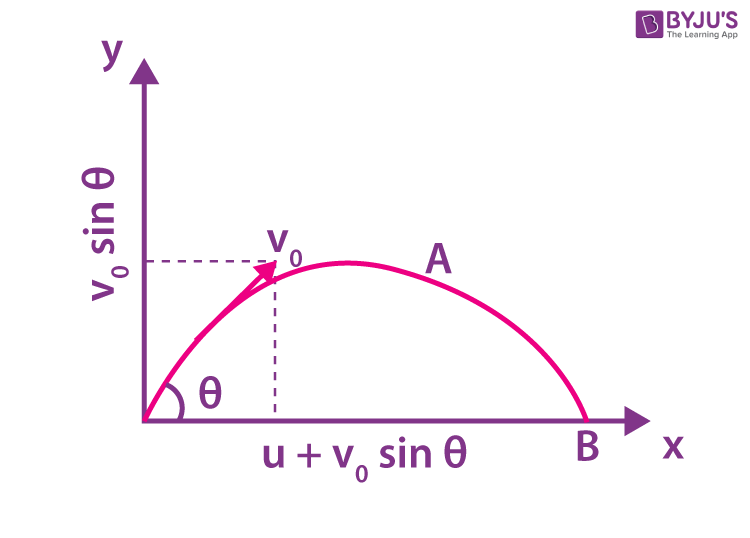
A cricket fielder can throw the cricket ball with a speed vo. If he throws the ball while running with speed u at an angle θ to the horizontal, find

e) how does θ for maximum range change if u > vo, u = vo and u < vo

f) how does θ in e) compare with that for u = 0?

Show solutionHide solution
Worked solution

Initial velocity in x-direction,

ux = u + vo cos θ

Initial velocity in y-direction,

uy = vo sin θ

where θ is the angle of projection

Exemplar Solutions Class 11 Physics Chapter 4 - 27

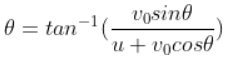
a) The angle of projection with the horizontal with respect to spectator is:

tan θ = uy/ux

Physics Class 11 Chapter 4 - 35

b) When the displacement along the y-axis is zero over the time period T

y = 0

uy = vo sin θ

ay = -g

t = T

We know that,

y = uyT + 1/2 ayt2

Solving for T, we get

T = 2 uo sin θ/g

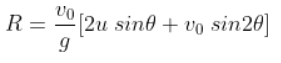
c) Horizontal range is

Physics Class 11 Chapter 4 - 36

d) For horizontal range, dR/dθ = 0

Then θmax is:

Physics Class 11 Chapter 4 - 37

e) If u = vo,

θmax = π/2

f) If u = 0, θmax = 45o

Then, u = 0 and θ ≥ 45o

Q4.36Multiple choice

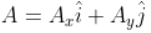
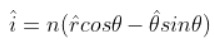
Motion in two dimensions, in a plane can be studied by expressing position, velocity, and acceleration as vector in Cartesian coordinates
Physics Class 11 Chapter 4 - 38 where
Physics Class 11 Chapter 4 - 39 and
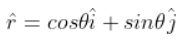
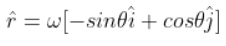
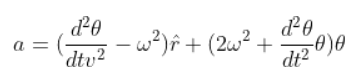
Physics Class 11 Chapter 4 - 40 are unit vectors along x and y directions, respectively and Ax and Ay are corresponding components of A. Motion can also be studied by expressing vectors in circular polar coordinates as
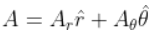
Physics Class 11 Chapter 4 - 41 where
Physics Class 11 Chapter 4 - 42 are unit vectors along direction in which r and θ are increasing.
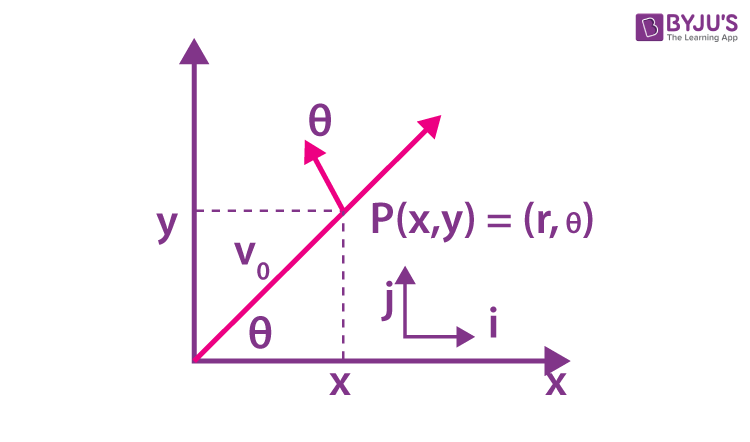

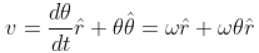
e) find velocity and acceleration in polar vector representation for particle moving along spiral described in d) above

Exemplar Solutions Class 11 Physics Chapter 4 - 28

Show answerHide answer
Correct option: A
Show solutionHide solution
Worked solution

a) The unit vector is given as:

Physics Class 11 Chapter 4 - 49

Solving the above equations we get unit vector as:

Physics Class 11 Chapter 4 - 50

b)

Physics Class 11 Chapter 4 - 51

Physics Class 11 Chapter 4 - 52

c) Given,

Physics Class 11 Chapter 4 - 53

Solving the above gives:

Physics Class 11 Chapter 4 - 54

d) Given,

Physics Class 11 Chapter 4 - 55

010

e) Given,

a = 1 unit

Physics Class 11 Chapter 4 - 56

Differentiating the above equation, we get velocity as:

Physics Class 11 Chapter 4 - 57

By differentiating the above equation we can find acceleration as:

Physics Class 11 Chapter 4 - 58

Q4.37Written answer

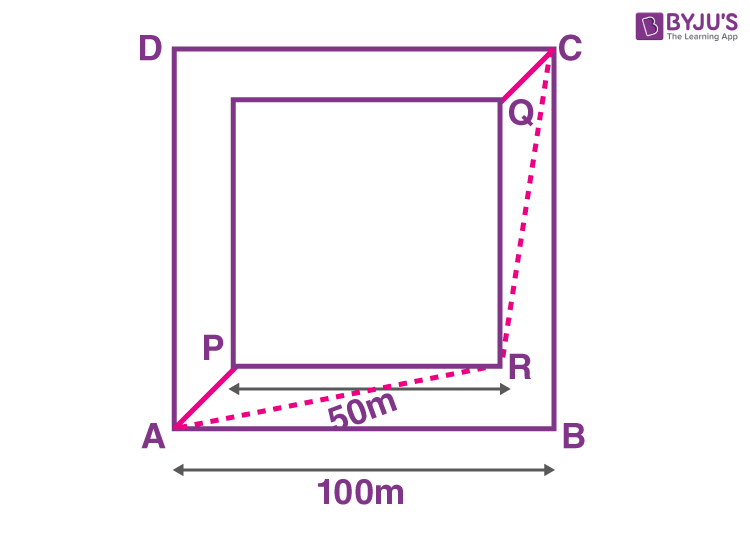
A man wants to reach from A to the opposite comer of the square C. The sides of the square are 100 m. A central square of 50 m × 50 m is filled with sand. Outside this square, he can walk at a speed 1 m/s. In the central square, he walk only at a speed of v m/s. What is smallest value of v for which he can reach faster via a straight path through the sand than any path in the square outside the sand?

Exemplar Solutions Class 11 Physics Chapter 4 - 29

Show solutionHide solution
Worked solution

Exemplar Solutions Class 11 Physics Chapter 4 - 30

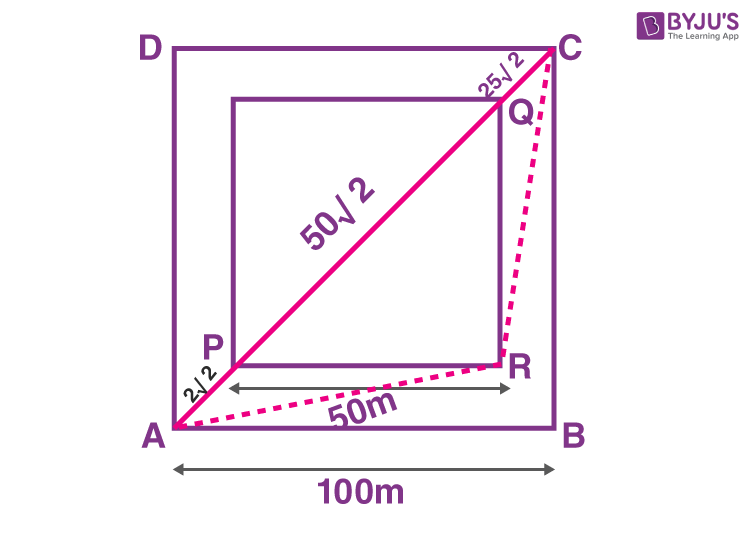
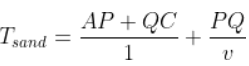
As shown in the diagram, APQC is the path taken by the man through the sand, time taken by him to go from A to C,

Physics Class 11 Chapter 4 - 59

= 50√2(1/v + 1)

The shortest path will be ARC from the diagram.

Toutside = AR+RC/1 s

Physics Class 11 Chapter 4 - 60

RC = AR = 25√10 s

Tsand < Toutside

V > 0.81 m/s