My Cart
Your Cart 0

    Your cart is empty.

  • Total (Amount) ₹0.00
Previous year question hub

Control Systems - Electrical Engineering Previous Year Questions

Practice Control Systems - Electrical Engineering previous year questions organised from real papers, with year-wise coverage and clear topic navigation.

26Papers
19Years
137Questions
1Topics

Control Systems question pattern

Every graph below is calculated only from this selection.

Questions by year

Compare question counts across years.

Difficulty distribution

How the classified questions are distributed by difficulty.

Medium 90 65.7%
Easy 44 32.1%
Hard 3 2.2%

Question type distribution

MCQ, numerical, multiple-select and other formats found in these papers.

MCQ 110 80.3%
Numerical Answer Type (NAT) 21 15.3%
MSQ 6 4.4%

Subject weightage

Top subjects by unique question coverage.

Electrical Engineering
137 Qs

Most asked topics

Top topics across the included previous year papers.

Control Systems
137 Qs

Subtopic coverage

Top subtopics inside this exact selection.

Time and Frequency Response
49 Qs
System Modelling and Feedback
36 Qs
Stability and Compensation
33 Qs
State-space Analysis
19 Qs

Paper coverage

Question coverage for the most populated papers. Every active PYP paper remains listed below.

Electrical Engineering (EE) 2026
4 Qs
Electrical Engineering (EE) 2025
3 Qs
Electrical Engineering (EE) 2024
6 Qs
Electrical Engineering (EE) 2023
5 Qs
Electrical Engineering (EE) 2022
5 Qs
Electrical Engineering (EE) 2021
4 Qs
Electrical Engineering (EE) 2020
6 Qs
Electrical Engineering (EE) 2019
6 Qs
Electrical Engineering (EE) 2018
4 Qs
Electrical Engineering (EE) 2017 [Session 1]
6 Qs
Electrical Engineering (EE) 2017 [Session 2]
6 Qs
Electrical Engineering (EE) 2016 [Session 1]
6 Qs
Electrical Engineering (EE) 2016 [Session 2]
5 Qs
Electrical Engineering (EE) 2014 [Session 2]
5 Qs
Electrical Engineering (EE) 2014 [Session 1]
3 Qs
Electrical Engineering (EE) 2014 [Session 3]
3 Qs
Electrical Engineering (EE) 2013 [Session 1]
6 Qs
Electrical Engineering (EE) 2013 [Session 4]
6 Qs
Electrical Engineering (EE) 2013 [Session 2]
5 Qs
Electrical Engineering (EE) 2013 [Session 3]
5 Qs
Electrical Engineering (EE) 2012
5 Qs
Electrical Engineering (EE) 2011
5 Qs
Electrical Engineering (EE) 2010
6 Qs
Electrical Engineering (EE) 2009
7 Qs
Electrical Engineering (EE) 2008
7 Qs
Electrical Engineering (EE) 2007
8 Qs

Browse by subtopics

Open a focused page built from the same verified paper data.

Included previous year papers

Newest papers appear first. Search these papers or sort by year and name.

Paper nameYearPDFAttempt
Electrical Engineering (EE) 20262026
4 questions in this view
2026
Electrical Engineering (EE) 20252025
3 questions in this view
2025
Electrical Engineering (EE) 20242024
6 questions in this view
2024
Electrical Engineering (EE) 20232023
5 questions in this view
2023
Electrical Engineering (EE) 20222022
5 questions in this view
2022
Electrical Engineering (EE) 20212021
4 questions in this view
2021
Electrical Engineering (EE) 20202020
6 questions in this view
2020
Electrical Engineering (EE) 20192019
6 questions in this view
2019
Electrical Engineering (EE) 20182018
4 questions in this view
2018
Electrical Engineering (EE) 2017 [Session 1]2017
6 questions in this view
2017
Electrical Engineering (EE) 2017 [Session 2]2017
6 questions in this view
2017
Electrical Engineering (EE) 2016 [Session 1]2016
6 questions in this view
2016
Electrical Engineering (EE) 2016 [Session 2]2016
5 questions in this view
2016
Electrical Engineering (EE) 2014 [Session 1]2014
3 questions in this view
2014
Electrical Engineering (EE) 2014 [Session 2]2014
5 questions in this view
2014
Electrical Engineering (EE) 2014 [Session 3]2014
3 questions in this view
2014
Electrical Engineering (EE) 2013 [Session 1]2013
6 questions in this view
2013
Electrical Engineering (EE) 2013 [Session 2]2013
5 questions in this view
2013
Electrical Engineering (EE) 2013 [Session 3]2013
5 questions in this view
2013
Electrical Engineering (EE) 2013 [Session 4]2013
6 questions in this view
2013
Electrical Engineering (EE) 20122012
5 questions in this view
2012
Electrical Engineering (EE) 20112011
5 questions in this view
2011
Electrical Engineering (EE) 20102010
6 questions in this view
2010
Electrical Engineering (EE) 20092009
7 questions in this view
2009
Electrical Engineering (EE) 20082008
7 questions in this view
2008
Electrical Engineering (EE) 20072007
8 questions in this view
2007

Sample previous year questions

A varied preview from the papers represented in this selection, with every available option.

1
2007 · Electrical Engineering · Control Systems · Stability and Compensation
Electrical Engineering (EE) 2007

The system shown in the figure is

Question diagram

Open complete paper
2
2008 · Electrical Engineering · Control Systems · Time and Frequency Response
Electrical Engineering (EE) 2008
The transfer function of a linear time invariant system is given as
G(s) = 1/(s2 + 3s + 2)
The steady state value of the output of this system for a unit impulse input applied at time instant t = 1 will be
Open complete paper
3
2009 · Electrical Engineering · Control Systems · Stability and Compensation
Electrical Engineering (EE) 2009

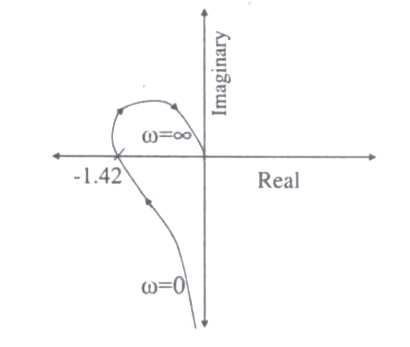
The polar plot of an open loop stable system is shown below. The closed loop system is

Question diagram

Open complete paper
4
2010 · Electrical Engineering · Control Systems · System Modelling and Feedback
Electrical Engineering (EE) 2010

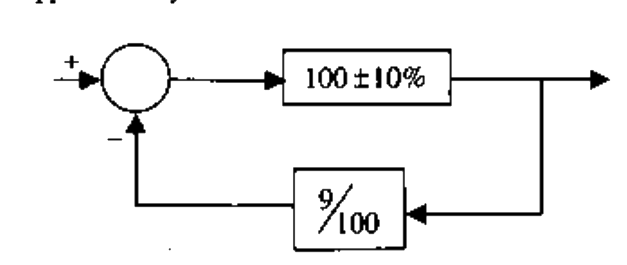
As shown in the figure, a negative feedback system has an amplifier of gain 100 with ±10% tolerance in the forward path, and an attenuator of value 9/100 in the feedback path. The overall system gain is approximately:

Question diagram

Open complete paper
5
2011 · Electrical Engineering · Control Systems · Time and Frequency Response
Electrical Engineering (EE) 2011
The frequency response of a linear system \(G(j\omega)\) is provided in the tabular form below
\(|G(j\omega)|\)1.31.21.00.80.50.3
\(\angle G(j\omega)\)\(-130^o\)\(-140^o\)\(-150^o\)\(-160^o\)\(-180^o\)\(-200^o\)

The gain margin and phase margin of the system are

Question diagram

Open complete paper
6
2012 · Electrical Engineering · Control Systems · Time and Frequency Response
Electrical Engineering (EE) 2012
A system with transfer function \(G(s) = \frac{(s^2+9)(s+2)}{(s+1)(s+3)(s+4)}\) is excited by \(\sin(\omega t)\). The steady-state output of the system is zero at
Open complete paper