Draw a plant cell and label the parts which
(a) determines the function and development of the cell
(b) packages materials coming from the endoplasmic reticulum
(c) provides resistance to microbes to withstand hypotonic external media without bursting
(d) is site for many biochemical reactions necessary to sustain life.
(e) is a fluid contained inside the nucleus
Soln:
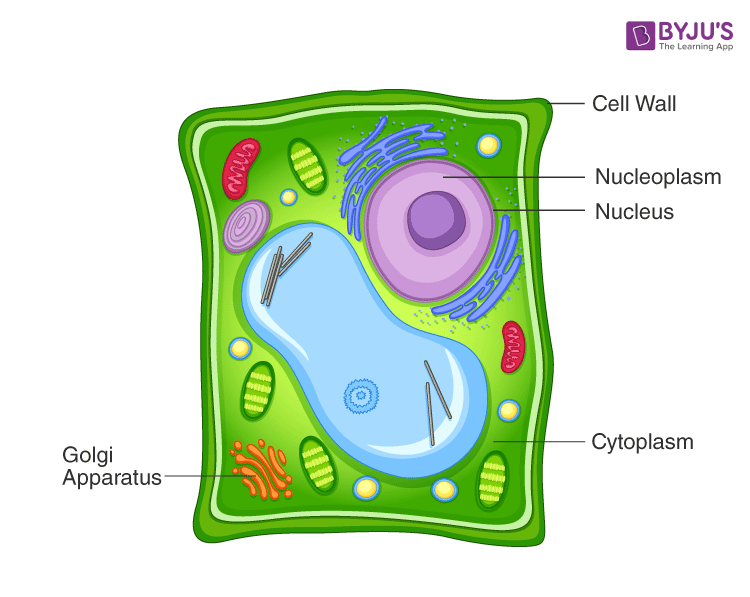
(a) Nucleus: It determines the function and development of the cell (b) Golgi apparatus: It packages materials coming from the endoplasmic reticulum (c) Cell wall: It provides resistance to microbes to withstand hypotonic external media without bursting (d) Cytoplasm: It is a site for many biochemical reactions necessary to sustain life. (e) Nucleoplasm: It is a fluid contained inside the nucleus
54. Illustrate only a plant cell as seen under an electron microscope. How is it different from an animal cell?
Soln:
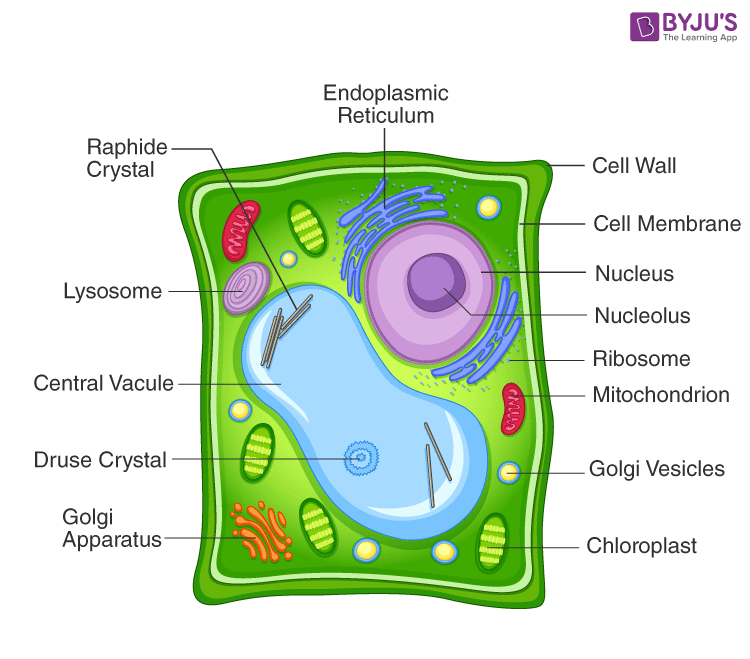 Major differences between a plant cell and animal cell are
- Chloroplast in a plant cell but absent in animal cells
- Large central vacuole in plant cell which is absent in animal cells
- The cell wall is present in plant cell and absent in animal cells.
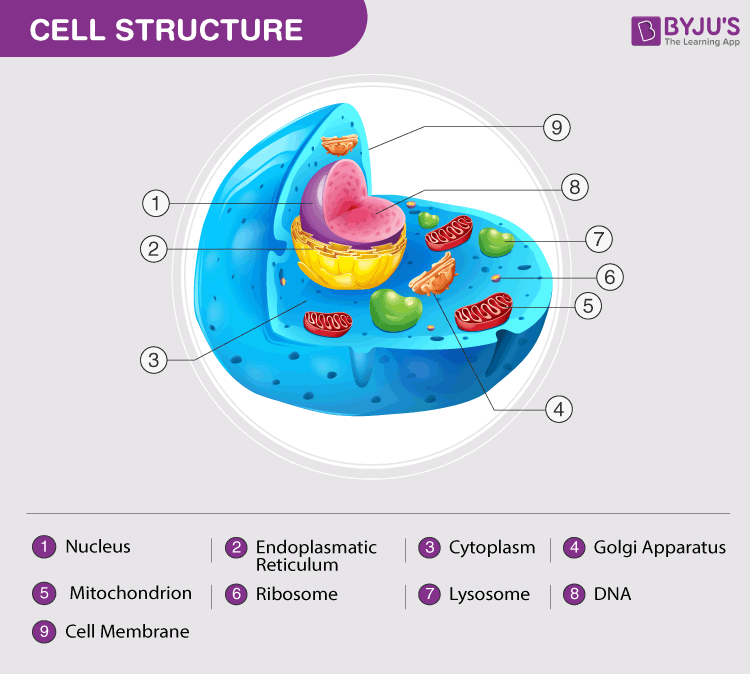
55. Draw a neat labelled diagram of an animal cell.
Soln:
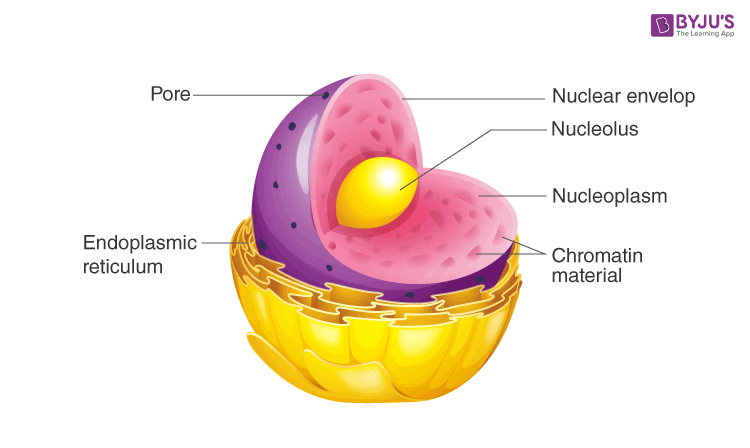
56. Draw a well-labelled diagram of a eukaryotic nucleus. How is it different from nucleoid?
Soln: The difference between the nucleus and nucleoid are given below:
|
Nucleus |
Nucleoid |
| A membrane-bound organelle in the cytoplasm of eukaryotes. |
A particular area in the cytoplasm of eukaryotes. |
|
Contains more than one chromosome. |
Contains a single chromosome. |
| Well-organized structure |
Poorly organized structure |
|
Spherical shaped |
Irregular shaped |
| Nucleolus and nucleoplasm present |
Nucleolus and nucleoplasm absent |
57. Differentiate between rough and smooth endoplasmic reticulum. How is endoplasmic reticulum important for membrane biogenesis?
Soln:
| Rough Endoplasmic reticulum | Smooth Endoplasmic reticulum |
| It possesses ribosomes attached to the membrane. | It does not possess ribosomes attached to its membrane. |
| Involved in protein synthesis | Involved in lipid synthesis |
| Found deep inside the cytoplasm. | Found on the periphery. |
| May develop from the nucleus. | May develop from the rough endoplasmic reticulum. |
58. In brief state what happens when
(a) dry apricots are left for sometime in pure water and later transferred to sugar solution?
(b) a Red Blood Cell is kept in concentrated saline solution?
(c) the Plasma membrane of a cell breaks down?
(d) rheo leaves are boiled in water first and then a drop of sugar syrup is put on it?
(e) golgi apparatus is removed from the cell?
Soln:
a) When we put dried raisins or apricots in plain water and leave them for some time cell gains water and swells. If we put some seeds into a concentrated solution of sugar you will observe it loses water and consequently shrinks. b) When red blood cell is kept in concentrated saline solution. The cell loses water immediately and shrinks. c) When the plasma membrane of a cell breaks down, the cell dies. d) On boiling, cells of Rheo leaves die and if we put sugar solution on it there will not be any intake of water due to lack of osmosis. Here cell undergoes plasmolysis concluding only living cells undergo osmosis. e) This stop the formation of vesicles and transport of proteins and lipids is stopped by the removal of Golgi apparatus.
59. Draw a neat diagram of plant cell and label any three parts which differentiate it from an animal cell.
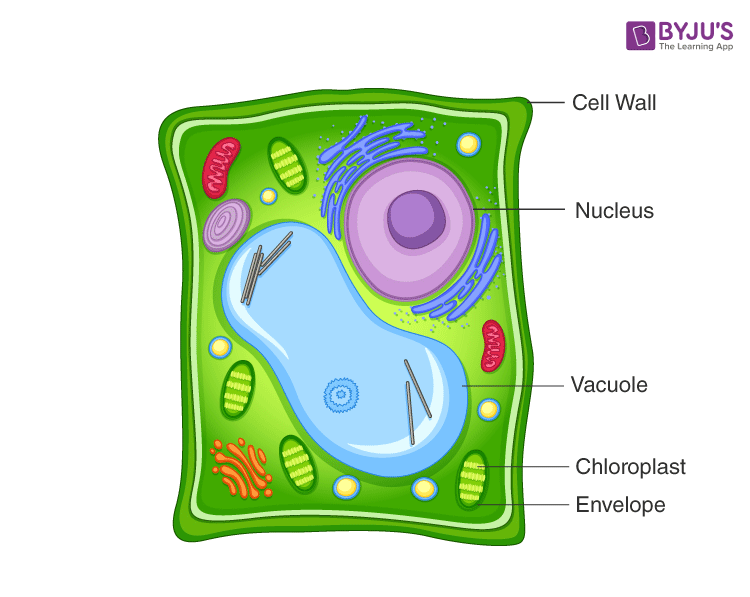
Show solutionHide solution
Solution coming soon.