My Cart
Your Cart 0

    Your cart is empty.

  • Total (Amount) ₹0.00
NCERT Exemplar · Class 7 · Maths

Chapter 12: Practical Geometry Symmetry and Visualising Solid Shapes

Practice each question, then open the answer or worked solution.

Textbook exercises

124 questions
Q91Written answer

The solid shapes are two-dimensional.

Show solutionHide solution
Worked solution

Ans: The solid shapes are three-dimensional. 

Examples of solid shapes are cone, cube etc.

Therefore, the given statement is False.

Q92Written answer

Triangle with length of sides as ${\mathbf{5cm}}$, ${\mathbf{6cm}}$ and ${\mathbf{11cm}}$ can be constructed.

Show solutionHide solution
Worked solution

Ans: Condition for constructing a triangle is that Sum of any two sides of a triangle should be greater than the third side.

But here, $6{\text{cm}} + 5{\text{cm}} = 11{\text{cm}}$ and the condition is not satisfied.

Therefore, the given statement is False.

Q93Written answer

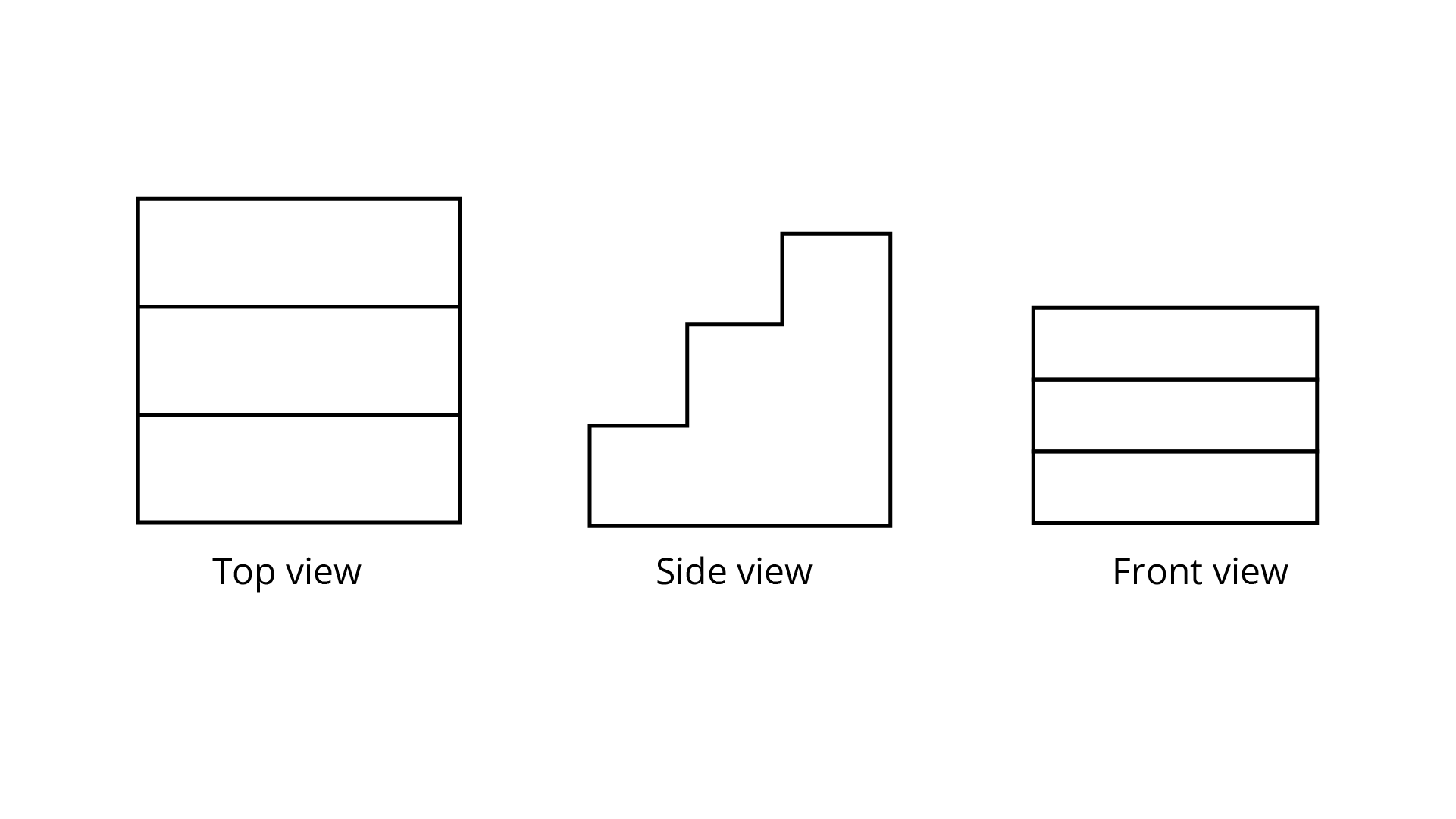
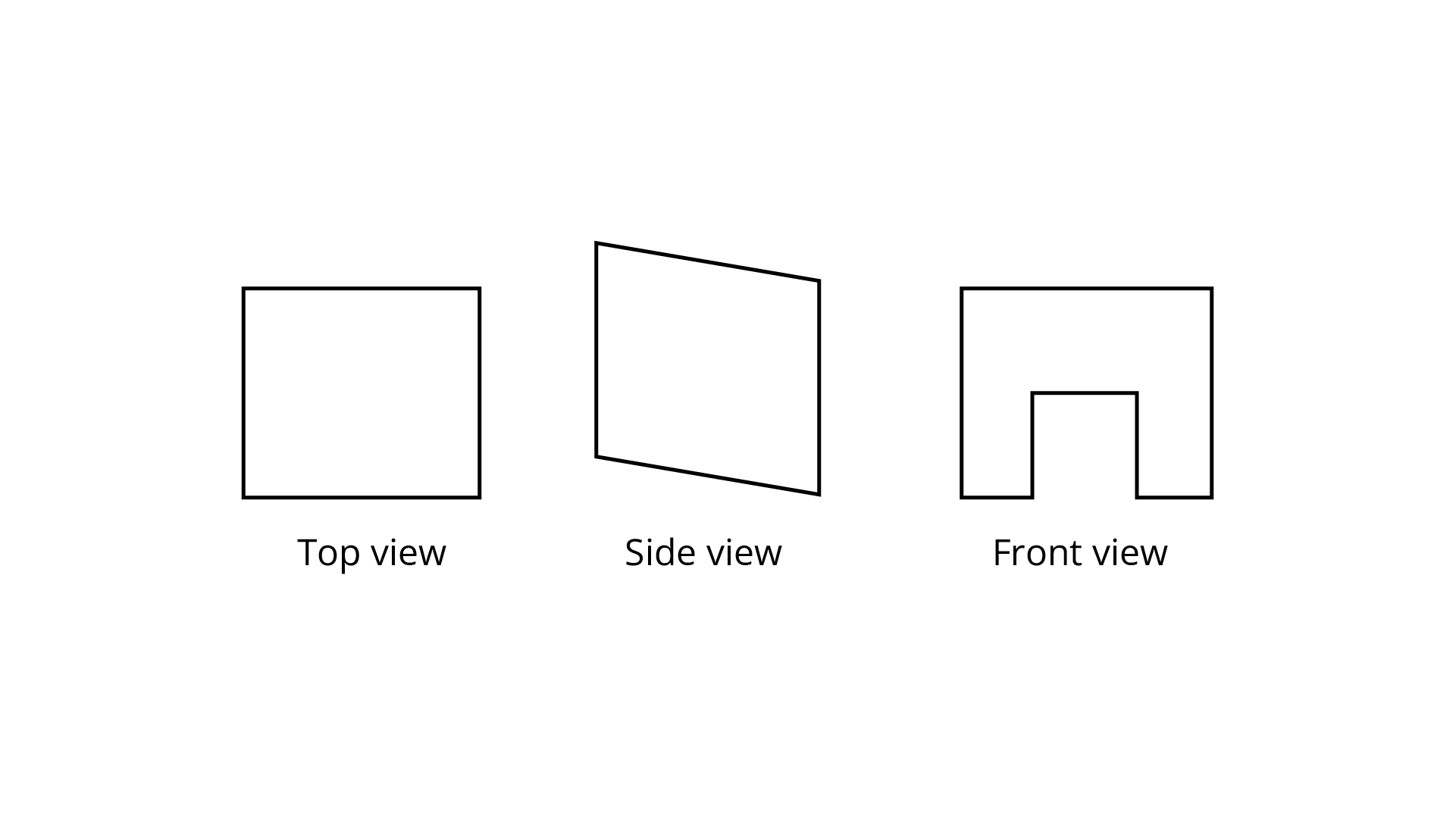
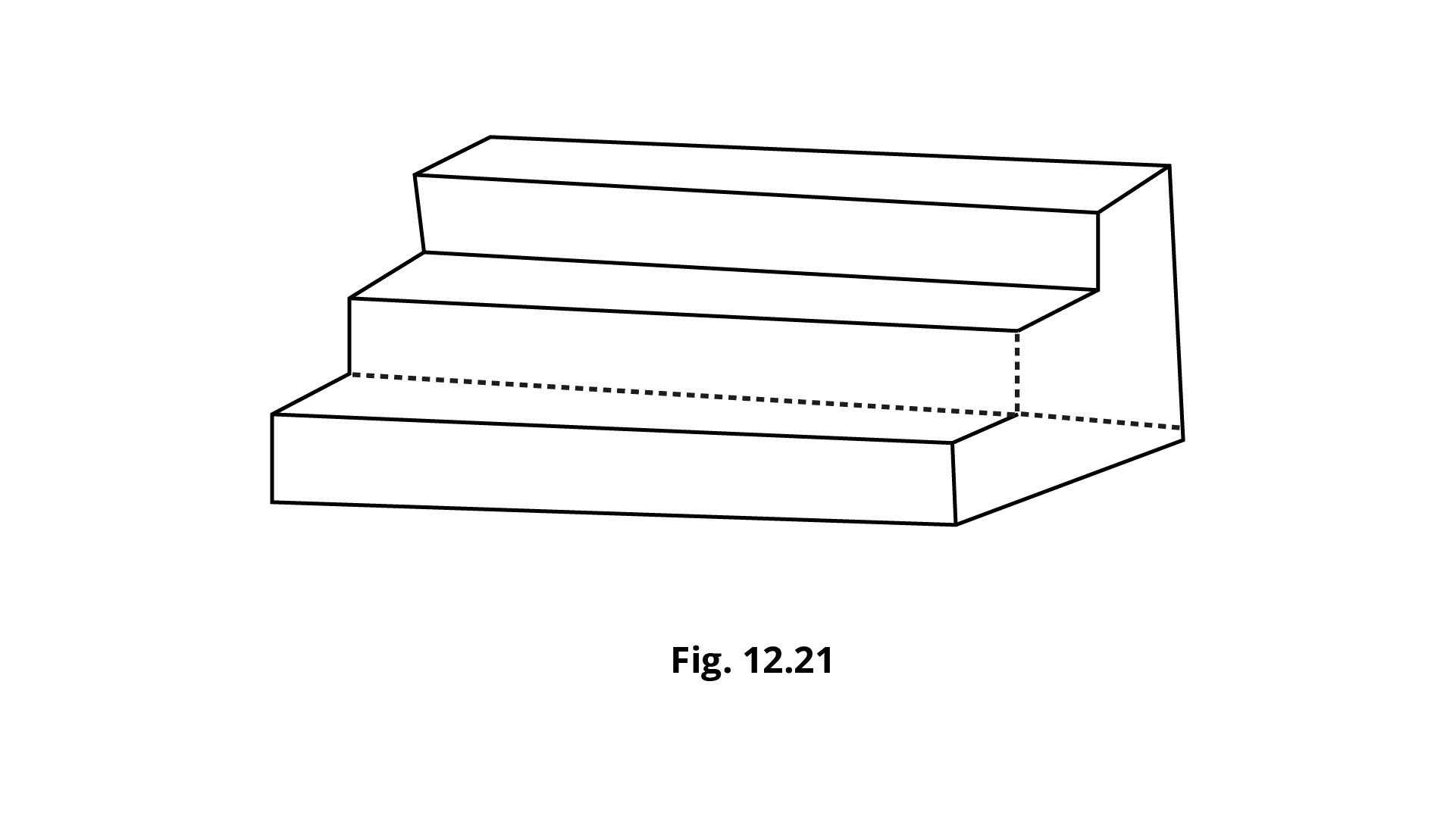
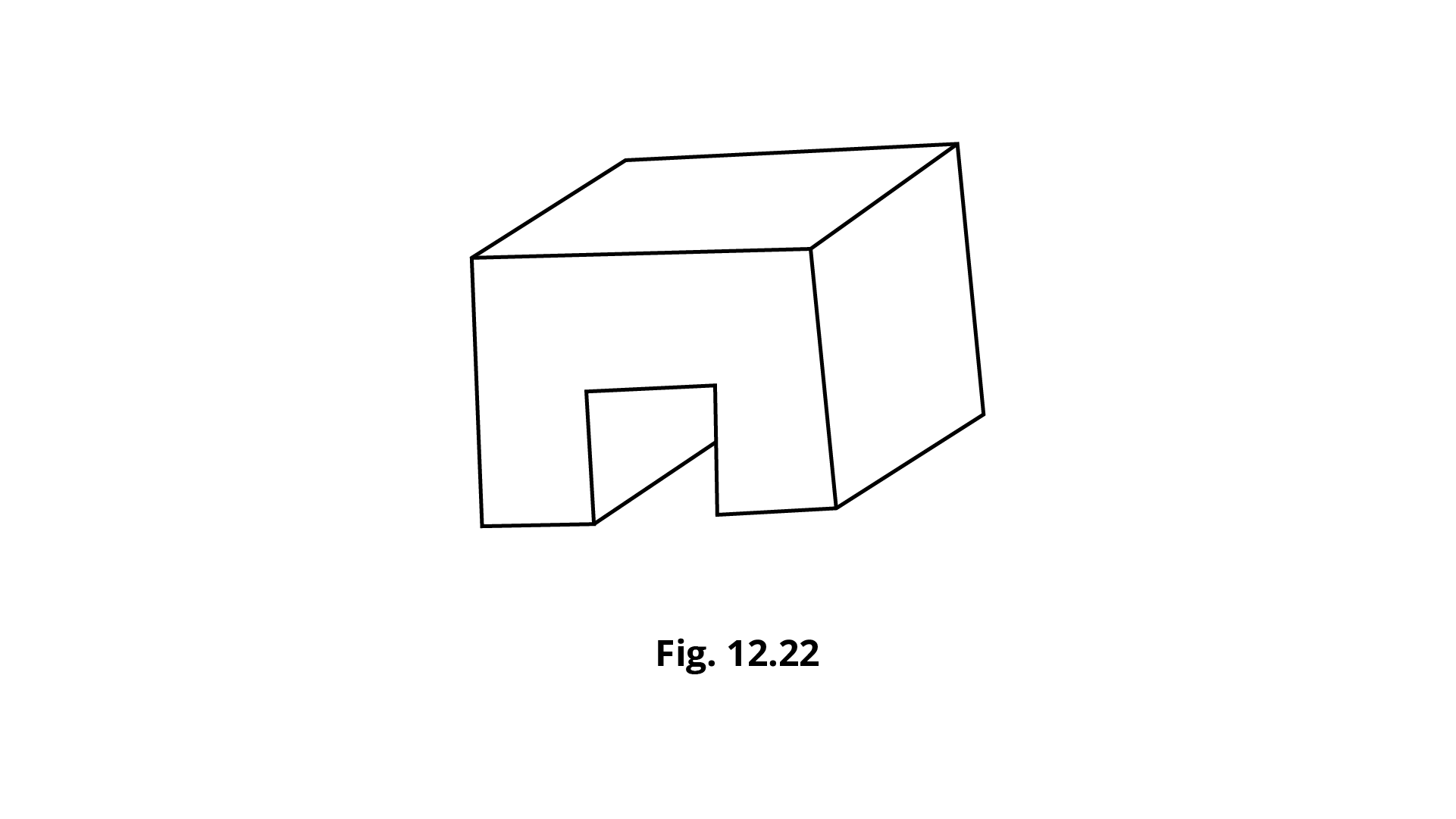
Draw the top, side and front views of the solids given below in Figures 12.21 and 12.22:

(i) 


seo images

(ii) 


seo images
Show solutionHide solution
Worked solution

Ans: For the given figure,


seo images

Ans:


seo images


Q94Written answer

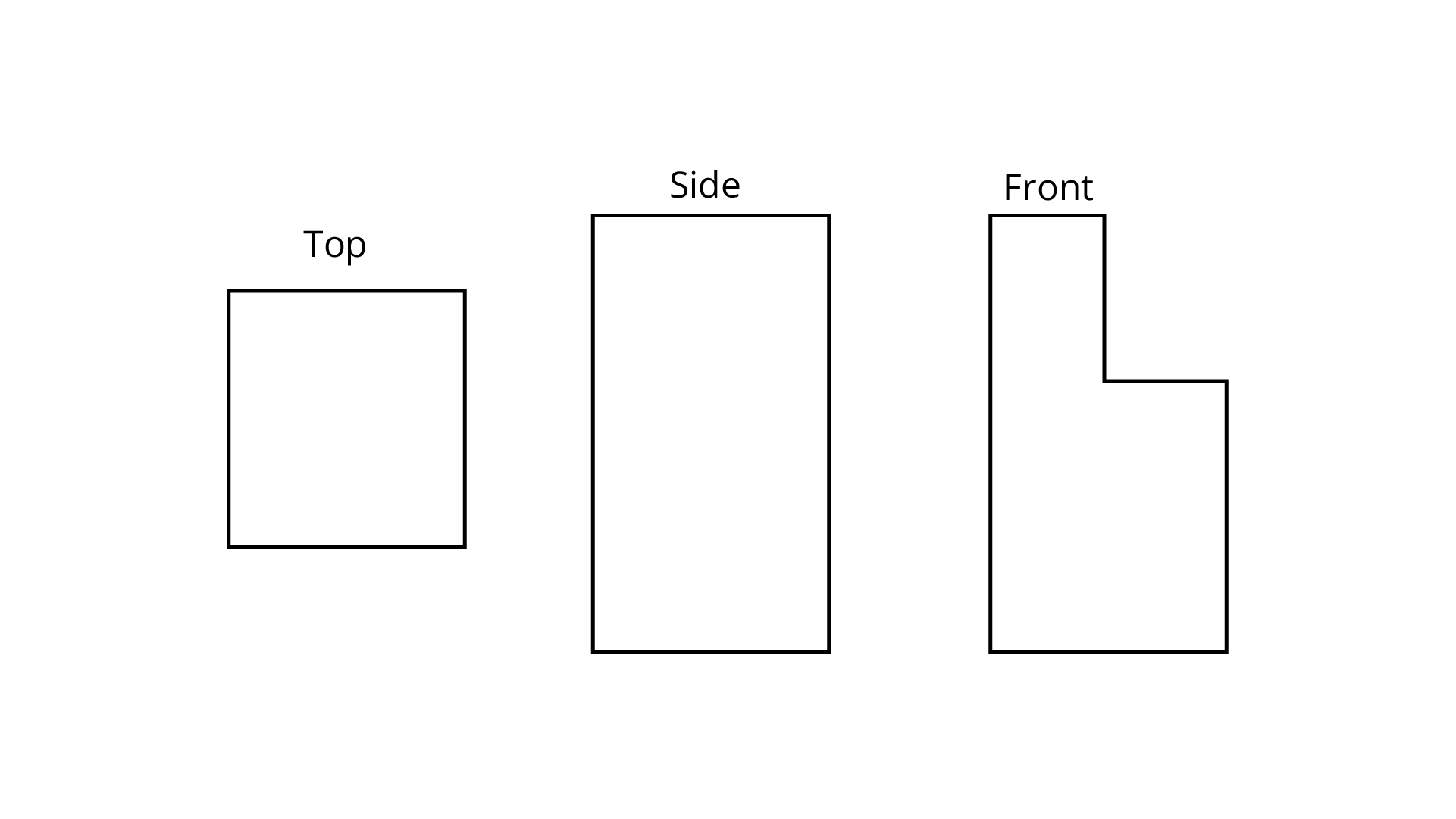
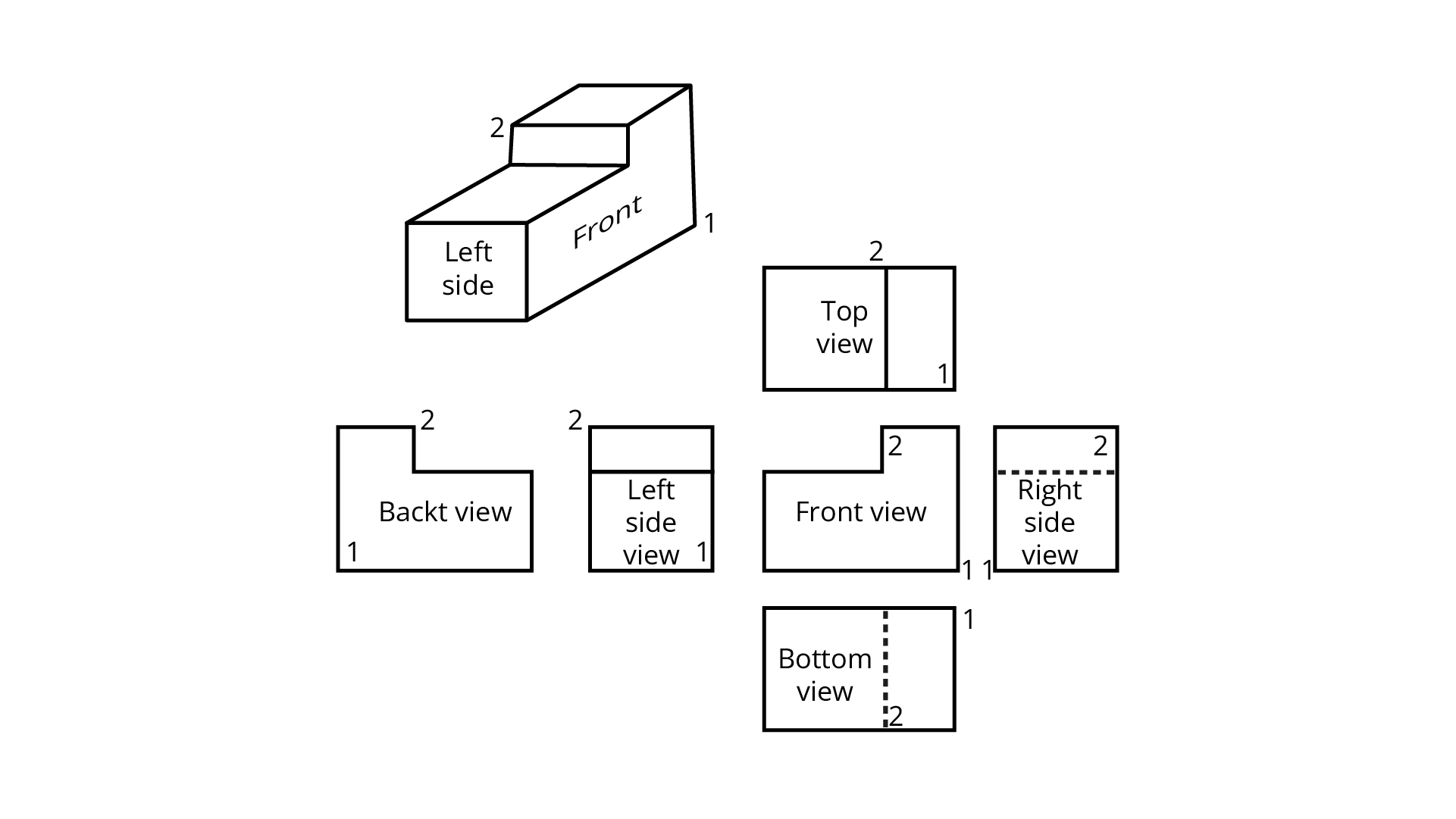
Draw a solid using the top. side and front views as shown below. {Use Isometric dot paper}.


seo images
Show solutionHide solution
Worked solution

Ans:


seo images
Q95Written answer

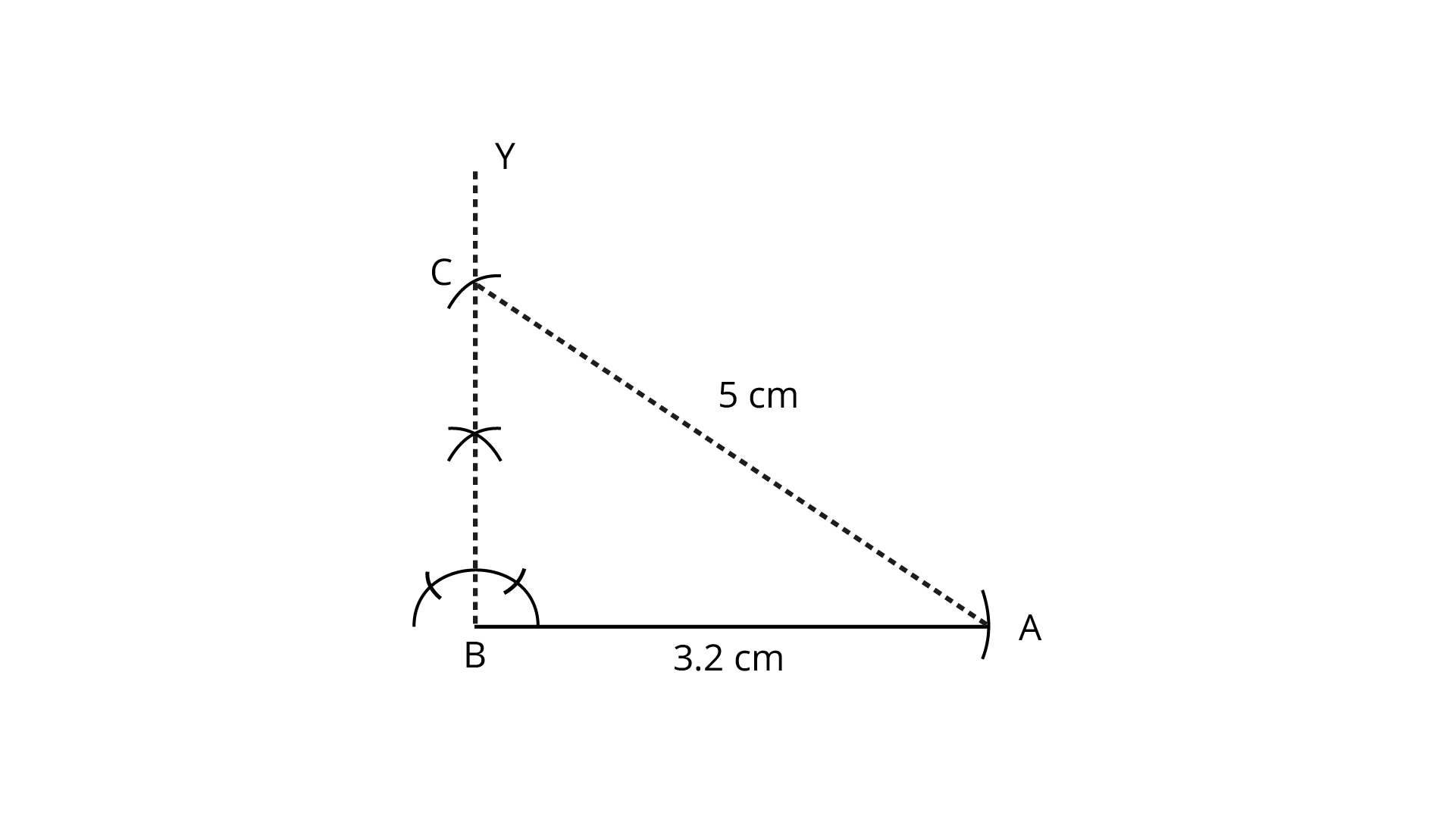
Construct a right-angled triangle whose hypotenuse measures ${\mathbf{5 cm}}$ and one of the other sides measures ${\mathbf{3}}{\mathbf{.2 cm}}{\mathbf{.}}$

Show solutionHide solution
Worked solution

Ans: Steps of construction:
(1) Draw a line AB=  3.2 cm.
(2) Construct a right angle ${\mathbf{90}}^\circ $ at point B, that is $\angle {\text{ABY}  =  {90}^{\circ} }$.
(3) From point A, cut an arc 5 cm on BY at ${\text{C}}$
(4) Join ${\text{AC}}$.


seo images

Therefore $\Delta {\text{ABC}}$ is the required triangle, having hypotenuse ${\text{AC  =  5 cm}}$ and ${\text{AB  =  3}}{\text{.2 cm}}{\text{.}}$


Q96Written answer

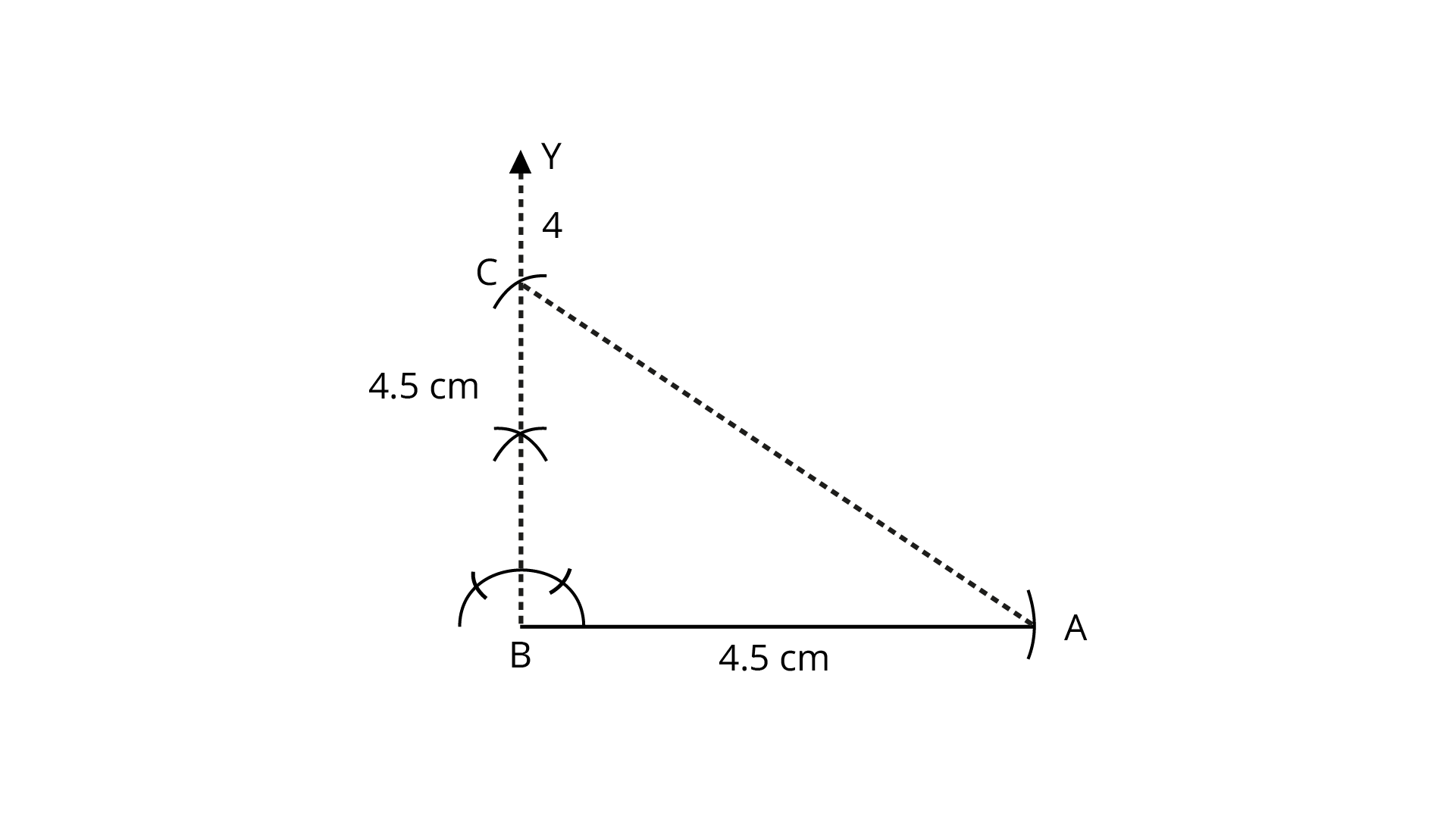
Construct a right-angled isosceles triangle with one side (other than hypotenuse) of length ${\mathbf{4}}{\mathbf{.5 cm}}$.

Show solutionHide solution
Worked solution

Ans: Steps of construction:
(1) Draw a line${\text{AB  =  4}}{\text{.5 cm}}$.
(2) Construct a right angle $\left( {90^\circ } \right)$ at point ${\text{B}}$, that is  $\angle ABY  =  {90}^{\circ}.$
(3) From point ${\text{B}}$, cut an arc ${\text{4}}{\text{.5 cm}}$ on ${\text{BY}}$ at ${\text{C}}$.
(4) Join ${\text{AC}}$.


seo images

Therefore,$\Delta {\text{ABC}}$ is the required triangle with one side of length ${\text{4}}{\text{.5 cm}}$.


Q97Written answer

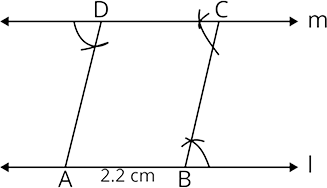
Draw two parallel lines at a distance of ${\mathbf{2}}{\mathbf{.2cm}}$ apart.

Show solutionHide solution
Worked solution

Ans: Steps of construction:
(1) Draw a line ${\text{l}}$ and mark a point ${\text{C}}$ outside it.

(2) Take a point ${\text{B}}$ on line ${\text{l}}$ and join ${\text{BC}}$.

(3) Draw a line parallel to the line ${\text{l}}$ passing through ${\text{C}}$.

(4) Mark a point ${\text{D}}$ on line ${\text{m}}$, at a distance of $2.2{\text{cm}}$ from ${\text{C}}$. 

(5) Mark angle arc at point D which should be equal to angle arc at point C.

(5) Through ${\text{D}}$ draw a line at the angle arc which will be parallel to the BC line.


seo images
Q98Written answer

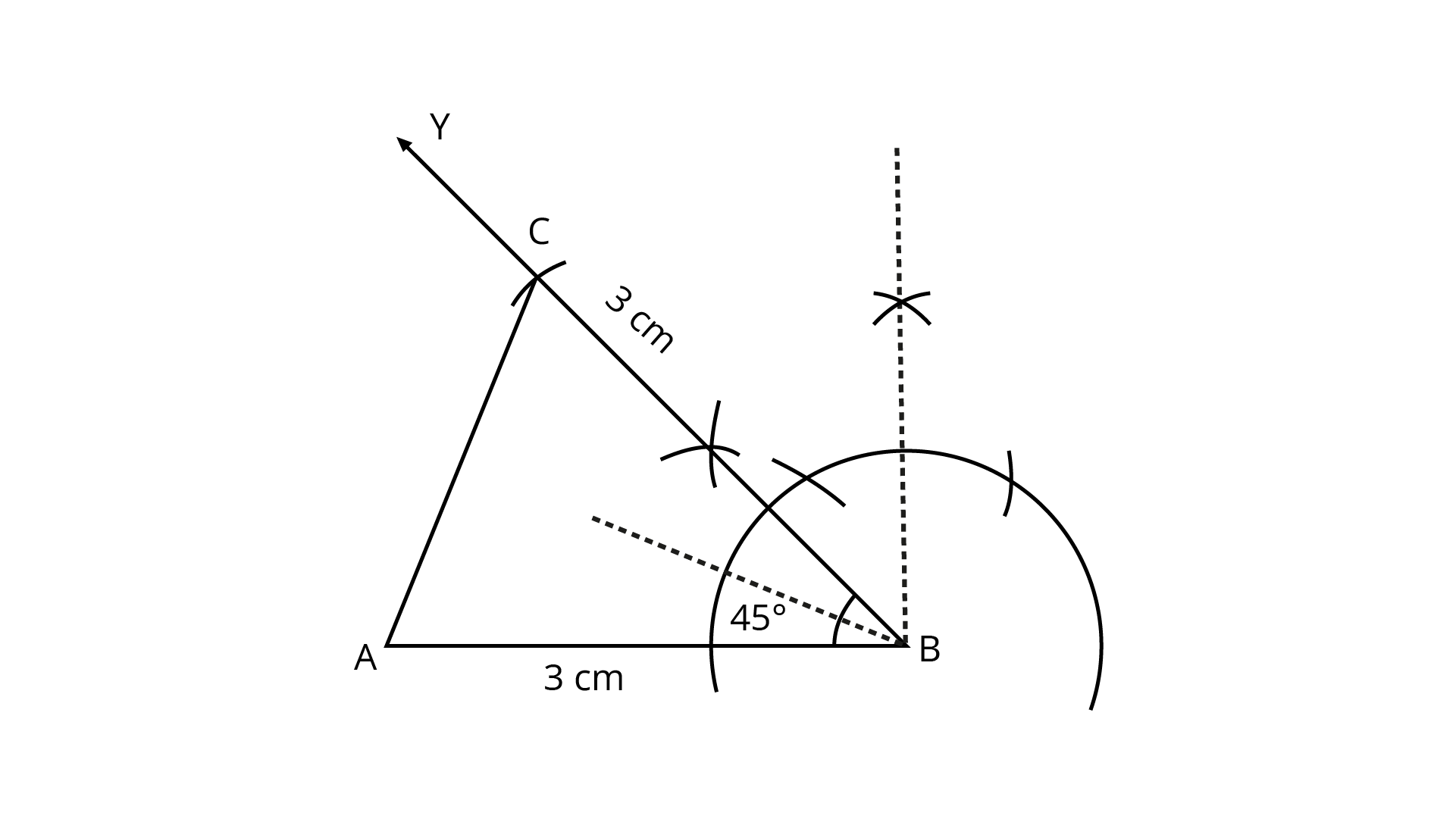
Draw an isosceles triangle with each of equal sides of length ${\mathbf{3cm}}$ and the angle between them as ${\mathbf{45^\circ }}$.

Show solutionHide solution
Worked solution

Ans: Steps of construction: 

(1) Draw a line segment ${\text{AB}}$ of length $3{\text{cm}}$.

(2) Draw an angle of$45^\circ $ on point ${\text{B}}$ and produce it to ray ${\text{Y}}$.

(3) With ${\text{B}}$ as center, draw an arc of $3{\text{cm}}$ which intersects ray ${\text{BY}}$ at ${\text{C}}$.

(4) Join ${\text{AC}}$.


seo images

Thus,$\Delta {\text{ABC}}$ is the required isosceles triangle.


Q99Written answer

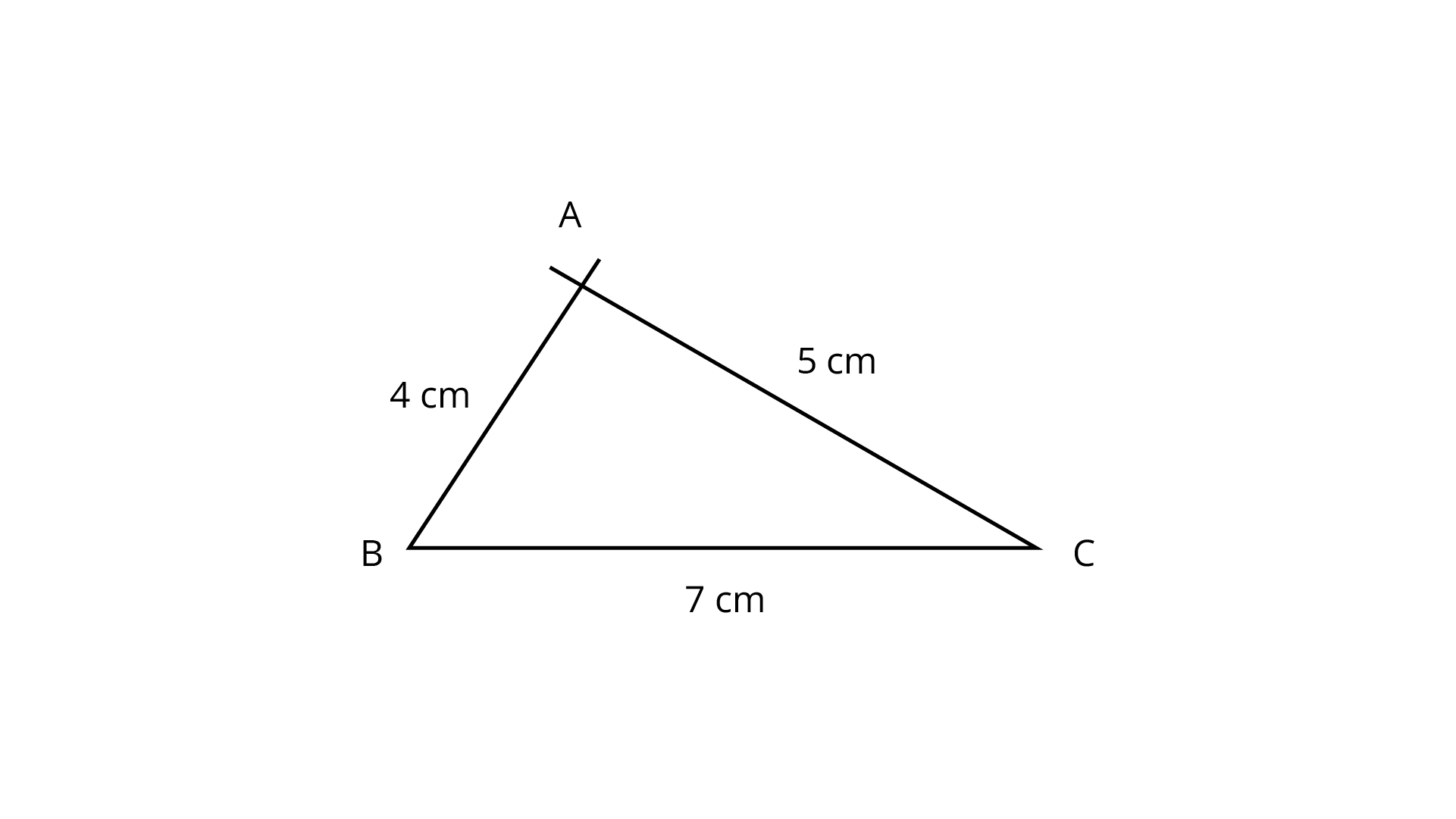
Draw a triangle whose sides are of lengths $4 cm, 5 cm$ and $7 cm$.

Show solutionHide solution
Worked solution

Ans: Let us assume that given sides are ${\text{BC  = 7 cm, AB  =  4 cm}}$ and ${\text{AC  =  5 cm}}$.

Steps of construction:

(1) Draw a line ${\text{BC  = 7 cm}}.$

(2) With center ${\text{B}}$ and radius ${\text{4 cm}}$ draw an arc.

(3) With center ${\text{C}}$ and radius ${\text{5 cm}},$ draw an arc which cuts the previous arc at ${\text{A}}$.

(4) Join ${\text{AB}} $ and ${\text{AC}}$.


seo images

Hence,$\Delta {\text{ABC}}$ is the required triangle in which ${\text{BC  = 7 cm, AB  =  4 cm}}$ and ${\text{AC  =  5 cm}}.$


Q100Written answer

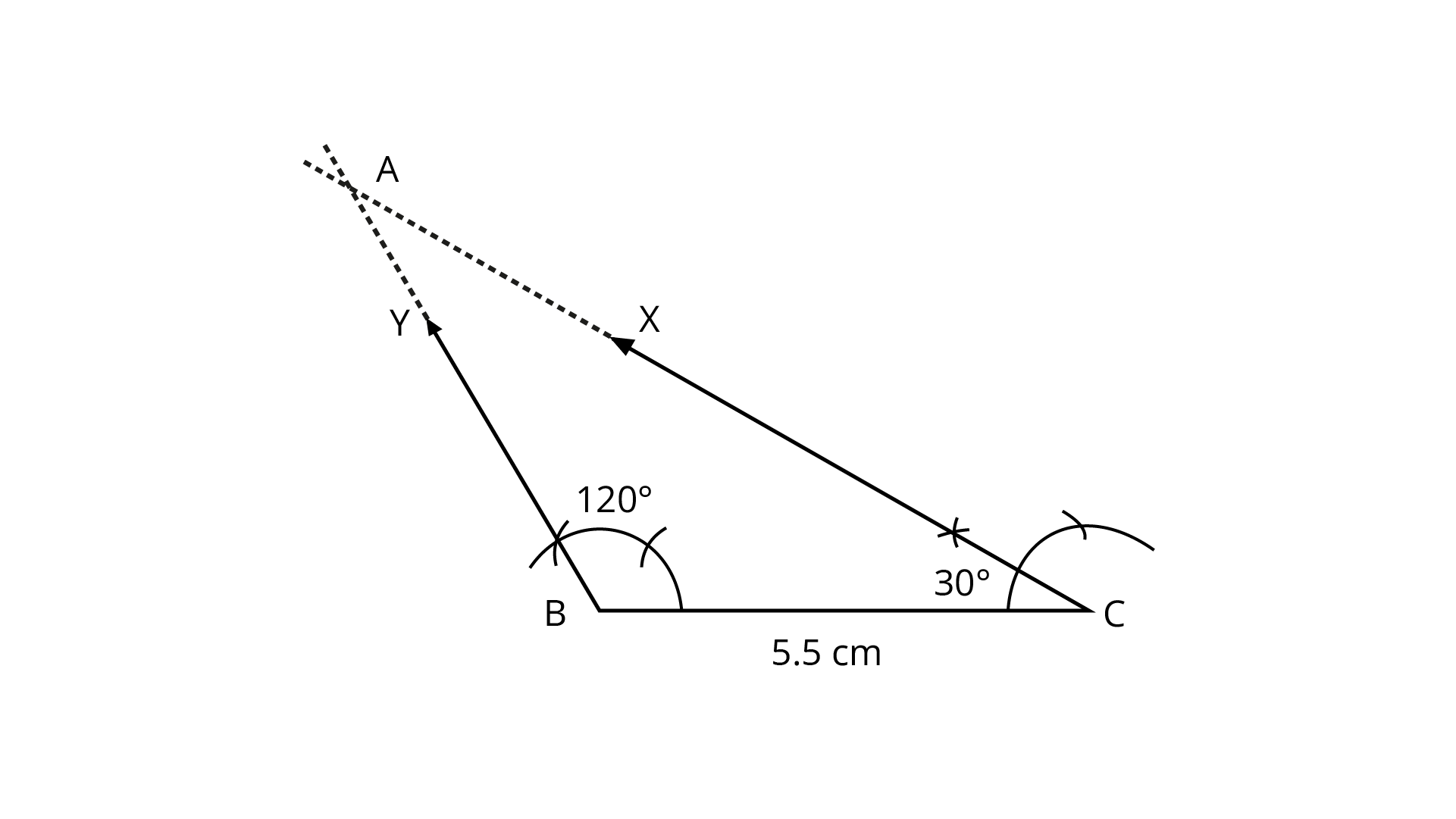
Construct an obtuse angled triangle which has a base of ${\mathbf{5}}{\mathbf{.5 cm}}$ and base angles of ${\mathbf{30^\circ }}$ and ${\mathbf{120^\circ }}$.

Show solutionHide solution
Worked solution

Ans: Steps of construction:

(1) Draw a line segment ${\text{BC}}$ of length ${\text{5}}{\text{.5 cm}}.$
(2) Draw an angle of $120^\circ $ on point ${\text{B}}$ and produce it to ray ${\text{Y}}$.
(3) Draw an angle of $30^\circ $ on point ${\text{C}}$ and produce it to ray ${\text{X}}$.
(4) Extend ${\text{BY}}$ and ${\text{CX}}$ to intersect at point ${\text{A}}$.


seo images

Hence, $\Delta {\text{ABC}}$ is the required triangle.