My Cart
Your Cart 0

    Your cart is empty.

  • Total (Amount) ₹0.00
NCERT Exemplar · Class 7 · Maths

Chapter 12: Practical Geometry Symmetry and Visualising Solid Shapes

Practice each question, then open the answer or worked solution.

Textbook exercises

124 questions
Q1Written answer

A triangle can be constructed by taking its sides as:

(a) ${\mathbf{1}}{\mathbf{.8cm,2}}{\mathbf{.6cm,4}}{\mathbf{.4cm}}$

(b) ${\mathbf{2cm,3cm,4cm}}$

(c) ${\mathbf{2}}{\mathbf{.4cm,2}}{\mathbf{.4cm,6}}{\mathbf{.4cm}}$

(d) ${\mathbf{3}}{\mathbf{.2cm,2}}{\mathbf{.3cm,5}}{\mathbf{.5cm}}$

Show solutionHide solution
Worked solution

Ans:  Option (b) is the correct answer.

A triangle is possible, when the sum of two sides is greater than the third side. Use the hit and trial method and check the all options:

For option (a),

$1.8{\text{cm}} + 2.6{\text{cm}} = 4.4{\text{cm}}$, which is equal to third side

For option (b),

$2{\text{cm}} + 3{\text{cm}} = 5{\text{cm}}$, which is greater than third side

For option (c),

$2.4{\text{cm}} + 2.4{\text{cm}} = 4.8{\text{cm}}$, which is less than third side

For option (d),

$3.2{\text{cm}} + 2.3{\text{cm}} = 5.5{\text{cm}}$, which is equal to the third side.

Thus, only option (b) satisfies the condition. Therefore, option (b) is right.

Q2Written answer

A triangle can be constructed by taking two of its angles as:

(a) ${\mathbf{11}}{{\mathbf{0}}^{\mathbf{^\circ }}}{\mathbf{,4}}{{\mathbf{0}}^{\mathbf{^\circ }}}$

(b) \[{\mathbf{7}}{{\mathbf{0}}^{\mathbf{^\circ }}}{\mathbf{,11}}{{\mathbf{5}}^{\mathbf{^\circ }}}\]

(c) ${\mathbf{13}}{{\mathbf{5}}^{\mathbf{^\circ }}}{\mathbf{,4}}{{\mathbf{5}}^{\mathbf{^\circ }}}$

(d) ${\mathbf{9}}{{\mathbf{0}}^{\mathbf{^\circ }}}{\mathbf{,9}}{{\mathbf{0}}^{\mathbf{^\circ }}}$

Show solutionHide solution
Worked solution

Ans: Option (a) is the correct answer.

A triangle is possible, when the sum of all interior angles is equal to $180^{\circ}$. Use the hit and trial method and check the all options:

For option (a),

${110^\circ } + {40^\circ } = {150^\circ }$ and third angle is ${30^\circ }$

For option (b),

${70^\circ } + {115^\circ } = {185^\circ }$, is greater than ${180^\circ }$

For option (c),

${135^\circ } + {45^\circ } = {180^\circ }$, third angle is ${0^\circ }$

For option (d),

${90^\circ } + {90^\circ } = {180^\circ }$, third angle is ${0^\circ }$

Thus, only option (a) satisfies the condition.

Therefore, option (a) is the correct answer.


Q3Written answer

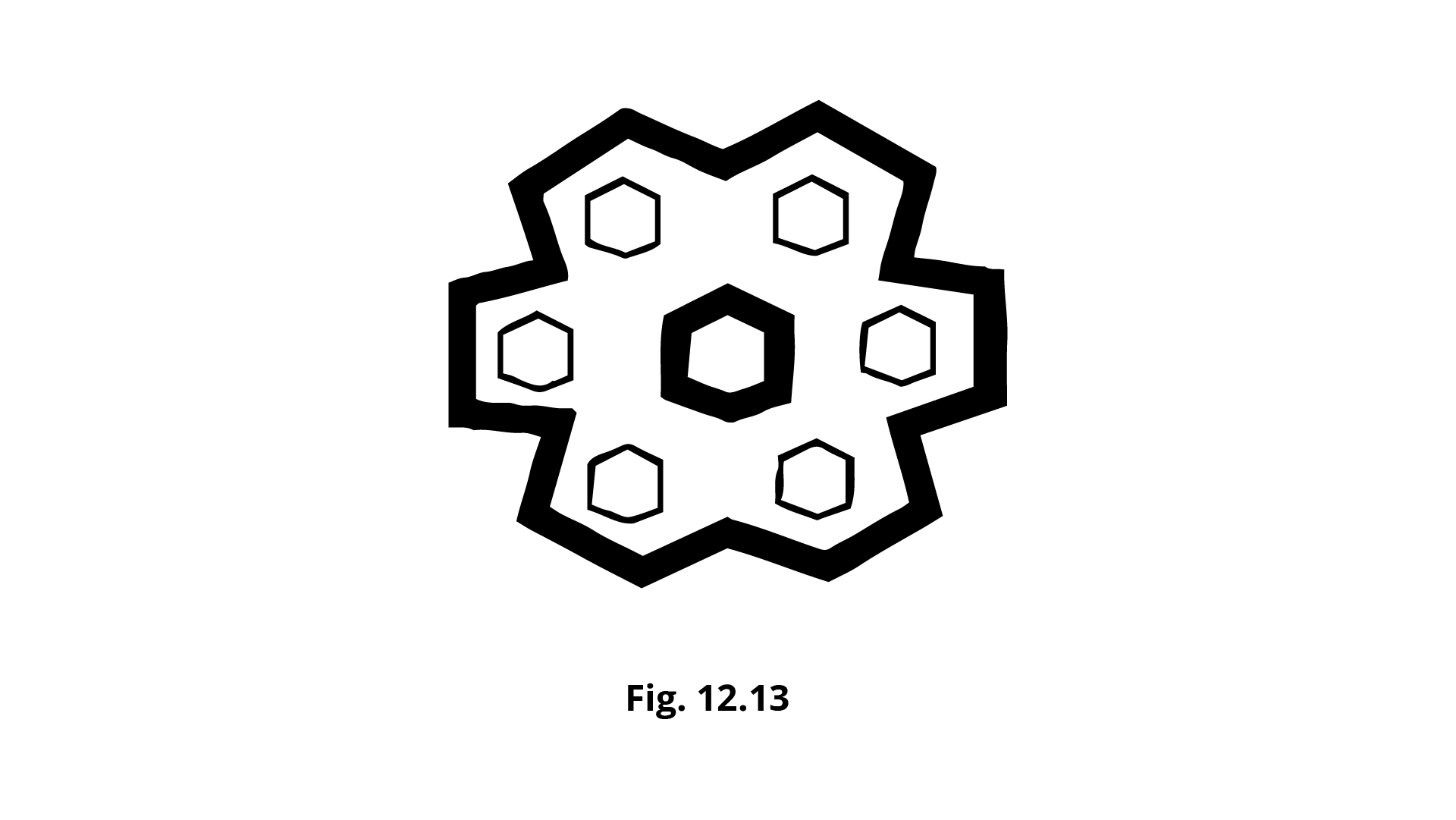
The number of lines of symmetry in the figure 12.13 given below is:

(a) ${\mathbf{4}}$

(b) ${\mathbf{8}}$

(c) ${\mathbf{6}}$

(d) infinitely many


seo images
Show solutionHide solution
Worked solution

Solution coming soon.

Q4Written answer

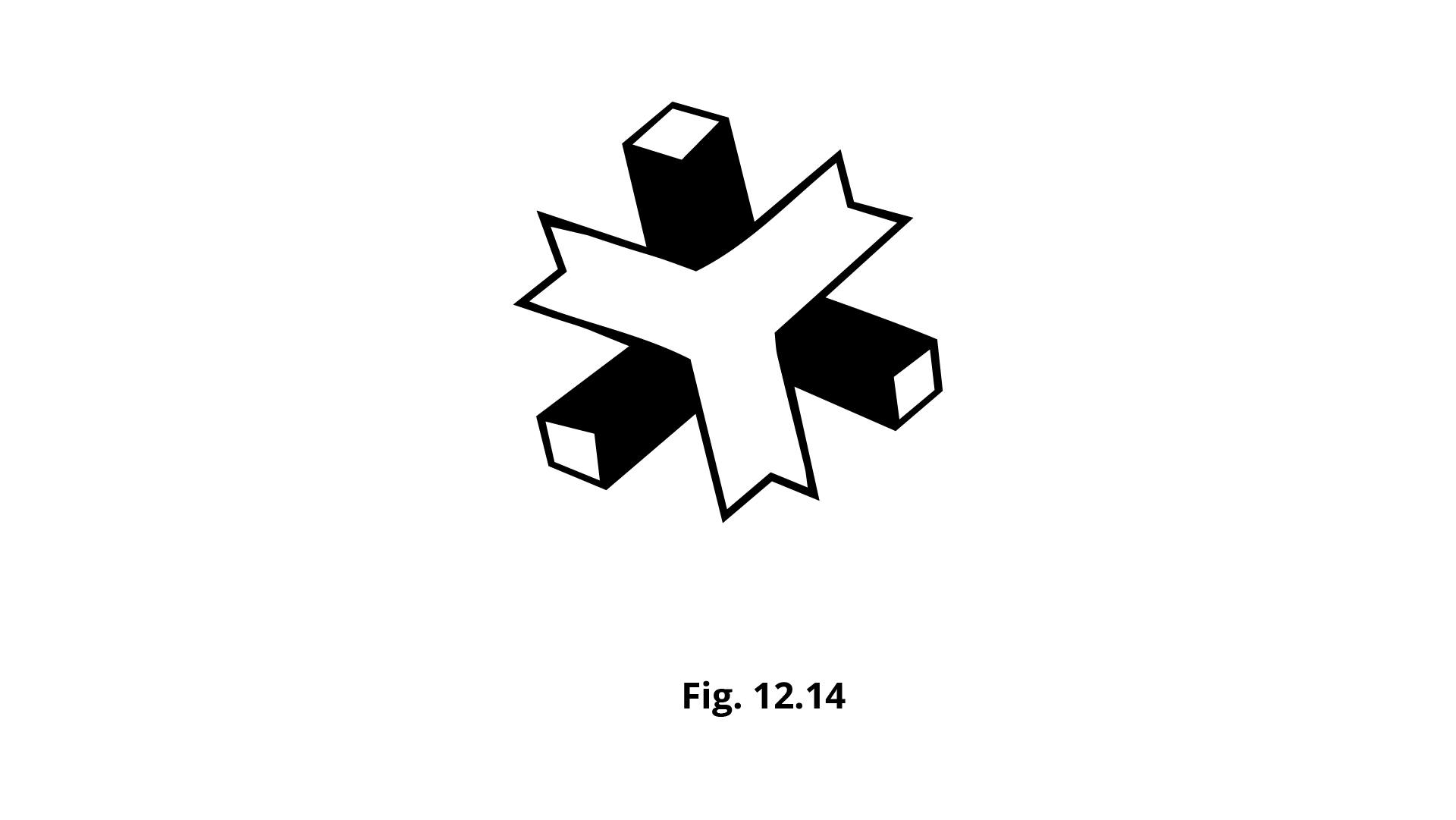
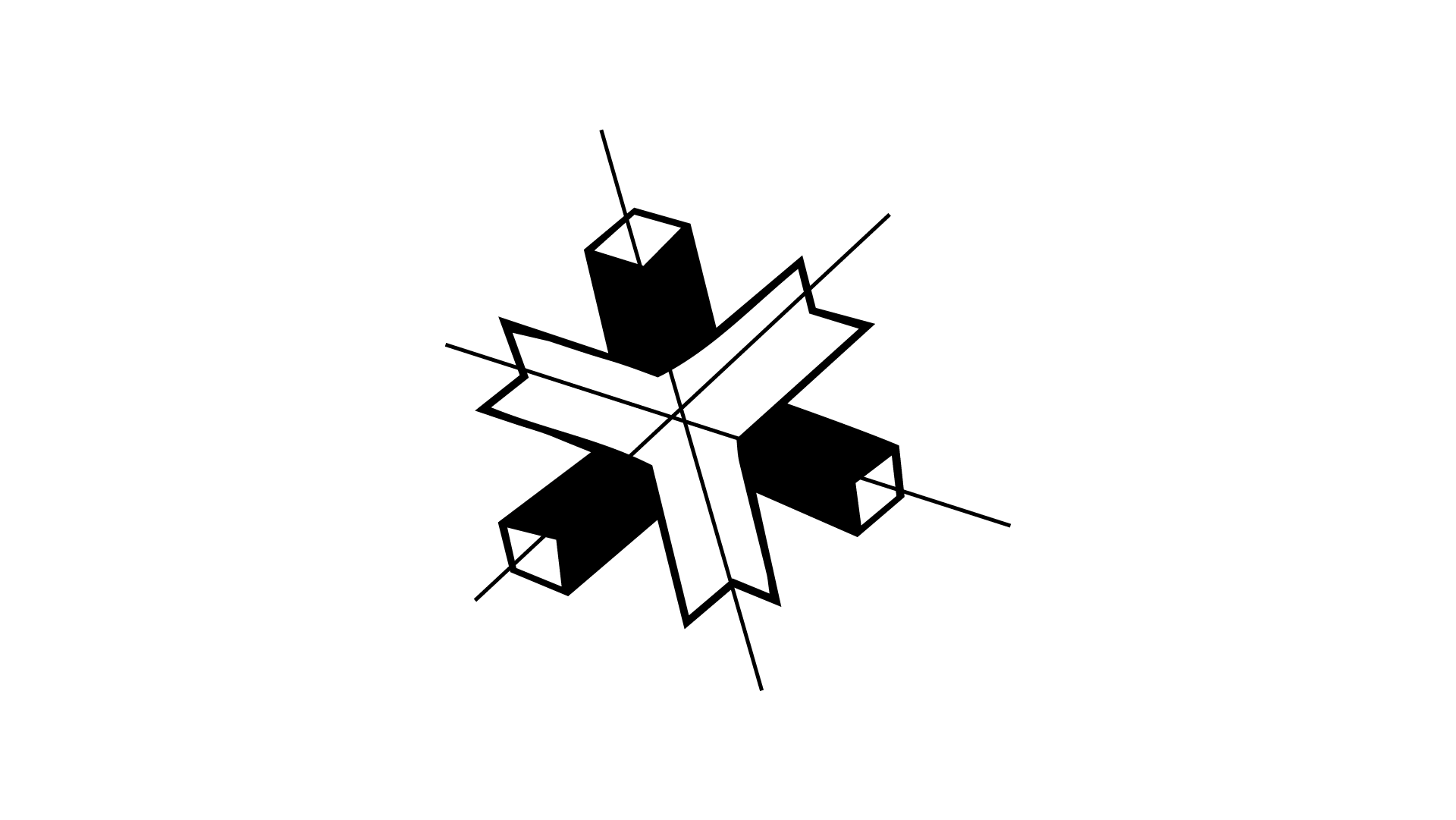
The number of lines of symmetry in figure 12.14 is:

(a) ${\mathbf{1}}$

(b) ${\mathbf{3}}$

(c) ${\mathbf{6}}$

(d) infinitely many


seo images
Show solutionHide solution
Worked solution

Ans: Option (b) is the correct answer.

Symmetrical line is the line which divides a figure into two equal parts.


seo images

Here, the figure has only a $3$ line of symmetry. Therefore, option (b) is the correct answer.


Q5Written answer

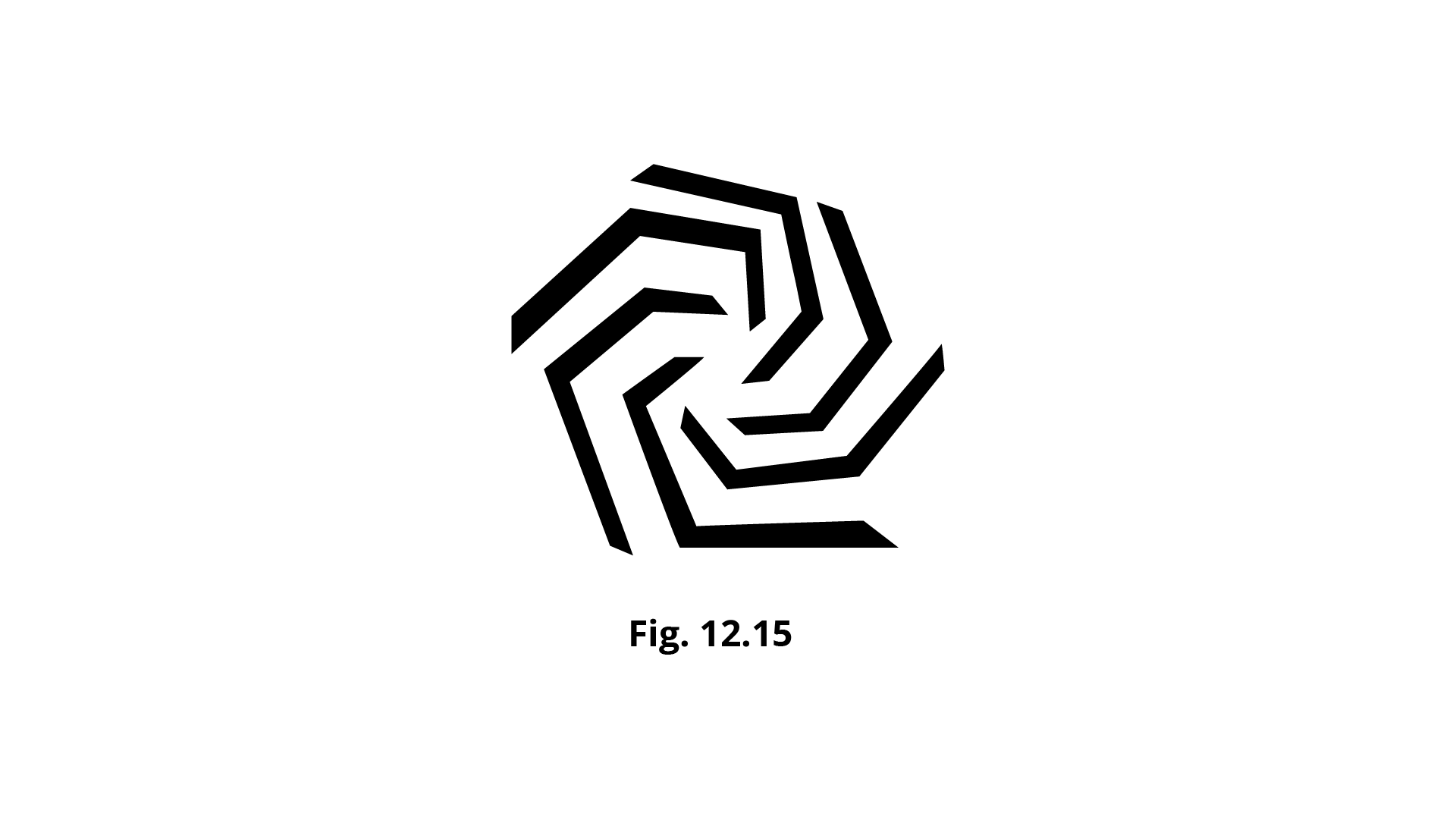
The order of rotational symmetry in the Fig. 12.15 given below is 

(a) ${\mathbf{4}}$

(b) ${\mathbf{8}}$

(c) ${\mathbf{6}}$

(d) Infinitely many


seo images
Show solutionHide solution
Worked solution

Ans: Option (c) is the correct answer.

In a complete turn of ${360^\circ }$, the number of times the figure coincides with its original position is called its order of rotational symmetry. Here, the order of rotational symmetry is $6$. Therefore, option (c) is the correct answer.


Q6Written answer

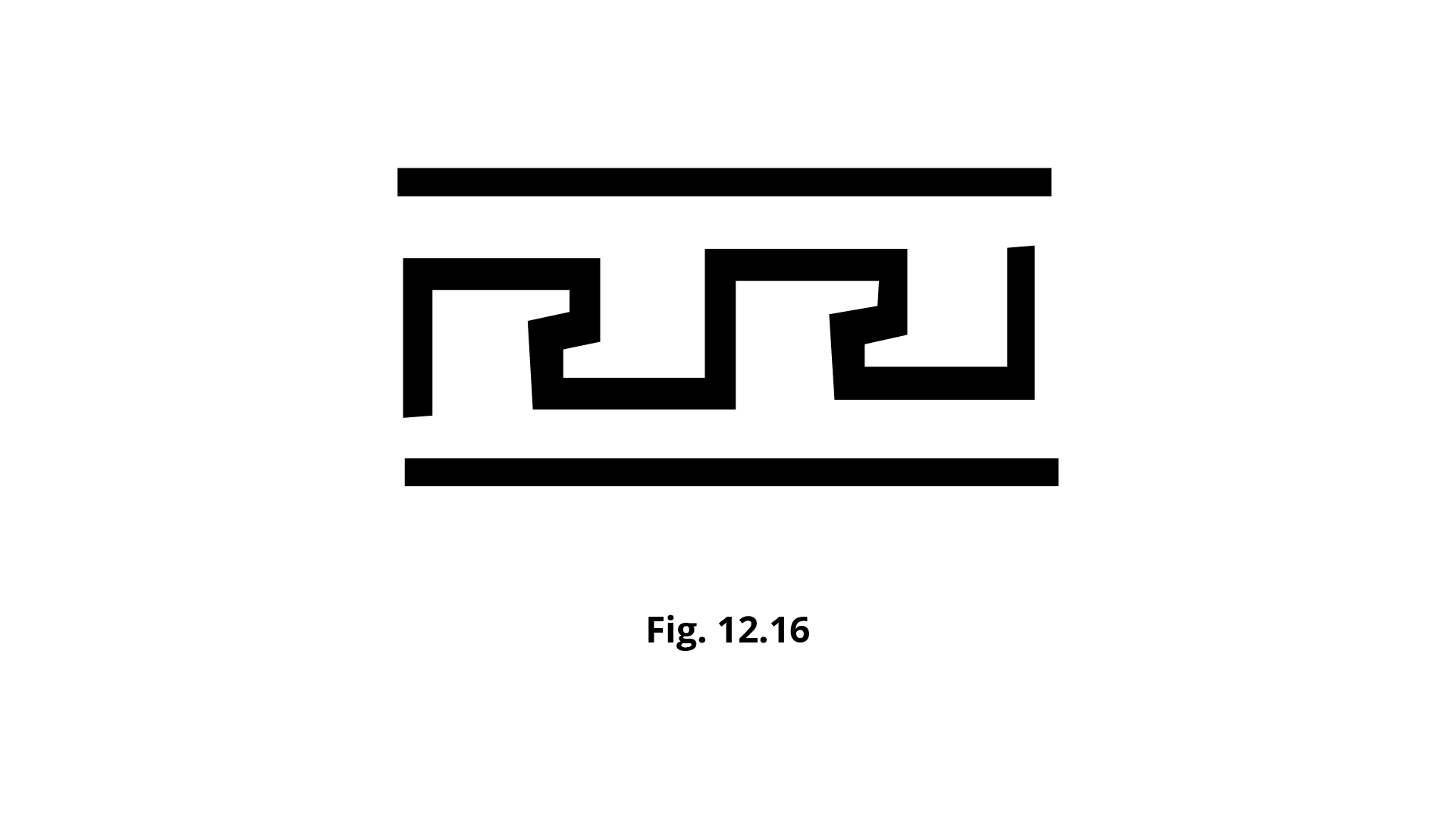
The order of rotational symmetry in the Fig. 12.16 given below is 

(a) ${\mathbf{4}}$

(b) ${\mathbf{2}}$

(c) ${\mathbf{1}}$

(d) Infinitely many


seo images
Show solutionHide solution
Worked solution

Ans: Option (b) is the correct answer.

In a complete turn of ${360^\circ }$, the number of times the figure coincides with its original position is called its order of rotational symmetry. Here, the order of rotational symmetry is $2$. Therefore, option (b) is the correct answer.


Q7Written answer

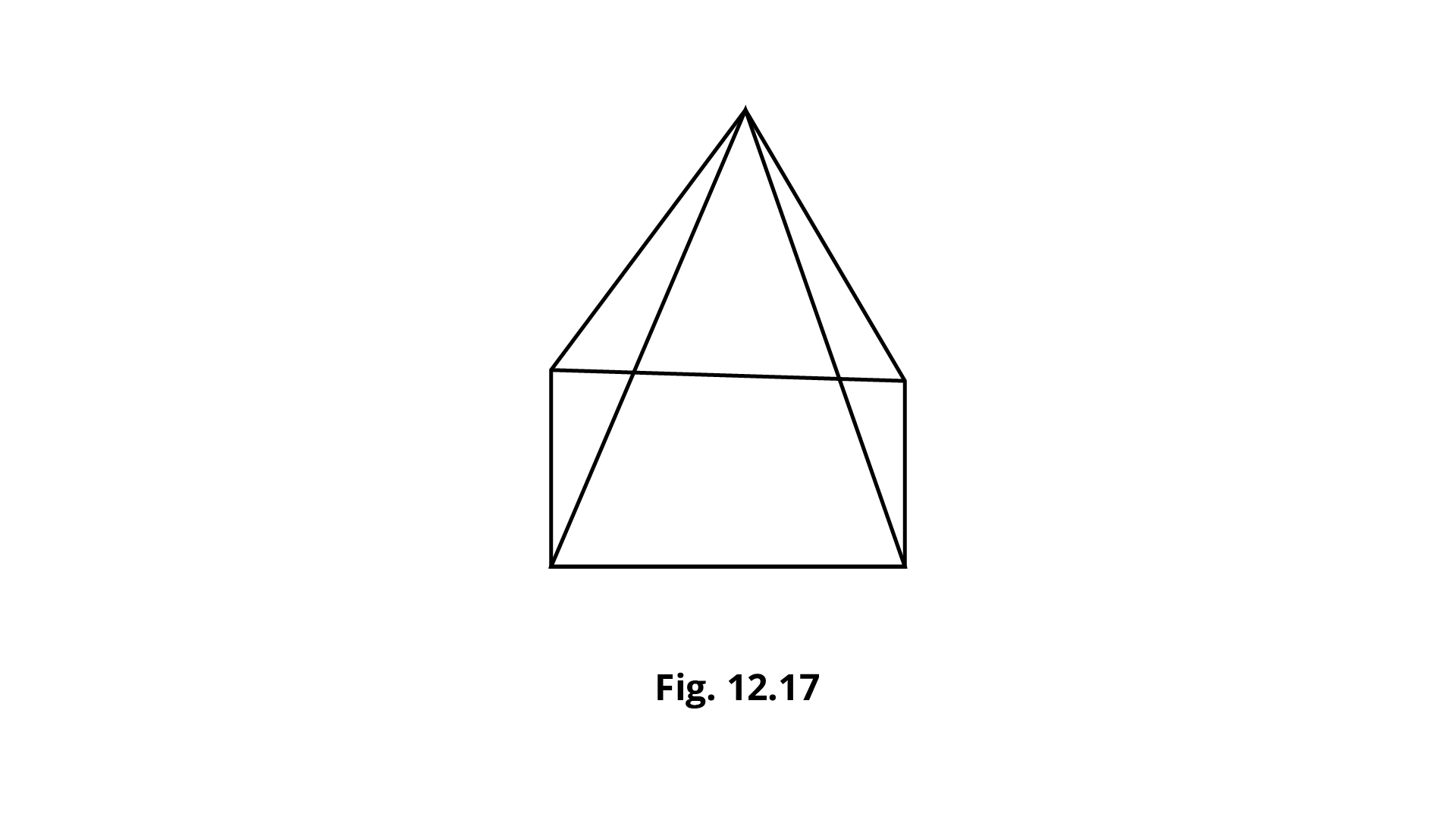
The name of the given solid in Fig 12.17 is: 

(a) triangular pyramid 

(b) rectangular pyramid 

(c) rectangular prism 

(d) triangular prism

seo images

Show solutionHide solution
Worked solution

Ans: Option (b) is the correct answer.

A pyramid is a three dimensional polyhedron shaped structure with only one polygonal base and has triangular sides. A prism is a three dimensional polyhedron characterized by two bases which are polygonal in shape and rectangular sides perpendicular to the base. Here, the given figure contains rectangle base and triangle sides. Thus, the given figure is the combination of a rectangle and triangle called a rectangular pyramid. Therefore, option (b) is the correct answer.


Q8Written answer

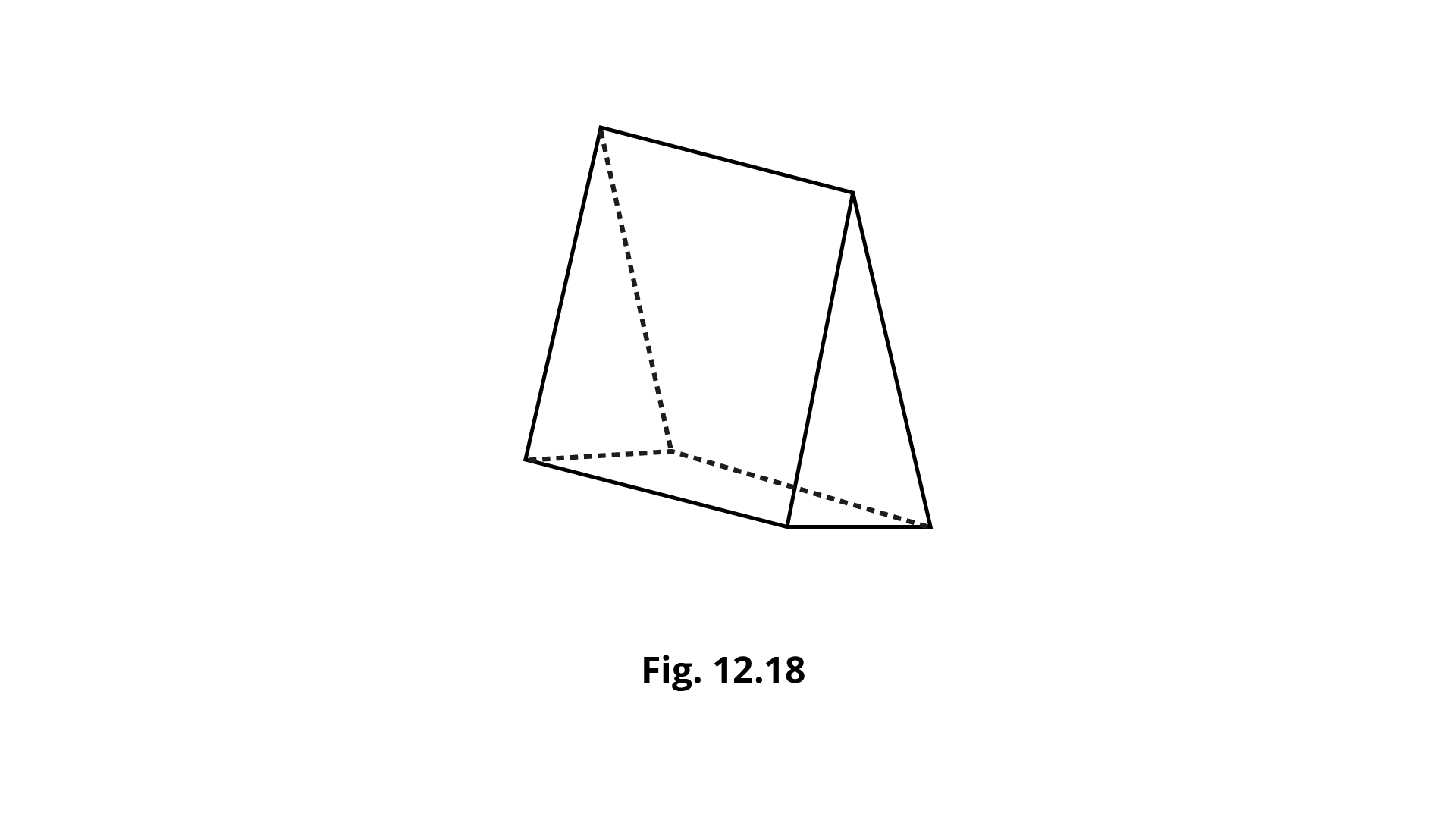
The name of the given solid in Fig 12.18 is: 

(a) triangular pyramid 

(b) rectangular prism 

(c) triangular prism

(d) rectangular pyramid 


seo images
Show solutionHide solution
Worked solution

Ans: Option (c) is the correct answer.

A pyramid is a three dimensional polyhedron shaped structure with only one polygonal base and has triangular sides. A prism is a three dimensional polyhedron characterized by two bases which are polygonal in shape and rectangular sides perpendicular to the base. Here, the given figure contains parallelogram faces and triangle sides. Therefore, the given figure is the combination of parallelogram and triangle called triangular prism. 


Q9Written answer

All faces of a pyramid are always: 

(a) Triangular 

(b) Rectangular 

(c) Congruent 

(d) None of these

Show solutionHide solution
Worked solution

Ans: Option (d) is the correct answer.

The all faces of a pyramid are triangular except base as it depends on the type of pyramid. Therefore, option (d) is the correct answer.


Q10Written answer

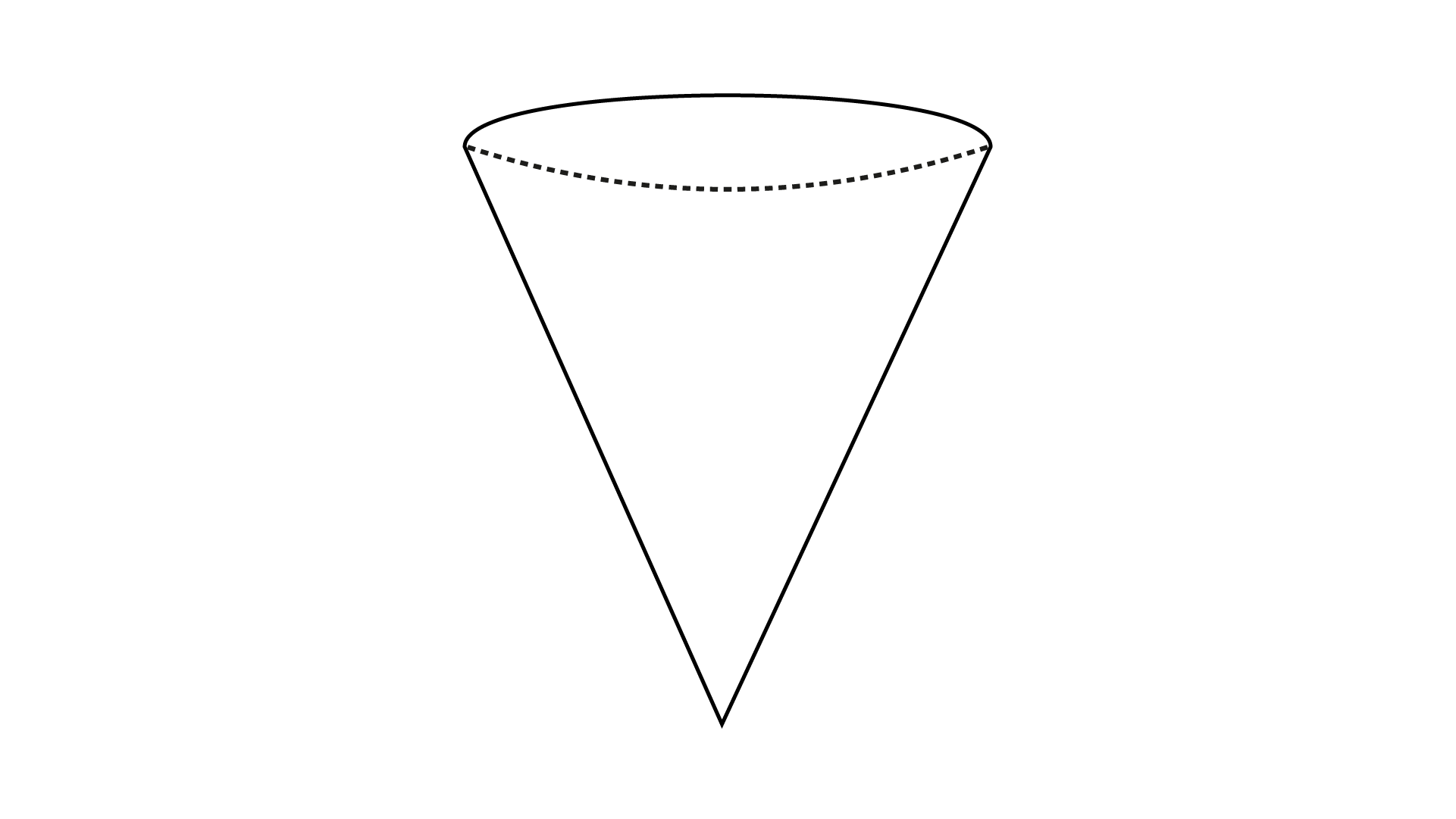
A solid that has only one vertex is 

(a) Pyramid 

(b) Cube 

(c) Cone 

(d) Cylinder

Show solutionHide solution
Worked solution

Ans: Option (c) is the correct answer.

Vertex is defined as the common endpoint of two or more rays or line segments. And it typically means a corner or a point where lines meet. A pyramid is a three dimensional polyhedron shaped structure with only one polygonal base and has triangular sides and it has five vertices. A cube is a regular hexahedron and it has eight vertices. A cylinder has no vertex, since its faces never meet. A solid that has only one vertex is called a cone.


seo images

Therefore, option (c) is the correct answer.