My Cart
Your Cart 0

    Your cart is empty.

  • Total (Amount) ₹0.00
Previous year question hub

Application Of Derivatives - Calculus - Mathematics Previous Year Questions

Practice Application Of Derivatives - Calculus - Mathematics previous year questions organised from real papers, with year-wise coverage and clear topic navigation.

11Papers
6Years
45Questions
1Topics

Application Of Derivatives question pattern

Every graph below is calculated only from this selection.

Questions by year

Year-wise coverage for Application Of Derivatives. Each bar uses a separate theme-derived color.

Difficulty distribution

How the classified questions are distributed by difficulty.

Not classified 45 100%

Question type distribution

MCQ, numerical, multiple-select and other formats found in these papers.

Multiple Choices 45 100%

Subject weightage

Top subjects by unique question coverage.

Mathematics
45 Qs

Most asked topics

Top topics across the included previous year papers.

Calculus
45 Qs

Subtopic coverage

Top subtopics inside this exact selection.

Application Of Derivatives
45 Qs

Paper coverage

Question coverage for the most populated papers. Every active PYP paper remains listed below.

COMEDK 2025 AFTERNOON SHIFT
6 Qs
COMEDK 2025 EVENING SHIFT
6 Qs
COMEDK 2025 Morning Shift
5 Qs
COMEDK 2024 AFTERNOON SHIFT
5 Qs
COMEDK 2024 MORNING SHIFT
5 Qs
COMEDK 2024 EVENING SHIFT
4 Qs
COMEDK 2023 EVENING SHIFT
4 Qs
COMEDK 2023 Morning Shift
2 Qs
COMEDK 2022
2 Qs
COMEDK 2021
2 Qs
COMEDK 2020
4 Qs

Included previous year papers

Newest papers appear first. Sort by year, question coverage or name.

PaperYear / sessionQuestions in this viewOpen
COMEDK 2025 AFTERNOON SHIFT20256View paper
COMEDK 2025 EVENING SHIFT20256View paper
COMEDK 2025 Morning Shift20255View paper
COMEDK 2024 AFTERNOON SHIFT20245View paper
COMEDK 2024 EVENING SHIFT20244View paper
COMEDK 2024 MORNING SHIFT20245View paper
COMEDK 2023 EVENING SHIFT20234View paper
COMEDK 2023 Morning Shift20232View paper
COMEDK 202220222View paper
COMEDK 202120212View paper
COMEDK 202020204View paper

All Application Of Derivatives previous year questions

Practice every matching question in batches of 20, with every available option.

1
2020 · Mathematics · Calculus · Application Of Derivatives
COMEDK 2020

The point on the curve \(y^2=x\), the tangent at which makes an angle 45\(^\circ\) with X-axis is

A
(1/2, 1/4)
B
(1/4, 1/2)
C
(1/2, 1/2)
D
(1/2, \(-\)1/2)
Open complete paper
2
2020 · Mathematics · Calculus · Application Of Derivatives
COMEDK 2020

The length of the subtangent to the curve \({x^2}{y^2} = {a^4}\) at \(( - a,a)\) is

A
2a
B
a/2
C
a/3
D
a
Open complete paper
3
2020 · Mathematics · Calculus · Application Of Derivatives
COMEDK 2020

The range in which \(y = - {x^2} + 6x - 3\) is increasing, is

A
\(x > 3\)
B
\(x < 3\)
C
\(5 < x < 6\)
D
\(7 < x < 8\)
Open complete paper
4
2020 · Mathematics · Calculus · Application Of Derivatives
COMEDK 2020

OA and OB are two roads enclosing an angle of 120\(^\circ\). X and Y start from O at the same time. X travels along OA with a speed of 4 km/h and Y travels along OB with a speed of 3 km/h. The rate at which the shortest distance between X and Y is increasing after 1 hour is
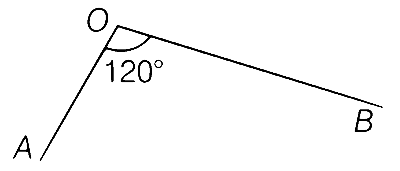
COMEDK 2020 Mathematics - Application of Derivatives Question 51 English

A
37 km/h
B
\(\sqrt{37}\) km/h
C
\(\sqrt{13}\) km/h
D
13 km/h
Open complete paper
5
2021 · Mathematics · Calculus · Application Of Derivatives
COMEDK 2021

Find the maximum value of \(f(x) = {1 \over {4{x^2} + 2x + 1}}\).

A
\({3 \over 4}\)
B
\({4 \over 3}\)
C
\({1 \over 3}\)
D
None of these
Open complete paper
6
2021 · Mathematics · Calculus · Application Of Derivatives
COMEDK 2021

The approximate value of \(f(5.001)\), where \(f(x)=x^3-7x^2+15\) is

A
\(-34.995\)
B
\(-33.995\)
C
\(-33.335\)
D
\(-35.995\)
Open complete paper
7
2022 · Mathematics · Calculus · Application Of Derivatives
COMEDK 2022

If the tangent to the curve \(xy + ax + by = 0\) at (1, 1) is inclined at an angle \({\tan ^{ - 1}}2\) with X-axis, then

A
\(a = 1,b = 2\)
B
\(a = 1,b = - 2\)
C
\(a = - 1,b = 2\)
D
\(a = - 1,b = - 2\)
Open complete paper
8
2022 · Mathematics · Calculus · Application Of Derivatives
COMEDK 2022

Let \(f(x) = a - {(x - 3)^{8/9}}\), then maxima of \(f(x)\) is

A
3
B
\(a-3\)
C
a
D
None
Open complete paper
9
2023 · Mathematics · Calculus · Application Of Derivatives
COMEDK 2023 EVENING SHIFT

If the volume of a sphere is increasing at a constant rate, then the rate at which its radius is increasing is

A
inversely proportional to its surface area
B
proportional to the radius
C
a constant
D
inversely proportional to the radius
Open complete paper
10
2023 · Mathematics · Calculus · Application Of Derivatives
COMEDK 2023 EVENING SHIFT

$$f(x)=2 x-\tan ^{-1} x-\log (x+\sqrt{x^2+1}) \text { is monotonically increasing, when }$$

A
\(x<0\)
B
\(x \in R-\{0\}\)
C
\(x \in R\)
D
\(x>0\)
Open complete paper
11
2023 · Mathematics · Calculus · Application Of Derivatives
COMEDK 2023 EVENING SHIFT

The function \(f(x)=\frac{x}{2}+\frac{2}{x}\) has a local minimum at

A
\(x=2\)
B
\(x=-2\)
C
\(x=0\)
D
\(x=1\)
Open complete paper
12
2023 · Mathematics · Calculus · Application Of Derivatives
COMEDK 2023 EVENING SHIFT

The altitude of a cone is \(20 \mathrm{~cm}\) and its semi vertical angle is \(30^{\circ}\). If the semi vertical angle is increasing at the rate of \(2^0\) per second, then the radius of the base is increasing at the rate of

A
\(160 \mathrm{~cm} / \mathrm{sec}\)
B
\(10 \mathrm{~cm} / \mathrm{sec}\)
C
\(\frac{160}{3} \mathrm{~cm} / \mathrm{sec}\)
D
\(30 \mathrm{~cm} / \mathrm{sec}\)
Open complete paper
13
2024 · Mathematics · Calculus · Application Of Derivatives
COMEDK 2024 AFTERNOON SHIFT

The dimensions of the largest rectangle of side \(x\) and \(y\) that can be inscribed in the right angled triangle of sides \(\mathrm{a}\) and \(\mathrm{b}\) is

COMEDK 2024 Afternoon Shift Mathematics - Application of Derivatives Question 31 English

A
\(\frac{a}{2}, \frac{b}{2}\)
B
\(\frac{3 a}{2}, \frac{3 b}{2}\)
C
\(\frac{a}{4}, \frac{b}{4}\)
D
\(a, b\)
Open complete paper
14
2024 · Mathematics · Calculus · Application Of Derivatives
COMEDK 2024 AFTERNOON SHIFT

$$\text { The function } y=\tan x-x \text { is }$$

A
\(\text { decreasing in }\left(0, \frac{\pi}{4}\right) \text { and increasing in }\left(\frac{\pi}{4}, \frac{\pi}{2}\right)\)
B
\(\text { a decreasing function in }\left(0, \frac{\pi}{2}\right)\)
C
\(\text { an increasing function in }\left(0, \frac{\pi}{2}\right)\)
D
\(\text { increasing in }\left(0, \frac{\pi}{4}\right) \text { and decreasing in }\left(\frac{\pi}{4}, \frac{\pi}{2}\right)\)
Open complete paper
15
2024 · Mathematics · Calculus · Application Of Derivatives
COMEDK 2024 AFTERNOON SHIFT

$$\text { If } f(x)=\frac{a \sin x+b \cos x}{c \sin x+d \cos x} \text { is decreasing for all } x \text {, then }$$

A
\(a b-c d<0\)
B
\(a d-b c<0\)
C
\(a b-c d>0\)
D
\(a d-b c>0\)
Open complete paper
16
2024 · Mathematics · Calculus · Application Of Derivatives
COMEDK 2024 AFTERNOON SHIFT

If \(f(x)=\log x+b x^2+a x, x \neq 0\) has extreme values (or turning points) at \(x=-1\) and \(x=2\) then the values of \(\mathrm{a}\) and \(\mathrm{b}\) are

A
\(a=\frac{1}{4} \quad b=-\frac{1}{2}\)
B
\(a=\frac{1}{2} \quad b=-\frac{1}{4}\)
C
\(a=\frac{1}{2} \quad b=\frac{1}{4}\)
D
\(a=-\frac{1}{2} \quad b=-\frac{1}{4}\)
Open complete paper
17
2024 · Mathematics · Calculus · Application Of Derivatives
COMEDK 2024 AFTERNOON SHIFT

If \((x-a)^2+(y-b)^2=c^2\), where \(\mathrm{a}, \mathrm{b}, \mathrm{c}\) are some constants, \(c>0\) then \(\frac{\left[1+\left(\frac{d y}{d x}\right)^2\right]^{\frac{3}{2}}}{\frac{d^2 y}{d x^2}}\) is independent of

A
x
B
Constants a and b
C
y
D
Constant c
Open complete paper
18
2024 · Mathematics · Calculus · Application Of Derivatives
COMEDK 2024 EVENING SHIFT

The side of a cube is equal to the diameter of a sphere. If the side and radius increase at the same rate then the ratio of the increase of their surface area is

A
\(3: \pi\)
B
\(\pi: 6\)
C
\(2 \pi: 3\)
D
\(3: 2 \pi\)
Open complete paper
19
2024 · Mathematics · Calculus · Application Of Derivatives
COMEDK 2024 EVENING SHIFT

What is the nature of the function \(f(x)=x^3-3 x^2+4 x\) on real numbers?

A
Strictly decreasing
B
Decreasing
C
Increasing
D
Constant
Open complete paper
20
2024 · Mathematics · Calculus · Application Of Derivatives
COMEDK 2024 EVENING SHIFT

The turning point of the function \(y=\frac{a x-b}{(x-1)(x-4)}\) at the point \(P(2,-1)\) is

A
neither a maximum nor a minimum
B
both maximum and a minimum
C
a minimum
D
a maximum
Open complete paper

Showing 20 of 45 questions