My Cart
Your Cart 0

    Your cart is empty.

  • Total (Amount) ₹0.00
NCERT Exemplar · Class 8 · Maths

Chapter 8: Exponents and Powers

Practice each question, then open the answer or worked solution.

Exercise

180 questions
Q151Written answer

Find three repeater machines that will do the same work as a (×64) machine. Draw them, or describe them using exponents.

Show solutionHide solution
Worked solution

Ans: We know that, the possible factors of 64 are 2, 4, 8. :

If 26 =64, 43 =64 and 82 =64

Hence, three repeater machines that would work as a (x 64) will be (x 26), (x 43) and (x 82). The diagram of (x 26), (x 43) and (x 82) is given below.


seo images


Q152Written answer

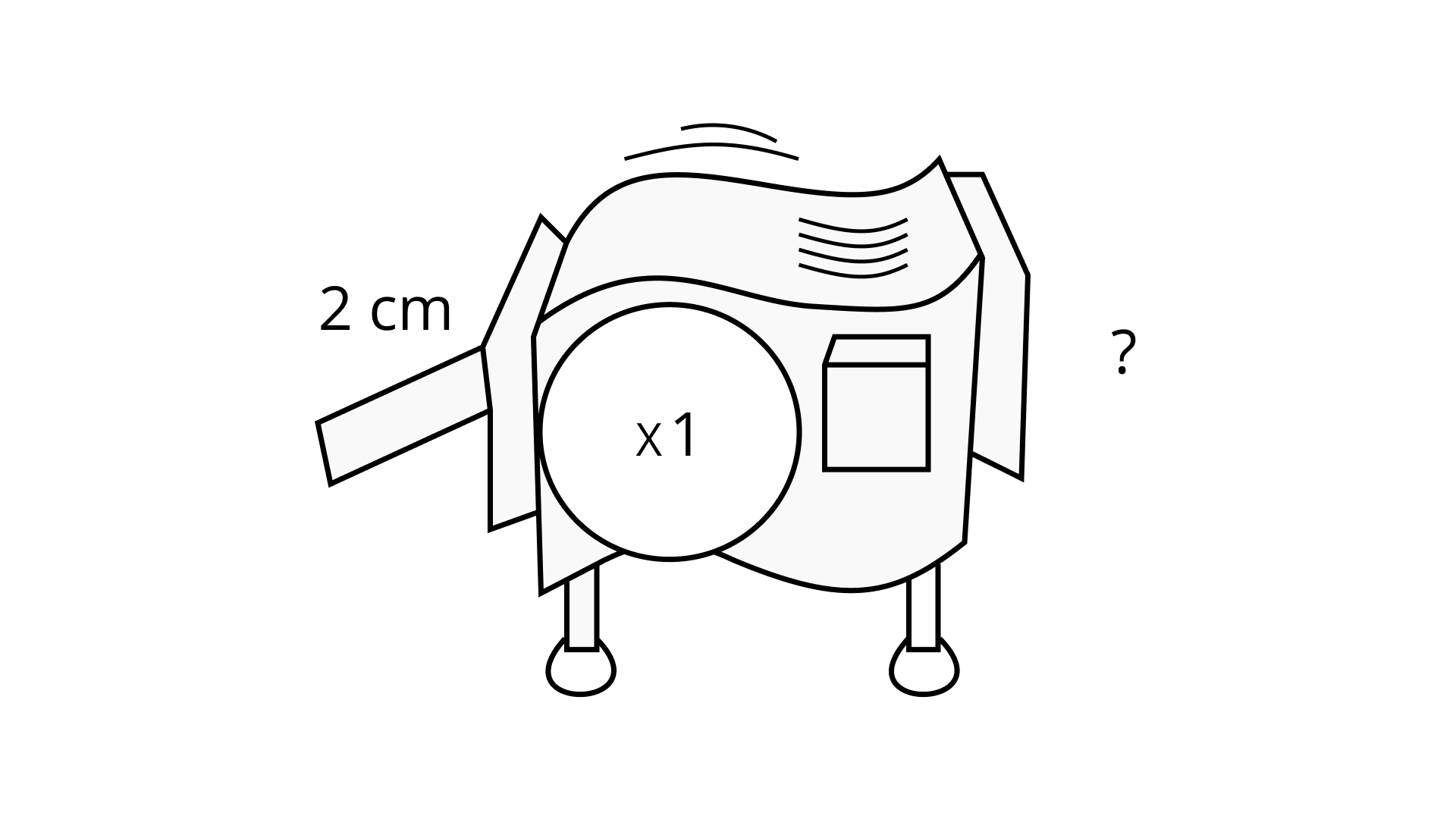
What will the following machine do to a 2 cm long piece of chalk?


seo images


Show solutionHide solution
Worked solution

Ans: The machine produce x 1100 = 1
So, if we insert a 2 cm long piece of chalk in that machine, the piece of chalk remains the same.


Q153Written answer

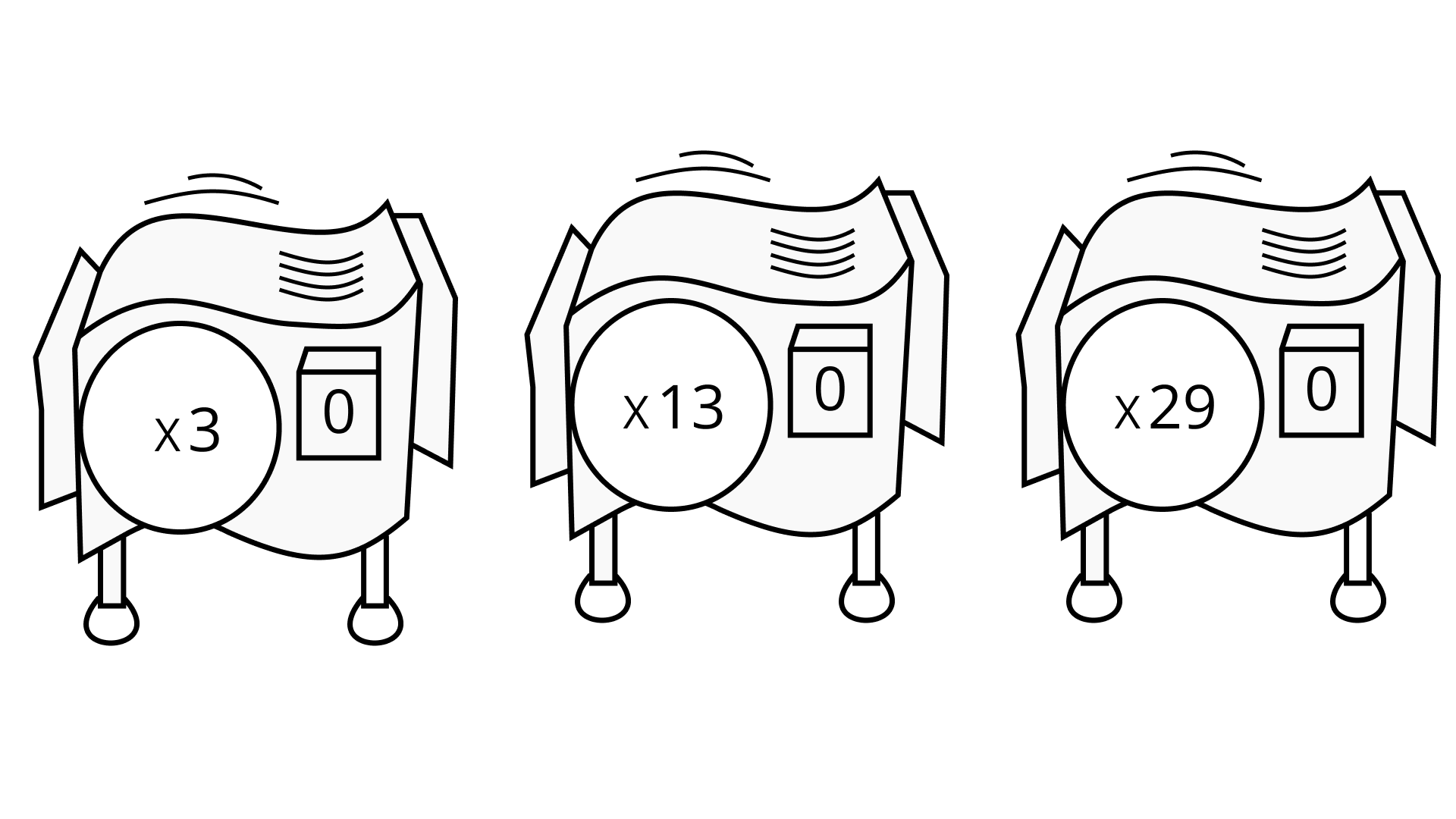
In a repeater machine with 0 as an exponent, the base machine is applied 0 times.

(a) What do these machines do to a piece of chalk?


seo images


(b) What do you think the value of 60 is?

Show solutionHide solution
Worked solution

Ans: Use the law of exponent a0 = 1.

Since, 30 = 1, 130 = 1, 290 = 1

So, machine (x 30), (x 130) and (x 290) produce nothing on not changing the piece 7 chalk. 


Ans: Use law of exponent a0 = 1,

Similarly, (x 60) machine does not change the piece.


Q154Written answer

Shrinking Machine

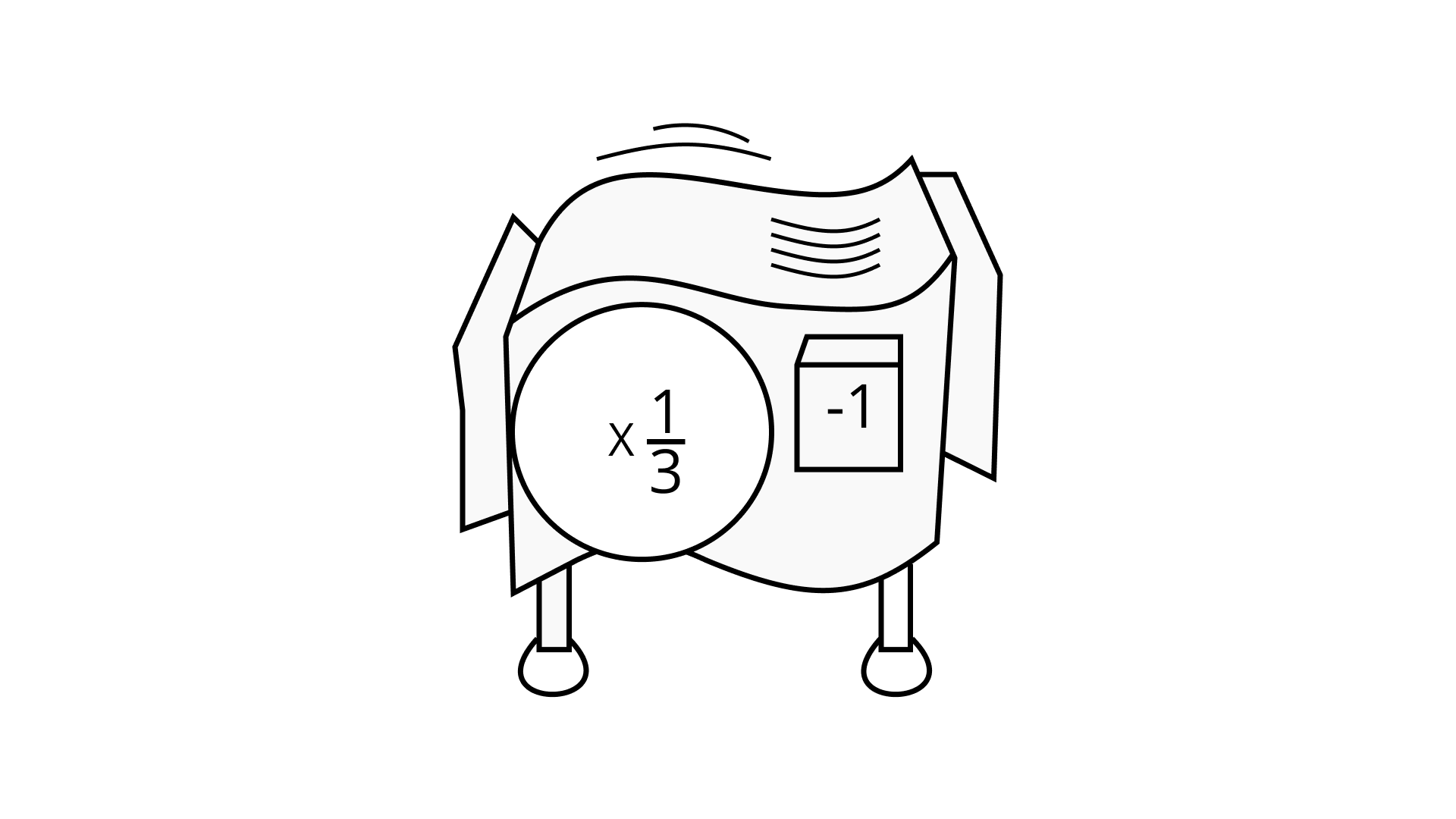
In a shrinking machine, a piece of stick is compressed to reduce its length. If 9 cm long sandwich is put into the shrinking machine below, how many cm long will it be when it emerges?


seo images


Show solutionHide solution
Worked solution

Ans: According to the question, in a shrinking machine, a piece of stick is compressed to reduce its length. If a 9 cm long sandwich is put into the shrinking machine, then the length of the sandwich will be $9 \times \dfrac{1}{{{3^{ - 1}}}}$= 9 x 3 = 27 cm.


Q155Written answer

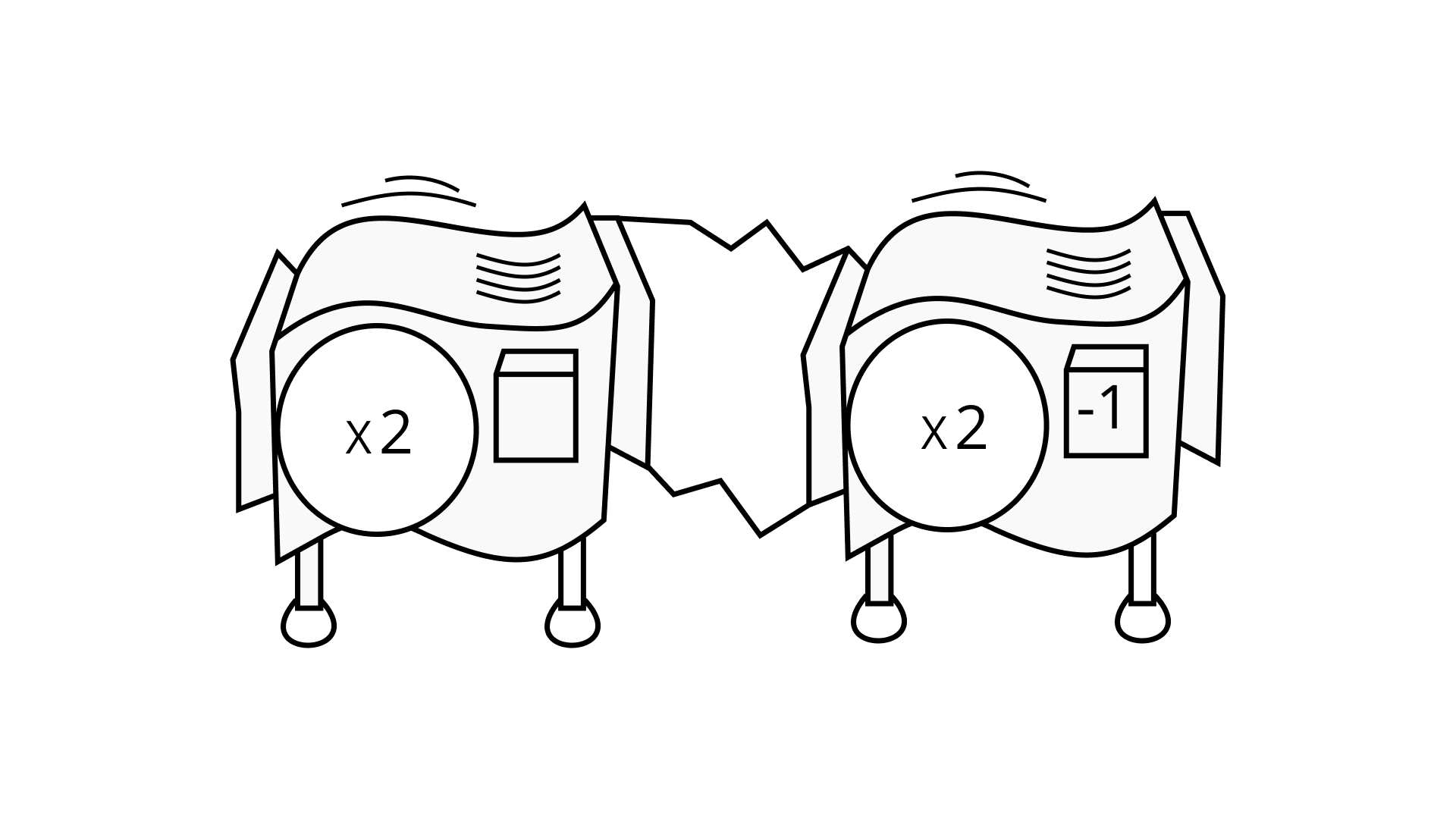
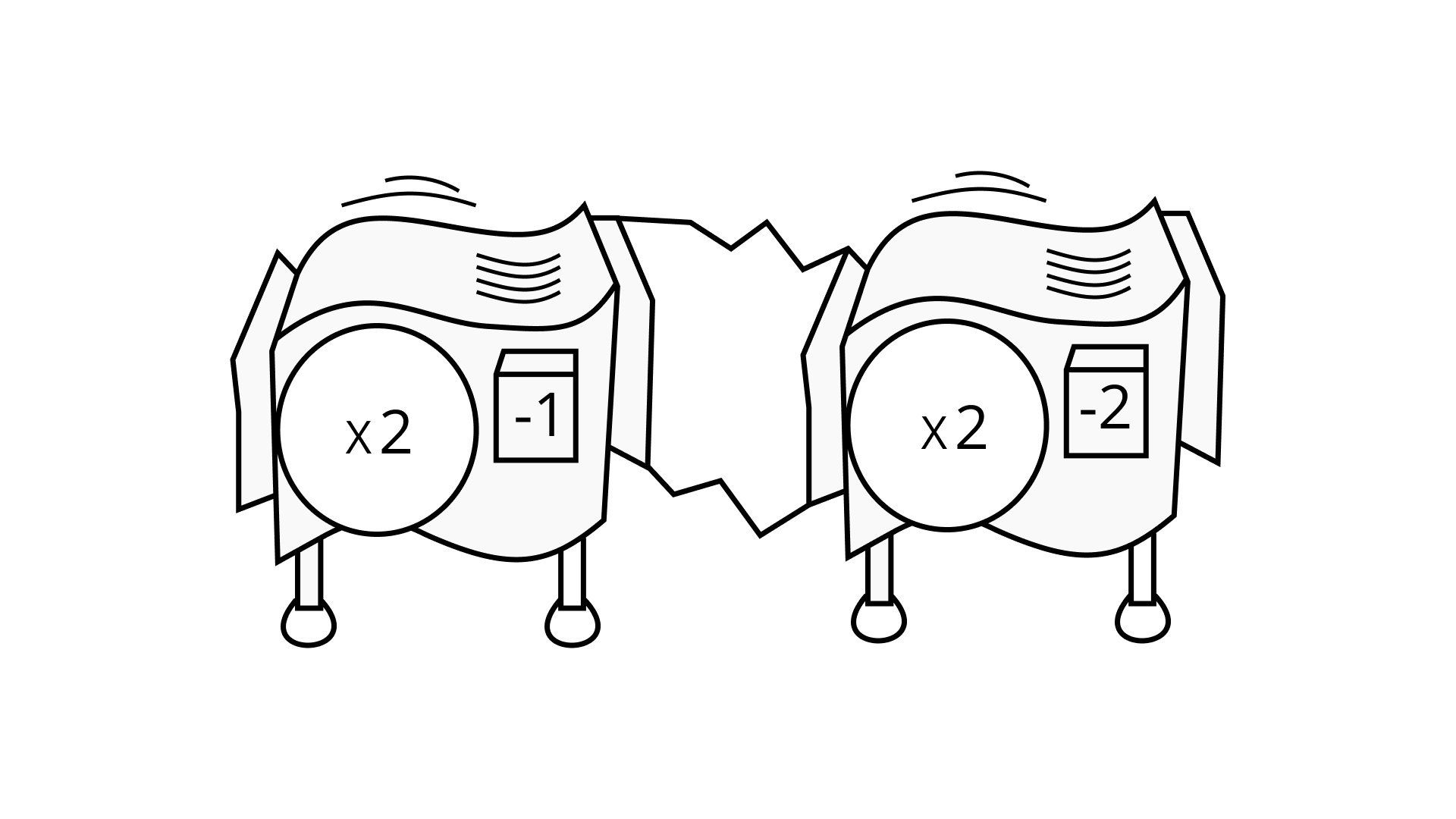
What happens when 1 cm worms are sent through these hook-ups?

(i)


seo images


(ii)


seo images


Show solutionHide solution
Worked solution

Ans: If you put 1 cm worms through ( x21) and (x2-1)

machine, the result will be = 1 x 2 x $\dfrac{1}{2}$ = 1cm.


Ans: If we send 1 cm worms through hooked machines (x 2-1) and (x 2)-2, result will be-

$1 \times \dfrac{1}{2} \times \dfrac{1}{{2 \times 2}} = \dfrac{1}{{2 \times 4}} = \dfrac{1}{8}{\text{ cm  =  0}}{\text{.125 cm}}$


Q156Written answer

Sanchay put a 1cm stick of gum through a (1 × 3–2) machine. How long was the stick when it came out?

Show solutionHide solution
Worked solution

Ans: Length of the stick of gum that Sanchay put through the (1 x 3-2) machine = 1 cm

Negation (-) sign in power states that the given machine is a

shrinking machine.

Hence $1 \times \dfrac{1}{{{3^2}}} = 1 \times \dfrac{1}{9} = \dfrac{1}{9}{\text{ cm}}$

Therefore, the length of the stick when it came out is $\dfrac{1}{9}{\text{ cm}}$.


Q157Written answer

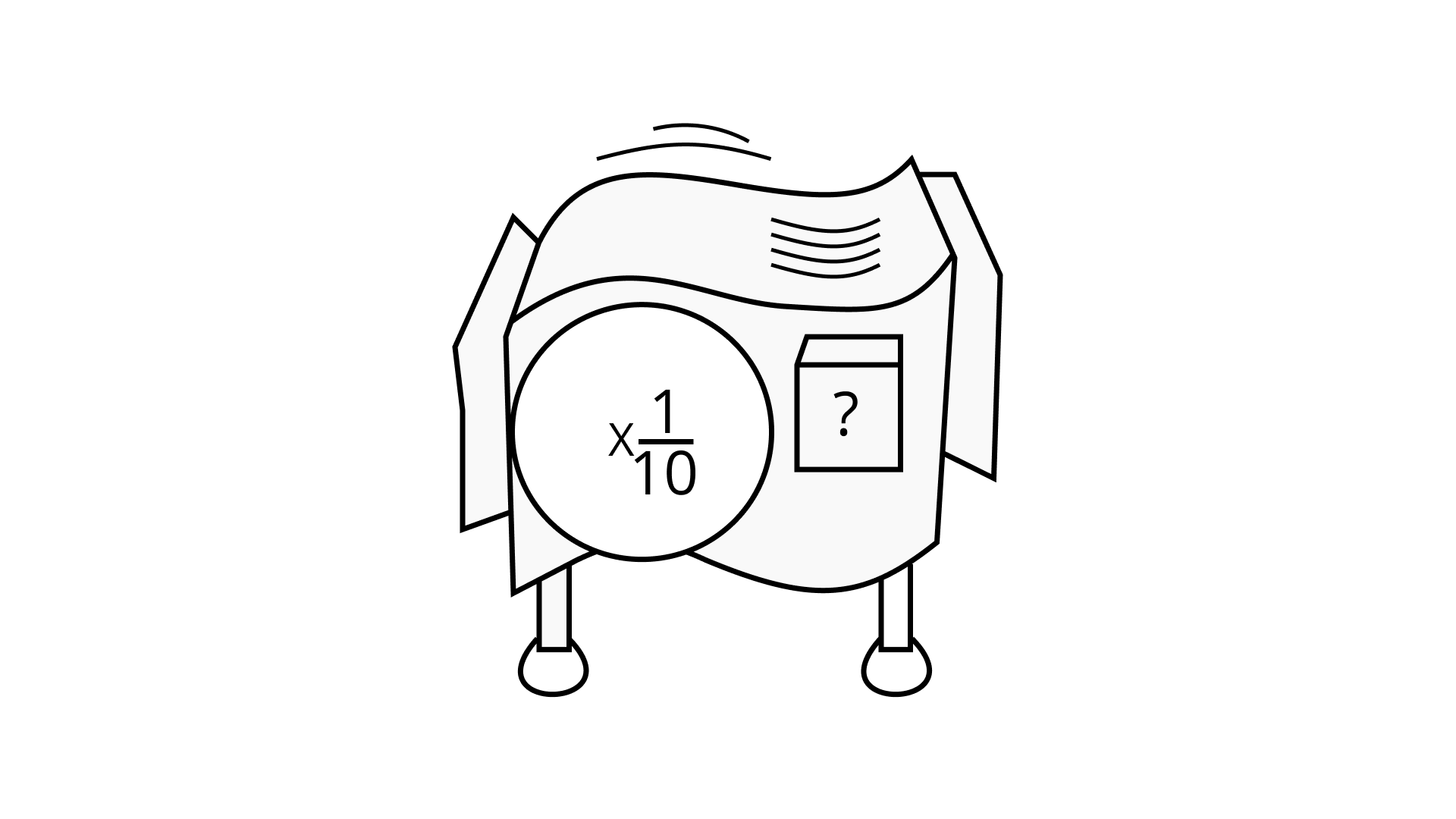
Ajay had a 1cm piece of gum. He put it through the repeater machine given below and it came out $\dfrac{1}{{{\mathbf{100}},{\mathbf{000}}}}$cm long. What is the missing value?


seo images


Show solutionHide solution
Worked solution

Ans: The 1 cm piece of gum that Ajay put came out as $\dfrac{1}{{100000}}$.

From this we can conclude that the machine is a shrinking

machine.

Therefore, the type of shrinking machine is ${\left( { \times \dfrac{{{1}}}{{10}}} \right)^5}$. 

Hence, the value missing is 5.


Q158Written answer

Find a single machine that will do the same job as the given hook-up.

(a) a (× 23) machine followed by (× 2–2) machine.

(b) a (× 24) machine followed by $\left( { \times {{\left( {\dfrac{1}{2}} \right)}^2}}\right)$ machine.

(c) a (× 599) machine followed by a (5–100) machine.

Show solutionHide solution
Worked solution

Ans: If (x23) machine is followed by a (x2-2) machine,

the result will be- $2 \times 2 \times 2 \times \dfrac{1}{2} \times \dfrac{1}{2} = {2^1}$

Thus, a single machine (x 21) will also work as the given hook-up.


Ans: A (x24) machine is followed by a $\left[ {{{\left( {\dfrac{1}{2}} \right)}^2}} \right]$ machine.

Therefore, the result will be $2 \times 2 \times 2 \times 2 \times \dfrac{1}{2} \times \dfrac{1}{2} = 4$


Ans: A (×599) machine is followed by a (x5–100) machine.

Therefore, the result will be ${5^{99}} \times \dfrac{1}{{{5^{100}}}} = \dfrac{1}{5}$

Thus, a $\left( { \times \dfrac{1}{5}} \right)$ machine will work as the given hook-up.


Q159Written answer

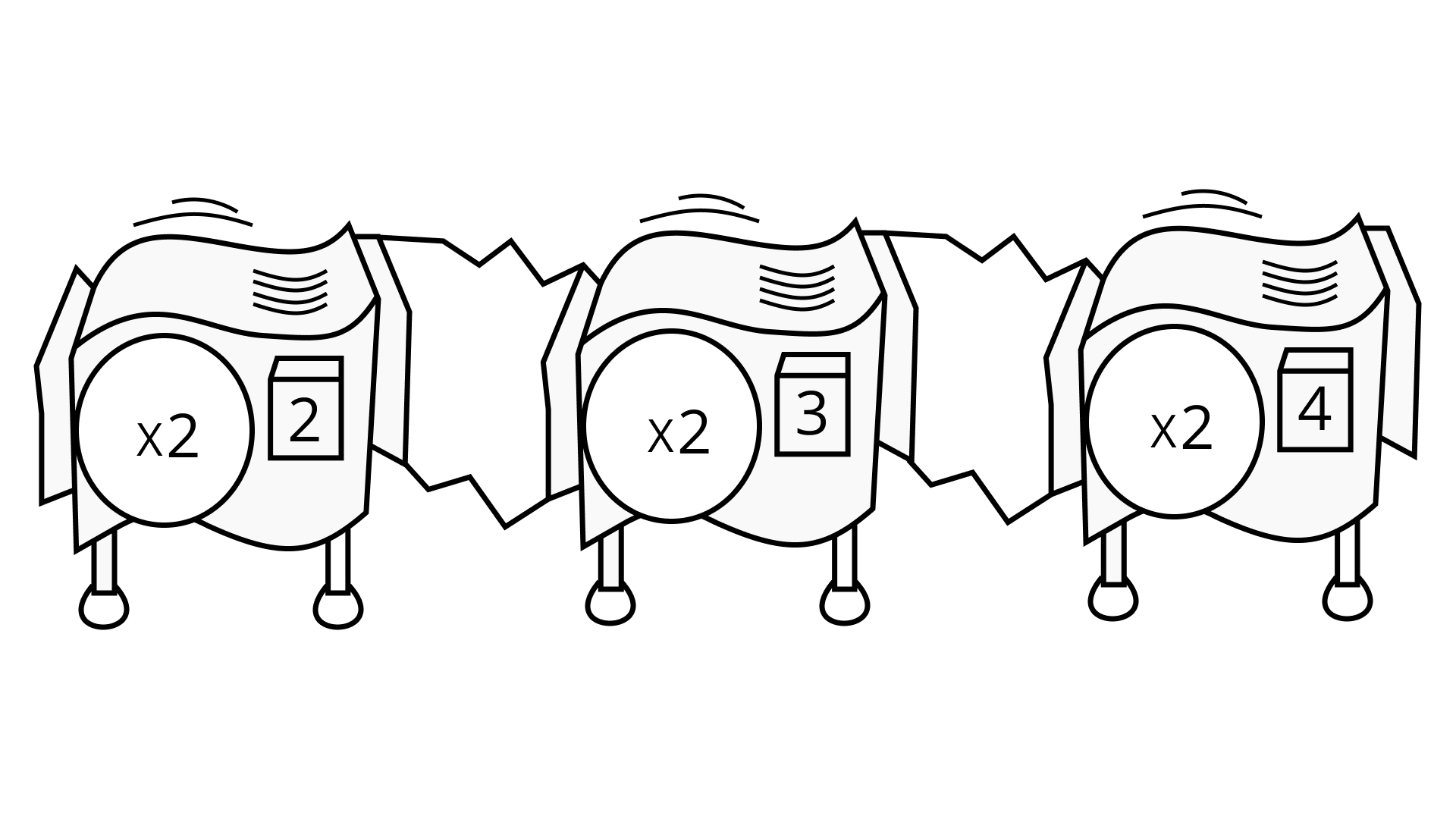
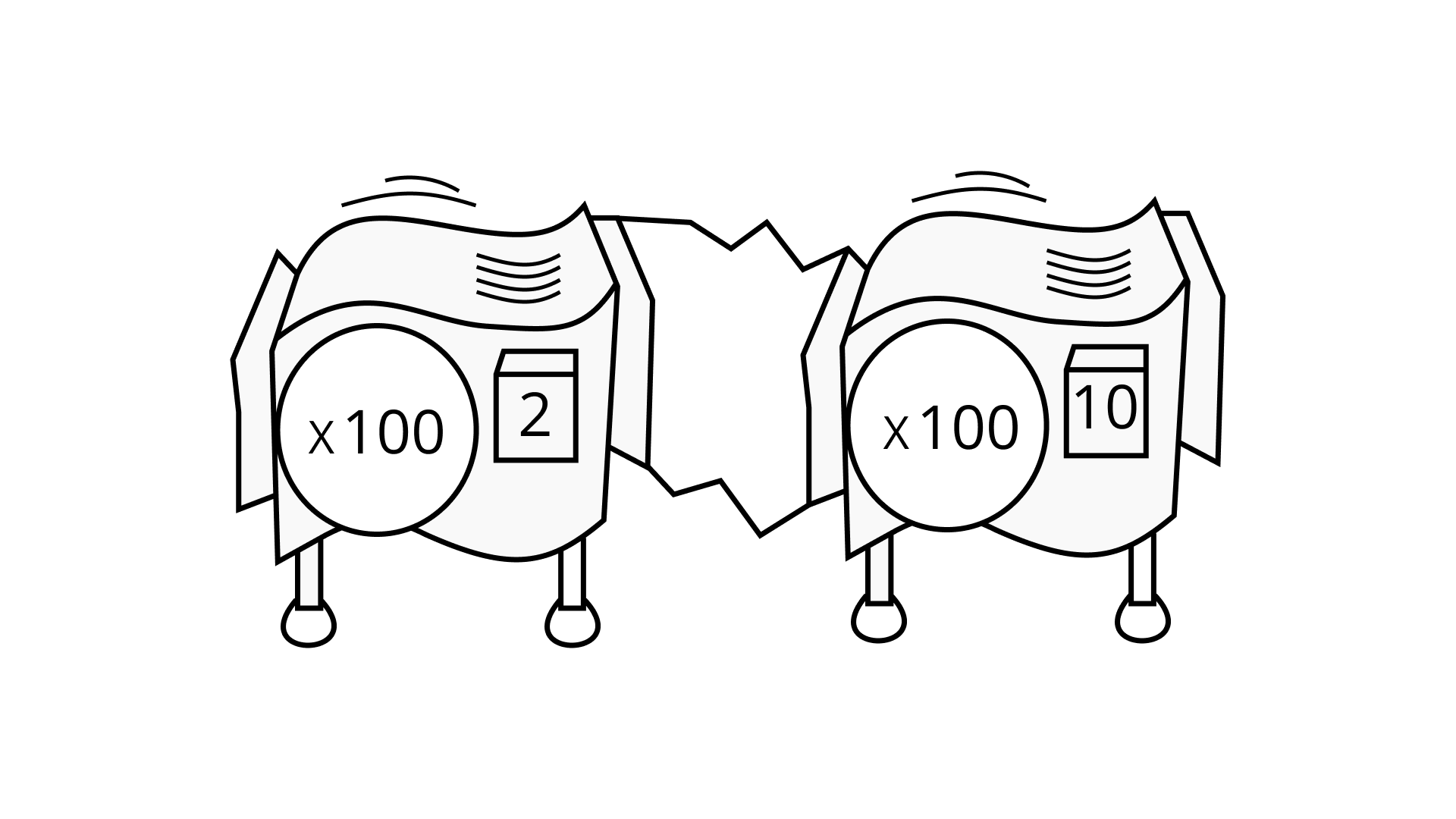
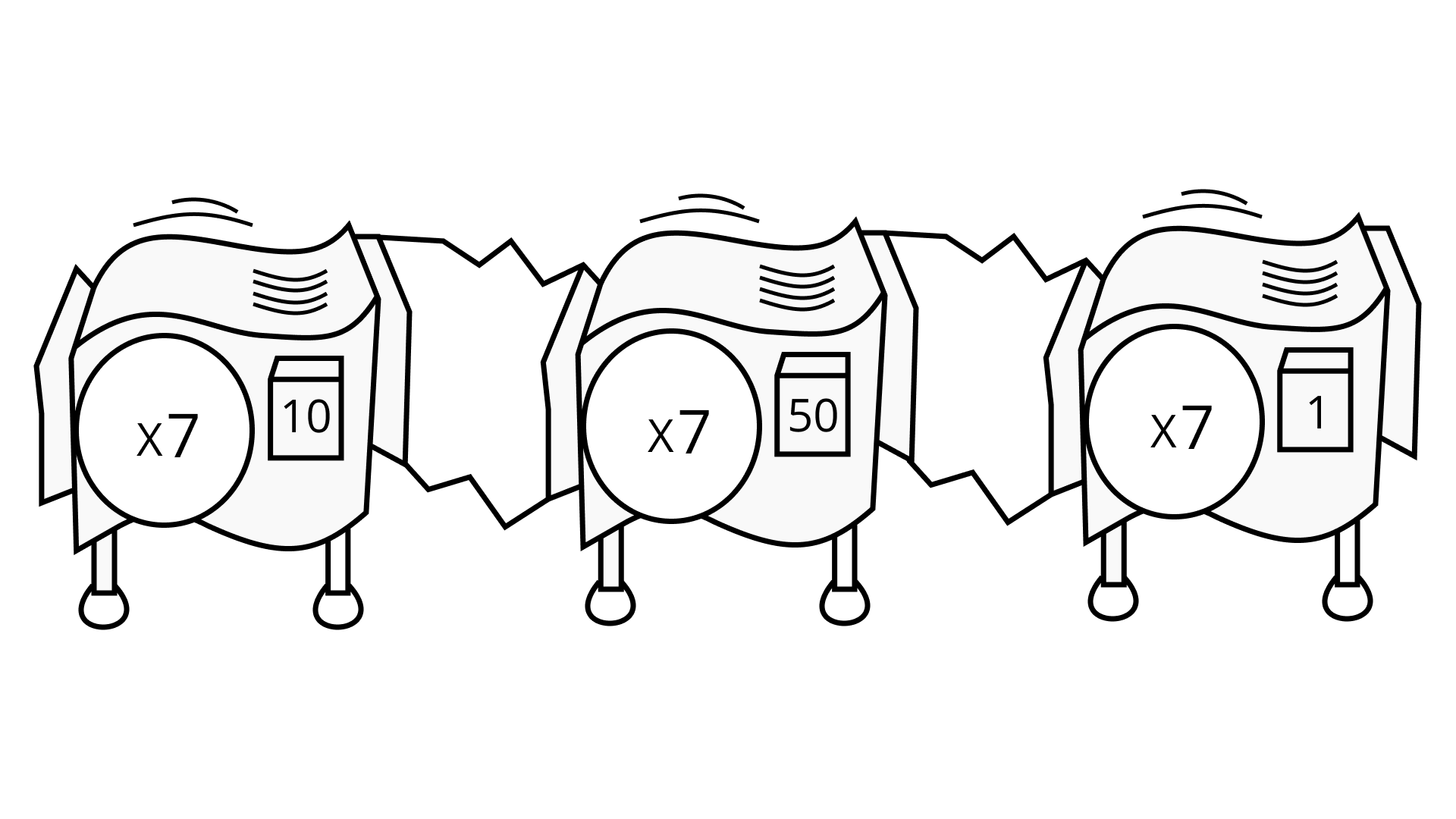
Find a single repeater machine that will do the same work as each hook-up.

(a)


seo images


(b)


seo images


(c)


seo images


(d)


seo images


Show solutionHide solution
Worked solution

Ans: The work that can be performed by the repeater machine is

equal to 22 x 23 x 24 = 29.

Hence, (x 29) single machine can perform the same amount of work. 


Ans: The work that can be performed by the repeater machine is equal to 1002 x 10010.

Hence, (x 10012) single machine can perform the same amount of work.


Ans: The work that can be performed by the repeater machine is equal to 710 x 750 x 71 = 761

Hence, (x761) single machine can perform the same amount of work.


Ans: The work that can be performed by the repeater machine is equal to 3y x 3y = 32y

Hence, (32y) single machine can perform the same amount of work.


(e)
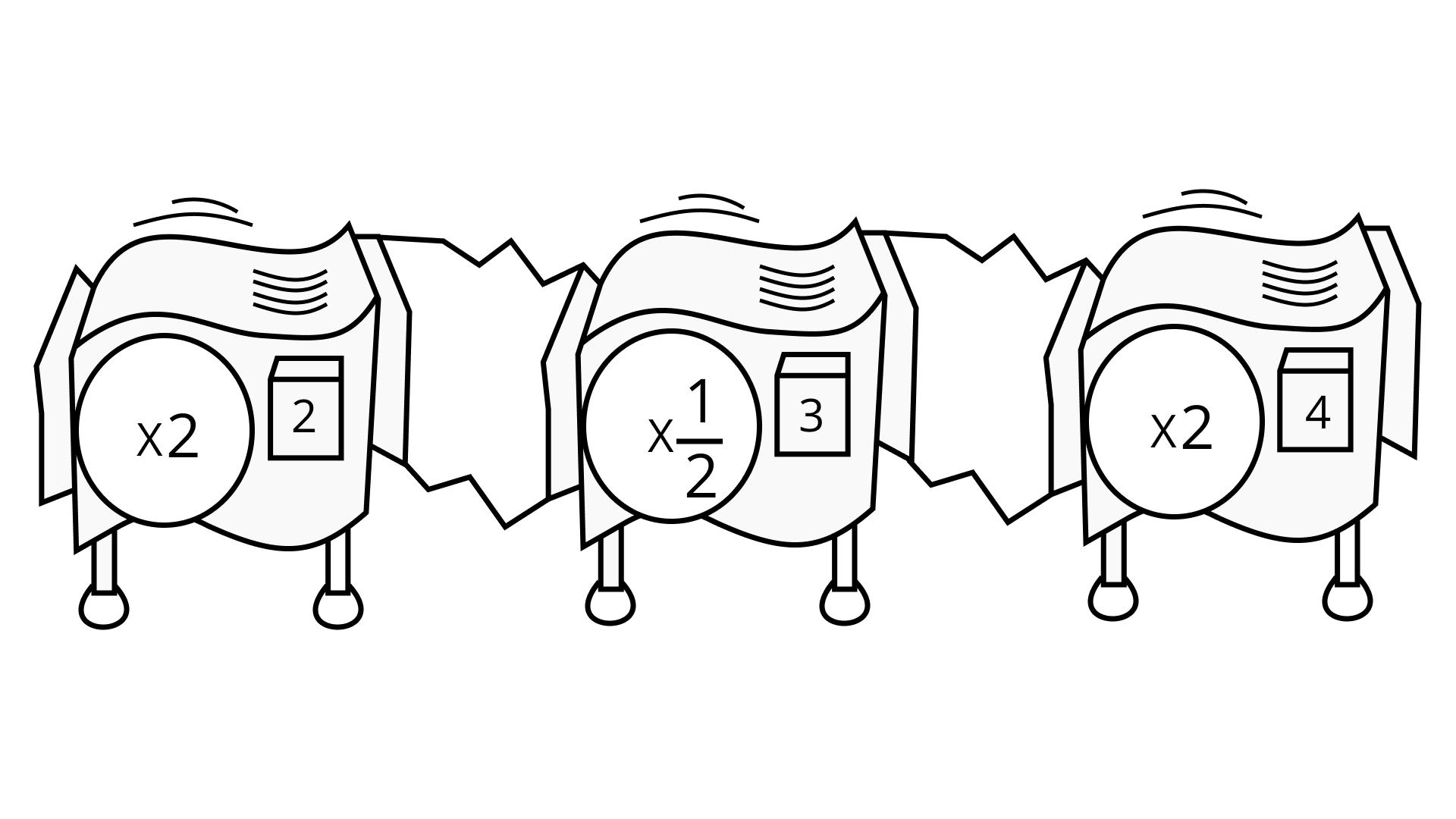

seo images


Ans: The work that can be performed by the repeater machine is equal to ${2^2} \times {\left( {\dfrac{1}{2}} \right)^3} \times {2^4} = {2^6} \times \dfrac{1}{{{2^3}}} = {2^3}$

Hence, (x23) single machines can perform the same amount of work.


(f)
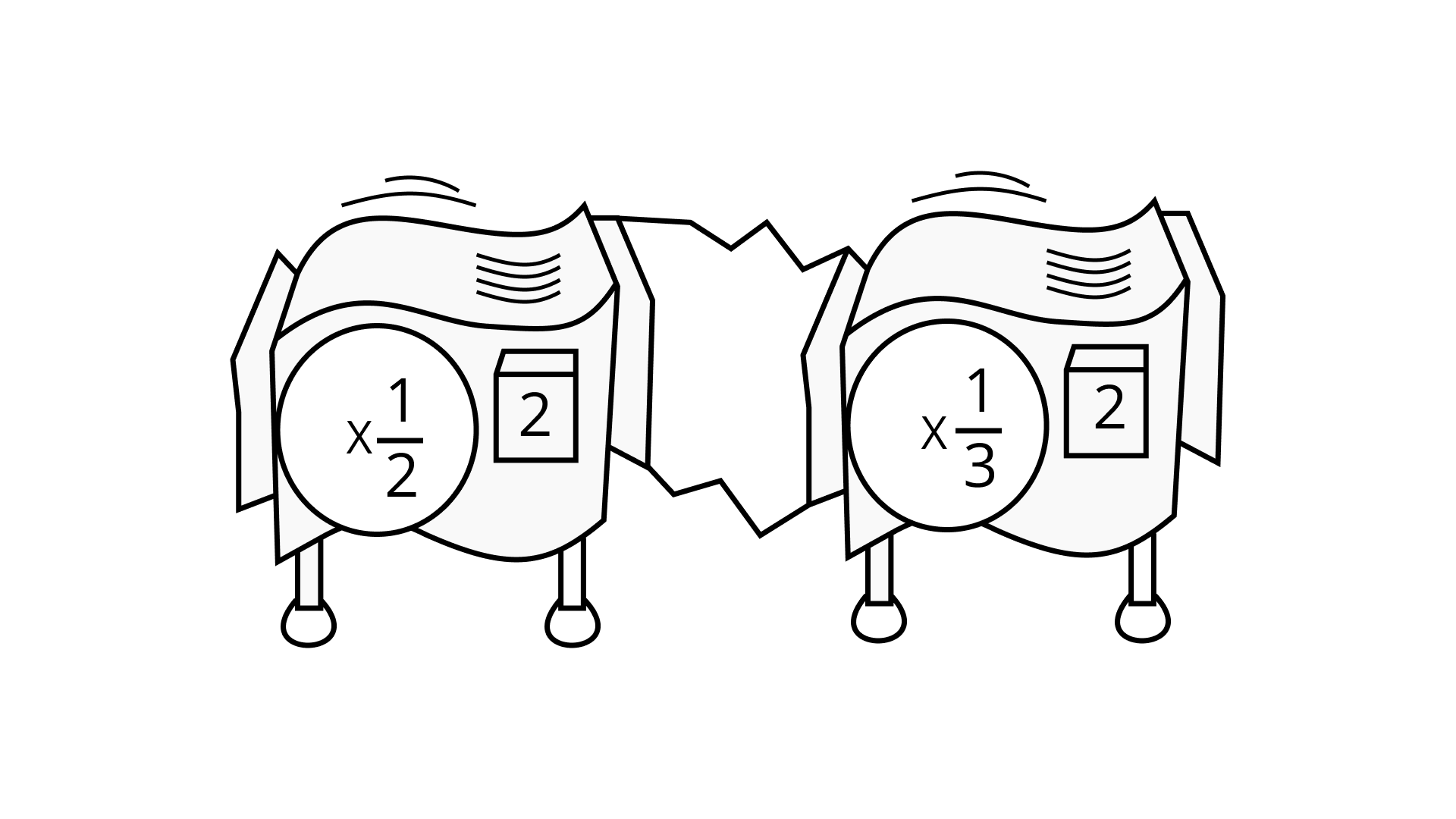

seo images


Ans: The work that can be performed by the repeater machine is equal to ${\left( {\dfrac{1}{2}} \right)^2} \times {\left( {\dfrac{1}{3}} \right)^2} = \dfrac{1}{2} \times \dfrac{1}{2} \times \dfrac{1}{3} \times \dfrac{1}{3} = \dfrac{1}{{2 \times 3 \times 2 \times 3}} = \dfrac{1}{{{6^2}}}$

Hence, $\left[ {{{\left( { \times \dfrac{1}{6}} \right)}^2}} \right]$ single machine can perform the same amount of work.
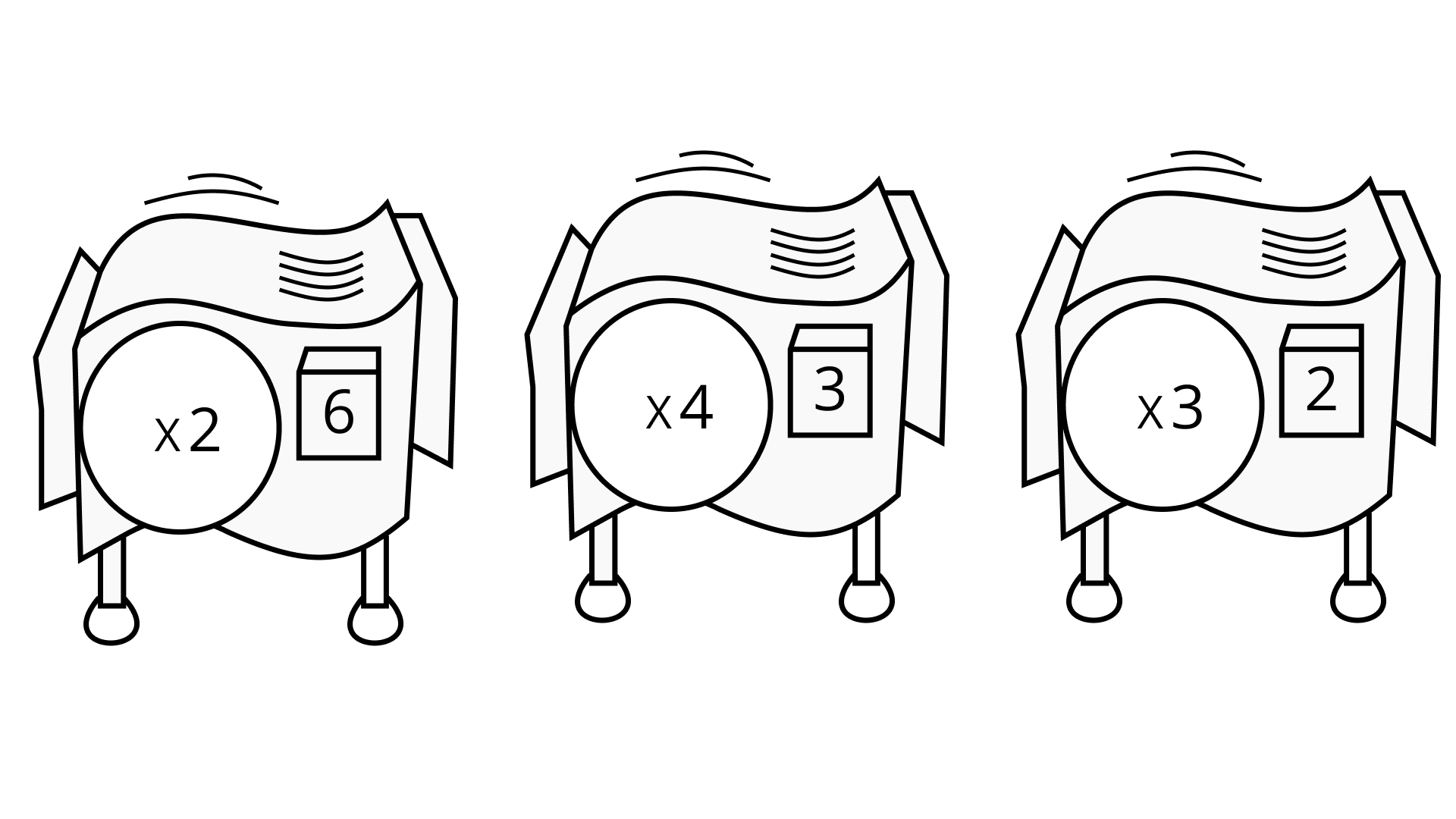
Q160Written answer

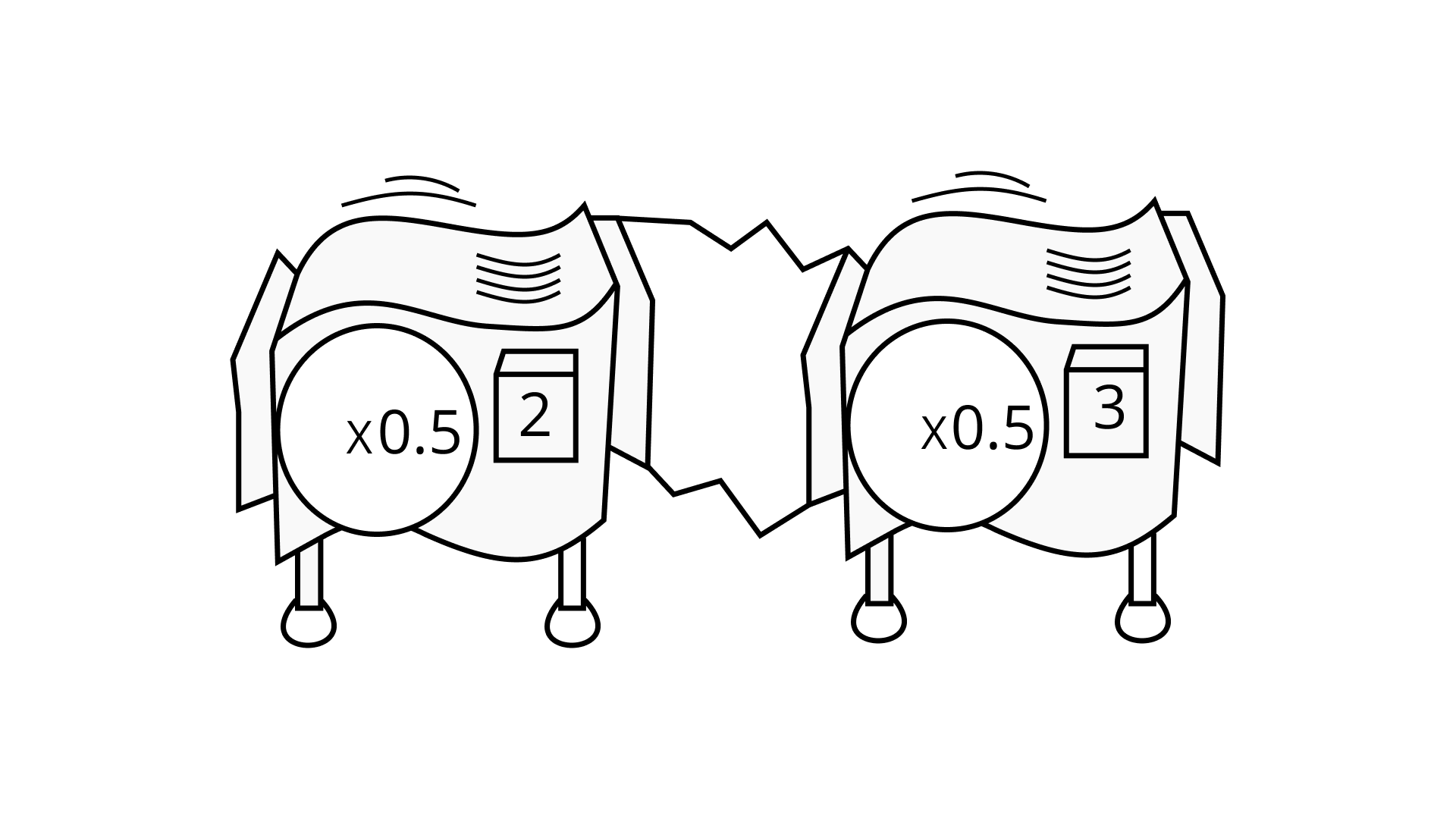
For each hook-up, determine whether there is a single repeater machine that will do the same work. If so, describe or draw it.

(a)


seo images


(b)


seo images


(c)


seo images


(d)


seo images


Show solutionHide solution
Worked solution

Ans: The work that can be performed by the hook-up machine = 73 × 72 = 75

So, (x 75) single machine can perform the same amount of work.
The diagram of a (x 75) single machine can be shown as below:


seo images


Ans: The work that can be performed by the hook-up machine = 23 × 33 = 8 × 9 = 72

Hence, it is not possible that a single machine to perform the same amount of work as (x 82) = 64 and (x 92) = 81.


Ans: The work that can be performed by the hook-up machine = ${2^2} \times {\left( {\dfrac{1}{3}} \right)^3} \times {5^4} = 4 \times \dfrac{1}{{27}} \times 625$ = $\dfrac{{2500}}{{27}} = 92.59$

Hence, it is not possible that a single machine to perform the same amount of work.


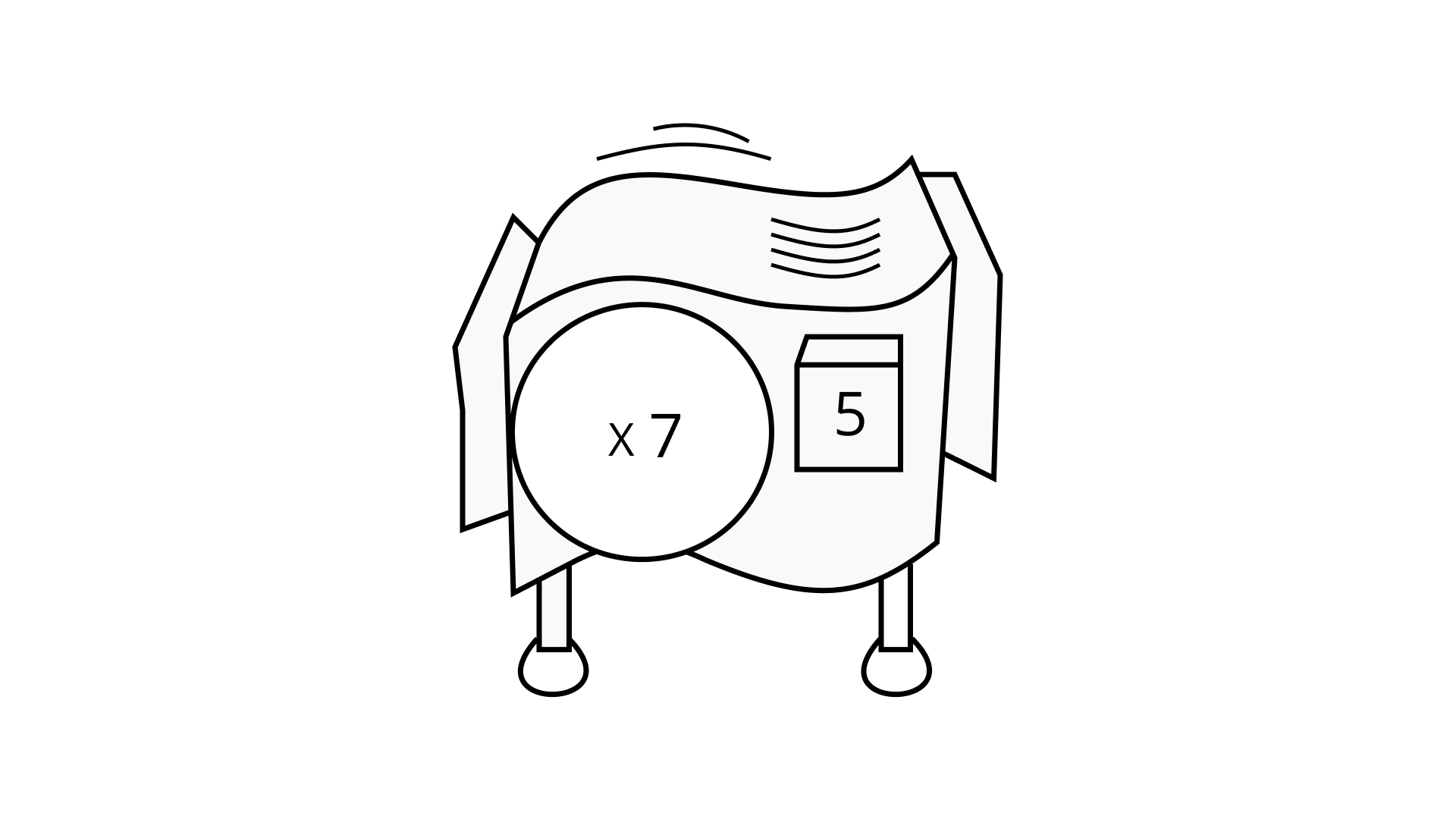
Ans: The work that can be performed by the hook-up machine = (0.5)2 x (0.5)3 = (0.5)5

So, (x (0.5)5) a single machine can perform the same amount of work.
The diagram of a (x 0.5)5 single machine can be shown as below:


seo images


(e)


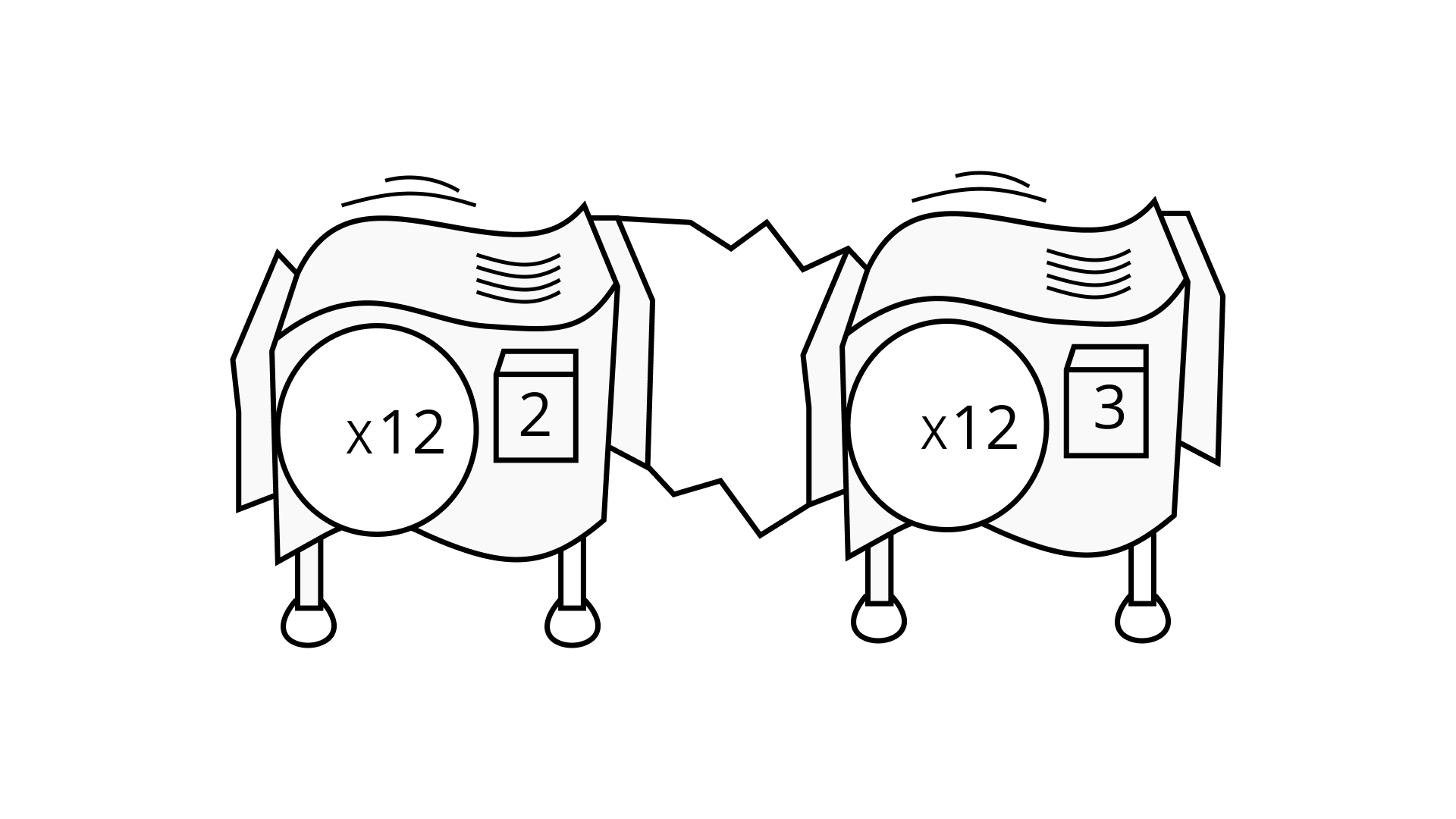
seo images


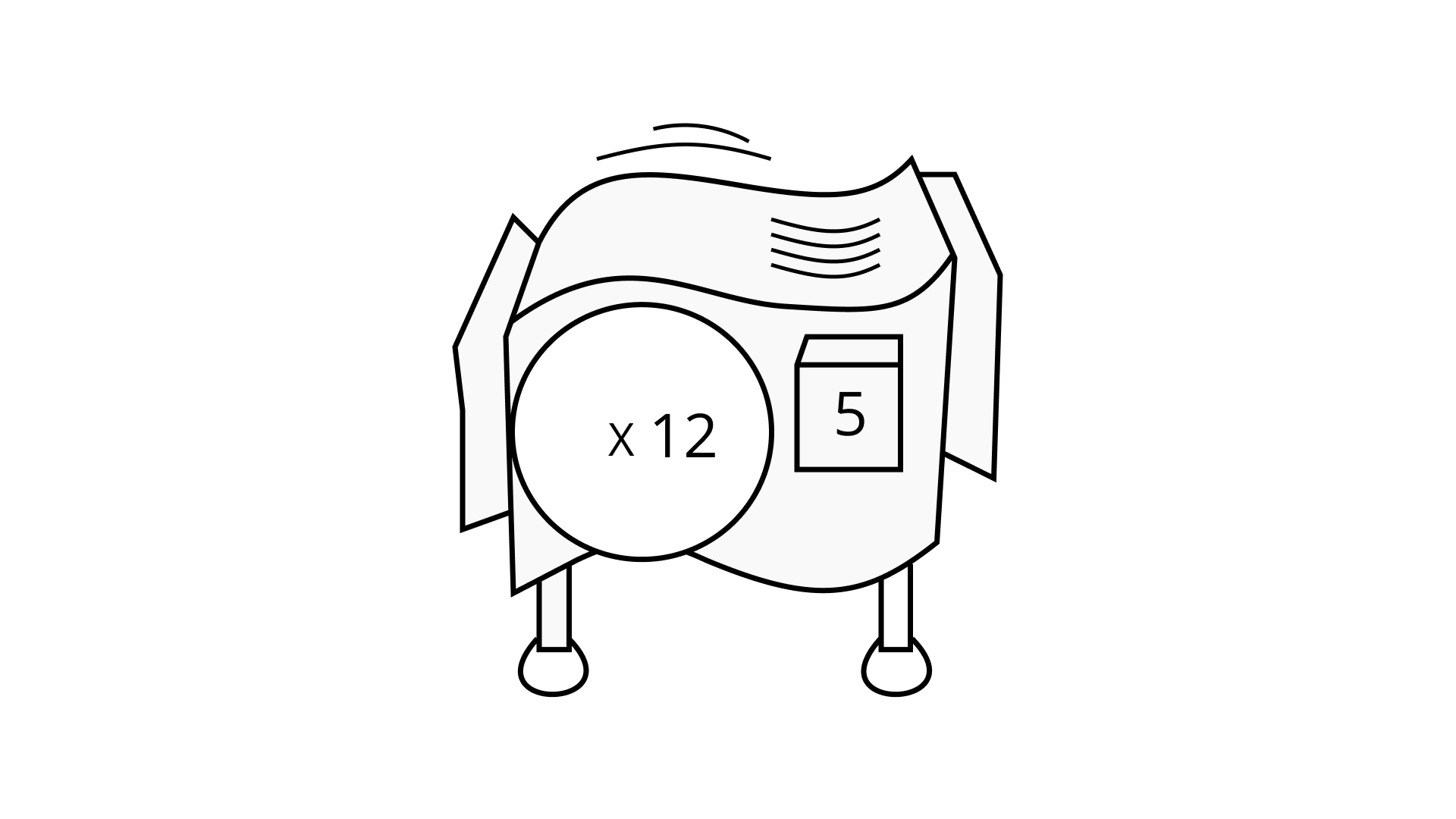
Ans: The work that can be performed by the hook-up machine = 122 x 123 = 125

So, (x 125) single machine can perform the same amount of work.
The diagram of a (x 125) single machine can be shown as below:


seo images