My Cart
Your Cart 0

    Your cart is empty.

  • Total (Amount) ₹0.00
NCERT Exemplar · Class 6 · Science

Chapter 7: Getting to Know Plants

Practice each question, then open the answer or worked solution.

Long Answer Questions

7 questions
Q13Written answer

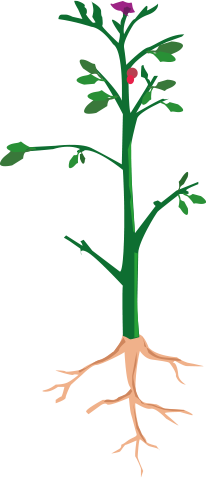
Read the function of parts of a plant given below:

(a) Fixes plants to the soil.

(b) Prepares starch.

(c) Takes part in reproduction.

(d) Supports branches and bears flowers.

In the diagram given in Fig. 7.1, write the names of the parts whose functions you have just read at the appropriate space.


seo images


Show solutionHide solution
Worked solution

Ans: a) Fixes plants to soil – Roots.

b) Prepares starch – Leaf by photosynthesis.

c) Takes part in reproduction – Flower.

d) Supports branches and bears flowers – Stem.


Q14Written answer

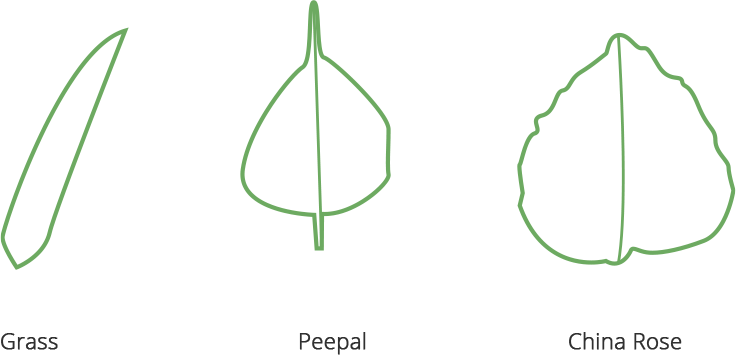
Draw the veins of leaves given in Fig. 7.2 below and write the type of venation.


seo images


Show solutionHide solution
Worked solution

Ans: Grass- Parallel venation.

Peepal and china rose- Reticulate venation


Q15Written answer

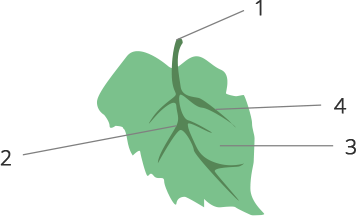
Observe Fig. 7.3 and attempt the questions that follow it.

(a) Label the parts 1, 2, 3 and 4 in the diagram.

(b) What type of venation does the leaf has?

(c) What type of venation is seen in grass leaves?


seo images


Show solutionHide solution
Worked solution

Ans: a) Part 1 is called Petiole.

Part 2 is called mid rib.

Part 3 is called Lamina.

Part 4 is called Veins

b) It is a reticulate venation. The veins spread out to give a net like appearance.

c) Grass has parallel venation.


Q16Written answer

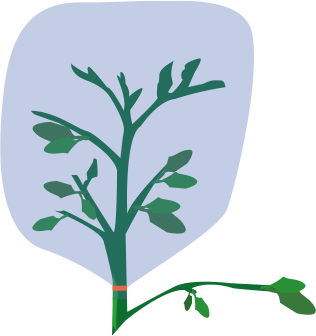
Observe the picture of an activity given as Fig. 7.4 carried out with leaves of plants and polythene bags.


seo images


(a) Which process is demonstrated in the activity?

(b) When will this activity show better results – on a bright sunny day or a cloudy day?

(c) What will you observe in the polythene bag after a few hours of setting up the activity?

(d) Mention any one precaution you must take while performing this activity.

Show solutionHide solution
Worked solution

Ans: Transpiration

Ans: The rate of transpiration depends on sunlight. The more sunlight, the more is transpiration. So it will show better results on a sunny day.

Ans: The polythene bag will have a few drops of water from inside.

Ans: i) The set up should be airtight

ii) The bag should be dry.

iii) The leaves or the twig should be fresh.


Q17Written answer

Identify the wrong statements and correct them.

(a) Anther is a part of the pistil.

(b) The visible parts of a bud are the petals.

(c) Lateral roots are present in a taproot.

(d) Leaves perform the function of transpiration only.

Show solutionHide solution
Worked solution

Ans: The given statement is wrong. The anther is not the part of the pistil but the stamen.

Ans: The given statement is wrong. Petals are the flowers of flowers. The visible parts of bud are sepals.

Ans: The given statement is correct.

Ans: The given statement is wrong. Leaves not only perform the function of transpiration but also perform the functions of photosynthesis, gaseous exchange through tiny pores in them known as stomata.


Q18Written answer

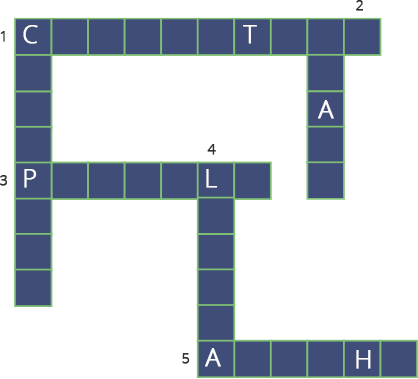
Solve the crossword given in Fig. 7.5 as per the clues given below it:


seo images


Across

1. The term that describes upward movement of water in a stem.

3. The part of the leaf which is attached to the stem.

5. This part is attached to the tip of the filament.

Down

1. Plants that are weak and spread on the ground.

2. Ovules are present in this part of the flower.

4. Is the broad part of the leaf.

Show solutionHide solution
Worked solution

Ans:  Across

1. Conduction.

3. Petiole

5. Anther

Down-

1. Creepers

2. Ovary

4. Lamina


Q19Written answer

Fill in the blanks with the terms that are listed below:

anther, male, ovary, ovule, petals, pistil, stamen, and filament.

Sepals, ______(a)______, stamens and ______(b)______ are the parts of a flower. Stamen is made up of ______(c)______ and ______(d)______ and it represents the ______(e)______ part of the flower. The female part of the flower is called the ______(f)______. The basal, swollen part of the pistil is

called the ______(g)______ which contains the ______(h)______.

Show solutionHide solution
Worked solution

Ans: (a) Petals.

(b) Pistil.

(c) Anther.

(d) Filament.

(e) Male.

(f) Pistil.

(g)Ovary.

(h)Ovules.


About Class 6 Science NCERT Exemplar Solutions Chapter 7

Crucial Features Of Using NCERT Exemplar Class 6 Science Solutions Chapter 7 Getting to Know Plants 

  • Solutions are available for all exemplar textbook questions so students can take references anytime without any hassle. 

  • Exemplar Act as the most efficient study source to prepare for exams on which students can rely without any doubts. 

  • Exemplar problems and solutions give students additional abilities to learn new concepts and solve questions based on that. 

  • The solutions mentioned in our NCERT Exemplar Class 6 Science Solutions Chapter 7 Getting to Know Plants are prepared by the best experts of Vedantu that provide a step-by-step solution as per the CBSE guidelines. 

  • With this solution guide, learning becomes simple and interesting at the same time for the students as well as parents. 


Crucial Topics Mentioned In Chapter 7 NCERT Exemplar Solutions 
  • Herbs, Shrubs & Trees 

  • Root & Its Functions 

  • Leaf & Types of Venation in Leaves 

  • Flower & Functions of different parts of a flower 

  • Stem & Its functions 

  • Diagrams of Leaf, flower, and Parts of a plant 


Learning Outcomes of Chapter 7 Getting To Know Plants 

After completing this chapter from Class 6th NCERT science book, students will be able to classify plants into three categories that are herbs, shrubs, and trees. In addition to that students will also learn about other types of plants like climbers, creepers, algae, mosses, and more. Children have usually seen different varieties of plants in their garden, after learning this chapter they will easily identify and classify them into different categories. 


Besides, this chapter also educates children about different life processes that happen in the life of plants and their parts. From the way they obtain food to the process of how they breathe and produce new fruits, this chapter gives an in-depth understanding of all these concepts.