A charged particle would continue to move with a constant velocity in a region wherein,
a) E = 0, B ≠ 0
b) E ≠ 0, B ≠ 0
c) E ≠ 0, B = 0
d) E = 0, B = 0
Show solutionHide solution
a) E = 0, B ≠ 0
b) E ≠ 0, B ≠ 0
d) E = 0, B = 0
Very Short AnswersYour cart is empty.
Practice each question, then open the answer or worked solution.
A charged particle would continue to move with a constant velocity in a region wherein,
a) E = 0, B ≠ 0
b) E ≠ 0, B ≠ 0
c) E ≠ 0, B = 0
d) E = 0, B = 0
a) E = 0, B ≠ 0
b) E ≠ 0, B ≠ 0
d) E = 0, B = 0
Very Short AnswersVerify that the cyclotron frequency ꞷ = eB/m has the correct dimensions of [T]-1.
The path traced by the particle in a cyclotron is a circular path in which magnetic force acts as a centripetal force
mv2/R = evB
eB/m = v/R = ꞷ
B = F/ev = [MLT-2]/[AT][LT-1] = [MA-1T-2] [ꞷ] = [eB/m] = [v/R] = [T]-1
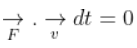
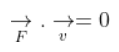
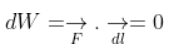
Show that a force that does not work must be a velocity-dependent force.


The magnetic force depends on v, which depends on the inertial frame of reference. Does then the magnetic force differ from inertial frame to frame? Is it reasonable that the net acceleration has a different value in different frames of reference?
The net acceleration can have a different value in different frames of reference as velocity depends on the frame of reference.
Describe the motion of a charged particle in a cyclotron if the frequency of the radio frequency (rf) field were doubled.
When the frequency of the radio frequency field is doubled, the time period of the radio frequency is halved, which results in the half revolution of the charges.
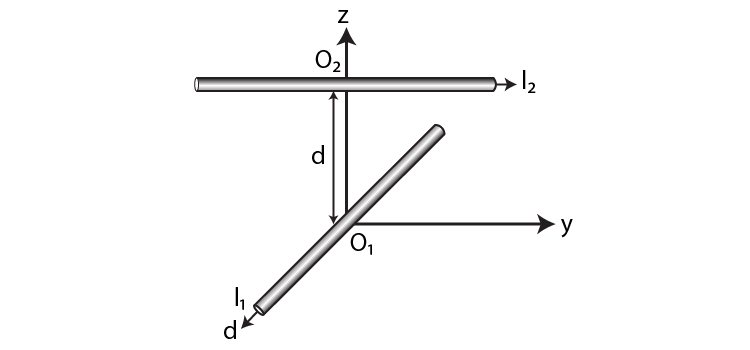
Two long wires carrying current I1 and I2 are arranged as shown in the figure. The one carrying I1 is along in the x-axis. The other carrying current, I2, is along a line parallel to the y-axis given by x = 0 and z = d. Find the force exerted at O2 because of the wire along the x-axis.

The magnetic field B on a current-carrying conductor is given as F = I(L×B) = ILB sinθ
O2 and I1 are parallel to the y-axis and are in the direction of –Y
I2 is parallel to the y-axis and is along Y-axis therefore, the angle between I2 and B1 is zero. The magnetic force F2 is given as F2 = B1I2L1 sin 0o = 0
Therefore, the force on O2 has current I1 zero.
Short AnswersA current-carrying loop consists of 3 identical quarter circles of radius R, lying in the positive quadrants of the x-y, y-z, and z-x planes with their centres at the origin joined together. Find the direction and magnitude of B at the origin.
The vector sum of the magnetic field at the origin due to the quarter is given as

A charged particle of charge e and mass m is moving in an electric field E, and magnetic field B. Construct dimensionless quantities and quantities of dimension [T]-1.
mv2/R = evB
eB/m = v/R = ꞷ
B = F/ev = [MA-1T-2] [ꞷ] = [eB/m]=[v/R] = [T-1]
An electron enters with a velocity v = v0i into a cubical region in which there are uniform electric and magnetic fields. The orbit of the electron is found to spiral down inside the cube in the plane parallel to the x-y plane. Suggest a configuration of fields E and B that can lead to it.
The configuration of fields E and B are the spiral path.
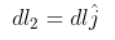
Do magnetic forces obey Newton’s third law? Verify for two current elements
located at the origin and
located at (0,R,0). Both carry current I.
The magnetic forces do not obey Newton’s third law if there is no current flowing in the conductor, which is placed parallel to each other.