My Cart
Your Cart 0

    Your cart is empty.

  • Total (Amount) ₹0.00
NCERT Exemplar · Class 12 · Physics

Chapter 12: Atoms

Practice each question, then open the answer or worked solution.

Questions

29 questions
Q12.11Written answer

The Balmer series for the H-atom can be observed

(a) if we measure the frequencies of light emitted when an excited atom falls to the ground state

(b) if we measure the frequencies of light emitted due to transitions between excited states and the first excited state

(c) in any transition in a H-atom

(d) as a sequence of frequencies with the higher frequencies getting closely packed

Show solutionHide solution
Worked solution

(b) if we measure the frequencies of light emitted due to transitions between excited states and the first excited state

(d) as a sequence of frequencies with the higher frequencies getting closely packed
Q12.12Written answer

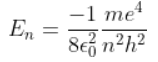
Let
Exemplar Solutions Class 12 Physics Chapter 12 - 3 be the energy of the nth level of H-atom. If all the H-atoms are in the ground state and radiation of frequency (E2-E1)/h falls on it

(a) it will not be absorbed at all

(b) some of the atoms will move to the first excited state

(c) all atoms will be excited to the n = 2 state

(d) no atoms will make a transition to the n = 3 state

Show solutionHide solution
Worked solution

(b) some of the atoms will move to the first excited state

(d) no atoms will make a transition to the n = 3 state

Q12.13Written answer

The simple Bohr model is not applicable to He4 atom because

(a) He4 is an inert gas

(b) He4 has neutrons in the nucleus

(c) He4 has one more electron

(d) electrons are not subject to central forces

Show solutionHide solution
Worked solution

(c) He4 has one more electron

(d) electrons are not subject to central forces

Very Short Answers
Q12.14Written answer

The mass of an H-atom is less than the sum of the masses of a proton and electron. Why is this?

Show solutionHide solution
Worked solution

We know that,

E = ∆mc2

The mass of the hydrogen atom is

mp + mp – BE/c2

Where BE = 13.6 eV.

Q12.15Written answer

Imagine removing one electron from He4 and He3. Their energy levels, as worked out on the basis of Bohr model will be very close. Explain why.

Show solutionHide solution
Worked solution

The energies of He4 and He3 will be very close according to the Bohr model because both have 1 electron as in case of the hydrogen atom and the nucleus is 4 times heavier than the H-atoms. Therefore, the stability of these atoms remains close to the H atom and so is their energy levels.

Q12.16Written answer

When an electron falls from a higher energy to a lower energy level, the difference in the energies appears in the form of electromagnetic radiation. Why cannot it be emitted as other forms of energy?

Show solutionHide solution
Worked solution

When an electron falls from a higher energy to a lower energy level, the difference in the energies appears in the form of electromagnetic radiation because there is an acceleration of the charged particle.

Q12.17Written answer

Would the Bohr formula for the H-atom remain unchanged if proton had a charge (+4/3)e and electron a charge (−3/4)e, where e = 1.6 × 10⁻¹⁹C? Give reasons for your answer.

Show solutionHide solution
Worked solution

As there is no change in the position of the proton and electron the product of both the charges will remain the same.

Q12.18Written answer

Consider two different hydrogen atoms. The electron in each atom is in an excited state. Is it possible for the electrons to have different energies but the same orbital angular momentum according to the Bohr model?

Show solutionHide solution
Worked solution

As the value of n in two different hydrogen atoms are different, their angular momentum will be different.

According to Bohr’s model, the angular momentum is given as

L = nh/2π

Short Answers
Q12.19Written answer

Positronium is just like an H-atom with the proton replaced by the positively charged anti-particle of the electron (called the positron which is as massive as the electron). What would be the ground state energy of positronium?

Show solutionHide solution
Worked solution

The lowest energy of the positronium is -6.8 electron volts

The highest energy level of the positronium which is the next to n = 1 that is n = 2 is -1.7 electron volt.

Q12.20Written answer

Assume that there is no repulsive force between the electrons in an atom but the force between positive and negative charges is given by Coulomb’s law as usual. Under such circumstances, calculate the ground state energy of a He-atom.

Show solutionHide solution
Worked solution

For He nucleus, Z = 2 and in-ground state n = 1

Therefore, En = -13.6 Z2/n2 eV = -54.4 eV