Q15Written answer
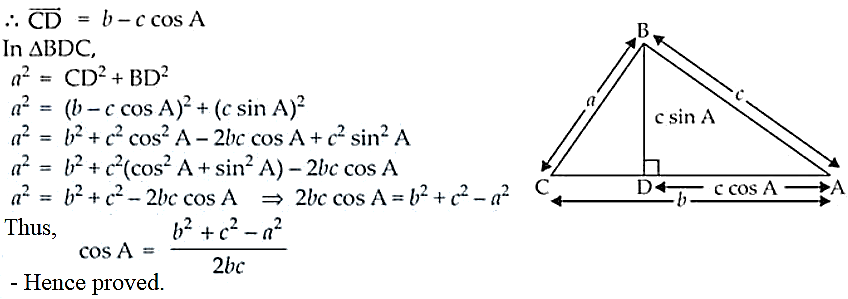
Prove that in any triangle ABC, , where a, b, c are the
magnitudes of the sides opposite to the vertices A, B, C, respectively.
Show solutionHide solution
Worked solution
In triangle ABC, the components of c are c cos A and c sin A.
 If
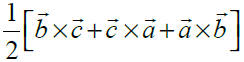
If  determine the vertices of a triangle, show that gives the
  are collinear. Also find the unit vector normal to the plane of the triangle.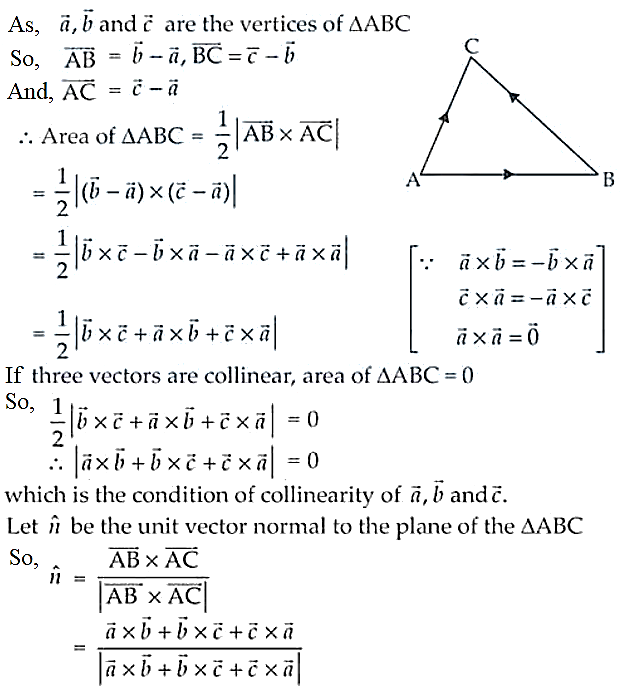
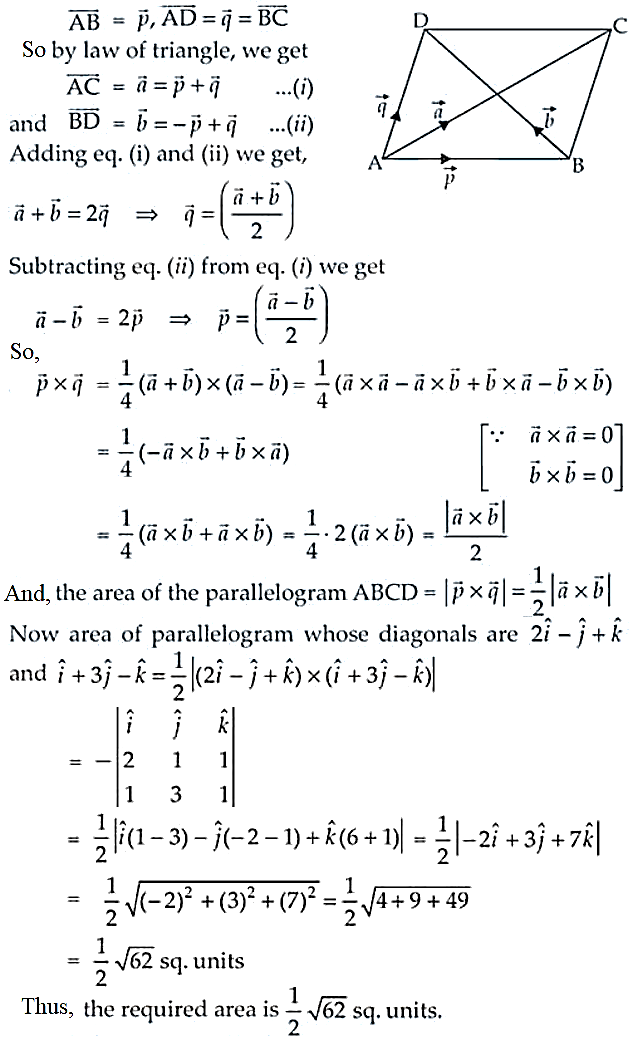
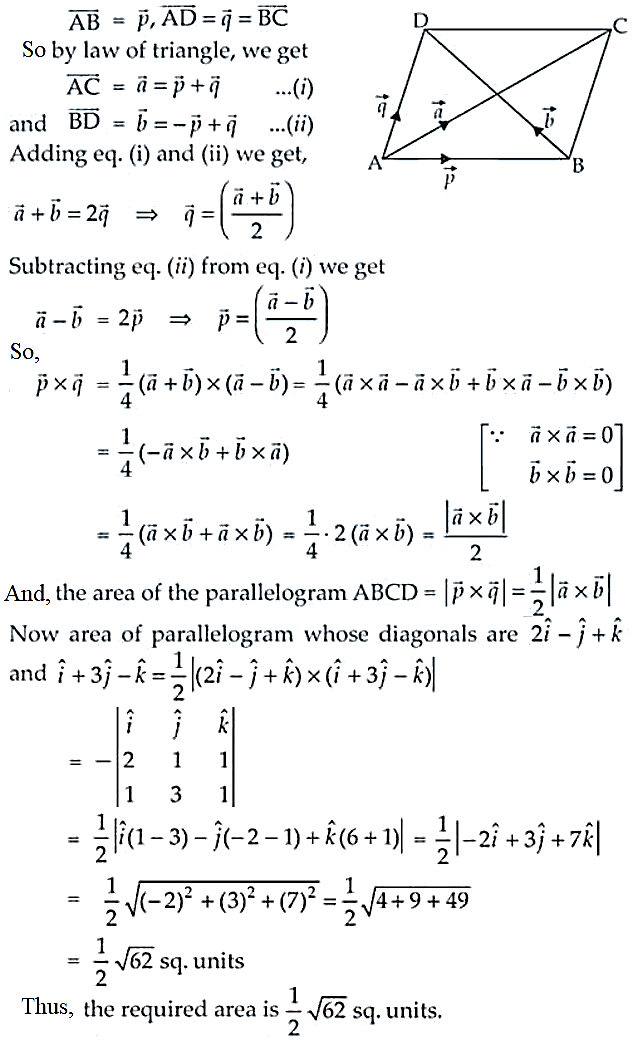
 Show that area of the parallelogram whose diagonals are given by
  and
and  is . Also find the area of the parallelogram whose diagonals are
  and
and  .
.
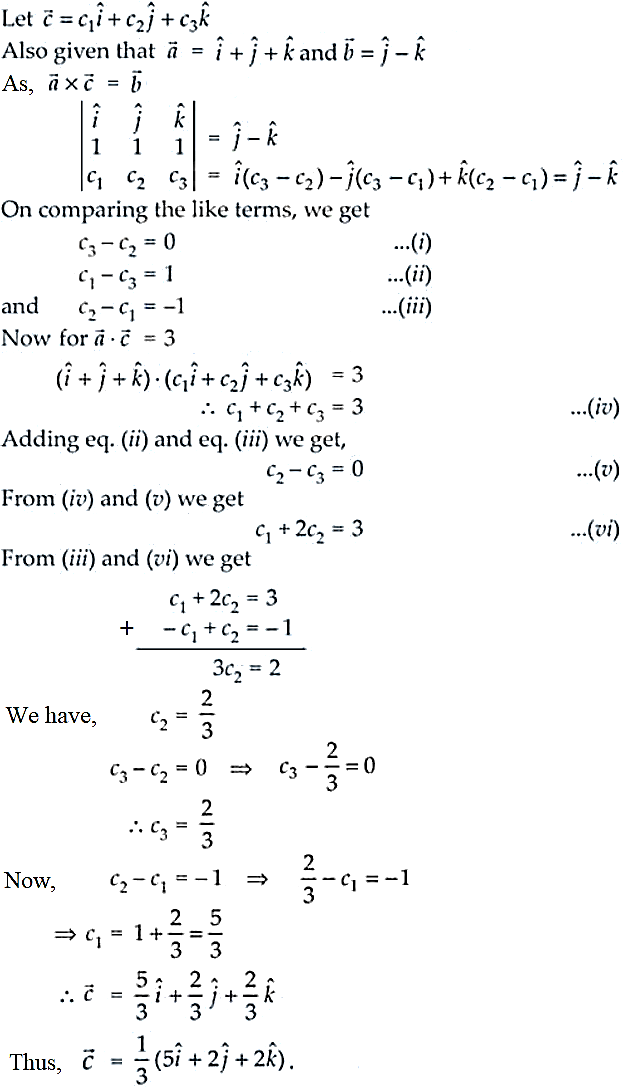
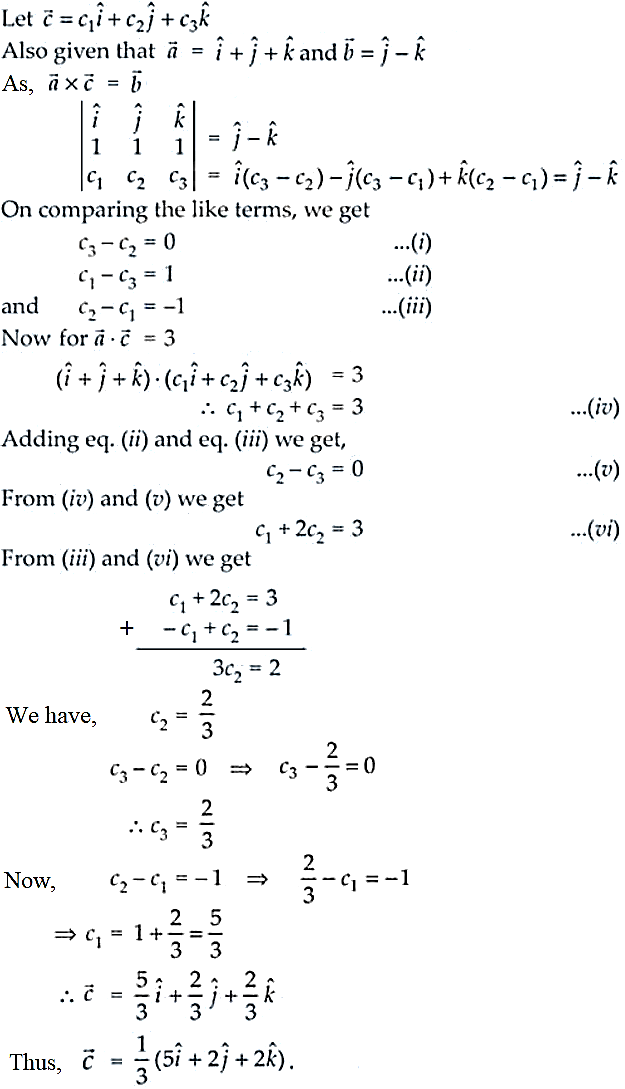
 find a vector
  such that
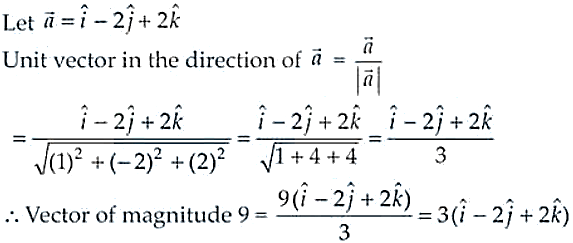
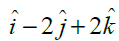 that has magnitude 9 is
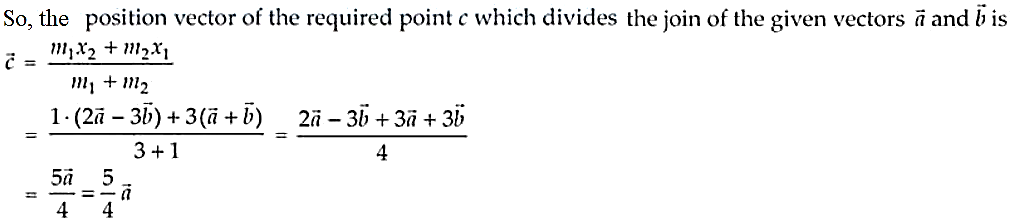
 in the ratio 3 : 1 is

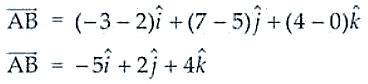
 and
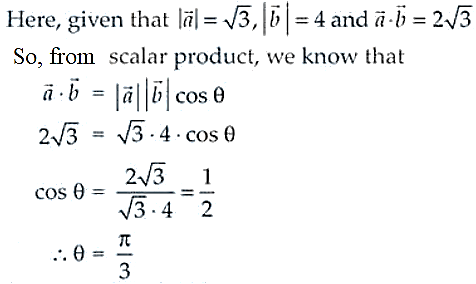
and  with magnitudes √3 and 4, respectively, and
 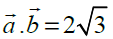 is
is