My Cart
Your Cart 0

    Your cart is empty.

  • Total (Amount) ₹0.00
NCERT Exemplar · Class 12 · Biology

Chapter 3: Human Reproduction

Practice each question, then open the answer or worked solution.

Very Short Answer Questions

15 questions
Q1Written answer

Given below are the events in human reproduction. Write them in correct sequential order.

Insemination, gametogenesis, fertilization, parturition, gestation and implantation.

Show solutionHide solution
Worked solution

Ans: The correct sequential order for the events occurring in human reproduction is:-

Gametogenesis - Insemination - Fertilization - Implantation - Gestation - Parturition.

Q2Written answer

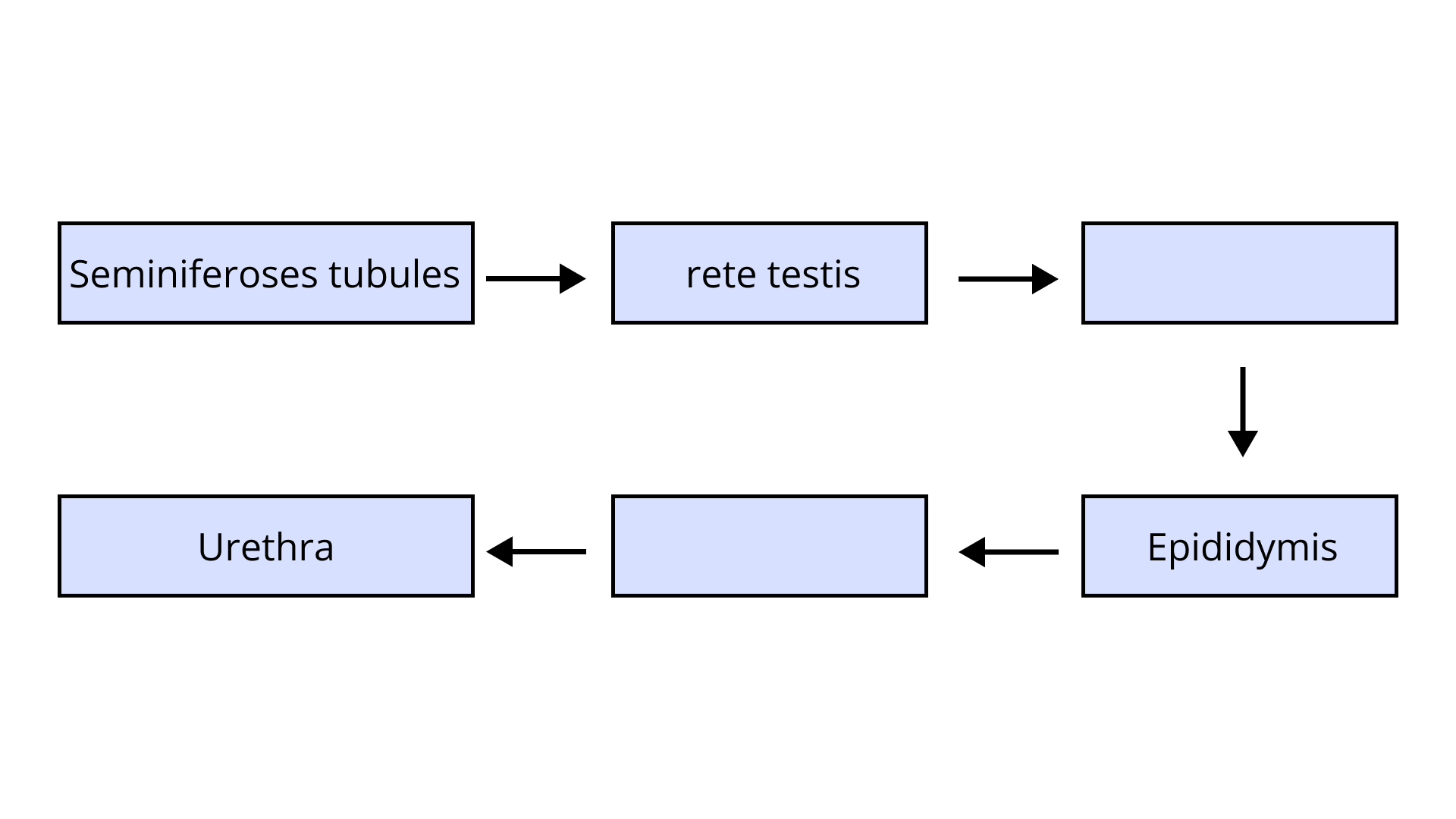
The path of sperm transport is given below. Provide the missing steps in blank boxes

seo images


Show solutionHide solution
Worked solution

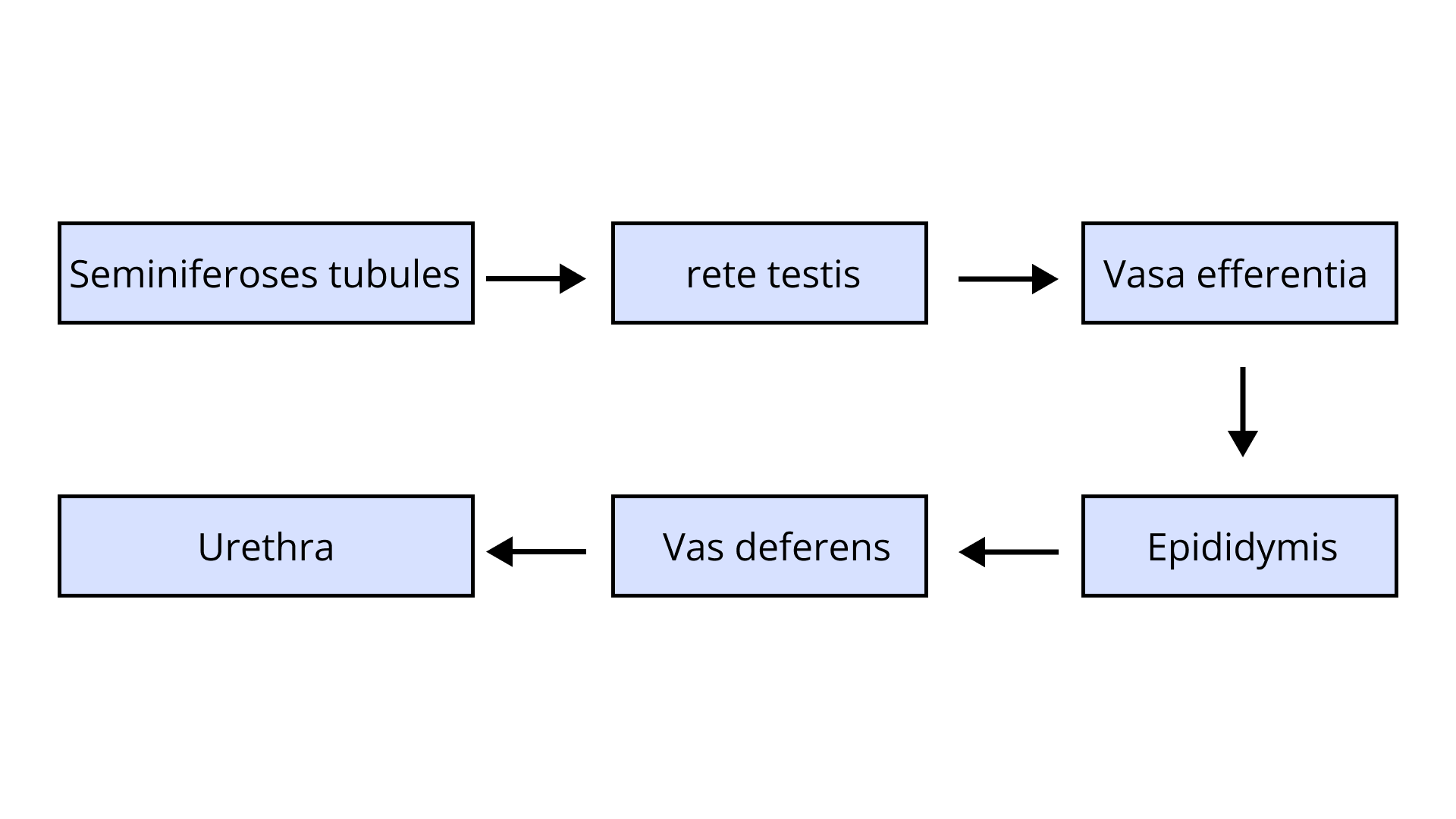
Ans: The path of transport of spermatozoa is respectively from seminiferous tubules to rete testis leading to vasa efferentia which takes the sperms to epididymis and then Vas deferens and, finally, urethra from where these reach outside.

seo images


Q3Written answer

What is the role of the cervix in the human female reproductive system?

Show solutionHide solution
Worked solution

Ans: Cervix, a part of the birth canal in the female reproductive structure is the part present at the ends of the uterus and beginning of vagina i.e., it acts as a connection between the two. It is the lowest part of the uterus and covers the end of it with strong muscles that keep the opening closed generally. The major role of the cervix is to act as a pathway for passage of menstrual blood in a menstruating female. Its other important function can be the making of the birth canal during parturition. The cervix gets dilated during delivery of the newborn and helps deliver the newborn by creating a passage from the uterus to vagina.


Q4Written answer

Why are menstrual cycles absent during pregnancy?

Show solutionHide solution
Worked solution

Ans: The high levels of various pregnancy hormones, especially progesterone, suppress the release of gonadotropins from anterior pituitary by the negative feedback mechanism. The absence of gonadotropins leads to absence of development or maturation of follicles in the ovary therefore, no ovulation occurs and hence no new menstrual cycle is seen as long as pregnancy continues.


Q5Written answer

Female reproductive organs and associated functions are given below in column A and B. Fill the blank boxes.

Column A

Column A

Ovaries

Ovulation

Oviduct

……a…..

….b….

Pregnancy

Vagina

Birth


Show solutionHide solution
Worked solution

Ans: Female reproductive organs and associated functions are -

    Column A

      Column A

Ovaries

Ovulation

Oviduct

Fertilization

Uterus

Pregnancy

Vagina

Birth


Q6Written answer

From where the parturition signals arise-mother or foetus? Mention the main hormone involved in parturition.

Show solutionHide solution
Worked solution

Ans: Parturition refers to the delivery of a newborn or fully developed fetus after the pregnancy has been completed. The first signals of parturition arise from the fully-developed embryo itself. It is called fetal-ejection reflex and causes the first initial contraction of the uterus which triggers the mother’s body’s mechanism for parturition. After this initial reflex, a massive release of oxytocin occurs which causes uterine contractions which acts as positive feedback for more release of oxytocin and a positive feedback loop is thus set till the newborn is delivered.


Q7Written answer

What is the significance of epididymis in male fertility?

Show solutionHide solution
Worked solution

Ans: The epididymis is a structure for carrying the spermatozoa from vasa efferentia to the vas deferens. The important role of this structure is the maturity sperms achieve while traveling through the epididymis including maturity, increased motility and fertilizing capacity. In the initial part, it helps in movement of sperms till the time they become capable of moving by segmental and peristaltic contractions at various intervals which push the spermatozoa away from the testes and towards the vas deferens.


Q8Written answer

Give the names and functions of the hormones involved in the process of spermatogenesis. Write the names of the endocrine glands from where they are released.

Show solutionHide solution
Worked solution

Ans:  GnRH is Gonadotropin releasing hormone, secreted by the hypothalamus, which causes release of gonadotropins LH (Luteinizing hormone) and FSH (Follicle stimulating hormone) from the anterior pituitary gland. 

LH acts on Leydig cells and leads to activation of synthesis of androgens in testes which further lead to initiation of spermatogenesis.

FSH, on the other hand, acts on nurse cells or Sertoli cells to stimulate secretion of some factors involved in the process of spermatogenesis.


Q9Written answer

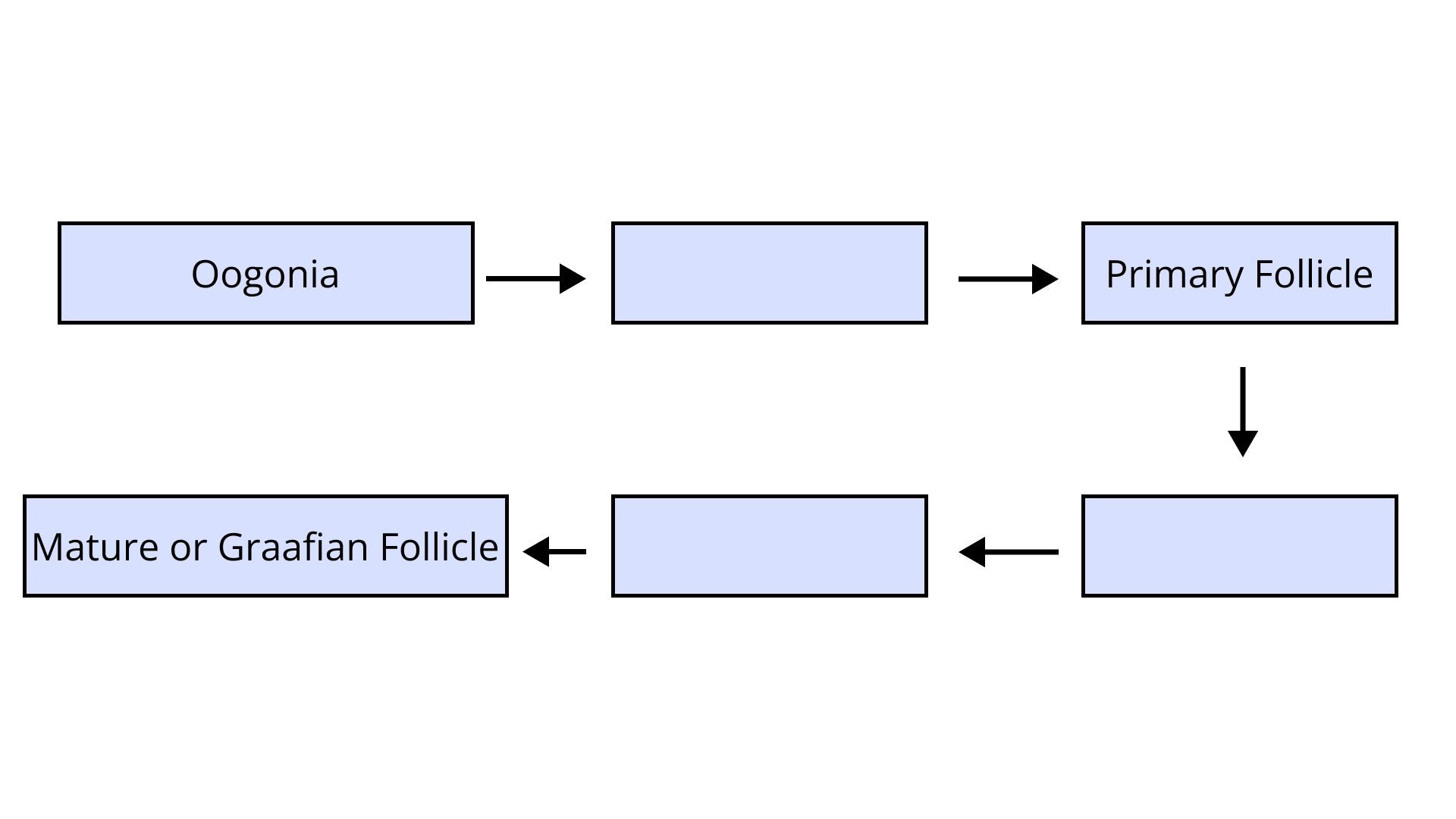
The mother germ cells are transformed into a mature follicle through series of steps. Provide the missing steps in the blank boxes.

seo images


Show solutionHide solution
Worked solution

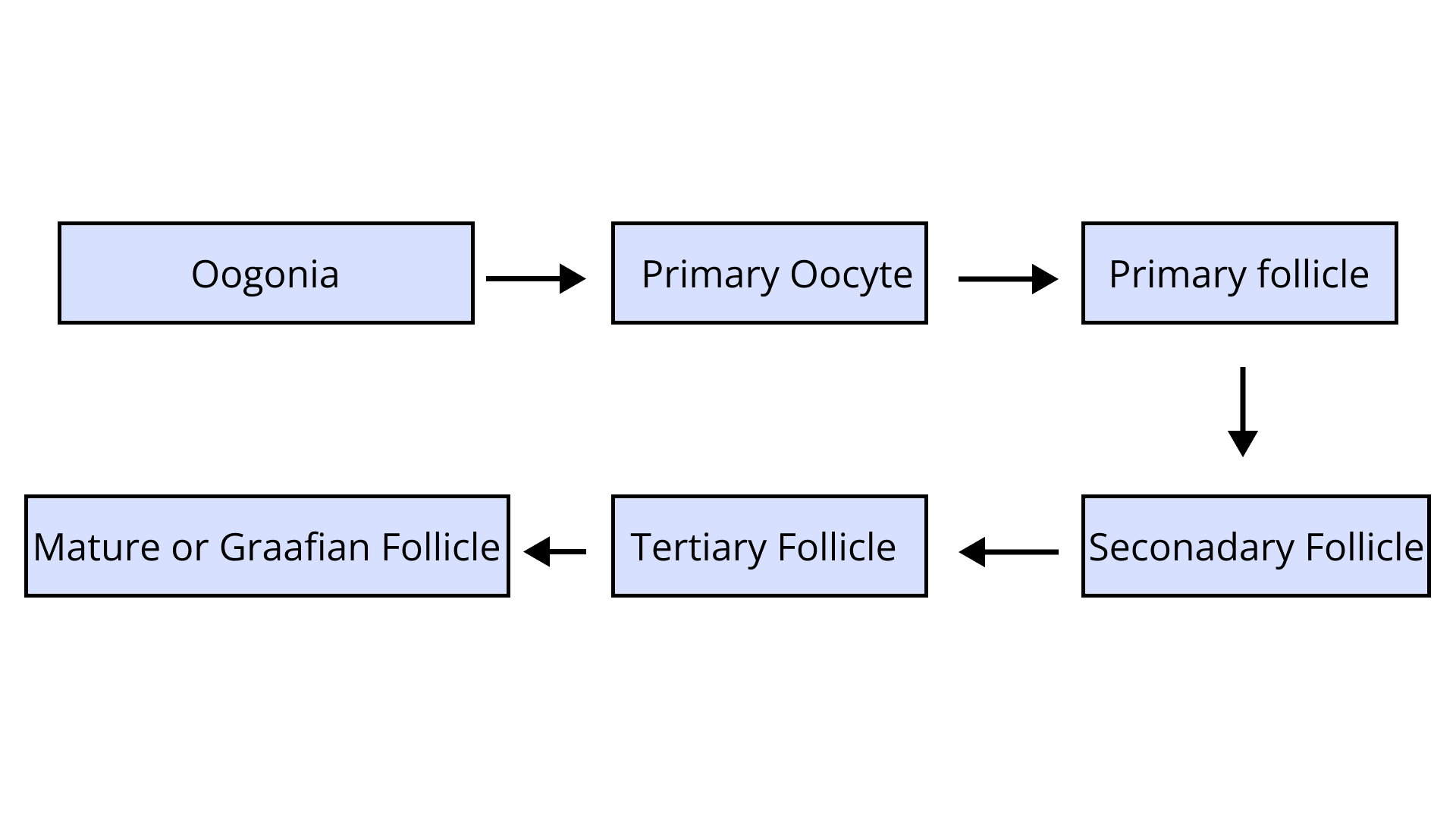
Ans: The mother germ cells or oogonia are transferred into formation of a mature or a graafian follicle by passing through various stages and divisions:

First, a primary oocyte is formed which becomes the primary follicle which further forms a secondary and then a tertiary follicle until the graafian follicle is achieved. This mature follicle ruptures and releases secondary oocytes out of the ovary and causes ovulation.

seo images


Q10Written answer

During reproduction, the chromosome number (2n) reduces to half (n) in the gametes and again the original number (2n) is restored in the offspring, what are the processes through which these events take place?

Show solutionHide solution
Worked solution

Ans: The restoration of a diploid number of chromosomes in the zygote through combination of two haploid gametes is a constant stability in the reproduction state. For a zygote to be diploid and same as the parent, the gametes fusing to form it must be haploid as n+n would lead to 2n. The diploid germ cells in a parent undergo reduction division or meiosis to achieve a haploid state(n) which occurs in formation of all gametes. The chromosome number is reduced to half in this. 

The restoration of diploid ploidy in a zygote occurs through fertilization of egg (n) with sperm(n).