My Cart
Your Cart 0

    Your cart is empty.

  • Total (Amount) ₹0.00
NCERT Exemplar · Class 12 · Biology

Chapter 1: Reproduction in Organisms

Practice each question, then open the answer or worked solution.

Short Answer Questions

11 questions
Q1Written answer

In haploid organisms that undergo sexual reproduction, name the stage in the life cycle when meiosis occurs. Give reasons for your answer.

Show solutionHide solution
Worked solution

Ans: The stage in which meiosis occurs in haploid organisms is the sporophytic stage. During this stage zygote undergoes meiosis & results in production of spores. This type of life cycle is called haplontic life cycle that occurs in certain organisms such as Volvox, Spirogyra etc. The gametophytic generation is dominant in this kind of life cycle.
Q2Written answer

The number of taxa exhibiting asexual reproduction is drastically reduced in higher plants (angiosperms) and higher animals (vertebrates) as compared with lower groups of plants and animals. Analyze the possible reasons for this situation.

Show solutionHide solution
Worked solution

Ans: Asexual reproduction is the kind of reproduction in which there is the involvement of mitosis only. In the case of organisms that are provided with complex body organization, mitosis alone is not enough to differentiate the different kinds of tissues. This method of reproduction is frequently seen in lower plants & the animals only that are quite simpler in their body organization.


Q3Written answer

Honeybees produce their young ones only by sexual reproduction. In Spite of this, in a colony of bees we find both haploid and diploid individuals. Name the haploid and diploid individuals in the colony and analyse the reasons behind their formation.

Show solutionHide solution
Worked solution

Ans: Honeybees are social insects. In the colony of honeybees, workers & females are diploid in nature while drones are haploid in nature. Drones are produced by the process of parthenogenesis (production of offspring by the unfertilized eggs). All the three members of the colony perform different functions & there is the division of labour in them.

Name of member

Functions

Worker bee

Nest building, food collection etc.

Female (queen)

Perform mating & lay eggs.

Drone

Perform mating & lay eggs.


Q4Written answer

With which type of reproduction do we associate the reduction division? Analyse the reasons for it.

Show solutionHide solution
Worked solution

Ans: The term reduction division is associated with sexual reproduction. This is because in sexual reproduction during gamete formation the no. of chromosomes become half due to the meiosis (reductional division).Both the parents contribute 50% each in the form of gametes ultimately give rise to offspring that is provided with the same no. of chromosomes as the parents have also the variation because of the crossing over.


Q5Written answer

Is it possible to consider vegetative propagation observed in certain plants like Bryophyllum, water hyacinth, ginger etc., as a type of asexual reproduction? Give two/three reasons.

Show solutionHide solution
Worked solution

Ans: Vegetative propagation in certain plants like Bryophyllum, water hyacinth, ginger etc. considered as a type of asexual reproduction because of following reasons-: 

1. It involves single parents.

2. Meiosis or reduction division does not occur.

3. Fusion of gametes is not there.


Q6Written answer

'Fertilization is not an obligatory event for fruit production in certain plants. Explain the statement.

Show solutionHide solution
Worked solution

Ans: Many plants have the ability to produce the fruits without the process of fertilization. Such kinds of fruits that are produced by this process are called parthenocarpic fruits, The example includes Banana. One can induce the artificial parthenocarpy in certain plants such as papaya & watermelon. The fruits produced by this method do not carry seeds as they can’t be produced without fertilization. Hence, it is said that fertilization is not a mandatory event for fruit production in certain plants.


Q7Written answer

In a developing embryo, analyse the consequences if cell divisions are not followed by cell differentiation.

Show solutionHide solution
Worked solution

Ans: Cell differentiation is an essential event because it allows the development of different tissues that ultimately give rise to different organs & organ systems. If there is no differentiation after the cell division then it leads to the production of mass of undifferentiated identical cells that is unable to survive.


Q8Written answer

List the changes observed in an angiosperm flower subsequent to pollination and fertilization.

Show solutionHide solution
Worked solution

Ans: Changes that took place in an angiosperm flower after the pollination and fertilization are-:

1. Sepals, Petals & Stamens fall off.

2. Zygote develops into embryo, ovary develops into fruit & ovules develop into seeds.

3. Fruit develops a thick covering, named pericarp (protective covering of seeds).


Q9Written answer

Suggest a possible explanation why the seeds in a pea pod are arranged in a row, whereas those in tomatoes are scattered in the juicy pulp.

Show solutionHide solution
Worked solution

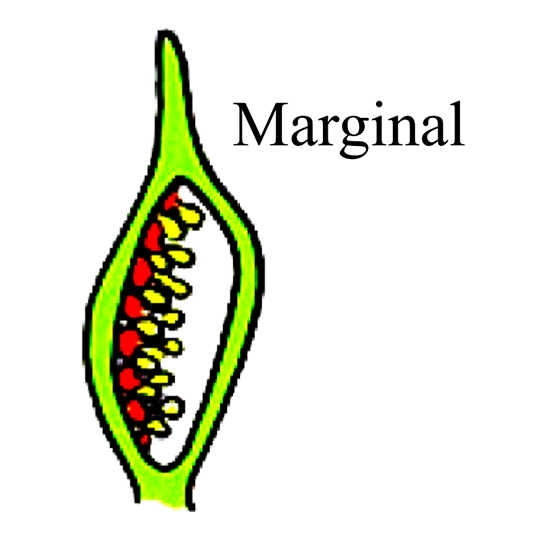
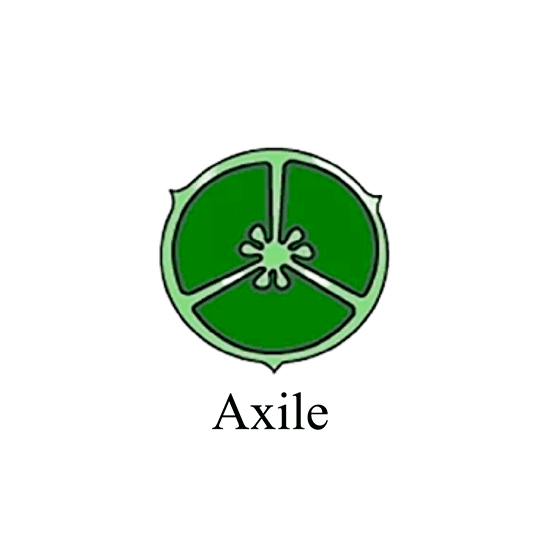
Ans: This is because of different types of placentation that is responsible for the arrangement of seeds. A pea plant shows marginal placentation while the tomatoes show axial placentation.

Marginal placentation -: In this kind of placentation placenta forms a ridge along the ventral suture of the ovary and the ovules develop in two separate rows. 

Axial placentation-: It is the type of placentation in which carpal folds inward with ovules (future seeds) placed along the central axis of the ovary (future fruit).


seo imagesseo images


Q10Written answer

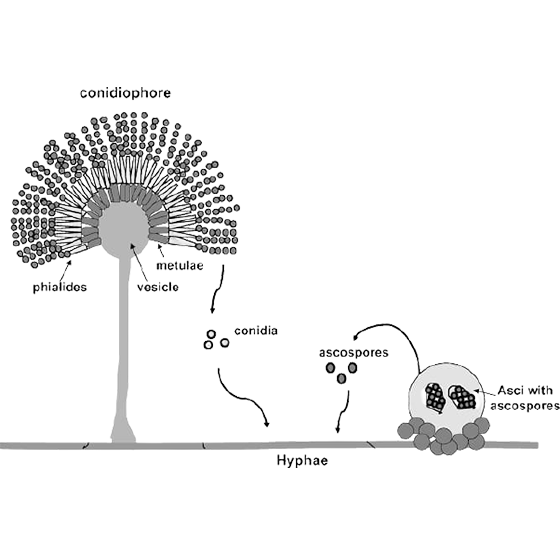
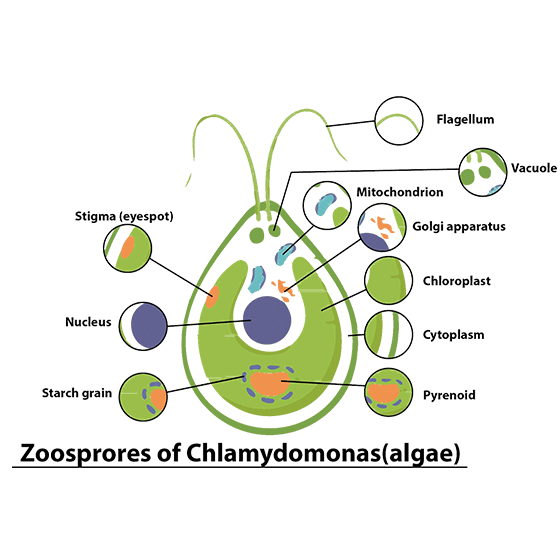
Draw the sketches of a zoospore and a conidium. Mention two dissimilarities between them and at least one feature common to both structures.

Show solutionHide solution
Worked solution

Ans: 


seo images


seo images


Zoospores

Conidium

1. It is flagellated in nature.

1. It is non- flagellated in nature.

2. It is motile in nature.

2. It is non-motile in nature.


Similarities-:

1.Both are produced in asexual mode of reproduction.

2.Both are haploid (n) in nature.