My Cart
Your Cart 0

    Your cart is empty.

  • Total (Amount) ₹0.00
NCERT Exemplar · Class 11 · Maths

Chapter 12: Introduction to Three Dimensional Geometry

Practice each question, then open the answer or worked solution.

Short Answer Questions

50 questions
Q1Written answer

Locate the following points:

(i) ${\text{ }}(1, - 1,3)$ 

(ii) ${\text{ }}( - 1,2,4)$ 

(iii) ${\text{ }}( - 2, - 4, - 7)$ 

(iv) ${\text{ }}\left( { - 4,2, - 5} \right)$ 

Show solutionHide solution
Worked solution

Ans:

seo images

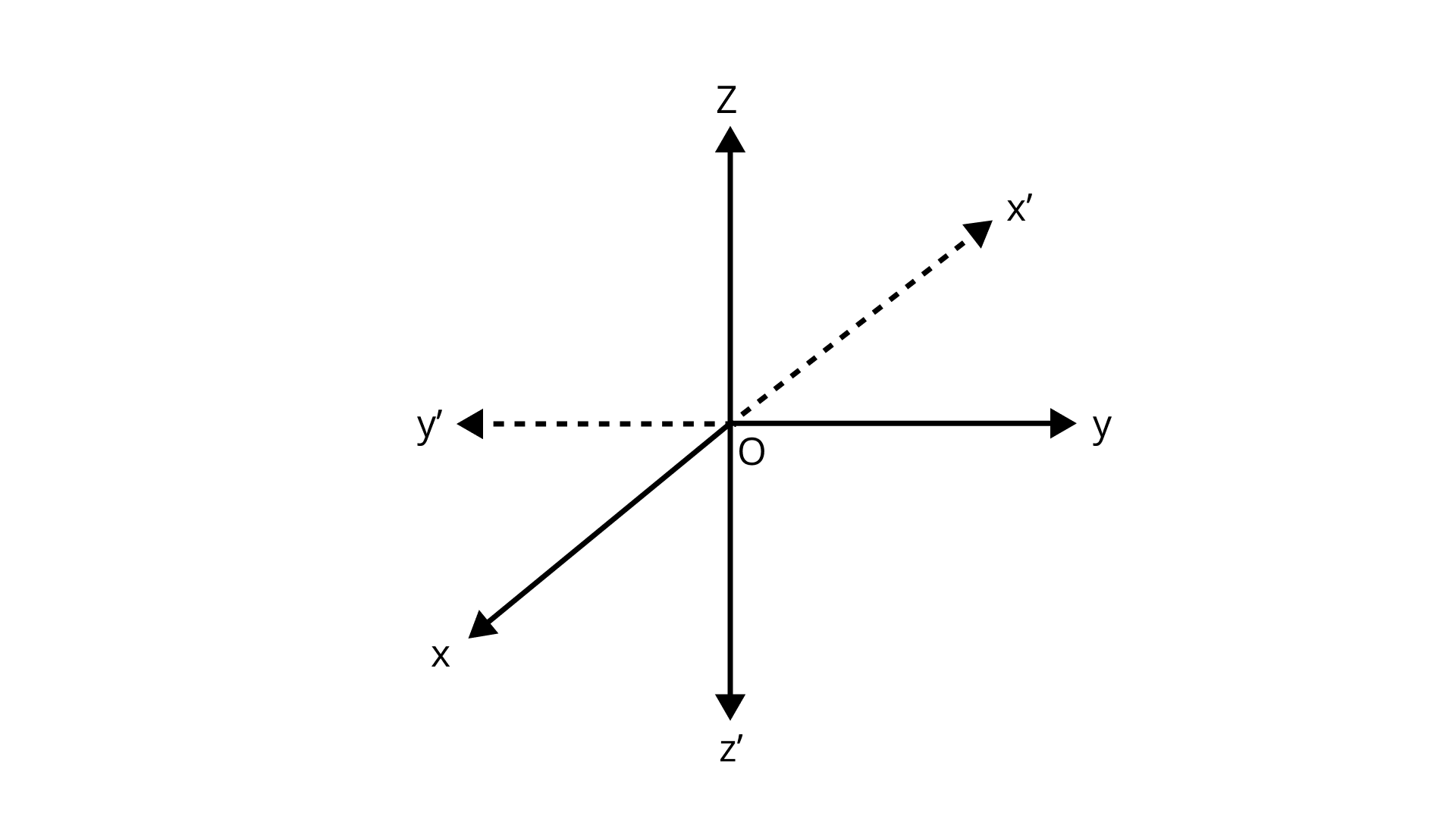
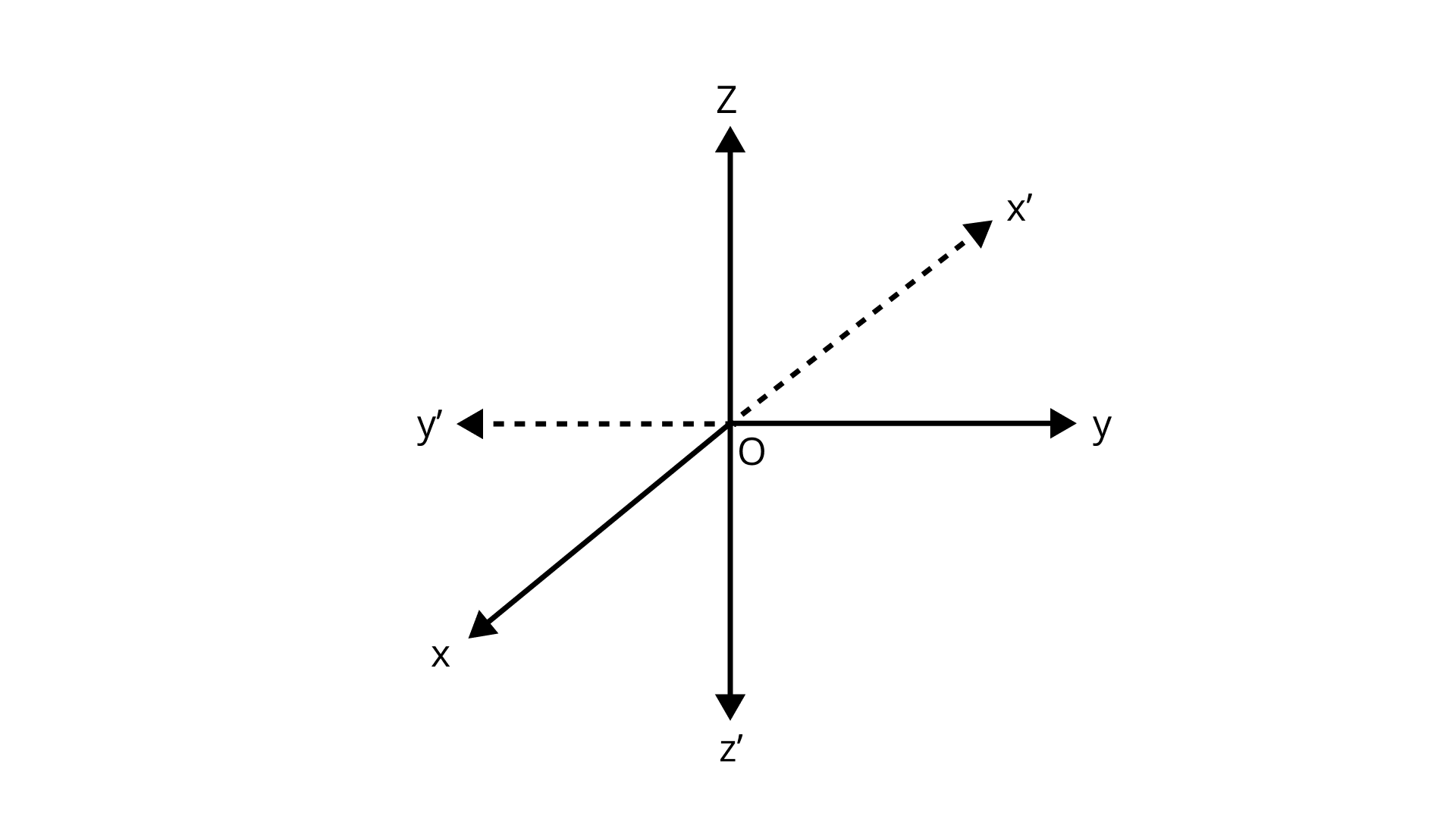
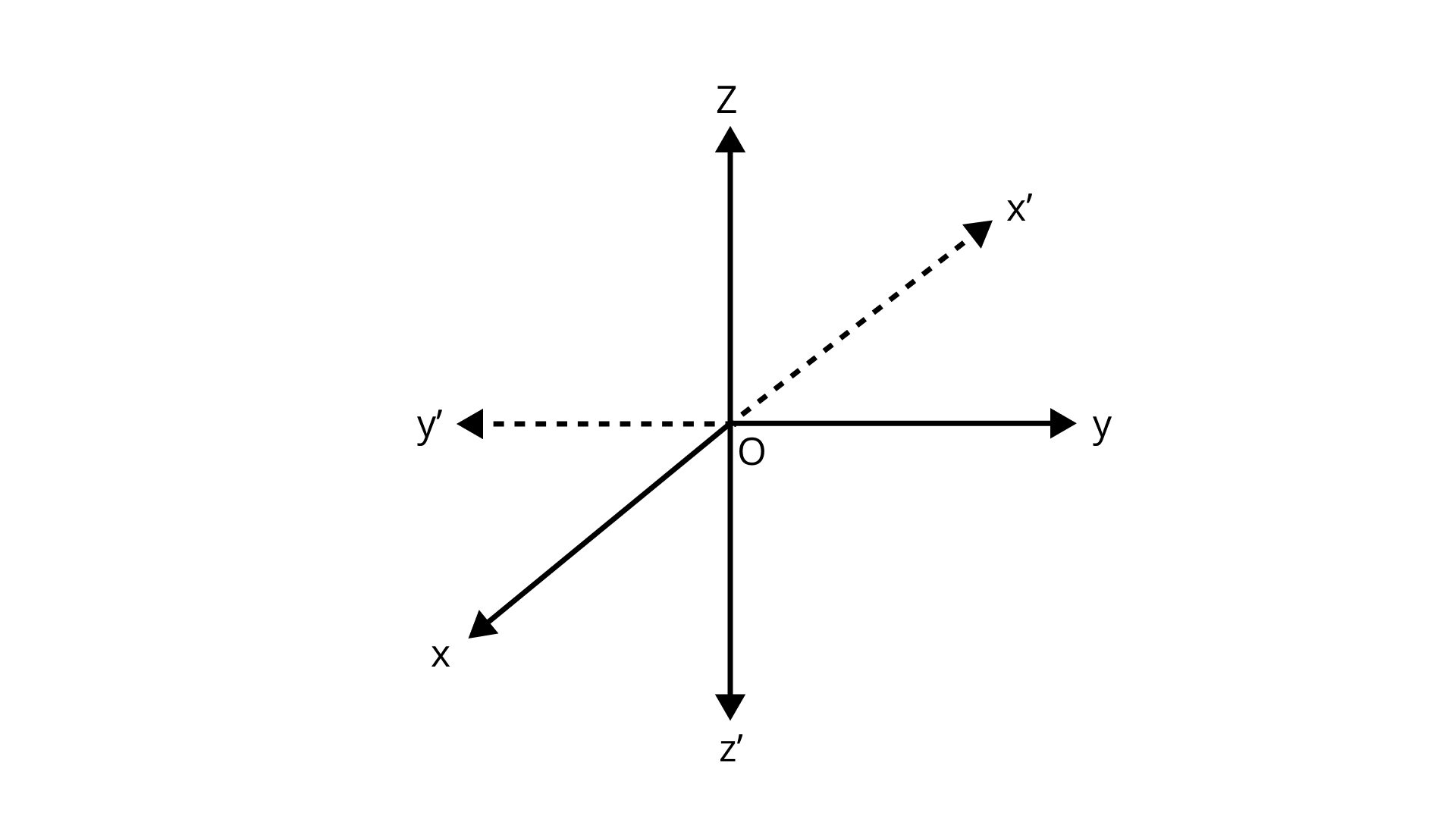
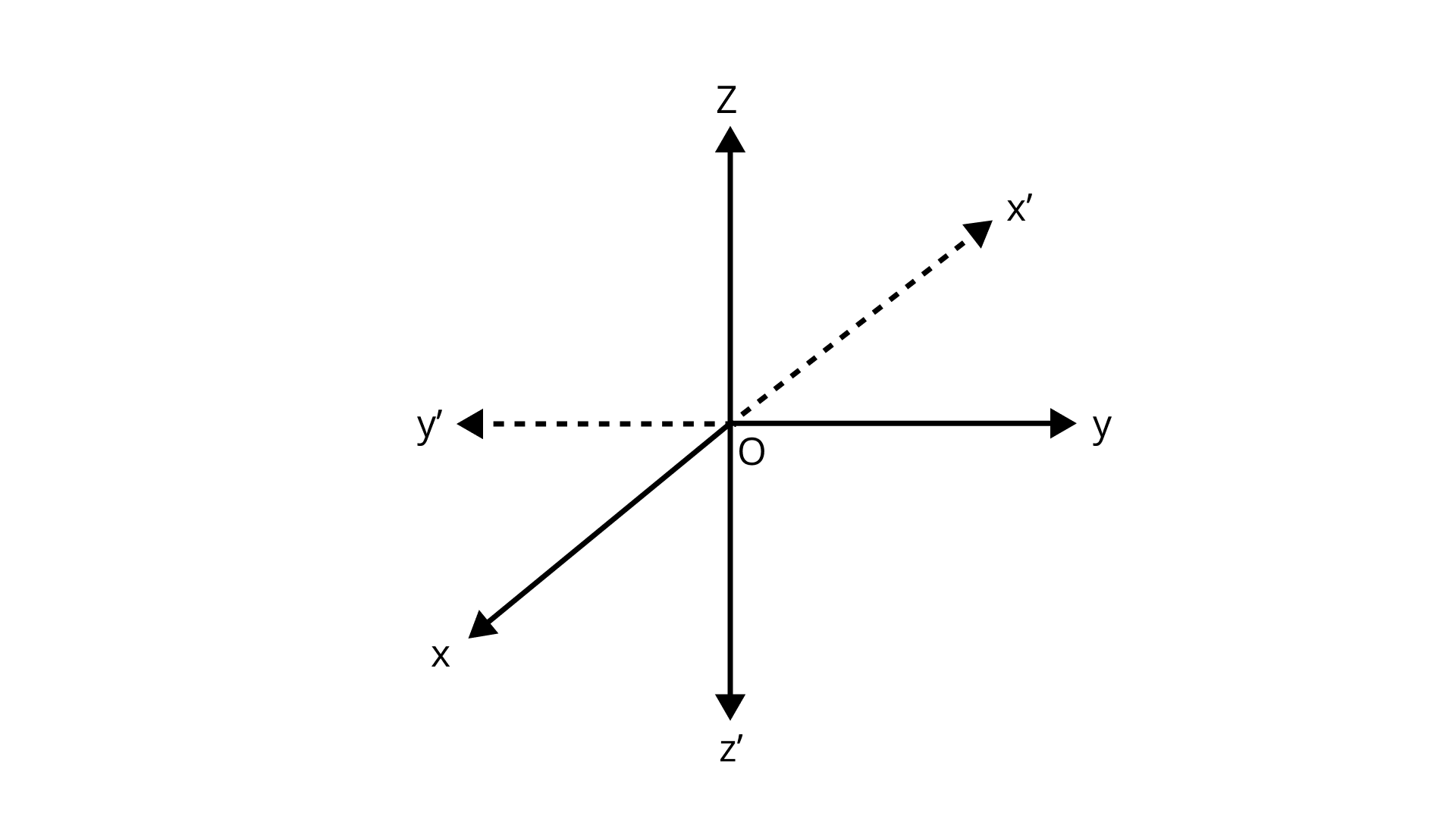
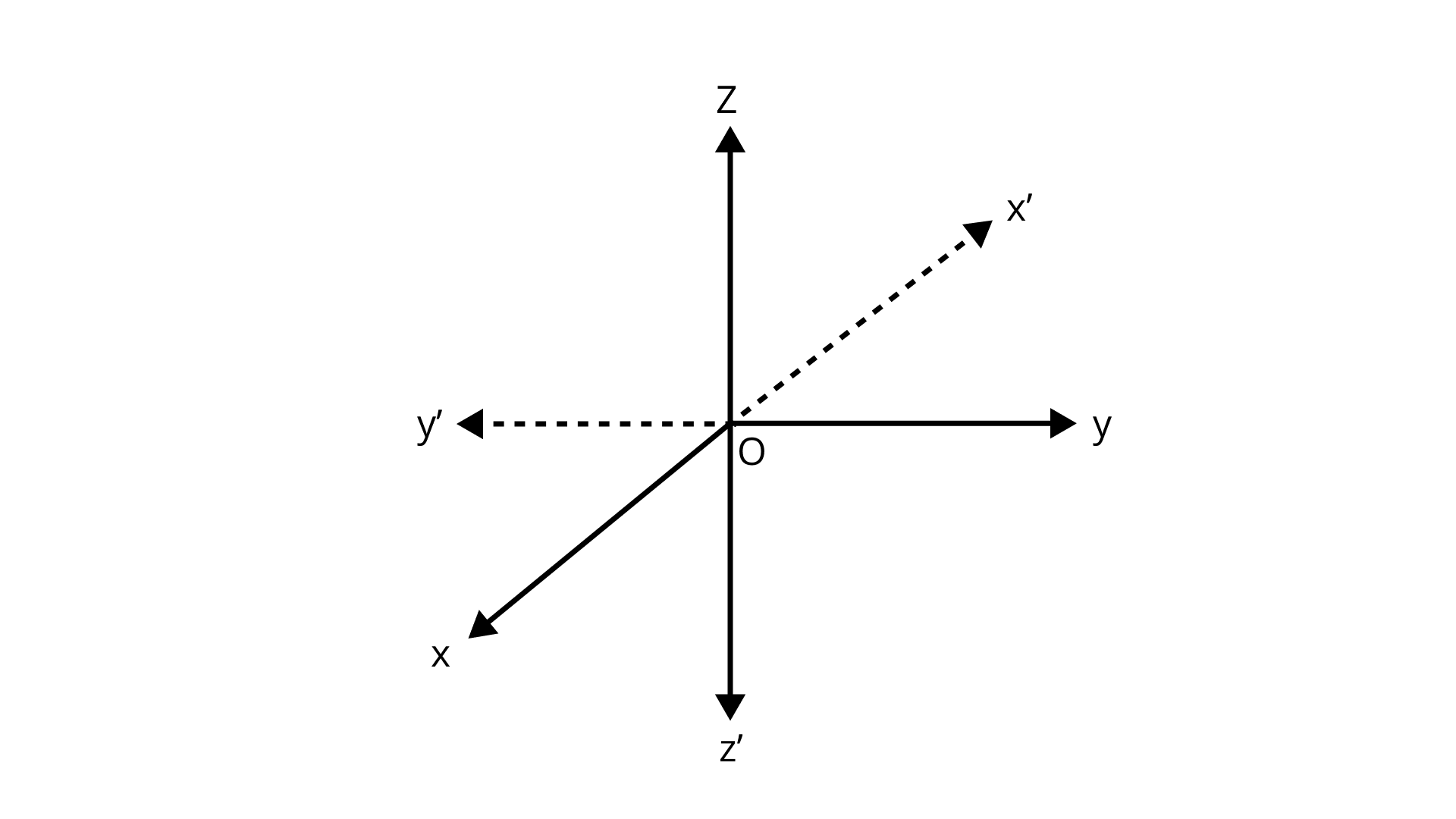
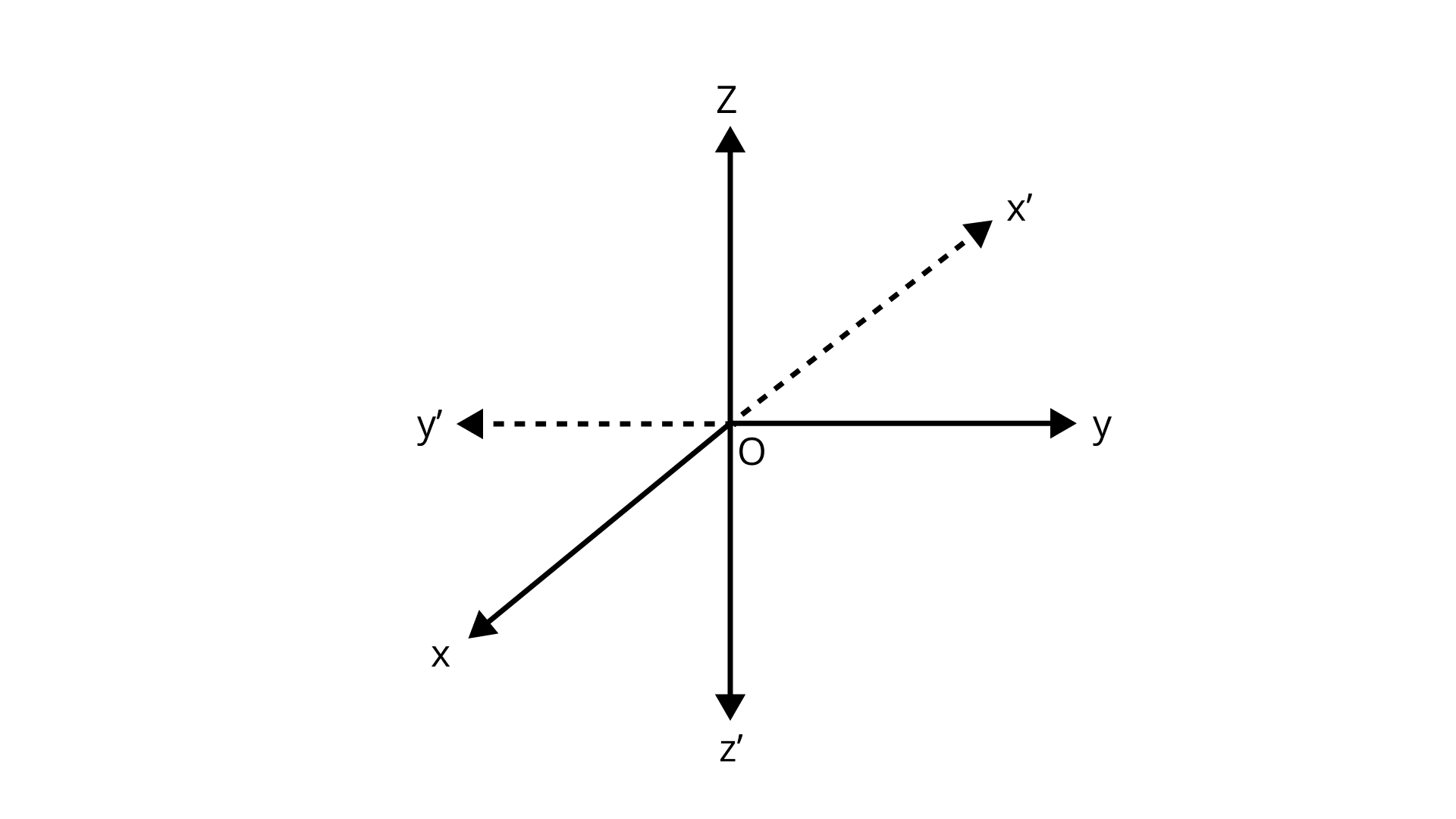
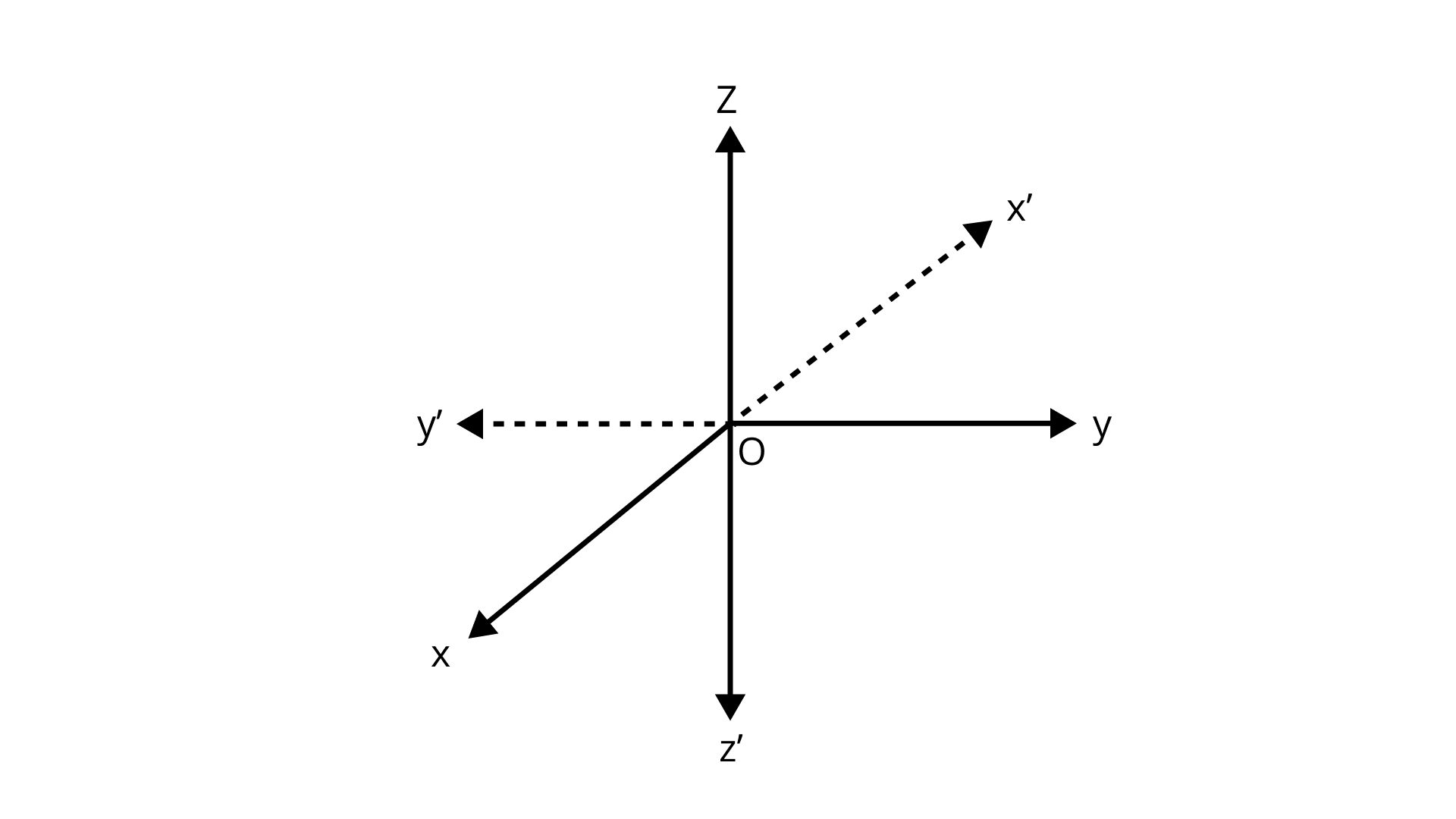
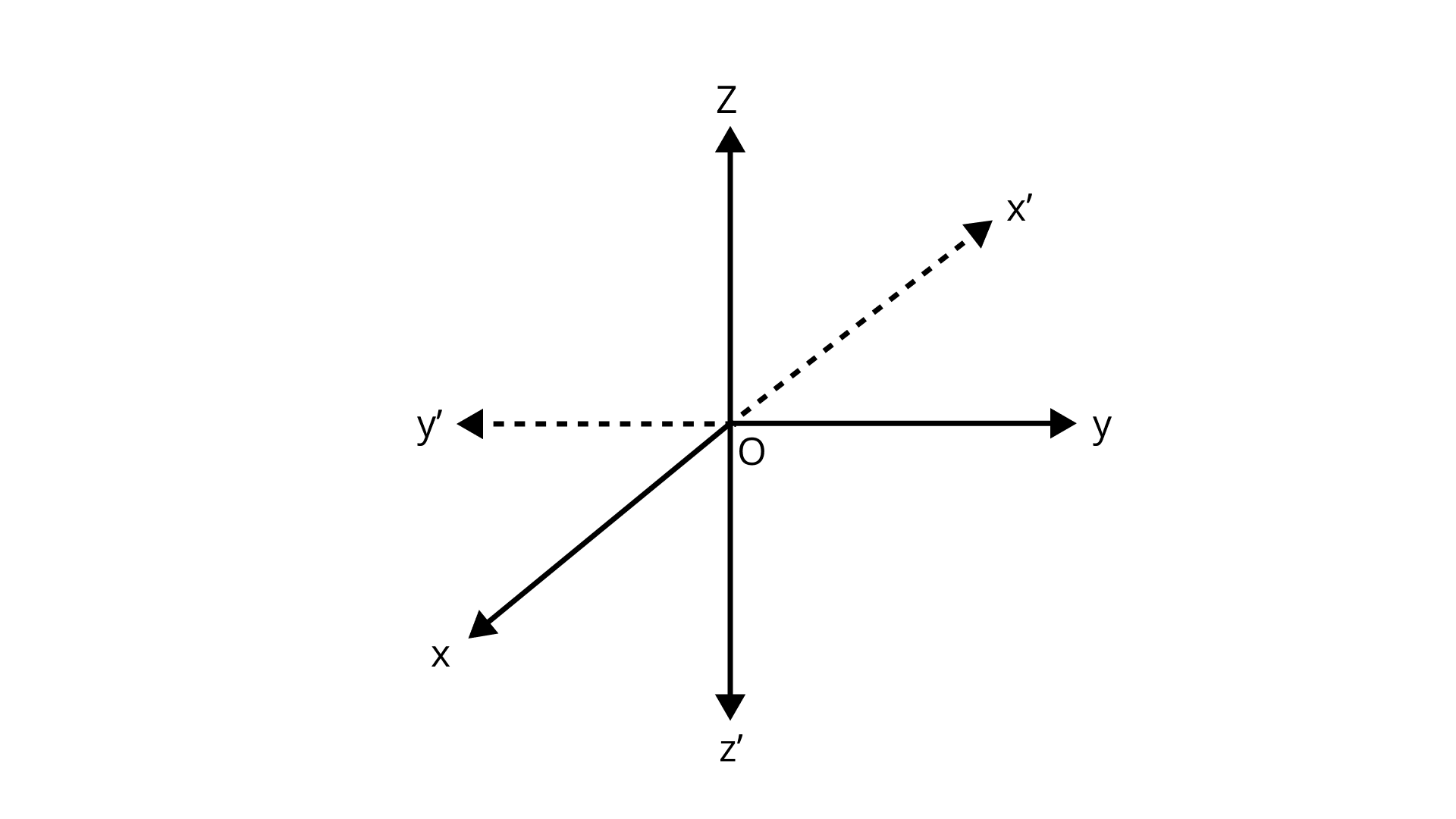
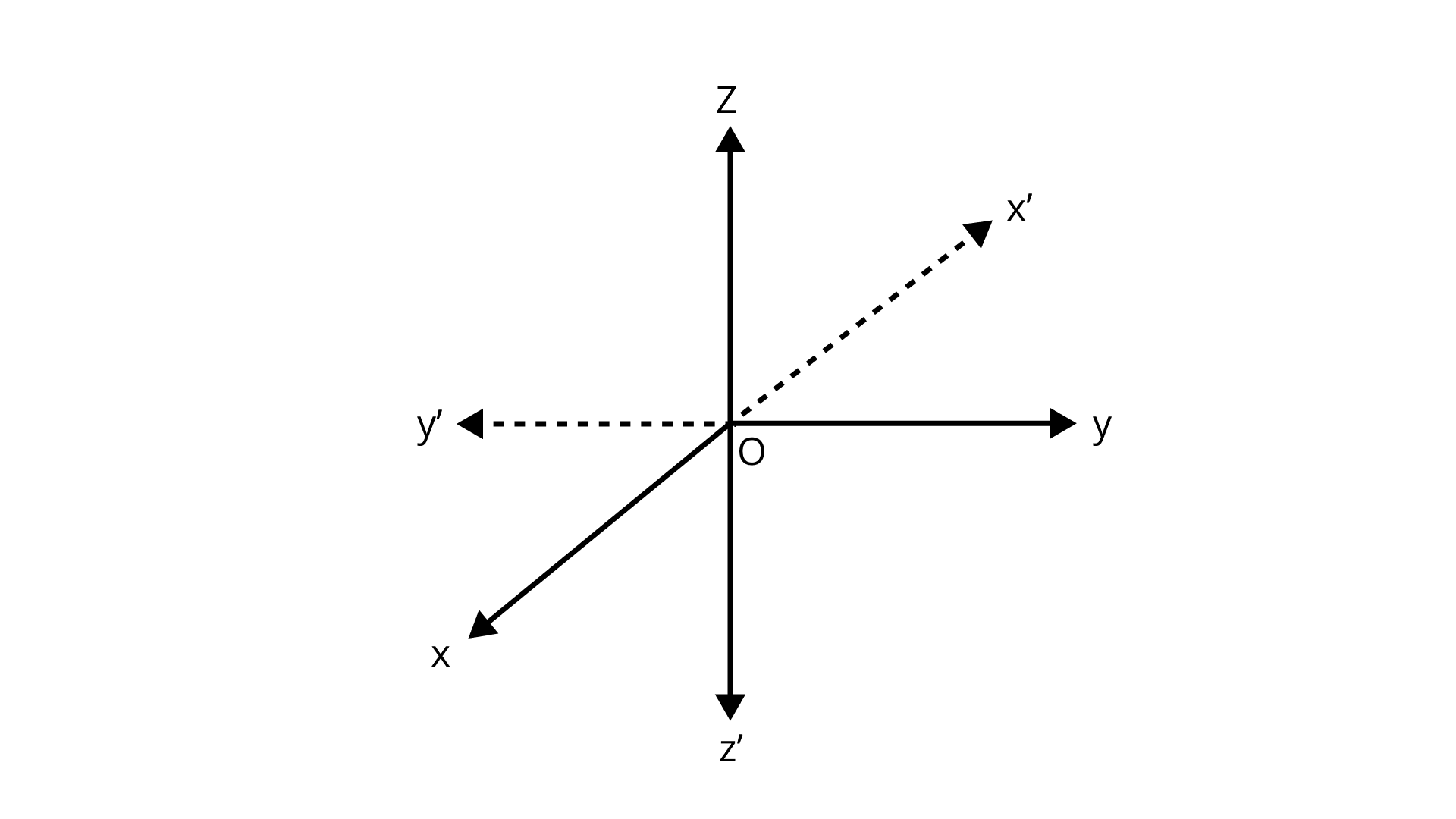
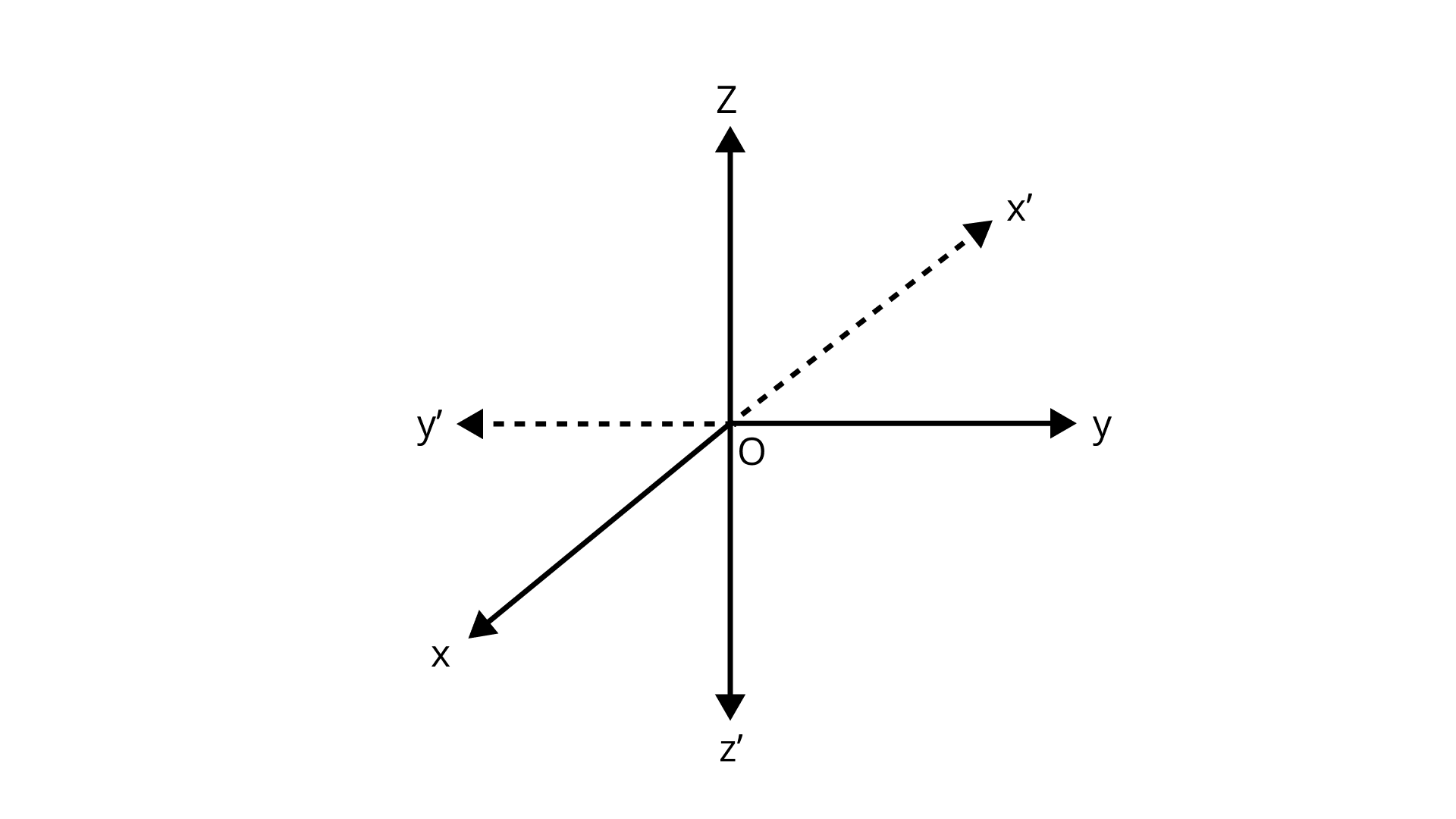
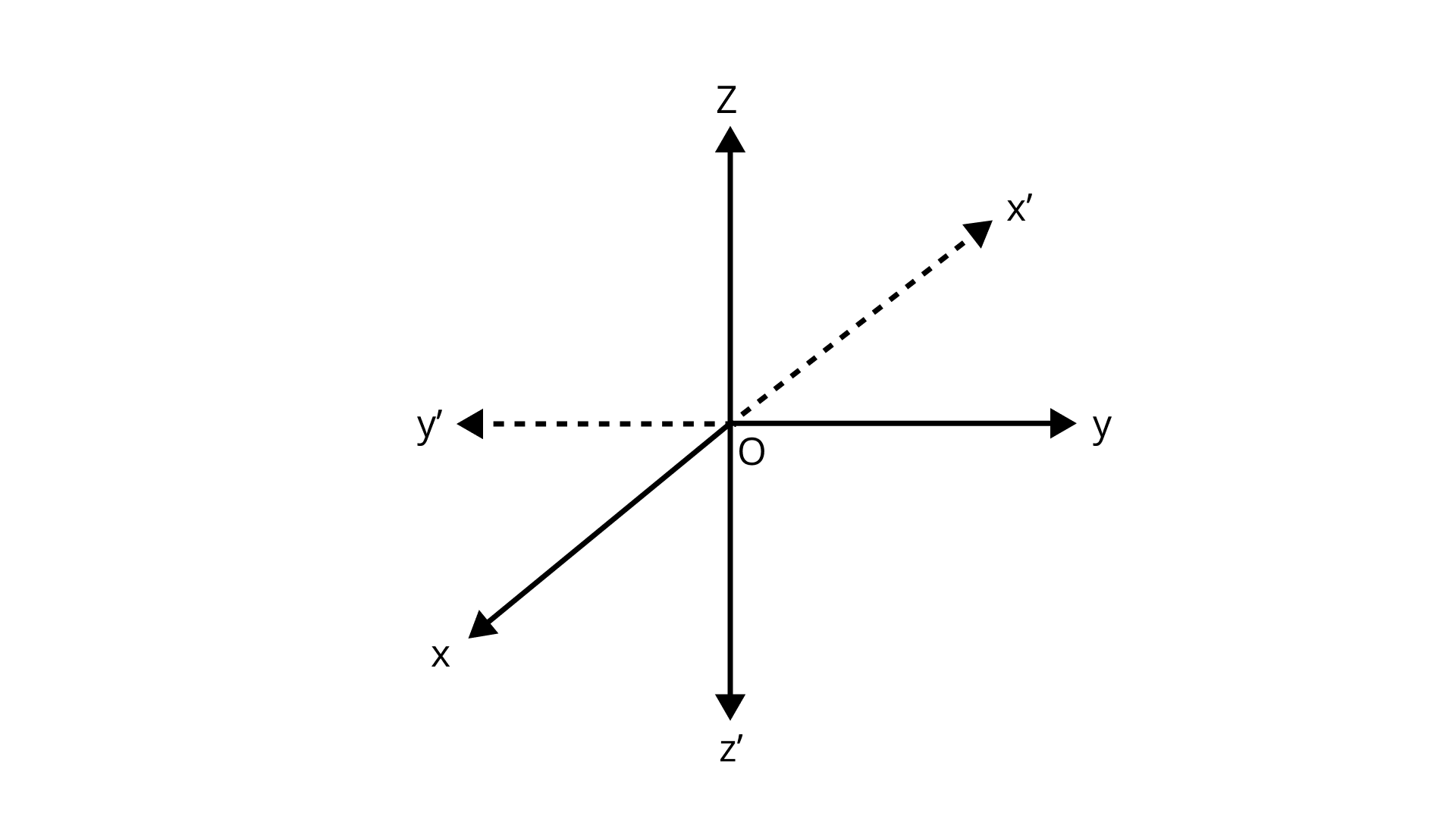
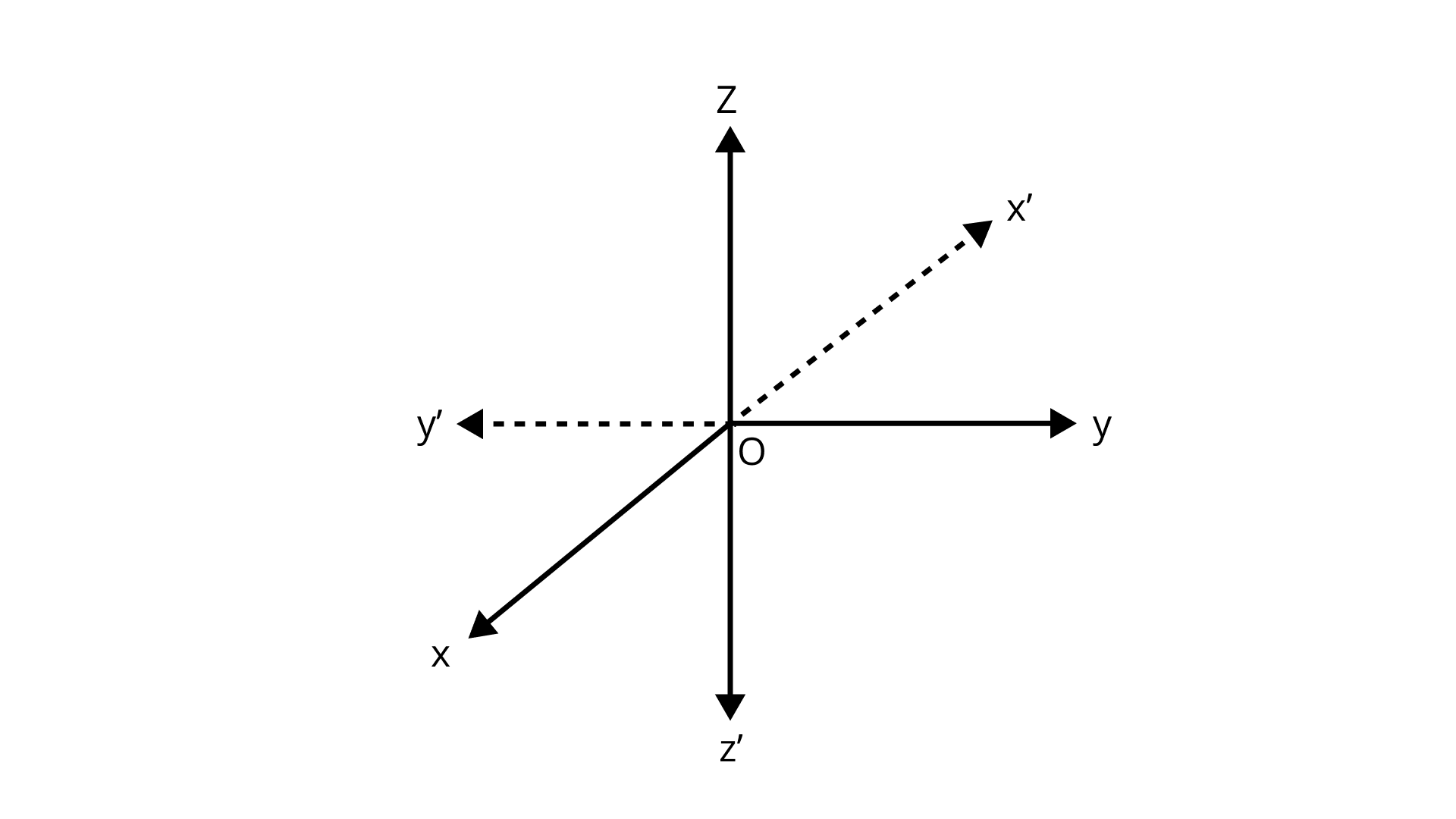
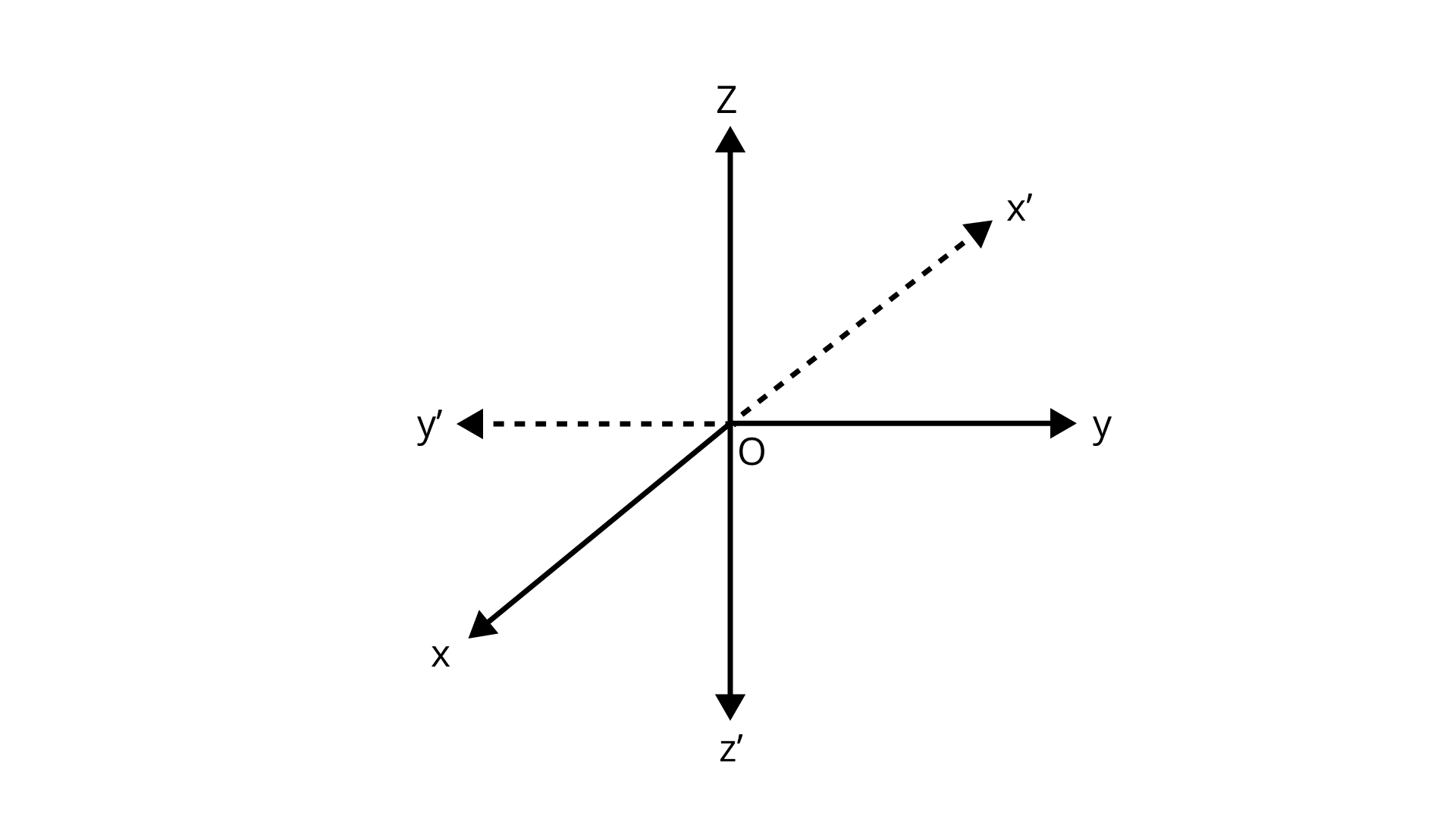
Each plane divides this space in two parts and these three coordinate planes together divide the space in eight regions called octants.

Locate the point ${\text{P}}.$

The point ${\text{P}}(1, - 1,3)$ is located in the $IV$ octant.


Ans:
seo images


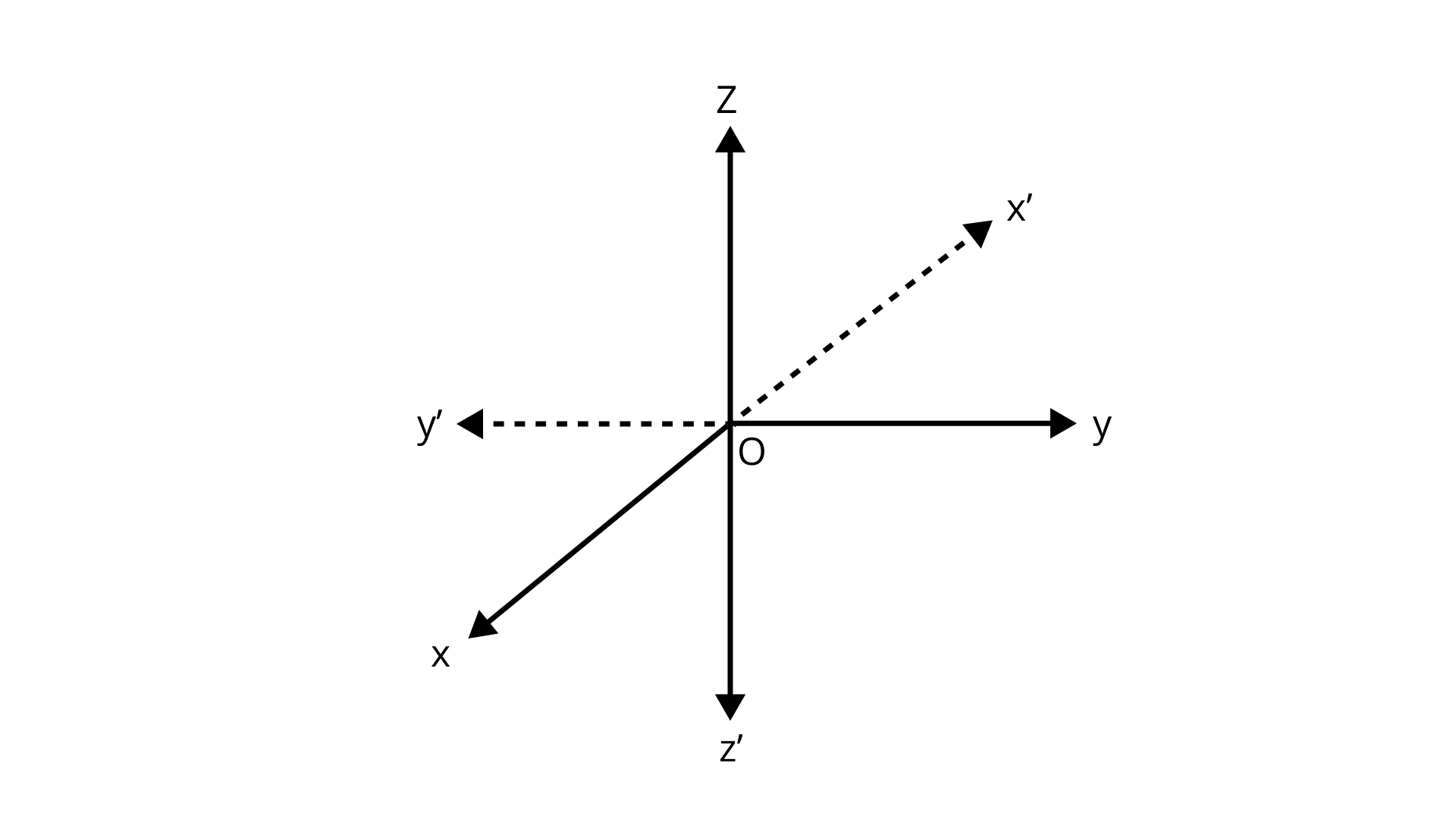
Each plane divides this space in two parts and these three coordinate planes together divide the space in eight regions called octants.

Locate the point ${\text{P}}.$

The point ${\text{P}}( - 1,2,4)$ is located in the$Il$ octant.


Ans: 
seo images


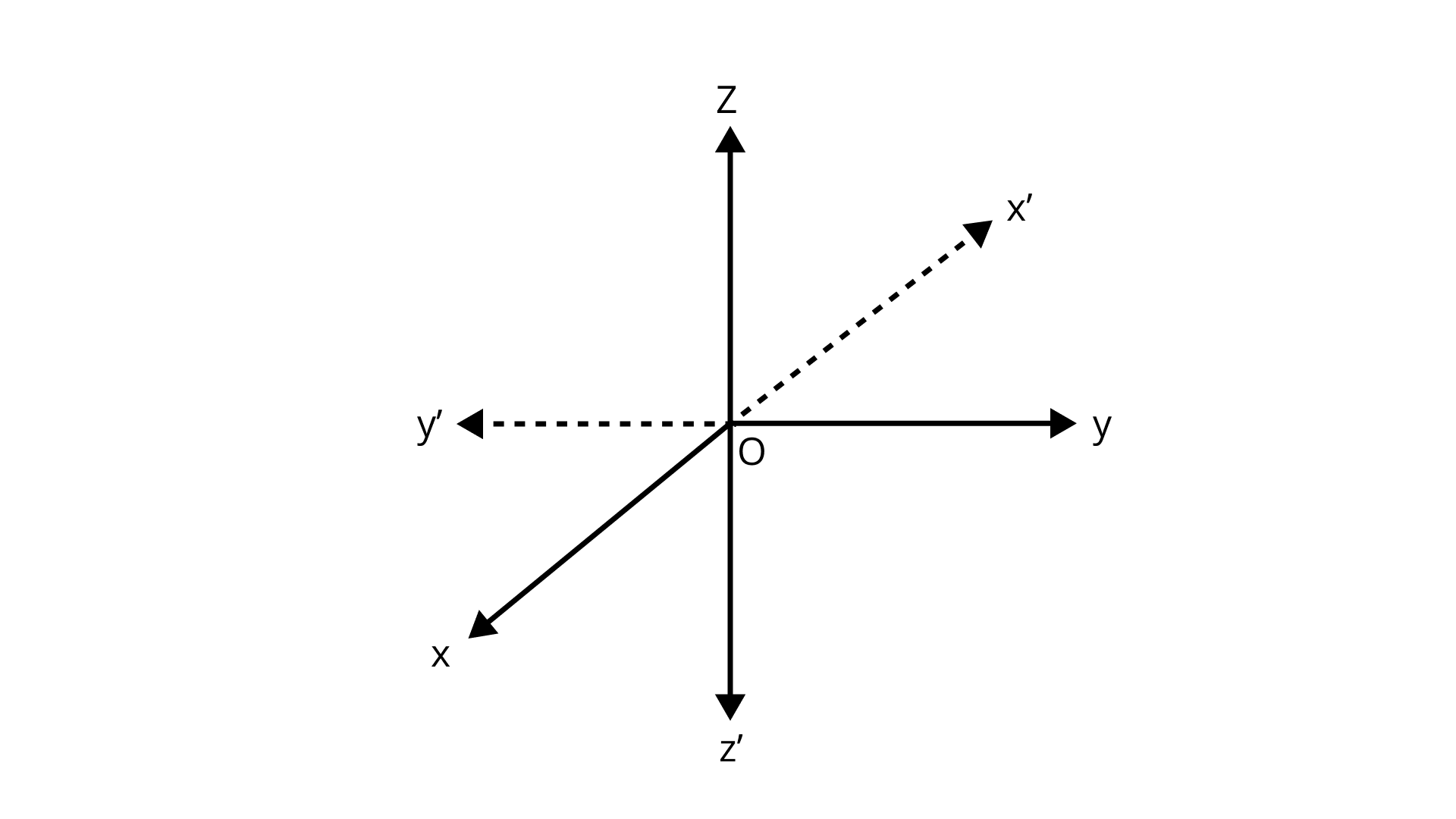
Each plane divides this space in two parts and these three coordinate planes together divide the space in eight regions called octants.

Locate the point ${\text{P}}.$

The point ${\text{P}}( - 2, - 4, - 7)$ is located in the $VII$ octant.


Ans:
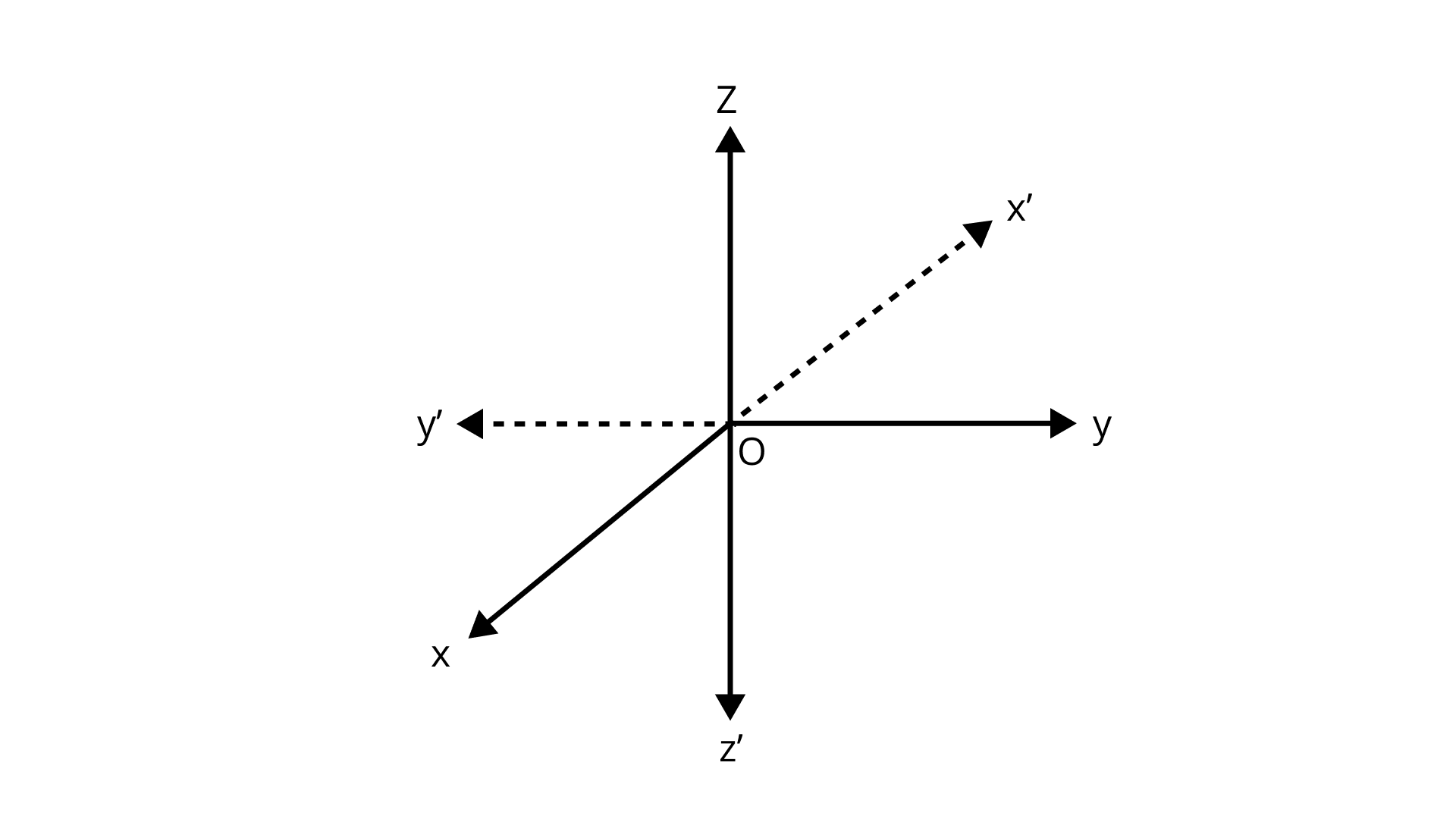
seo images


Each plane divides this space in two parts and these three coordinate planes together divide the space in eight regions called octants.

Locate the point $P.$

The point $P{\text{ }}\left( { - 4,2, - 5} \right)$ is located in the ${\text{Vl}}$ octant.

Q2Written answer

Name the octant in which each of the following points lies.

(i) ${\text{ }}\left( {1,2,3} \right)$ 

(ii) ${\text{ }}(4, - 2,3)$ 

(iii) ${\text{ }}(4, - 2,-5)$ 

(iv) ${\text{ }}(4, 2,-5)$ 

(v) ${\text{ }}(-4,2,5)$ 

(vi) ${\text{ }}( - 3, - 1,6)$ 

(vii) ${\text{P}}( 2, - 4,-7)$ 

(viii) ${\text{ }}( - 4,2, - 5)$ 

Show solutionHide solution
Worked solution

Ans:

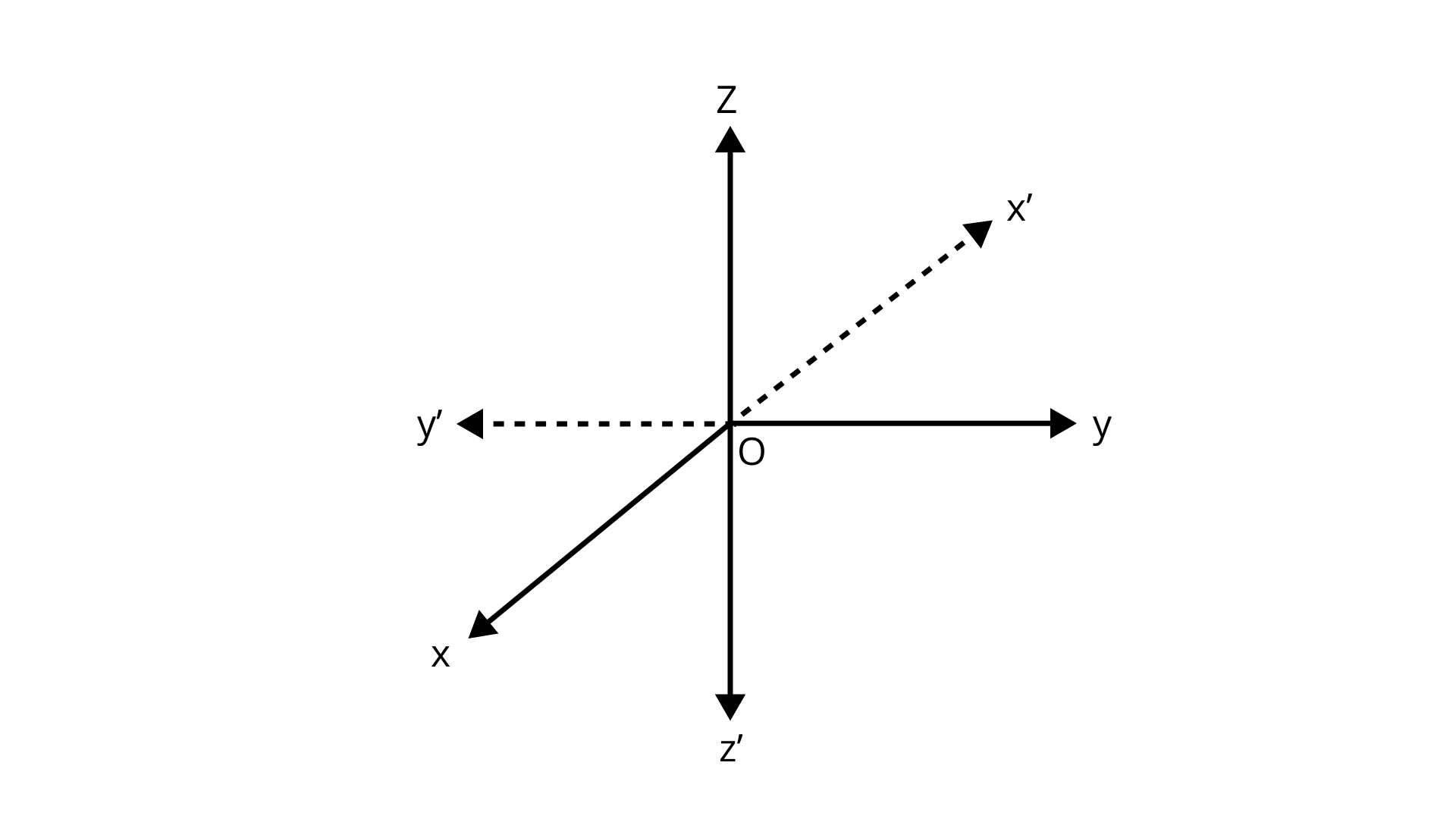
seo images


Each plane divides this space in two parts and these three coordinate planes together divide the space in eight regions called octants.

Locate the point ${\text{P}}.$

The point $P{\text{ }}\left( {1,2,3} \right)$ is located in the $I$ octant.


Ans:

seo images


Each plane divides this space in two parts and these three coordinate planes together divide the space in eight regions called octants.

Locate the point $P.$

The point ${\text{P}}(4, - 2,3)$ is located in the $IV$ octant.


Ans:

seo images


Each plane divides this space in two parts and these three coordinate planes together divide the space in eight regions called octants.

Locate the point${\text{P}}$. 

The point $P(4, - 2, - 5)$ is located in the $VIII$ octant.


Ans: 

seo images


Each plane divides this space in two parts and these three coordinate planes together divide the space in eight regions called octants.

Locate the point ${\text{P}}.$

The point $P\left( {4,2, - 5} \right)$ is located in the ${\text{V}}$ octant.


Ans:

seo images


Each plane divides this space in two parts and these three coordinate planes together divide the space in eight regions called octants.

Locate the point ${\text{P}}.$]

The point ${\text{P}}( - 4,2,5)$ is located in the $II$ octant.


Ans:

seo images


Each plane divides this space in two parts and these three coordinate planes together divide the space in eight regions called octants.

Locate the point ${\text{P}}.$

The point ${\text{P}}( - 3, - 1,6)$ is located in the $III$octant.


Ans:

seo images


Each plane divides this space in two parts and these three coordinate planes together divide the space in eight regions called octants.

Locate the point $P.$

The point $P(2, - 4, - 7)$ is located in the $VIII$octant.


Ans:

seo images


Each plane divides this space in two parts and these three coordinate planes together divide the space in eight regions called octants.

Locate the point ${\text{P}}$

The point ${\text{P}}( - 4,2, - 5)$ is located in the ${\text{Vl}}$ octant.

Q3Written answer

Let $A,{\kern 1pt} {\kern 1pt} {\kern 1pt} B,{\kern 1pt} {\kern 1pt} {\kern 1pt} C$ be the feet of perpendiculars from a point ${\text{P}}$ on the $x,{\kern 1pt} {\kern 1pt} {\kern 1pt} y,{\kern 1pt} {\kern 1pt} {\kern 1pt} {\kern 1pt} z -$ axis respectively. Find the coordinates of $A,{\kern 1pt} {\kern 1pt} {\kern 1pt} B$ and ${\text{C}}$in each of the following where the point${\text{P}}$ is:

(i)  $(3,4,2)$

(ii) ( - 5,3,7)

(iii) (4, - 3, - 5)

Show solutionHide solution
Worked solution

Ans:

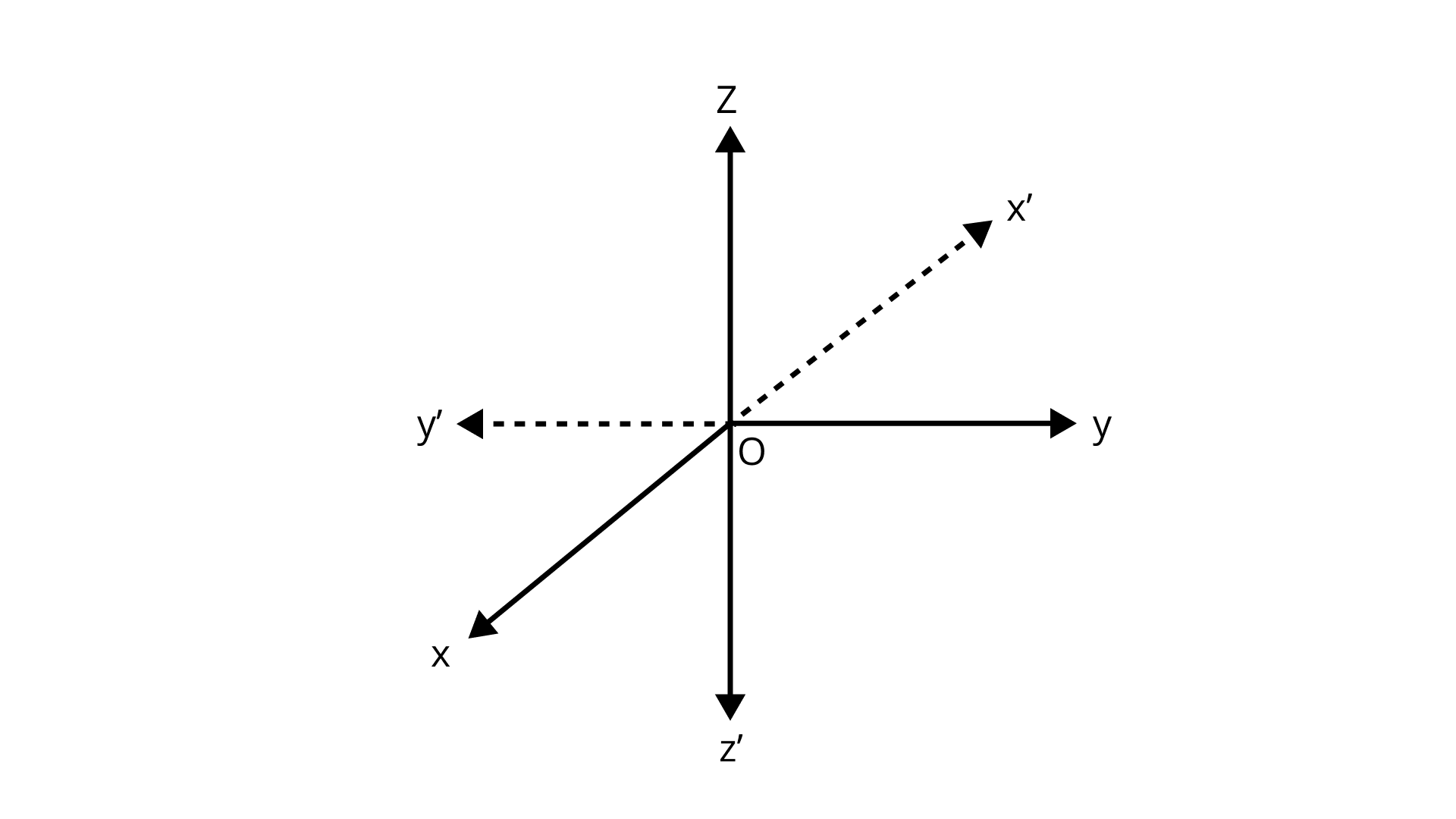
seo images


Each plane divides this space in two parts and these three coordinate planes together divide the space in eight regions called octants.

Locate the points.

The coordinates of $A$ are $(3,0,0)$

The coordinates of $B$ are $(0,4,0)$

The coordinates of $C$ are $(0,0,2)$


Ans:

seo images


Each plane divides this space in two parts and these three coordinate planes together divide the space in eight regions called octants.

Locate the points.

The coordinates of ${\text{A}}$ are $( - 5,0,0)$

The coordinates of ${\text{B}}$ are $(0,3,0,)$

The coordinates of $C$ are $(0,0,7)$


Ans:

seo images


Each plane divides this space in two parts and these three coordinate planes together divide the space in eight regions called octants.

Locate the points. 

The coordinates of $A$ are $(4,0,0)$

The coordinates of $B$ are $(0, - 3,0)$

The coordinates of $C$ are $(0,0, - 5)$


Q4Written answer

Let $A,{\kern 1pt} {\kern 1pt} {\kern 1pt} {\kern 1pt} B,{\kern 1pt} {\kern 1pt} {\kern 1pt} {\kern 1pt} C$ be the feet of perpendiculars from a point ${\text{P}}$ on the $xy,{\kern 1pt} {\kern 1pt} {\kern 1pt} {\kern 1pt} yz$ and $zx$ planes respectively. Find the coordinates of $A,{\kern 1pt} {\kern 1pt} {\kern 1pt} B,{\kern 1pt} {\kern 1pt} {\kern 1pt} C$ in each of the following where the point ${\text{P}}$ is
(i) $\left( {3,4,5} \right)$

(ii) ( - 5,3,7)

(iii) $\left( {4, - 3, - 5} \right).$

Show solutionHide solution
Worked solution

Ans:

Each plane divides this space in two parts and these three coordinate planes together divide the space in eight regions called octants.

seo images


Locate the points.

The coordinates of $A$ are$(3,{\kern 1pt} 4,{\kern 1pt} 0)$]

The coordinates of $B$ are $(0,{\kern 1pt} 4,{\kern 1pt} 5)$

The coordinates of $C$ are$(3,{\kern 1pt} 0,{\kern 1pt} 5)$


Ans:

Each plane divides this space in two parts and these three coordinate planes together divide the space in eight regions called octants.

seo images


Locate the points.

The coordinates of $A$ are$( - 5,{\kern 1pt} 3,{\kern 1pt} 0)$

The coordinates of $B$ are $(0,{\kern 1pt} 3,{\kern 1pt} 7)$

The coordinates of $C$ are $( - 5,{\kern 1pt} 0,{\kern 1pt} 7)$


Ans:

Each plane divides this space in two parts and these three coordinate planes together divide the space in eight regions called octants.

seo images


Locate the points. 

The coordinates of $A$ are$(4, - 3,0)$

The coordinates of $B$ are$(0, - 3, - 5){\text{}}$

The coordinates of $C$ are${\text{C}}(4,0, - 5)$


Q5Written answer

How far apart are the points $(2,0,0)$ and $( - 3,0,0)$

Show solutionHide solution
Worked solution

Ans: Given:The points $(2,0,0)$ and $( - 3,0,0)$

The distance between two points $P\left( {{x_1},{y_1},{z_1}} \right)$ and $Q\left( {{x_2},{y_2},{z_2}} \right)$ is given by$PQ = \sqrt {{{\left( {{x_2} - {x_1}} \right)}^2} + {{\left( {{y_2} - {y_1}} \right)}^2} + {{\left( {{z_2} - {z_1}} \right)}^2}}$.

Given points are $(2,0,0)$ and $( - 3,0,0)$

Distance between the given points

$= \sqrt {{{(2 + 3)}^2} + {{(0 - 0)}^2} + {{(0 - 0)}^2}}$

$= \sqrt {25}$

$= 5$

Hence, the required distance is $5.$


Q6Written answer

Find the distance from the origin to $\left( {6,6,7} \right).$

Show solutionHide solution
Worked solution

Ans: Given: The origin to $\left( {6,6,7} \right).$

The distance between two points $P\left( {{x_1},{y_1},{z_1}} \right)$ and $Q\left( {{x_2},{y_2},{z_2}} \right)$ is given by$PQ = \sqrt {{{\left( {{x_2} - {x_1}} \right)}^2} + {{\left( {{y_2} - {y_1}} \right)}^2} + {{\left( {{z_2} - {z_1}} \right)}^2}}$.

Coordinates of the origin are $(0,0,0)$

Distance from $(0,0,0)$to $(6,6,7)$

$D = \sqrt {{{(6 - 0)}^2} + {{(6 - 0)}^2} + {{(7 - 0)}^2}}$

$= \sqrt {36 + 36 + 49}$

$= \sqrt {121}$

$= 11$units. 

Hence, the required distance is $11$units.


Q7Written answer

Show that if ${x^2} + {y^2} = 1,$ then the point $\left( {x,y,\sqrt {1 - {x^2} - {y^2}} } \right)$ is at a distance $1$unit from the origin.

Show solutionHide solution
Worked solution

Ans: Given: Point $\left( {x,y,\sqrt {1 - {x^2} - {y^2}} } \right)$

Given point is $\left( {x,y,\sqrt {1 - {x^2} - {y^2}} } \right)$

Distance between the origin and the point is

$D = \sqrt {{{(x - 0)}^2} + {{(y - 0)}^2} + {{\left( {\sqrt {1 - {x^2} - {y^2}}  - 0} \right)}^2}}$

$= \sqrt 1  = 1$

Hence, proved.


Q8Written answer

Show that the point $A(1, - 1,3),{\kern 1pt} {\kern 1pt} {\kern 1pt} {\kern 1pt} B(2, - 4,5)$ and $(5, - 13,11)$ are collinear.

Show solutionHide solution
Worked solution

Ans: Given: ${\text{A}}(1, - 1,3),{\kern 1pt} {\kern 1pt} {\kern 1pt} {\kern 1pt} {\text{B}}(2, - 4,5)$ and$(5, - 13,11)$

Examine the points.

The distance between points $A$ and $B$ is $\sqrt {{{(2 - 1)}^2} + {{( - 4 + 1)}^2} + {{(5 - 3)}^2}}$

$= \sqrt {{{(1)}^2} + {{( - 3)}^2} + {{(2)}^2}}$

$= \sqrt {1 + 9 + 4}$

$= \sqrt {14}$

The distance between points $B$ and $C$ is $\sqrt {{{(5 - 2)}^2} + {{( - 13 + 4)}^2} + {{(11 - 5)}^2}}$

$= \sqrt {{{(3)}^2} + {{( - 9)}^2} + {{(6)}^2}}$

Solve further, $\sqrt {9 + 81 + 36}$

$= \sqrt {126}$

$= 3\sqrt {14}$

The distance between points $A$ and $C$ is $\sqrt {{{(5 - 1)}^2} + {{( - 13 + 1)}^2} + {{(11 - 3)}^2}}$

$= \sqrt {16 + 144 + 64}$

$= \sqrt {224}$

i.e. $4\sqrt {14}$

Therefore,

${\text{AB + BC = AC}}$

The points ${\text{A, B}},$ and ${\text{C}}$ are collinear.


Q9Written answer

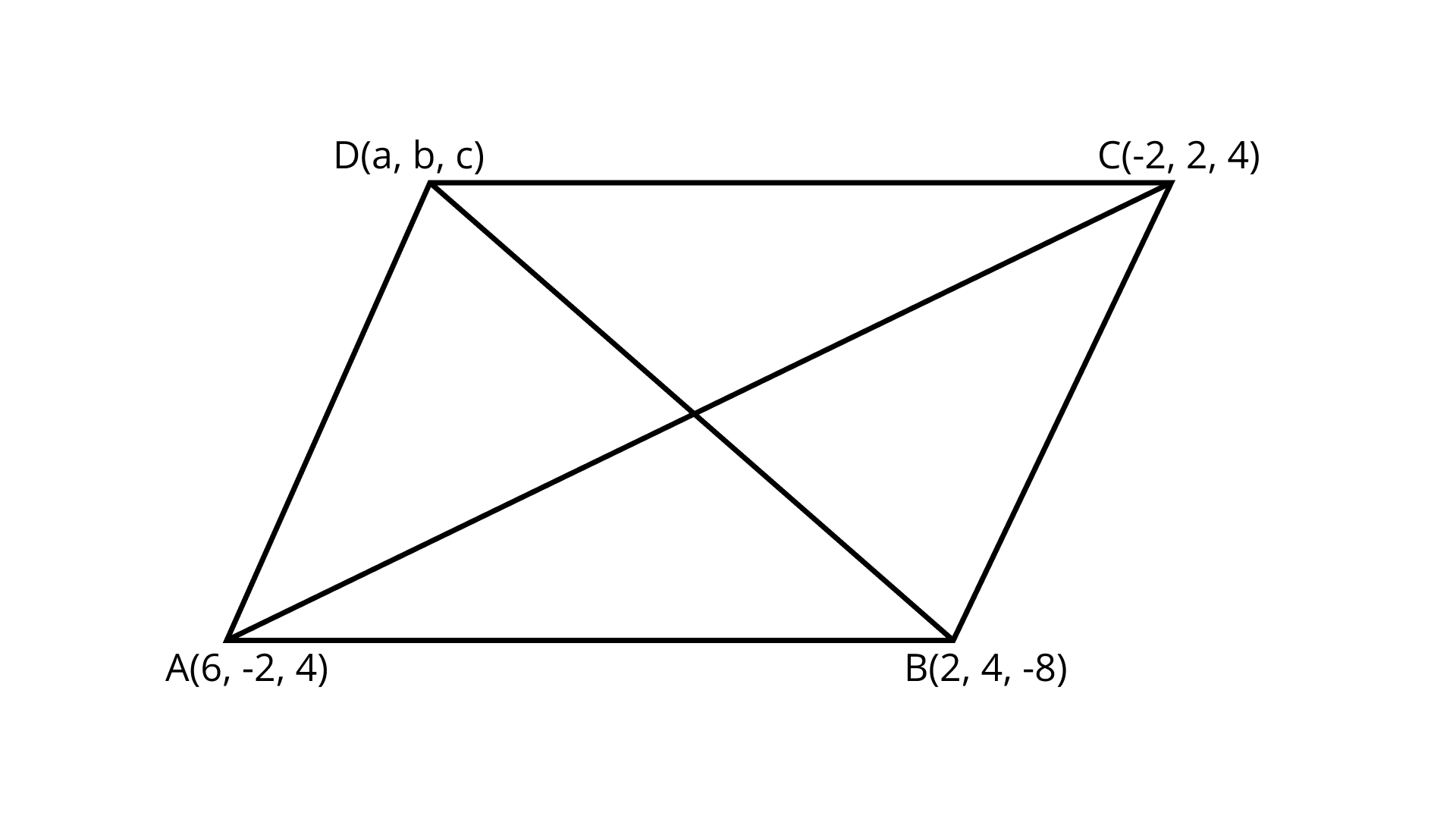
Three consecutive vertices of a parallelogram $ABCD$ are $A(6, - 2,4),{\kern 1pt} {\kern 1pt} {\kern 1pt} {\kern 1pt} B(2,4, - 8),{\kern 1pt} \,{\kern 1pt} {\kern 1pt} C( - 2,2,4)$. Find the coordinates of the fourth vertex.

seo images


$= (2,0,4)$

Show solutionHide solution
Worked solution

Ans: Given:${\text{A}}(6, - 2,4),{\kern 1pt} {\kern 1pt} {\kern 1pt} {\kern 1pt} {\text{B}}(2,4, - 8),{\kern 1pt} {\kern 1pt} {\kern 1pt} {\kern 1pt} {\text{C}}( - 2,2,4)$

To find: Coordinates of the fourth vertex.

The diagonals of a parallelogram bisect each other.

Midpoint of diagonal

${\text{AC}} = \left( {\dfrac{{6 - 2}}{2},\dfrac{{ - 2 + 2}}{2},\dfrac{{4 + 4}}{2}} \right)$

And the midpoint of diagonal $BD$                            

$= \left( {\dfrac{{a + 2}}{2},\dfrac{{b + 4}}{2},\dfrac{{c - 8}}{2}} \right)$

$\dfrac{{a + 2}}{2} = 2$

$\Rightarrow a = 2$

And

$\dfrac{{b + 4}}{2} = 0$

$\Rightarrow b =  - 4$

$\dfrac{{c - 8}}{2} = 4$

$\Rightarrow c = 16$

Hence, the required coordinates are $\left( {2, - 4,16} \right).$


Q10Written answer

Show that the triangle $ABC$ with vertices $A\left( {0,4,1} \right), {\kern 1pt} B\left( {2,3,-1} \right)$ and $C\left( {4,5,0} \right)$ is right angled.

Show solutionHide solution
Worked solution

Ans: Given:

$\mathrm{A}(0,4,1), \mathrm{B}(2,3,-1)$

$\mathrm{C}(4,5,0)$

Given vertices are ${\text{A}}\left( {0,4,1} \right),{\text{ }}{\kern 1pt} {\text{B}}\left( {2,3,-1} \right)$ and ${\text{C}}(4,5,0)$

So,${\text{AB  = }}\sqrt {{{(2 - 0)}^2} + {{(3 - 4)}^2} + {{( - 1 - 1)}^2}}$

$= \sqrt {4 + 1 + 4}$

$= \sqrt 9$

$= 3$

Also,

${\text{BC}} = \sqrt {{{(4 - 2)}^2} + {{(5 - 3)}^2} + {{(0 + 1)}^2}} {\text{ }}$

$= \sqrt {4 + 4 + 1}$

$= \sqrt 9$

$= 3$

Also,

${\text{AC}} = \sqrt {{{(4 - 0)}^2} + {{(5 - 4)}^2} + {{(0 - 1)}^2}}$

$= \sqrt {16 + 1 + 1}$

$= \sqrt {18}$

For right angled triangle ${(AB)^2} + {(BC)^2} = {(AC)^2}$

${(3)^2} + {(3)^2} = {(\sqrt {18} )^2}$

So ${\text{A}}{{\text{B}}^2} + {\text{B}}{{\text{C}}^2} = {\text{A}}{{\text{C}}^2}$

Hence, $\vartriangle {\text{ABC}}$ is a right angled triangle.