What happens when
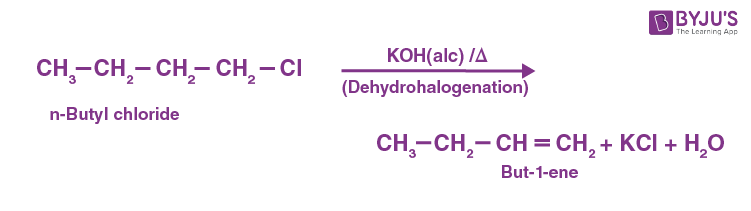
(i) n-butyl chloride is treated with alcoholic KOH,
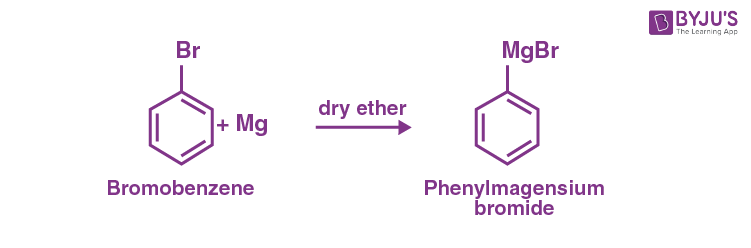
(ii) bromobenzene is treated with Mg in the presence of dry ether,
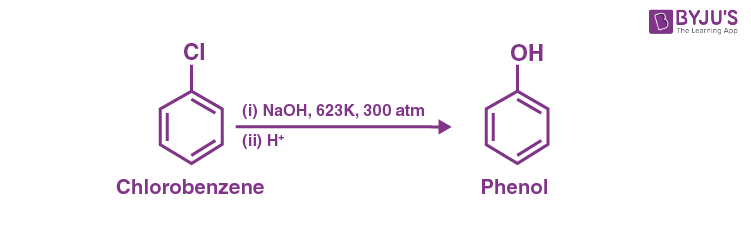
(iii) chlorobenzene is subjected to hydrolysis,
(iv) ethyl chloride is treated with aqueous KOH,
(v) methyl bromide is treated with sodium in the presence of dry ether,
(vi) methylchloride is treated with KCN.
Show solutionHide solution
(i) When n−butyl chloride is treated with alcoholic KOH, the formation of but−l−ene takes place. This reaction is a dehydrohalogenation reaction.
(ii) When bromobenzene is treated with Mg in the presence of dry ether, phenylmagnesium bromide is formed.
(iii) Chlorobenzene does not undergo hydrolysis under normal conditions. However, it undergoes hydrolysis when heated in an aqueous sodium hydroxide solution at a temperature of 623 K and a pressure of 300 atm to form phenol.
(iv) When ethyl chloride is treated with aqueous KOH, it undergoes hydrolysis to form ethanol.

(v) When methyl bromide is treated with sodium in the presence of dry ether, ethane is formed. This reaction is known as the Wurtz reaction.

(vi) When methyl chloride is treated with KCN, it undergoes a substitution reaction to give methyl cyanide.

Haloalkanes are the halogen derivatives of hydrocarbons, and these are of the following types depending upon the number of hydrogen atoms present in them. Haloarenes are aromatic compounds in which the halogen atom is attached directly to the carbon atom of the aromatic ring. The