Question 13.6 :
Describe a method for the identification of primary, secondary and tertiary amines. Also, write chemical equations of the reactions involved.
Primary, secondary and tertiary amines can be identified and distinguished by Hinsberg’s test. In this test, the amines are allowed to react with Hinsberg’s reagent, benzene sulphonyl chloride (C6 H5 SO2 Cl). The three types of amines react differently to Hinsberg’s reagent. Therefore, they can be easily identified using Hinsberg’s reagent. Primary amines react with benzene sulphonyl chloride to form N-alkyl benzene sulphonyl amide, which is soluble in alkali.
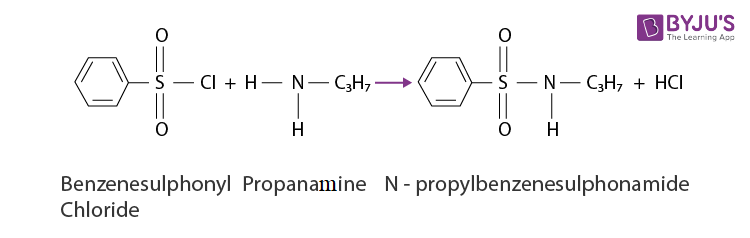
Due to the presence of a strong electron-withdrawing sulphonyl group in the sulphonamide, the H – atom attached to nitrogen can be easily released as a proton. So, it is acidic and dissolves in alkali.
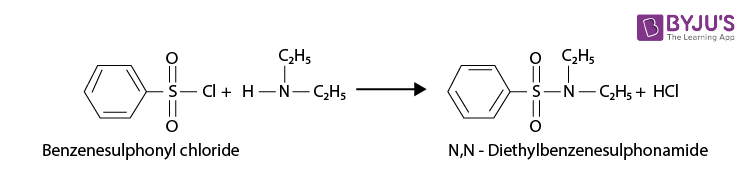
Secondary amines react with Hinsberg’s reagent to give a sulphonamide which is insoluble in alkali.
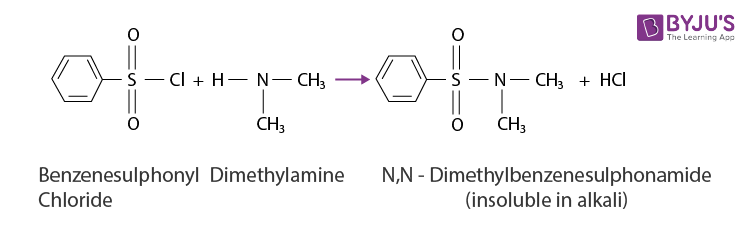
There is no H – atom attached to the N-atom in the sulphonamide. Therefore, it is not acidic and insoluble in alkali. On the other tertiary amines do not react with Hinsberg’s reagent at all.
Question 13.7:
Write short notes on the following.
(i) Carbylamine reaction
(ii) Diazotisation
(iii) Hofmann’s bromamide reaction
(iv) Coupling reaction
(v) Ammonolysis
(vi) Acetylation
(vii) Gabriel phthalimide synthesis.
(i) Carbylamine reaction
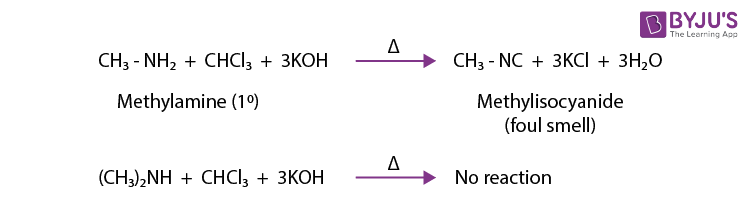
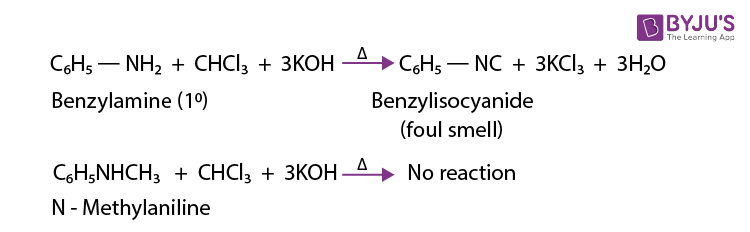
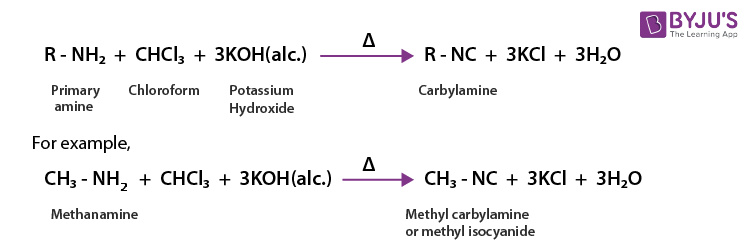
Carbylamine reaction is used as a test for the identification of primary amines. When aliphatic and aromatic primary amines are heated with chloroform and ethanolic potassium hydroxide, carbylamines (or isocyanides) are formed. These carbylamines have very unpleasant odours. Secondary and tertiary amines do not respond to this test.
(ii) Diazotization
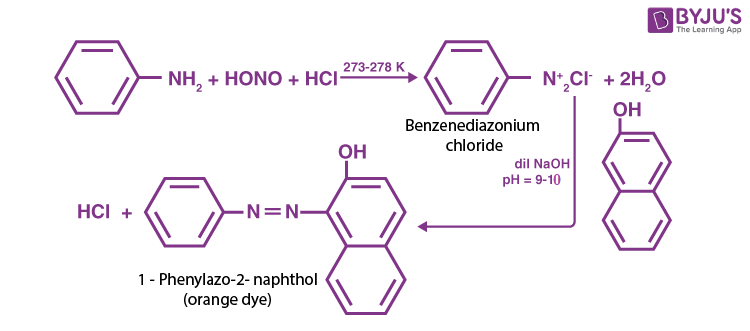
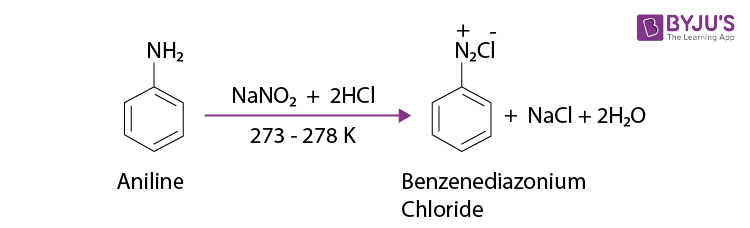
Aromatic primary amines react with nitrous acid (prepared in situ from NaNO2 and a mineral acid such as HCl) at low temperatures ( 273 – 278 K ) to form diazonium salts. This conversion of aromatic primary amines into diazonium salts is known as diazotization.
For example, on treatment with NaNO 2 & HCl at 273 – 278 K, aniline produces benzene diazonium chloride, with NaCl & H2 O as by-products.
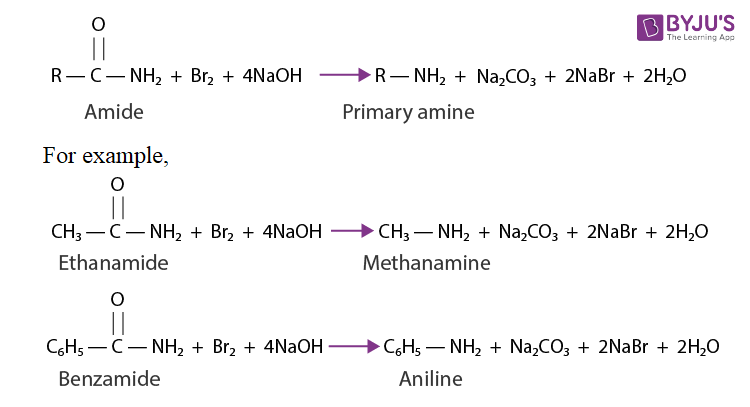
(iii) Hoffmann bromamide reaction
When an amide is treated with bromine in an aqueous or ethanolic solution of sodium hydroxide, a primary amine with one carbon atom less than the original amide is produced. This degradation reaction is known as the Hoffmann bromamide reaction. This reaction involves the migration of an alkyl or aryl group from the carbonyl carbon atom of the amide to the nitrogen atom.
(iv) Coupling reaction
The reaction of joining two aromatic rings through the − N = N – bond is known as the coupling reaction. Arene diazonium salts, such as benzene diazonium salts, react with phenol or aromatic amines to form coloured azo compounds.
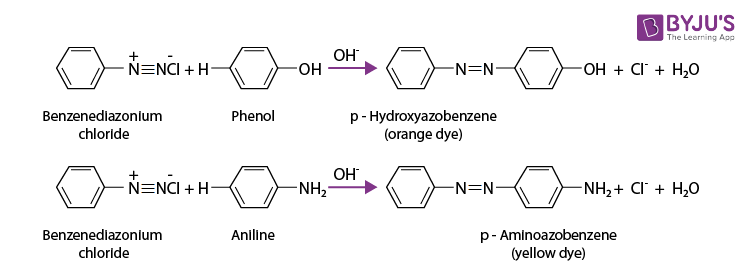
It can be observed that the para-positions of phenol and aniline are coupled with the diazonium salt. This reaction proceeds through electrophilic substitution.
(v) Ammonolysis
When an alkyl or benzyl halide is allowed to react with an ethanolic solution of ammonia, it undergoes a nucleophilic substitution reaction in which the halogen atom is replaced by an amino (– NH2) group. This process of cleavage of the carbon-halogen bond is known as ammonolysis.

When this substituted ammonium salt is treated with a strong base, such as sodium hydroxide, the amine is obtained.

Though primary amine is produced as the major product, this process produces a mixture of primary, secondary and tertiary amines, and also a quaternary ammonium salt, as shown.
(vi) Acetylation

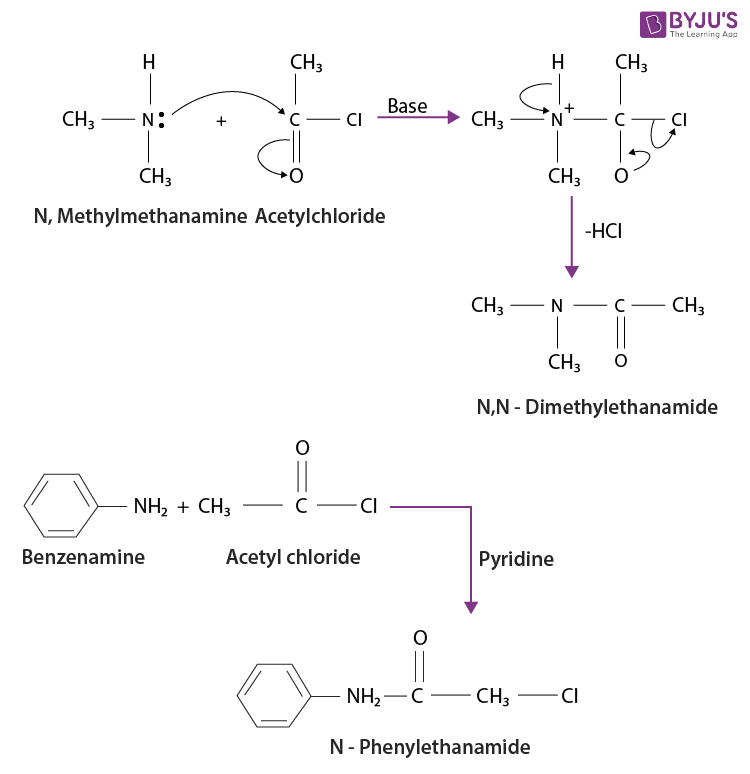
Acetylation (or ethanoylation) is the process of introducing an acetyl group into a molecule.
Aliphatic and aromatic primary & secondary amines undergo acetylation reaction by nucleophilic substitution when treated with acid chlorides, anhydrides or esters. This reaction involves the replacement of the hydrogen atom of – NH2 or > NH group by the acetyl group, which results in the formation of amides. In order to transfer the equilibrium to the right-hand side, the HCl that is produced while the reaction is on is removed almost immediately as it is produced. This reaction is performed in the existence of a base (such as pyridine) which is comparatively stronger than the amine.
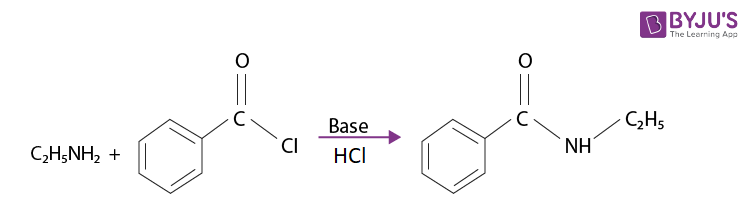
The reaction, also known as benzoylation, is the reaction that occurs when amines react with benzoyl chloride. One of the examples is illustrated below.
(vii) Gabriel phthalimide synthesis
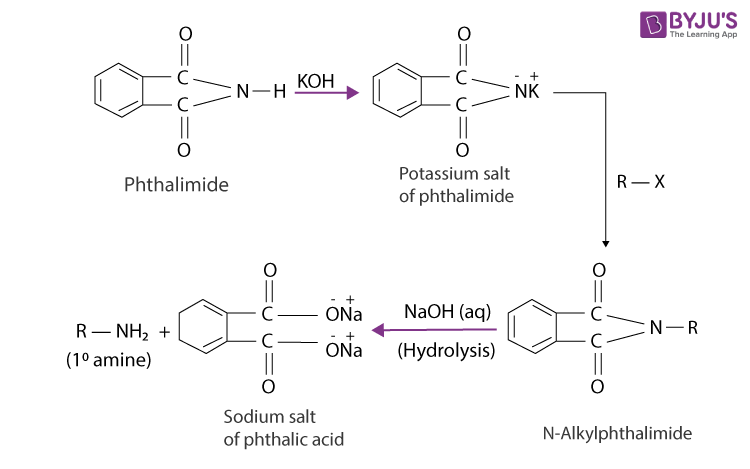
Gabriel phthalimide synthesis is a convenient and important method for the synthesis of aliphatic primary amines. It includes the reaction between phthalimide with ethanolic potassium hydroxide forming the potassium salt of phthalimide. This salt is then heated with an alkyl halide, which is succeeded by alkaline hydrolysis to give in the resultant primary amine.
Question 13.8:
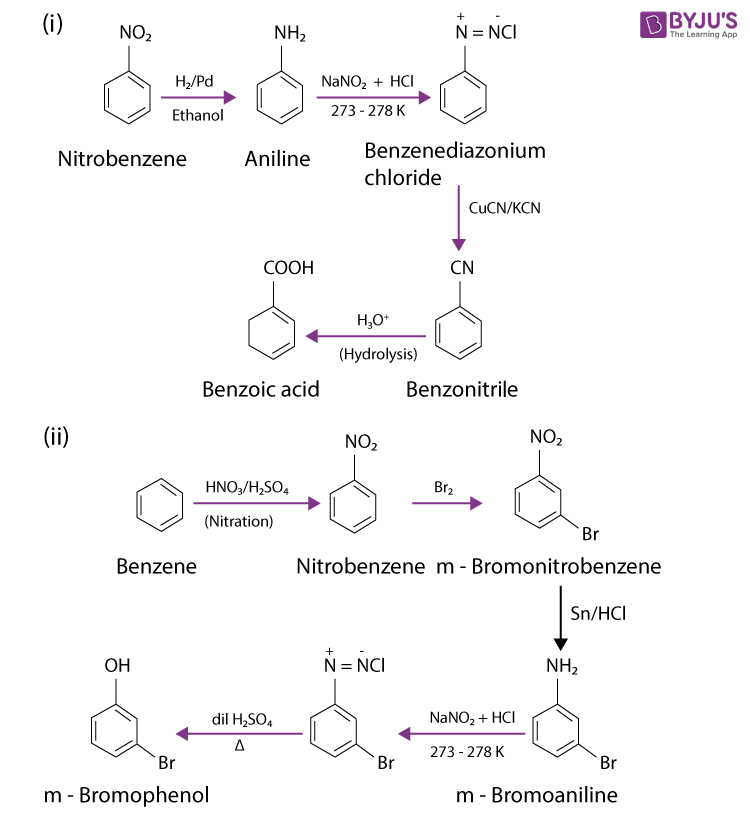
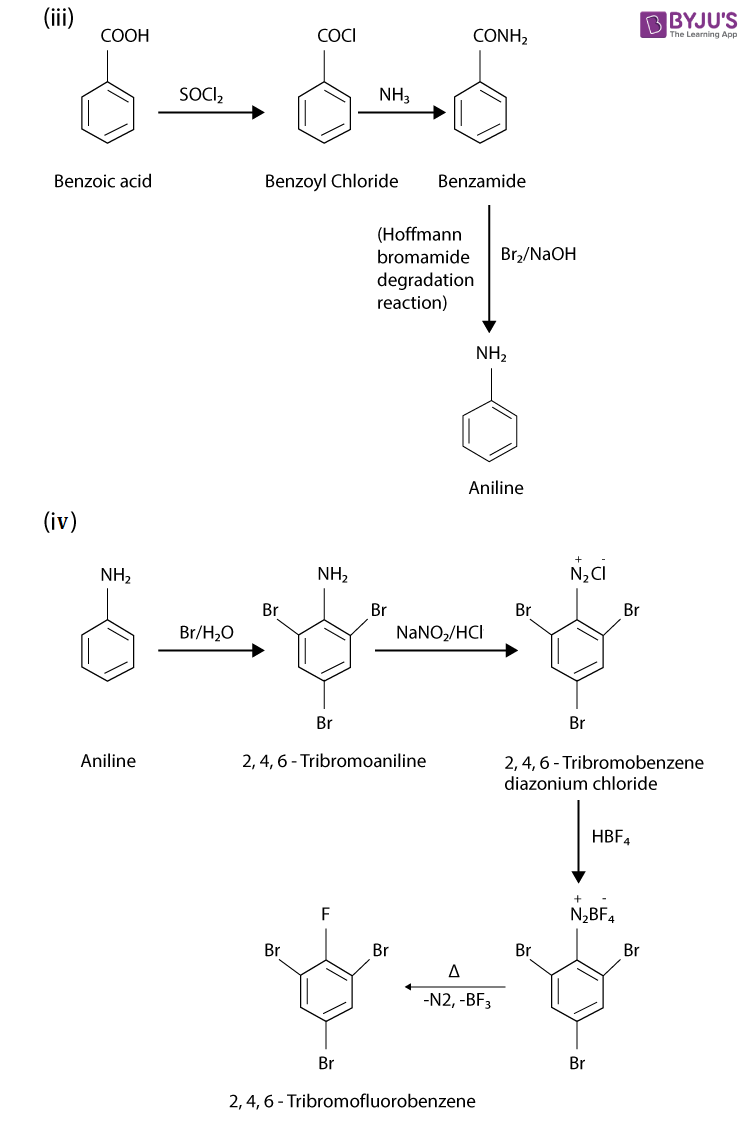
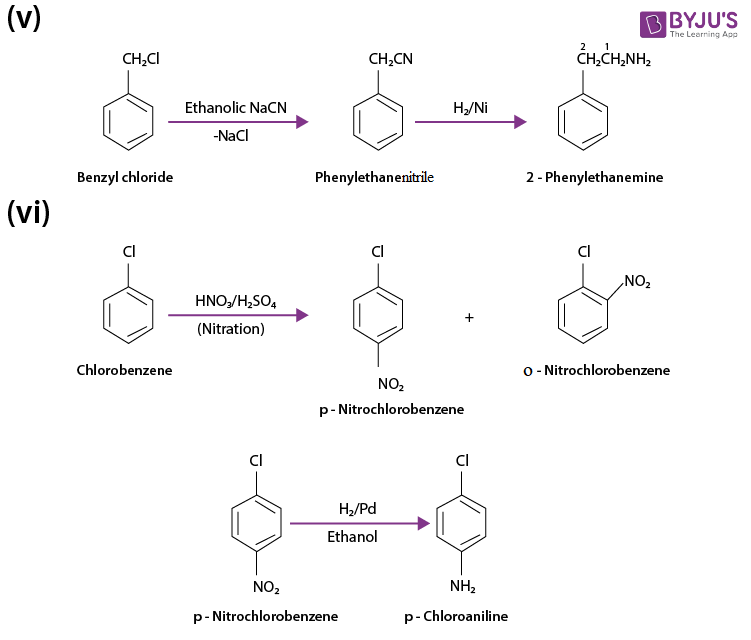
Accomplish the following conversions.
(i) Nitrobenzene to benzoic acid
(ii) Benzene to m-bromophenol
(iii) Benzoic acid to aniline
(iv) Aniline to 2, 4 ,6-tribromofluorobenzene
(v) Benzyl chloride to 2-phenylethanamine
(vi) Chlorobenzene to p-chloroaniline
Question 13.9 :
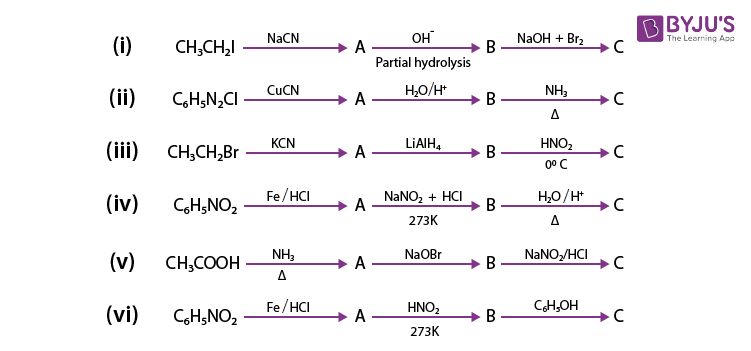
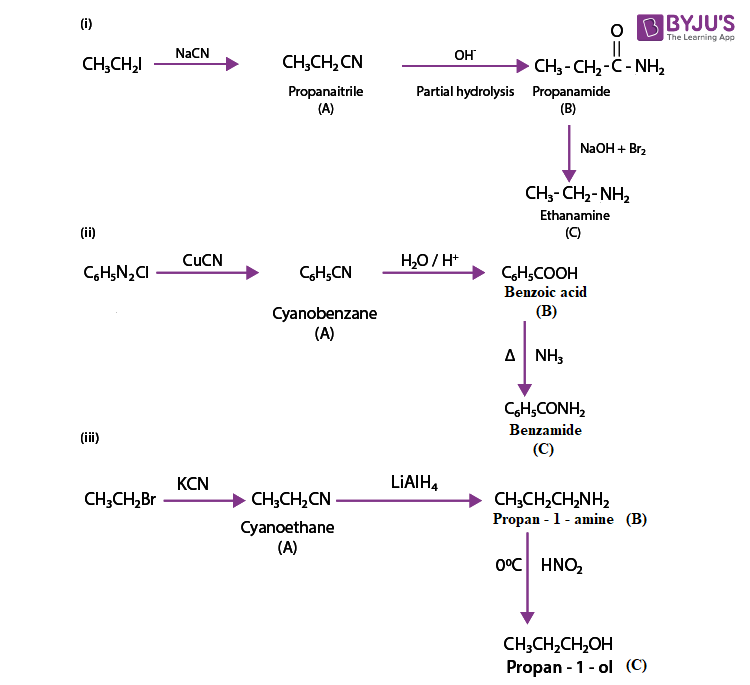
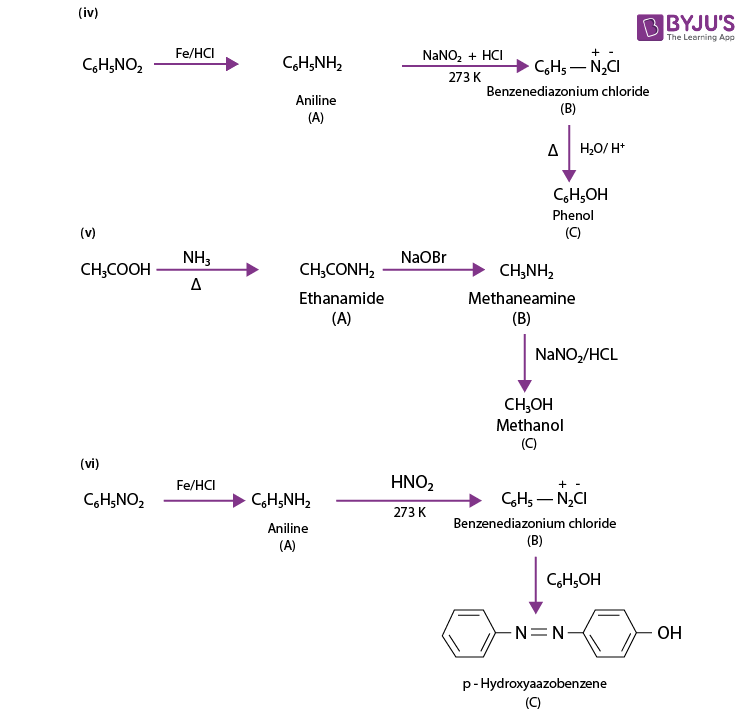
Give the structures of A, B and C in the following reactions.
Question 13.10:
An aromatic compound ‘A’ on treatment with aqueous ammonia and heating forms compound ‘B’, which on heating with Br2 and KOH forms a compound ‘C’ of molecular formula C6H7N. Write the structures and IUPAC names of compounds A, B and C.
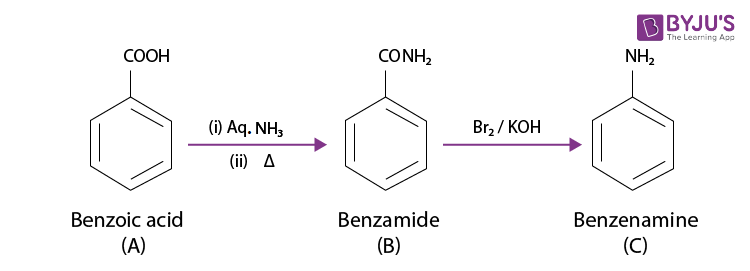
It is given that compound ‘C’ has the molecular formula, and C6 H7 N is formed by heating compound ‘B’ with Br2 and KOH. This is a Hoffmann bromamide degradation reaction. Therefore, compound ‘B’ is an amide and compound ‘C’ is an amine. The only amine having the molecular formula C6 H7 N is aniline (C6 H5 NH2).

Therefore, compound ‘B’ (from which ‘C’ is formed) must be benzamide (C6 H5 CO NH2).

Further, benzamide is formed by heating compound ‘A’ with aqueous ammonia.
Therefore, compound ‘A’ must be benzoic acid.

The given reactions can be explained with the help of the following equations:
Question 13.11:
Complete the following reactions.
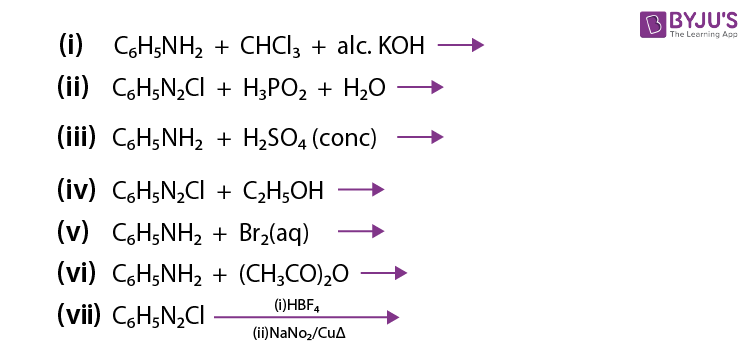
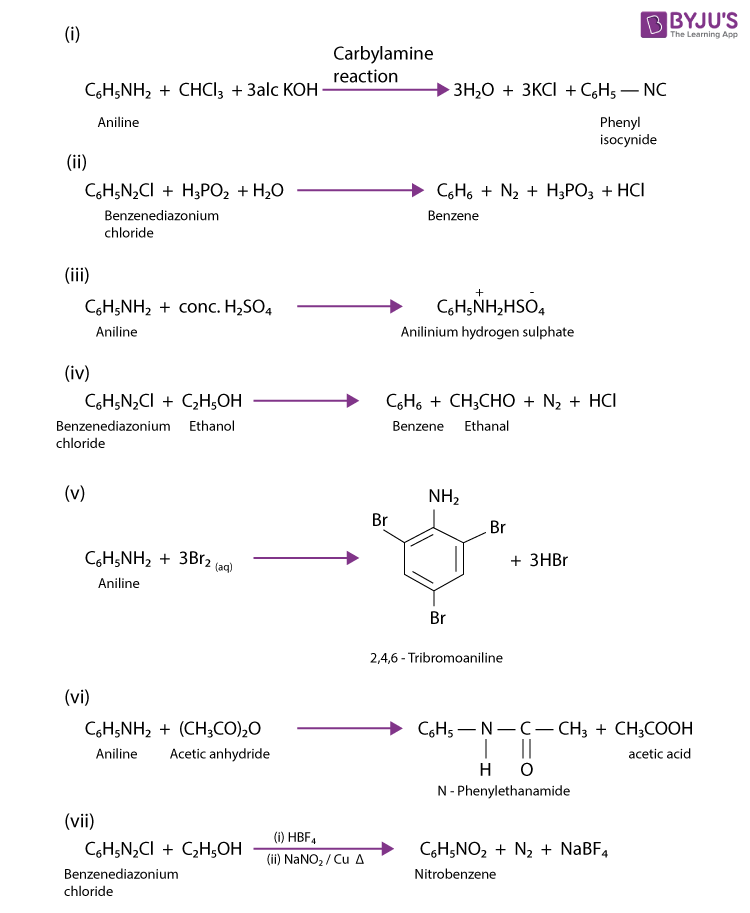
Question 13.12:
Why cannot aromatic primary amines be prepared by Gabriel phthalimide synthesis?
Gabriel phthalimide synthesis is usually used for the formation of aliphatic primary amines. This includes nucleophilic substitution ( SN2 ) of alkyl halides by the anion produced by the phthalimide.
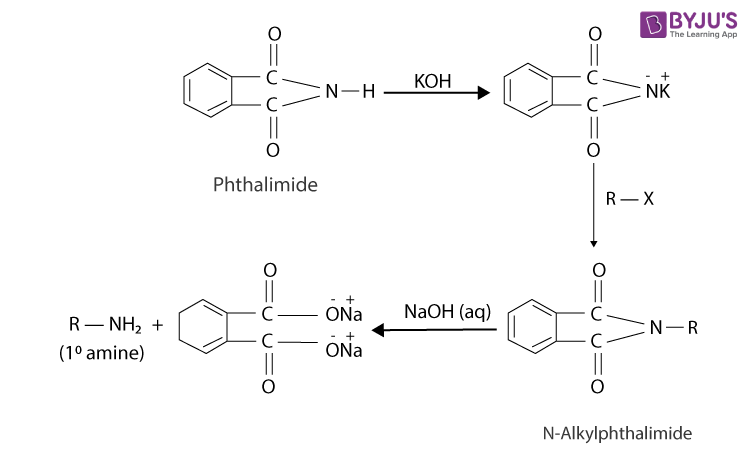
However, nucleophilic substitution with the anion formed by the phthalimide is not undergone by aryl halides.
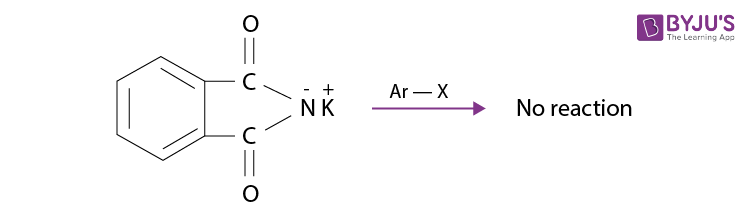
Therefore, Gabriel phthalimide synthesis is not preferred for preparing aromatic primary amines.
Question 13.13:
Write the reactions of
(i) Aromatic with nitrous acid.
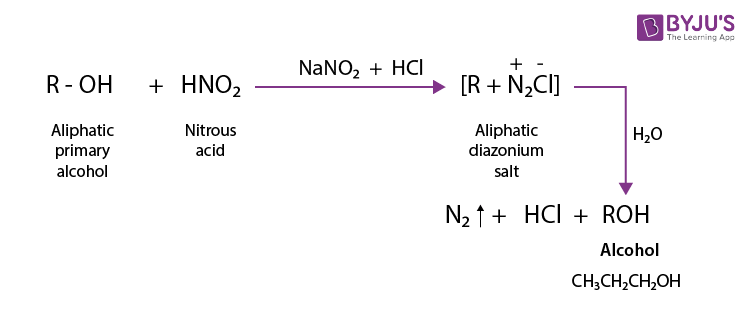
(ii) Aliphatic primary amines with nitrous acid.
(i) Aromatic amine when reacts with nitrous acid (which is made in situ from NaNO2 and a mineral acid, such as
(HCl) at 273 – 278 K forming stable aromatic diazonium salts, i.e., NaCl and H2 O.
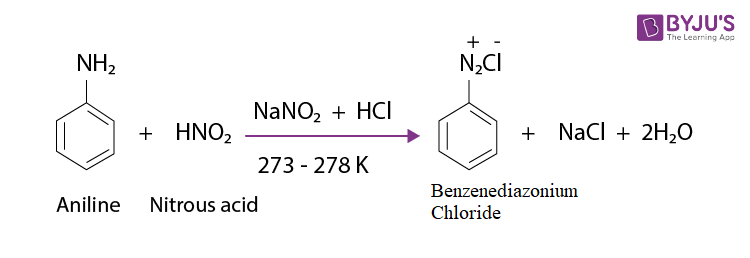
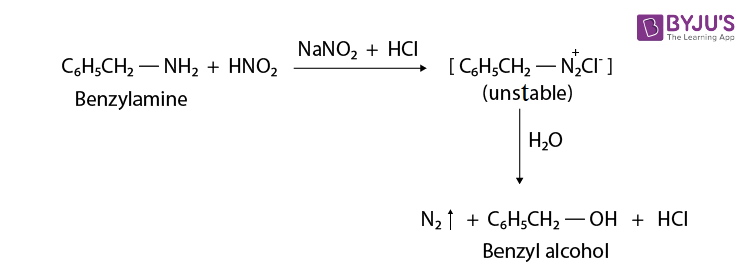
(ii) Aliphatic primary amines, when reacted with nitrous acid. (made in situ from NaNO2 and a mineral acid, such as HCl, forming unstable aliphatic diazonium salts, which later produce alcohol and HCl, along with the evolution of N2 gas.)
Question 13.14:
Give a plausible explanation for each of the following.
(i) Why are alcohols more acidic than amines of comparable molecular masses?
(ii) Why do tertiary amines have lower boiling points than primary amines?
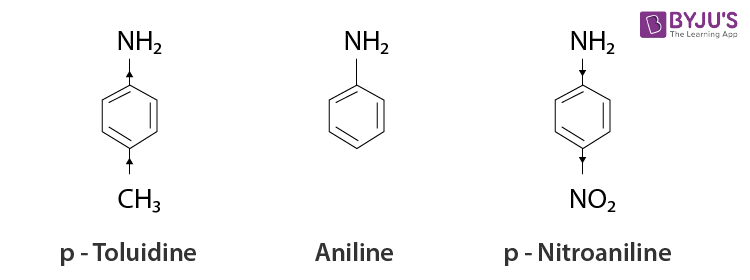
(iii) Why are aromatic amines weaker bases than aliphatic amines?
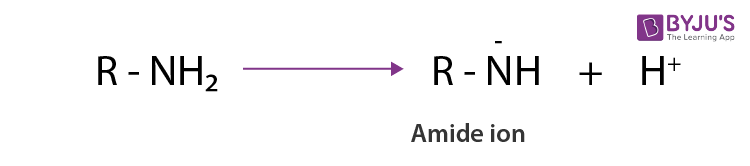
(i) Protonation of amines gives amide ions.
In the same way, alcohol gives away a proton which results in an alkoxide ion.
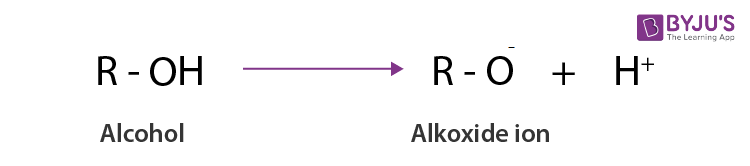
In an amide ion, N-atom has a negative charge on it, while in the alkoxide ion, the O- atom has a negative charge is on it. In view of the fact that O is more electronegative than N, O has the ability to hold the negative charge more effortlessly than N. consequently, the alkoxide ion is more stable than the amide ion. Therefore, alcohols more acidic than amines of comparable molecular masses
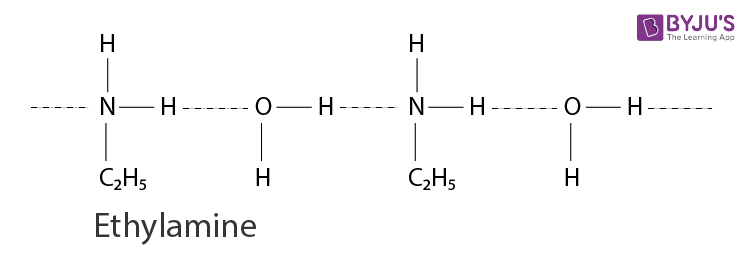
(ii) There are no H-atoms present in a molecule of a tertiary amine, while two hydrogen atoms are present in primary amines. Primary amines undergo extensive intermolecular H-bonding because of the presence of H-atoms.

Consequently, additional energy would be required to detach the molecules of primary amines. Therefore, tertiary amines have lower boiling points than primary amines.
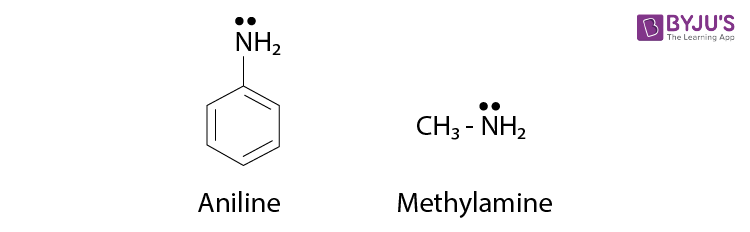
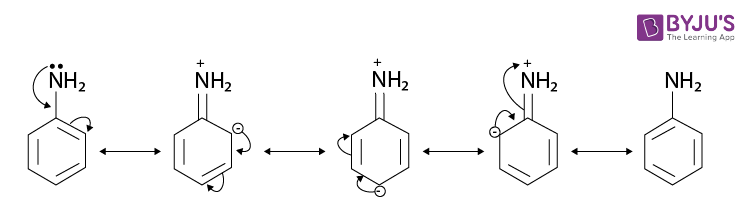
(iii) The availability of N-atom is fewer in aromatic amines; this is because of the R effect of the benzene ring. Thus, the electrons on the N-atom in aromatic amines cannot be donated easily. This explains why aliphatic amines are stronger bases than aromatic amines.
Class 12 Chemistry NCERT Solutions for Chapter 13 Amines
Chapter 13 Amines of Class 12 Chemistry is prepared as per the CBSE Syllabus for 2023-24. Amines are derivatives of ammonia obtained by the replacement of hydrogen. In the Class 12 NCERT Solutions for this chapter, students will be able to understand the nomenclature, properties and structure of amines. Amines are the most important nitrogen-containing organic compounds. Solved examples based on the basicity of amines, synthesis and reactions undergone by amines are well explained by our subject experts.
Subtopics of Class 12 Chemistry Chapter 13 – Amines
- Structure of Amines
- Classification
- Nomenclature
- Preparation of Amines
- Physical Properties
- Chemical Reactions
- Methods of preparation of Diazonium Salts
- Physical Properties
- Chemical reactions
- Importance of Diazonium salts in Synthesis of aromatic Compounds
Amines are derivatives of ammonia. They are obtained by replacing hydrogen atoms with an alkyl or aryl group. Either one or two or all three hydrogen atoms are replaced. Based on the number of hydrogen atoms replaced, amines are classified into three: Primary, Secondary and Tertiary amines.
Primary amines are formed when one hydrogen atom of ammonia is replaced by R or Ar. Secondary amines are formed when two hydrogen atoms of ammonia or one hydrogen atom of R-NH2 are replaced by an alkyl or aryl group. When all three hydrogen atoms of NH3 are replaced by an alkyl or aryl group, it is called a tertiary amine. This was a brief about the chapter according to the latest CBSE Syllabus.
Why Opt for BYJU’S?
To know more about the classification of amines like primary, secondary and tertiary and common names and IUPAC names of amines, properties of amines, methods of preparation, the difference between primary, secondary and tertiary amines, the importance of Diazonium salts, etc., sign up for free to BYJU’S – The Learning App to access the NCERT Solutions.
Apart from NCERT Solutions Class 12 Chemistry Chapter 13 Amines PDF, students can get NCERT Solutions for other chapters and other subjects as well. Students can download worksheets, assignments, solution PDFs and other study materials for the board exam preparation and score better marks.
For more information, visit BYJU’S website or download the BYJU’S – The Learning App for a comprehensive learning experience.
| Related Links |
| NCERT X Maths Solution |
NCERT Science Class 9 Solutions PDF |
| Science Solution Class 10 NCERT |
|