My Cart
Your Cart 0

    Your cart is empty.

  • Total (Amount) ₹0.00
NCERT · Class 10 · Science

Chapter 8: Heredity and Evolution

Practice each question, then open the answer or worked solution.

Exercises · Page 159

Textbook page 159 · 12 questions
Q1Written answer

A Mendelian experiment consisted of breeding tall pea plants bearing violet flowers with short pea plants bearing white flowers. The progeny all bore violet flowers, but almost half of them were short. This suggests that the genetic makeup of the tall parent can be depicted as

(a) TTWW

(b) TTww

(c) TtWW

(d) TtWw

Show solutionHide solution
Worked solution

Correct answer – (c)

TtWW might be the genetic makeup of the tall parent. Since half the progenies are short, this implies that the parent plant also will have a collection of short genes; all progenies bore violet flowers, further suggesting that violet colour is dominant over white.
Q2Written answer

An example of homologous organs is

(a) Our arm and a dog’s foreleg

(b) Our teeth and an elephant’s tusks

(c) Potato and runners of grass

(d) All of the above

Show solutionHide solution
Worked solution

Correct answer – (d)

Homologous organs have the same origin as each of the above organs but different functions. Homologous organs can be defined as the organs of various animals having similar basic structures but different functions. For example, a whale’s flippers, a frog’s forelimbs, and a man have the same basic structures but perform different functions, which is why they are called homologous organs.

Q3Written answer

In evolutionary terms, we have more in common with

(a) A Chinese schoolboy

(b) A chimpanzee

(c) A spider

(d) A bacterium

Show solutionHide solution
Worked solution

Correct answer – (a)

Humans and chimpanzees are related since they belong to the identical order (Primates) and the same family (Hominidae). However, a schoolboy, regardless of ethnicity, is still a Homo sapien.

Q4Written answer

A study found that children with light-coloured eyes are likely to have parents with light-coloured eyes. On this basis, can we say anything about whether the light eye colour trait is dominant or recessive? Why or why not?

Show solutionHide solution
Worked solution

Knowledge of at least 3 generations is required to find if an attribute is dominant or recessive. Hence, it is not possible to identify if the given trait is dominant or recessive.

Q5Written answer

How are the areas of study – evolution and classification – interlinked?

Show solutionHide solution
Worked solution

Classification and evolution are two related fields of biology. Evolution pertains to how organisms evolve, and classification deals with finding out how two species are related to each other. For example, evolution and fossil evidence point to the fact that Australopithecus afarensis is considered one of our earliest ancestors. And classification tells us that Australopithecus afarensis belongs to the genus Homo, which is also the same genus as modern humans.

Q6Written answer

Explain the terms analogous and homologous organs with examples.

Show solutionHide solution
Worked solution

Homologous organs are those organs that have the basic structural design as well as the origin; however, they serve different functions. For example, the forelimbs of humans and the wings of bats are anatomically similar.

Analogous organs are those organs that have a different structural design as well as origin; however, they perform similar functions. For example, the wings of birds and insects.

Q7Written answer

Outline a project which aims to find the dominant coat colour in dogs.

Show solutionHide solution
Worked solution

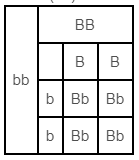
Dogs have a certain set of genes that govern coat colour. There are a minimum of eleven known sequence series (A, B, C, D, E, F, G, M, P, S, T) that influence the colour of a dog. A dog inherits one copy from each of its parents. As an example, within the B series, a dog is genetically black or brown. Assume that one parent is homozygous black (BB), whereas the other parent is homozygous brown (bb).

NCERT Solutions for Class 10 Chapter 9 Image 2

In this case, all the offspring are going to be heterozygous (Bb).

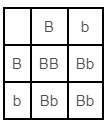
Since black (B) is dominant, all the offspring are going to be black. However, they are going to have each B and b alleles. If such heterozygous pups are crossed, they are going to produce 25 homozygous blacks (BB), 15 heterozygous black (Bb), and 25 homozygous brown (bb) offspring.

NCERT Solutions for Class 10 Chapter 9 Image 3

Q8Written answer

Explain the importance of fossils in deciding evolutionary relationships.

Show solutionHide solution
Worked solution

Fossils give evidence about:

(a) The organism and their paleobiology

(b) Even the behaviour of an organism can be deduced to some extent (for example, palaeontologists) have unearthed a site with more than 10,000 skeletons of a dinosaur called Hadrosaurus. This implies that the dinosaur lived in herds.

(c) Fossils also provide insight into the evolutionary history of animals and plants (for instance, palaeontologists have discovered that whales had evolved from goat-sized land-dwelling animals called Pakicetus).

Q9Written answer

What evidence do we have for the origin of life from inanimate matter?

Show solutionHide solution
Worked solution

The evidence on the origin of life from inanimate matter was provided by Stanley L. Miller and Harold C. Urey’s experiment, which was conducted in 1953. They created an artificial environment which was reminiscent of the early earth’s atmosphere – it contained ammonia, hydrogen and other gases which were thought to have existed during primordial earth.

This concoction of gases was kept at a temperature slightly below 100 ° C. Additionally, sparks were generated to simulate lightning, which was also thought to be common during that period. At the end of the experiment, he was able to create 11 out of the 20 amino acids which are required for life.

Q10Written answer

Explain how sexual reproduction gives rise to more viable variations than asexual reproduction. How does this affect the evolution of those organisms that reproduce sexually?

Show solutionHide solution
Worked solution

Sexual reproduction causes a lot of viable variations because of the following reasons:

(a) Error in copying of DNA (though it was rare)

(b) Random segregation of paternal and maternal chromosomes at the time of sex cell formation.

(c) Exchange of genetic material between homologous chromosomes during the formation of gametes.

(d) Accumulation of variations occurred because of reproduction over generation after generation, and choice naturally created wide diversity.

(e) In the case of asexual reproduction, variation is severely limited as there is only one parent involved. Hence, the offspring is genetically similar to the parent