My Cart
Your Cart 0

    Your cart is empty.

  • Total (Amount) ₹0.00
Previous year question hub

Latest Trends in Petroleum Engineering - Petroleum Engineering Previous Year Questions

Practice Latest Trends in Petroleum Engineering - Petroleum Engineering previous year questions organised from real papers, with year-wise coverage and clear topic navigation.

7Papers
7Years
17Questions
1Topics

Latest Trends in Petroleum Engineering question pattern

Every graph below is calculated only from this selection.

Questions by year

Year-wise coverage for Latest Trends in Petroleum Engineering. Each bar uses a separate theme-derived color.

Difficulty distribution

How the classified questions are distributed by difficulty.

Easy 10 58.8%
Medium 7 41.2%

Question type distribution

MCQ, numerical, multiple-select and other formats found in these papers.

MCQ 13 76.5%
MSQ 3 17.6%
Numerical Answer Type (NAT) 1 5.9%

Subject weightage

Top subjects by unique question coverage.

Petroleum Engineering
17 Qs

Most asked topics

Top topics across the included previous year papers.

Latest Trends in Petroleum Engineering
17 Qs

Subtopic coverage

Top subtopics inside this exact selection.

Unconventional Hydrocarbon Resources
13 Qs
Geological Carbon Dioxide Storage
4 Qs

Paper coverage

Question coverage for the most populated papers. Every active PYP paper remains listed below.

Petroleum Engineering (PE) 2024
2 Qs
Petroleum Engineering (PE) 2023
1 Qs
Petroleum Engineering (PE) 2021
2 Qs
Petroleum Engineering (PE) 2019
2 Qs
Petroleum Engineering (PE) 2018
3 Qs
Petroleum Engineering (PE) 2017
5 Qs
Petroleum Engineering (PE) 2016
2 Qs

Browse by subtopics

Open a focused page built from the same verified paper data.

Included previous year papers

Newest papers appear first. Sort by year, question coverage or name.

PaperYear / sessionQuestions in this viewOpen
Petroleum Engineering (PE) 202420242View paper
Petroleum Engineering (PE) 202320231View paper
Petroleum Engineering (PE) 202120212View paper
Petroleum Engineering (PE) 201920192View paper
Petroleum Engineering (PE) 201820183View paper
Petroleum Engineering (PE) 201720175View paper
Petroleum Engineering (PE) 201620162View paper

Sample previous year questions

A varied preview from the papers represented in this selection, with every available option.

1
2016 · Petroleum Engineering · Latest Trends in Petroleum Engineering · Unconventional Hydrocarbon Resources
Petroleum Engineering (PE) 2016

Gas hydrate forms at

Open complete paper
2
2017 · Petroleum Engineering · Latest Trends in Petroleum Engineering · Unconventional Hydrocarbon Resources
Petroleum Engineering (PE) 2017
The amount of methane gas evolved at 0°C and 1 atm from the dissociation of 1 m³ of methane gas hydrate, is approximately:
Open complete paper
3
2018 · Petroleum Engineering · Latest Trends in Petroleum Engineering · Geological Carbon Dioxide Storage
Petroleum Engineering (PE) 2018

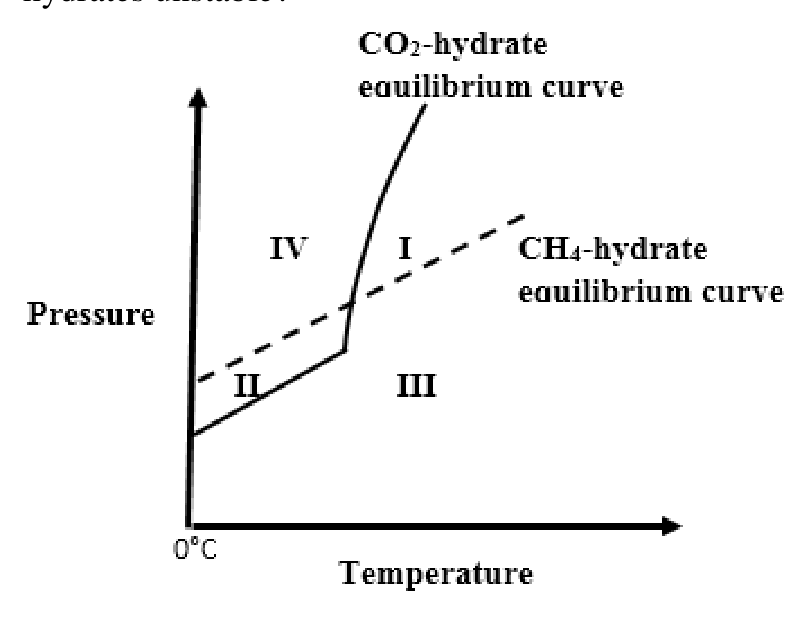
The CH4-hydrate equilibrium curve (dashed) and CO2-hydrate equilibrium curve (solid) on a pressure-temperature plane above 0°C are shown in the figure. The two curves divide the plane in four non-overlapping regions. In which region are CO2-hydrates stable and CH4-hydrates unstable?

Source question diagram

Open complete paper
4
2019 · Petroleum Engineering · Latest Trends in Petroleum Engineering · Unconventional Hydrocarbon Resources
Petroleum Engineering (PE) 2019

The capacity of a passenger airline is expressed in terms of

Open complete paper
5
2021 · Petroleum Engineering · Latest Trends in Petroleum Engineering · Geological Carbon Dioxide Storage
Petroleum Engineering (PE) 2021
When CO2 and liquid water are brought in contact with each other, they may form solid hydrates. The three-phase hydrate boundary is shown in the Pressure -Temperature plot given below.
Identify the correct statements.
G = Gas Phase, H = Hydrate Phase, L = Liquid Phase
Open complete paper
6
2024 · Petroleum Engineering · Latest Trends in Petroleum Engineering · Unconventional Hydrocarbon Resources
Petroleum Engineering (PE) 2024

From the options given below, identify the process through which coal bed methane is produced.

Open complete paper