Difficulty distribution
How the classified questions are distributed by difficulty.
Your cart is empty.
Practice Rotational Motion - Mechanics - Physics previous year questions organised from real papers, with year-wise coverage and clear topic navigation.
Every graph below is calculated only from this selection.
Year-wise coverage for Rotational Motion. Each bar uses a separate theme-derived color.
How the classified questions are distributed by difficulty.
MCQ, numerical, multiple-select and other formats found in these papers.
Top subjects by unique question coverage.
Top topics across the included previous year papers.
Top subtopics inside this exact selection.
Question coverage for the most populated papers. Every active PYP paper remains listed below.
Newest papers appear first. Sort by year, question coverage or name.
| Paper | Year / session | Questions in this view | Open |
|---|---|---|---|
| JEE Advanced 2026 Paper 1 Online | 2026 | 1 | View paper |
| JEE Advanced 2026 Paper 1 Online | 2026 | 1 | View paper |
| JEE Advanced 2026 Paper 1 Online | 2026 | 1 | View paper |
| JEE Advanced 2026 Paper 2 Online | 2026 | 2 | View paper |
| JEE ADVANCED 2025 PAPER 1 ONLINE | 2025 | 1 | View paper |
| JEE ADVANCED 2024 PAPER 1 ONLINE | 2024 | 2 | View paper |
| JEE ADVANCED 2023 PAPER 1 ONLINE | 2023 | 2 | View paper |
| JEE ADVANCED 2023 PAPER 2 ONLINE | 2023 | 2 | View paper |
| JEE ADVANCED 2022 PAPER 1 ONLINE | 2022 | 3 | View paper |
| JEE ADVANCED 2022 PAPER 2 ONLINE | 2022 | 1 | View paper |
| JEE ADVANCED 2021 PAPER 1 ONLINE | 2021 | 2 | View paper |
| JEE ADVANCED 2020 PAPER 1 OFFLINE | 2020 | 1 | View paper |
| JEE ADVANCED 2020 PAPER 2 OFFLINE | 2020 | 1 | View paper |
| JEE ADVANCED 2019 PAPER 2 OFFLINE | 2019 | 1 | View paper |
| JEE ADVANCED 2018 PAPER 1 OFFLINE | 2018 | 4 | View paper |
| JEE ADVANCED 2017 PAPER 1 OFFLINE | 2017 | 1 | View paper |
| JEE ADVANCED 2017 PAPER 2 OFFLINE | 2017 | 5 | View paper |
| JEE ADVANCED 2016 PAPER 1 OFFLINE | 2016 | 2 | View paper |
| JEE ADVANCED 2016 PAPER 2 OFFLINE | 2016 | 3 | View paper |
| JEE ADVANCED 2015 PAPER 1 OFFLINE | 2015 | 2 | View paper |
| JEE ADVANCED 2015 PAPER 2 OFFLINE | 2015 | 1 | View paper |
| JEE ADVANCED 2014 PAPER 1 OFFLINE | 2014 | 2 | View paper |
| JEE ADVANCED 2013 PAPER 1 OFFLINE | 2013 | 1 | View paper |
| IIT JEE 2012 PAPER 1 OFFLINE | 2012 | 3 | View paper |
| IIT JEE 2012 PAPER 2 OFFLINE | 2012 | 6 | View paper |
| IIT JEE 2011 PAPER 1 OFFLINE | 2011 | 3 | View paper |
| IIT JEE 2009 PAPER 1 OFFLINE | 2009 | 1 | View paper |
| IIT JEE 2009 PAPER 2 OFFLINE | 2009 | 1 | View paper |
| IIT JEE 2008 PAPER 1 OFFLINE | 2008 | 1 | View paper |
| IIT JEE 2008 PAPER 2 OFFLINE | 2008 | 3 | View paper |
| IIT JEE 2007 PAPER 1 OFFLINE | 2007 | 3 | View paper |
| IIT JEE 2007 PAPER 2 OFFLINE | 2007 | 2 | View paper |
| IIT JEE 2006 | 2006 | 2 | View paper |
| IIT JEE 2005 MAINS | 2005 | 3 | View paper |
| IIT JEE 2001 | 2001 | 1 | View paper |
| IIT JEE 2000 | 2000 | 1 | View paper |
Practice every matching question in batches of 20, with every available option.
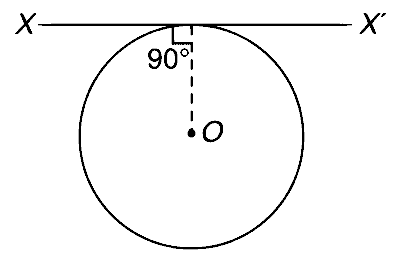
A thin wire of length $L$ and uniform linear mass density $\rho$ is bent into a circular loop with centre at $O$ as shown. The moment of inertia of the loop about the axis $XX'$ is:

One quarter section is cut from a uniform circular disc of radius $R$. This section has a mass $M$. It is made to rotate about a line perpendicular to its plane and passing through the centre of the original disc. Its moment of inertia about the axis of rotation is

A wooden log of mass M and length L is hinged by a frictionless nail at O; a bullet of mass m strikes with velocity \(v\) and sticks to it. Find angular velocity of the system immediately after the collision about O.
A cylinder of mass m and radius R rolls down on an inclined plane of inclination \(\theta\). Calculate the linear acceleration of axis of cylinder.
Two identical ladders, each of mass M and length L are resting on the rough horizontal surface as shown in the figure. A block of mass \(m\) hangs from P. If the system is in equilibrium, find the magnitude and the direction of frictional force at A and B.
A solid sphere of radius $R$ has moment of inertia $I$ about its geometrical axis. If it is melted into a disc of radius $r$ and thickness $t$. If its moment of inertia about the tangential axis (which is perpendicular to plane of the disc), is also equal to $I$, then the value of $r$ is equal to

A solid cylinder of mass m and radius $r$ is rolling on rough inclined plane of inclination $\theta$. The coefficient of friction between the cylinder and incline is $\mu$. then
When disc B is brought in contact with disc A, they acquire a common angular velocity in time t. The average frictional torque on one disc by the other during this period is
The ratio \({{{x_1}} \over {{x_2}}}\) is
The loss of kinetic energy during the above process is :
STATEMENT 1
If there is no external torque on a body about its center of mass, then the velocity of the center of mass remains constant.
Because
STATEMENT 2
The linear momentum of an isolated system remains constant.
A small object of uniform density rolls up a curved surface with an initial velocity \(v\). It reaches up to a maximum height of \(\frac{3 v^{2}}{4 g}\) with respect to the initial position. The object is

STATEMENT - 1 :
Two cylinders, one hollow (metal) and the other solid (wood) with the same mass and identical dimensions are simultaneously allowed to roll without slipping down an inclined plane from the same height. The hollow cylinder will reach the bottom of the inclined plane first.
and
STATEMENT - 2 :
By the principle of conservation of energy, the total kinetic energies of both the cylinders are identical when they reach the bottom of the incline.
The net external force acting on the disk when its centre of mass is at displacement x with respect to its equilibrium position is :
The maximum value of V\(_0\) for which the disk will roll without slipping is:
The centre of mass of the disk undergoes simple harmonic motion with angular frequency \(\omega\) equal to:
If the resultant of all the external forces acting on a system of particles is zero, then from an inertial frame, one can surely say that
A sphere is rolling without slipping on a fixed horizontal plane surface. In the figure below, A is the point of contact, B is the centre of the sphere and C is its topmost point. Then,

A metal rod of length L and mass m is pivoted at one end. A thin disk of mass M and radius R ( < L) is attached at its centre to the free end of the rod. Consider two ways the disc is attached : (case A). The disc is not free to rotate about its centre and (case B) the disc is free to rotate about its centre. The rod-disc system performs SHM in vertical plane after being released from the same displaced position. Which of the following statement(s) is(are) true?

A boy is pushing a ring of mass 2 kg and radius 0.5 m with a stick as shown in the figure. The stick applies a force of 2 N on the ring and rolls it without slipping with an acceleration of 0.2 m/s2. The coefficient of friction between the ground and the ring is large enough that rolling always occurs and the coefficient of friction between the stick and the ring is (P/10). The value of P is _________.

Showing 20 of 72 questions