Difficulty distribution
How the classified questions are distributed by difficulty.
Your cart is empty.
Practice Macroevolution - Evolution - Ecology and Evolution previous year questions organised from real papers, with year-wise coverage and clear topic navigation.
Every graph below is calculated only from this selection.
Compare question counts across years.
How the classified questions are distributed by difficulty.
MCQ, numerical, multiple-select and other formats found in these papers.
Top subjects by unique question coverage.
Top topics across the included previous year papers.
Top subtopics inside this exact selection.
Question coverage for the most populated papers. Every active PYP paper remains listed below.
Newest papers appear first. Search these papers or sort by year and name.
| Paper name | Year | Attempt | |
|---|---|---|---|
Ecology and Evolution (EY) 20252025 | 2025 |
|
|
Ecology and Evolution (EY) 20242024 | 2024 | |
|
Ecology and Evolution (EY) 20232023 | 2023 | |
|
Ecology and Evolution (EY) 20222022 | 2022 | |
|
Ecology and Evolution (EY) 20192019 | 2019 | |
|
Ecology and Evolution (EY) 20182018 | 2018 | |
|
Ecology and Evolution (EY) 20162016 | 2016 | |
|
Practice every matching question in batches of 20, with every available option.
A phylogenetic study finds that certain plants of peninsular India are more closely related to those in Australia than to those in China. Which of the following statements best explains this result?
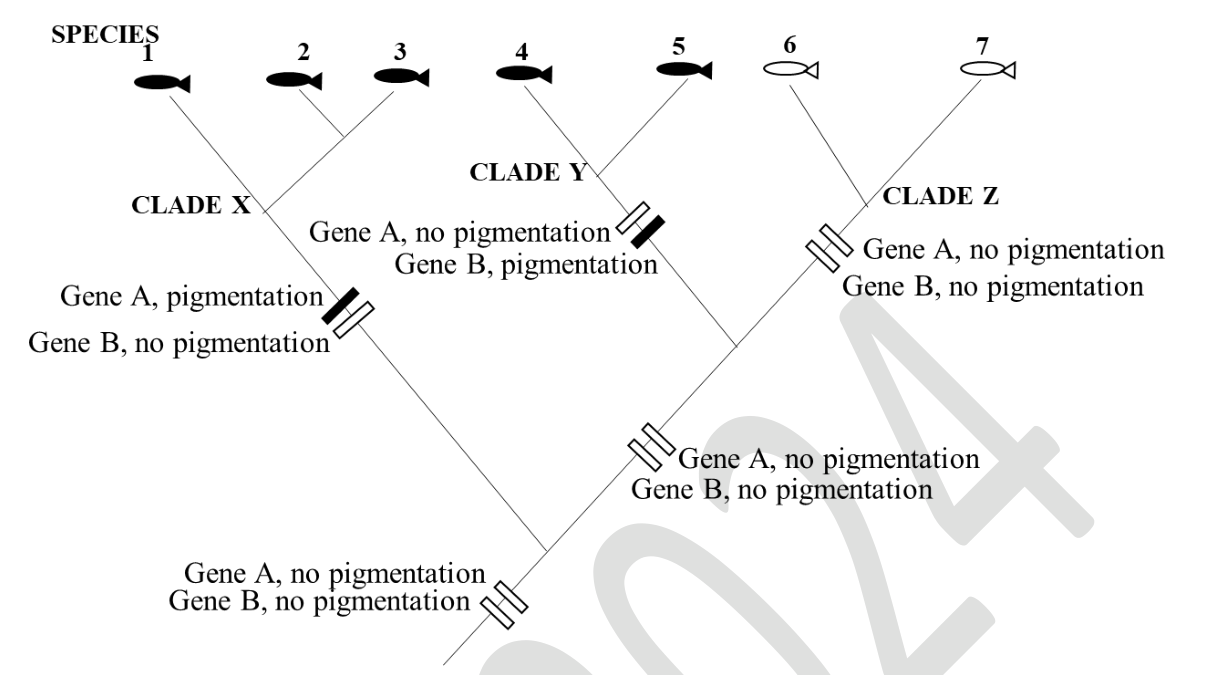
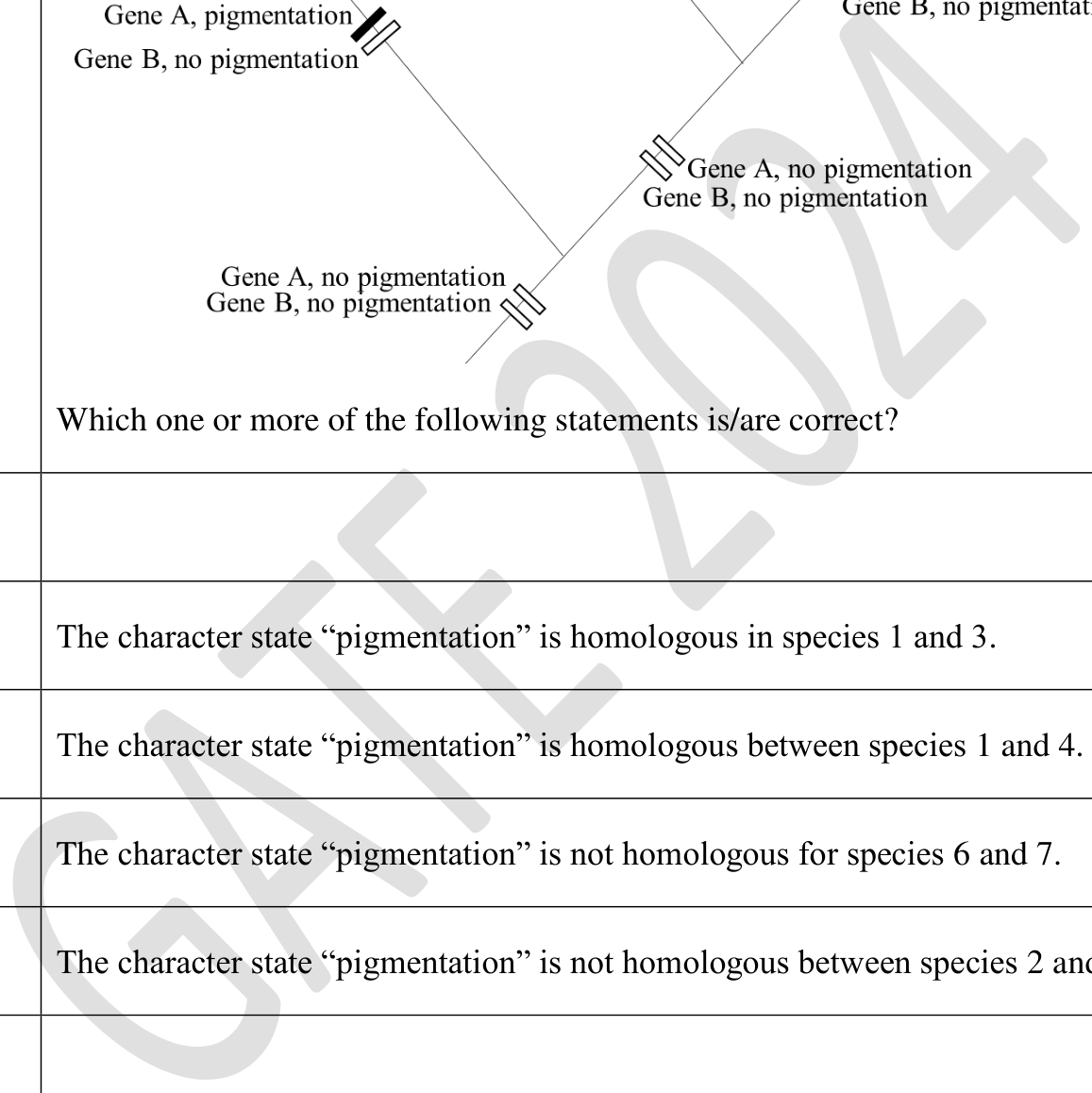
A phylogenetic tree for the evolution of two pigmentation traits in species of fish is shown for clades X, Y and Z. Genes A and/or B, if mutated, can cause dark pigmentation in the body. Which one or more of the following statements is/are correct?