- Total number of questions: 65
- 30 questions carry one mark each
- 35 questions carry two marks each
- Negative marking: 1/3 of the marks allotted to the question
- Use of calculator is allowed
- This is a proctored examination
- All other browser applications will be automatically closed
- After three warnings, the examination window will close automatically
Exam Details
Ecology and Evolution (EY) 2025
Review the key details, then start the test when you are ready. You can also open the full package to see related papers.
Questions
65
Duration
180 mins
Package
Ecology and Evolution (EY) - Previous Year Papers
Paper pattern & analysis
Filter this paper by subject, topic or subtopic. Every graph updates from the selected questions.
Topic distribution
Subtopic distribution
Difficulty distribution
65questions
Easy
60
92.3%
Hard
5
7.7%
Question type distribution
65questions
Multiple Choices
61
93.8%
Fill in the blanks
4
6.2%
Instructions
Ecology and Evolution (EY) 2025 – Instructions
Syllabus
Full Syllabus
Sample questions from this paper
Questions are selected across the paper subjects wherever the paper contains that variety.
2025 · Unclassified
Ecology and Evolution (EY) 2025
Q.1 – Q.5 carry one mark each.
Here are two analogous groups, Group-I and Group-II, that list words in their decreasing order of intensity. Identify the missing word in Group-II.
Group-I: Abuse → Insult → Ridicule Group-II: _______ → Praise → Appreciate
2025 · Unclassified
Ecology and Evolution (EY) 2025
Had I learnt acting as a child, I _______ a famous film star. Select the most appropriate option to complete the above sentence.
2025 · Unclassified
Ecology and Evolution (EY) 2025
The 12 musical notes are given as C, C♯, D, D♯, E, F, F♯, G, G♯, A, A♯, and B. Frequency of each note is 12√2 times the frequency of the previous note. If the frequency of the note C is 130.8 Hz, then the ratio of frequencies of notes F♯ and C is:
2025 · Unclassified
Ecology and Evolution (EY) 2025
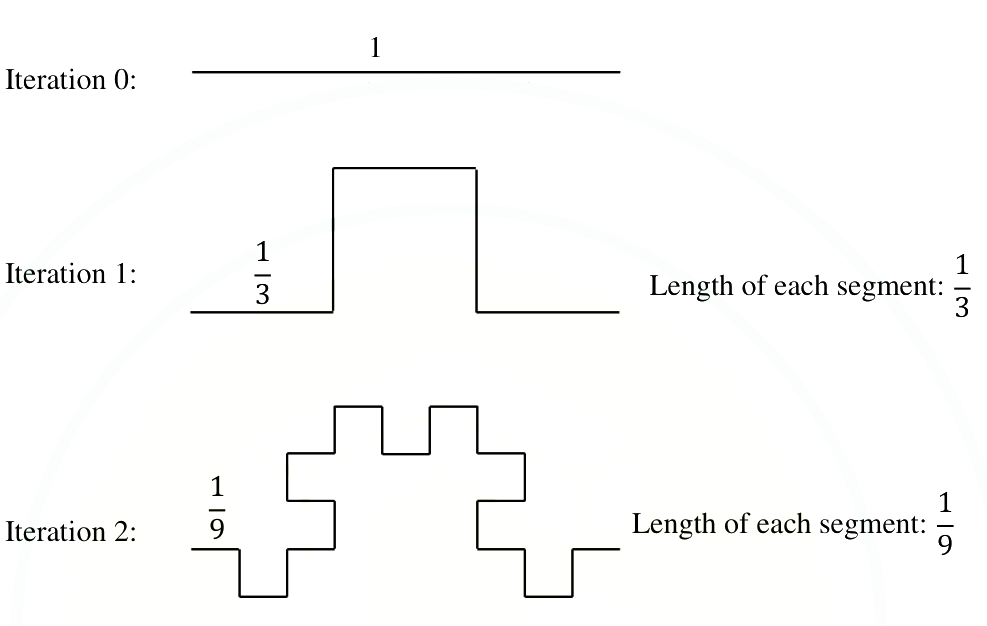
The following figures show three curves generated using an iterative algorithm. The total length of the curve generated after 'Iteration n' is: Note: The figures shown are representative.
2025 · Unclassified
Ecology and Evolution (EY) 2025
Which one of the following plots represents f(x) = -|x|/x, where x is a non-zero real number? Note: The figures shown are representative.
A
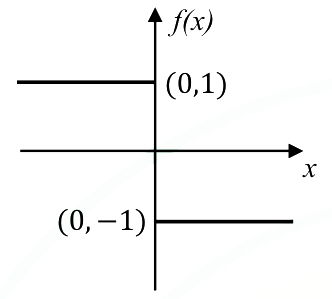
B
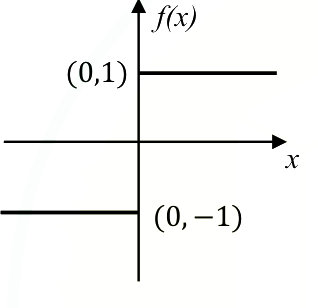
C
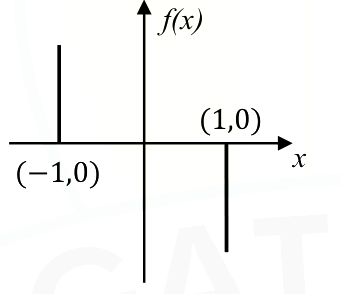
D
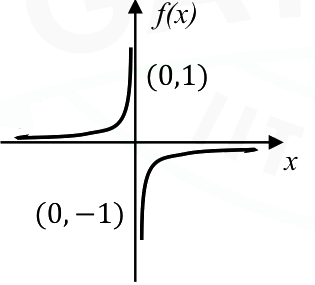
2025 · Unclassified
Ecology and Evolution (EY) 2025
Q.6 – Q.10 carry two marks each.
Identify the option that has the most appropriate sequence such that a coherent paragraph is formed:
P. Over time, such adaptations lead to significant evolutionary changes with the potential to shape the development of new species.
Q. In natural world, organisms constantly adapt to their environments in response to challenges and opportunities.
R. This process of adaptation is driven by the principle of natural selection, where favorable traits increase an organism’s chances of survival and reproduction.
S. As environments change, organisms that can adapt their behavior, structure and physiology to such changes are more likely to survive.