My Cart
Your Cart 0

    Your cart is empty.

  • Total (Amount) ₹0.00
Previous year question hub

Mechanics of Rigid Bodies - Engineering Sciences Previous Year Questions

Practice Mechanics of Rigid Bodies - Engineering Sciences previous year questions organised from real papers, with year-wise coverage and clear topic navigation.

17Papers
17Years
118Questions
1Topics

Mechanics of Rigid Bodies question pattern

Every graph below is calculated only from this selection.

Questions by year

Year-wise coverage for Mechanics of Rigid Bodies. Each bar uses a separate theme-derived color.

Difficulty distribution

How the classified questions are distributed by difficulty.

Medium 82 69.5%
Easy 32 27.1%
Hard 4 3.4%
Question type distribution

MCQ, numerical, multiple-select and other formats found in these papers.

MCQ 62 52.5%
Numerical Answer Type (NAT) 49 41.5%
MSQ 4 3.4%
Fill in the blanks 3 2.5%

Subject weightage

Top subjects by unique question coverage.

Engineering Sciences
118 Qs

Most asked topics

Top topics across the included previous year papers.

Mechanics of Rigid Bodies
118 Qs

Subtopic coverage

Top subtopics inside this exact selection.

Particle and Rigid-body Dynamics
66 Qs
Statics, Trusses and Friction
52 Qs

Paper coverage

Question coverage for the most populated papers. Every active PYP paper remains listed below.

Engineering Sciences (XE) 2026
7 Qs
Engineering Sciences (XE) 2025
10 Qs
Engineering Sciences (XE) 2024
10 Qs
Engineering Sciences (XE) 2023
8 Qs
Engineering Sciences (XE) 2022
10 Qs
Engineering Sciences (XE) 2021
9 Qs
Engineering Sciences (XE) 2020
7 Qs
Engineering Sciences (XE) 2019
6 Qs
Engineering Sciences (XE) 2018
7 Qs
Engineering Sciences (XE) 2017
7 Qs
Engineering Sciences (XE) 2016
8 Qs
Engineering Sciences (XE) 2015
9 Qs
Engineering Sciences (XE) 2014
6 Qs
Engineering Sciences (XE) 2013
5 Qs
Engineering Sciences (XE) 2012
6 Qs
Engineering Sciences (XE) 2010
2 Qs
Engineering Sciences (XE) 2007
1 Qs

Browse by subtopics

Open a focused page built from the same verified paper data.

Included previous year papers

Newest papers appear first. Sort by year, question coverage or name.

PaperYear / sessionQuestions in this viewOpen
Engineering Sciences (XE) 202620267View paper
Engineering Sciences (XE) 2025202510View paper
Engineering Sciences (XE) 2024202410View paper
Engineering Sciences (XE) 202320238View paper
Engineering Sciences (XE) 2022202210View paper
Engineering Sciences (XE) 202120219View paper
Engineering Sciences (XE) 202020207View paper
Engineering Sciences (XE) 201920196View paper
Engineering Sciences (XE) 201820187View paper
Engineering Sciences (XE) 201720177View paper
Engineering Sciences (XE) 201620168View paper
Engineering Sciences (XE) 201520159View paper
Engineering Sciences (XE) 201420146View paper
Engineering Sciences (XE) 201320135View paper
Engineering Sciences (XE) 201220126View paper
Engineering Sciences (XE) 201020102View paper
Engineering Sciences (XE) 200720071View paper

Sample previous year questions

A varied preview from the papers represented in this selection, with every available option.

1
2007 · Engineering Sciences · Mechanics of Rigid Bodies · Particle and Rigid-body Dynamics
Engineering Sciences (XE) 2007
The angular acceleration of the cylinder is given by
Open complete paper
2
2010 · Engineering Sciences · Mechanics of Rigid Bodies · Particle and Rigid-body Dynamics
Engineering Sciences (XE) 2010
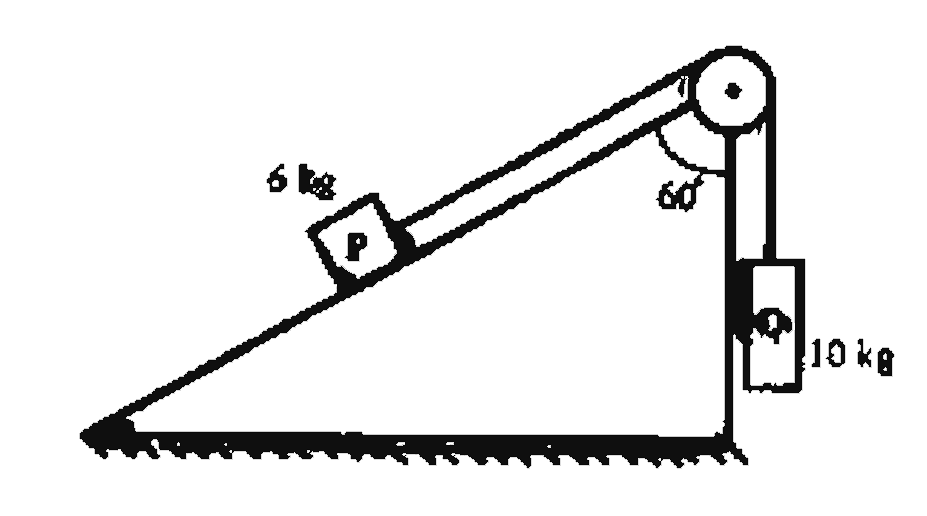
Two blocks P and Q are connected by a string, which passes over a pulley as shown in the figure. The block P is sliding on an inclined surface. Ignoring the masses of the string and the pulley, the tension in the string is (use gravitational acceleration \(g = 9.81\) m/s2 and neglect all friction)
Open complete paper
3
2012 · Engineering Sciences · Mechanics of Rigid Bodies · Particle and Rigid-body Dynamics
Engineering Sciences (XE) 2012
The power (in kW) required to propel the boat is

Question diagram

Open complete paper
4
2013 · Engineering Sciences · Mechanics of Rigid Bodies · Particle and Rigid-body Dynamics
Engineering Sciences (XE) 2013

A force F = 2 N is applied on a block of mass M = 0.5 kg as shown in the figure. The block is constrained to move along the horizontal direction in a guideway. Find out the distance (in meters) travelled by the block in 2 s starting from rest. Neglect any friction between the block and the guideway.

Open complete paper
5
2014 · Engineering Sciences · Mechanics of Rigid Bodies · Statics, Trusses and Friction
Engineering Sciences (XE) 2014
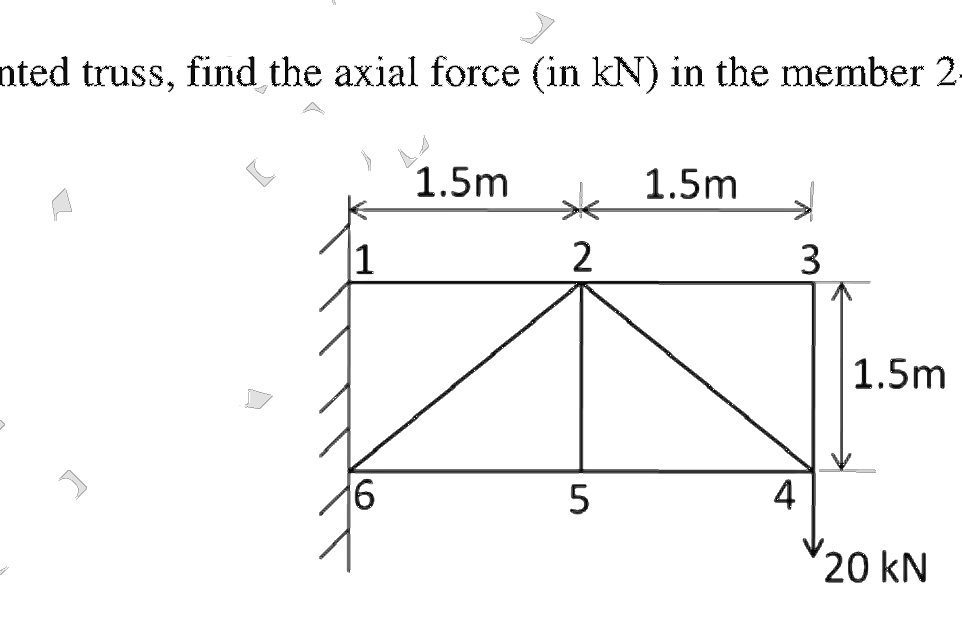
For the pin jointed truss, find the axial force (in kN) in the member 2-5.
Open complete paper
6
2015 · Engineering Sciences · Mechanics of Rigid Bodies · Statics, Trusses and Friction
Engineering Sciences (XE) 2015

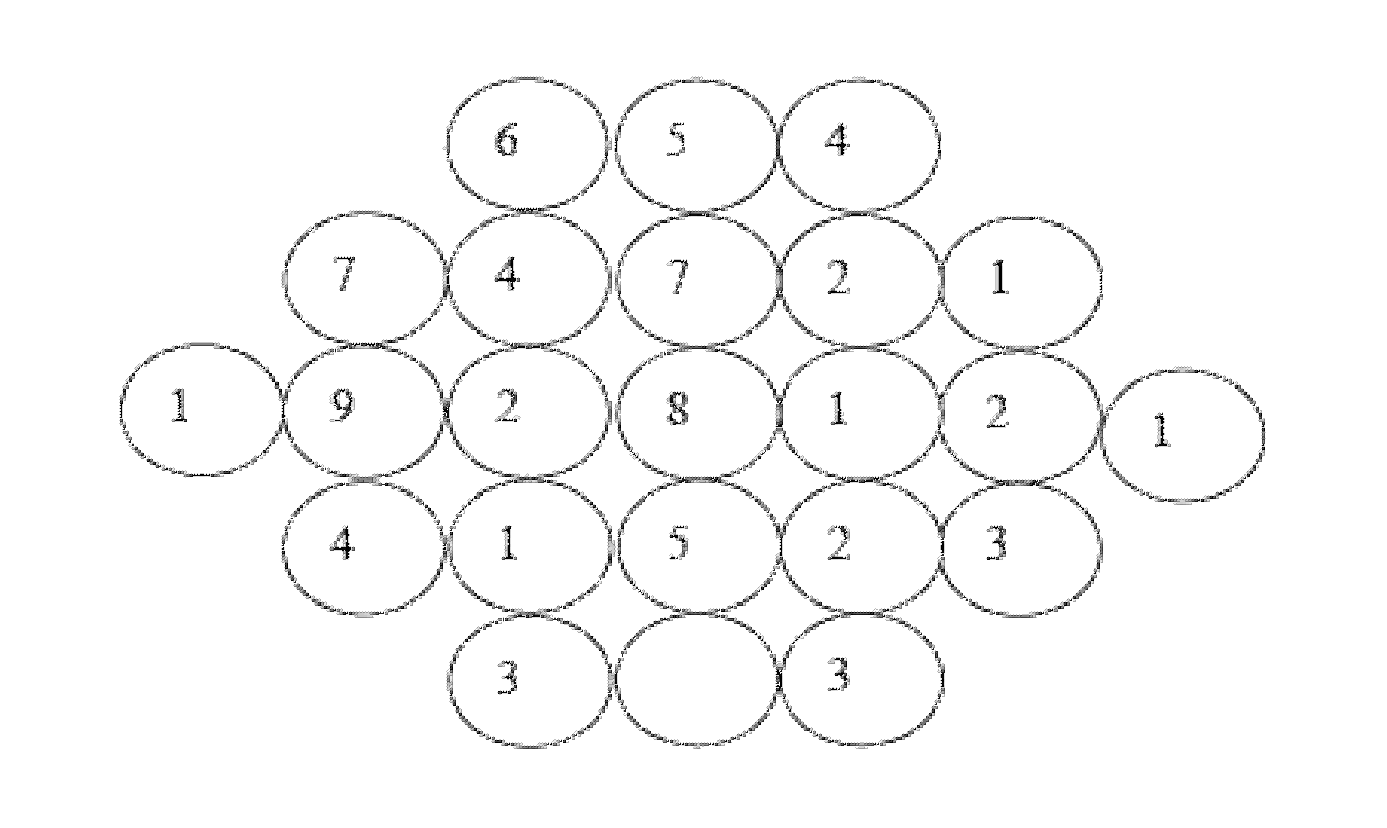
Fill in the missing value

Open complete paper