Q10Written answer
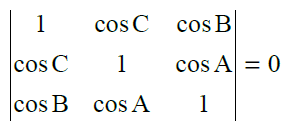
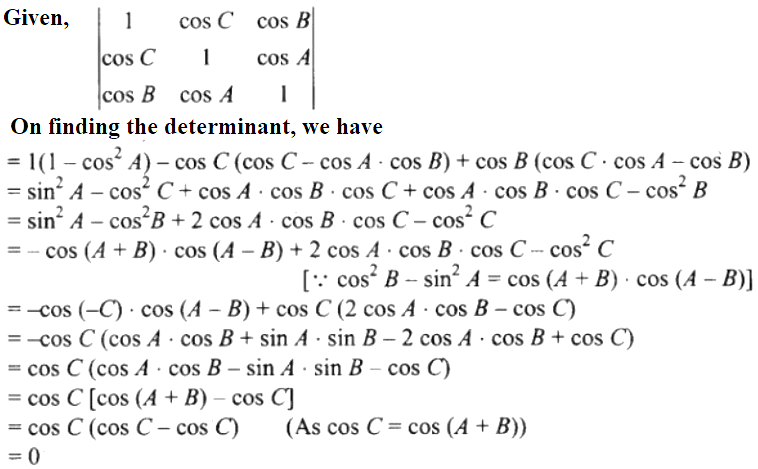
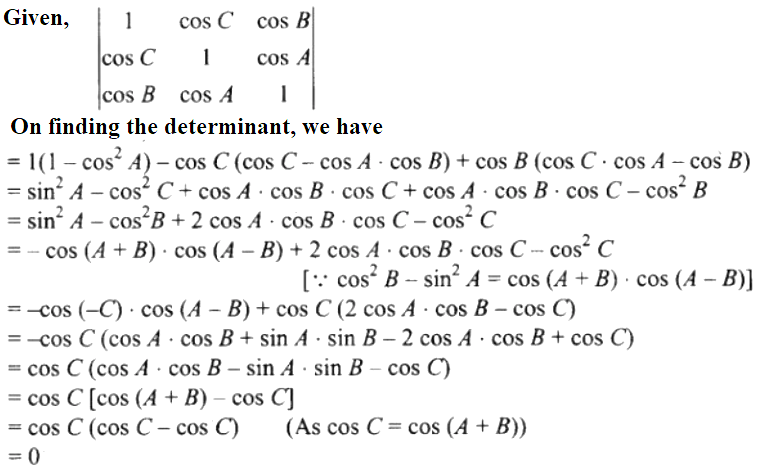
If A + B + C = 0, then prove that
Show solutionHide solution
Worked solution
Your cart is empty.
Practice each question, then open the answer or worked solution.
If A + B + C = 0, then prove that
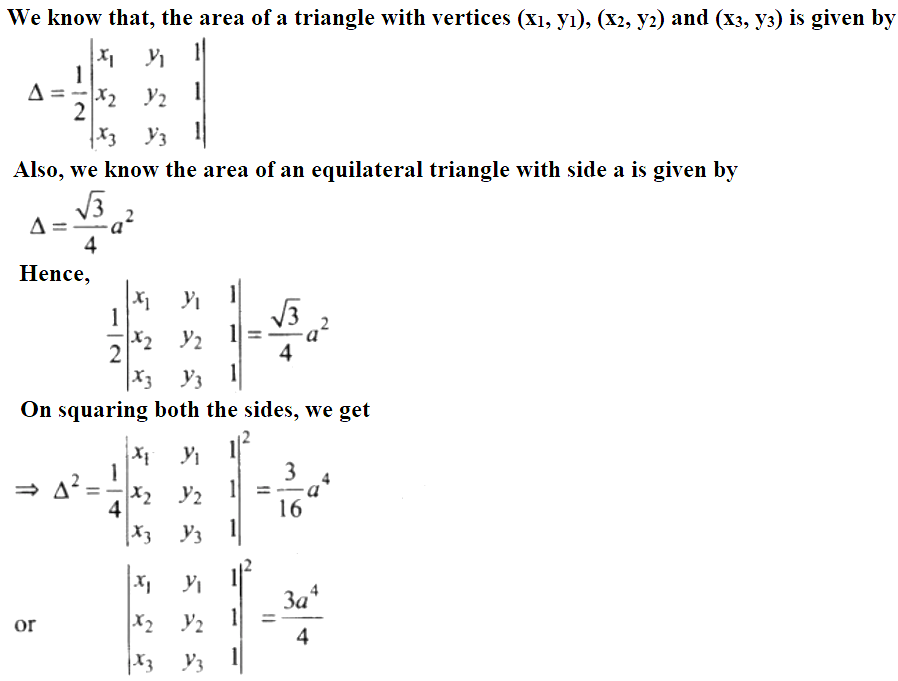
If the co-ordinates of the vertices of an equilateral triangle with sides of length ‘a’ are (x1, y1),
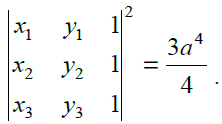
(x2, y2), (x3, y3), then
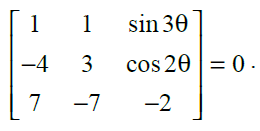
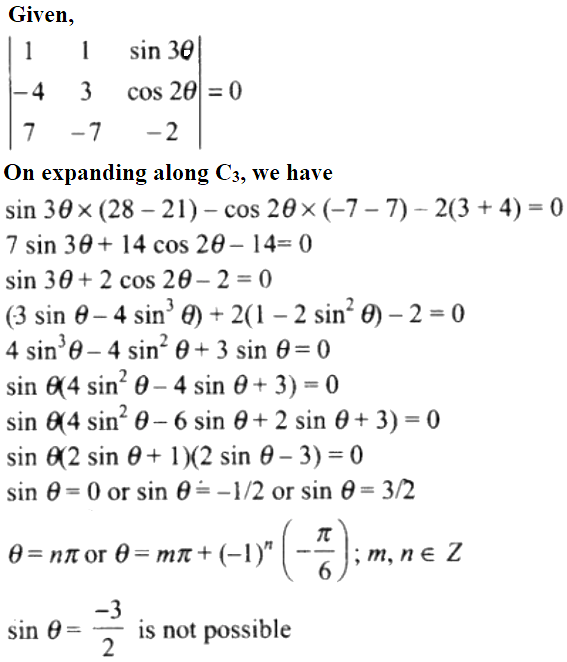
Find the value of q satisfying
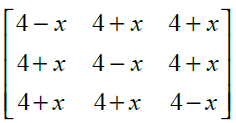
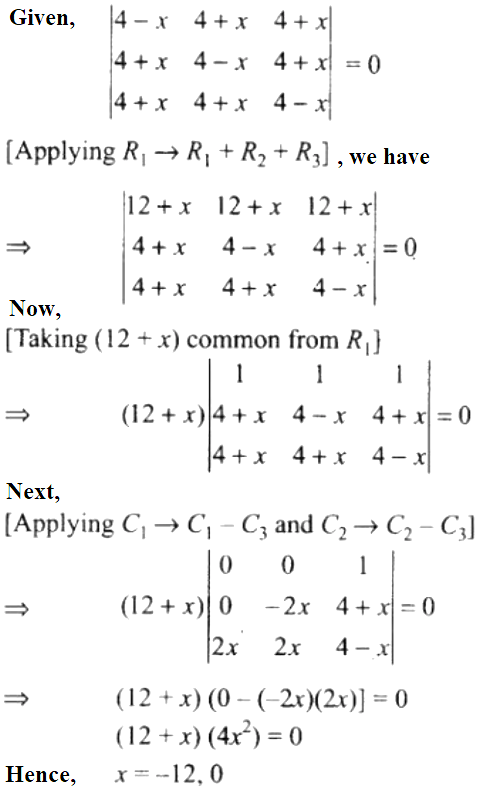
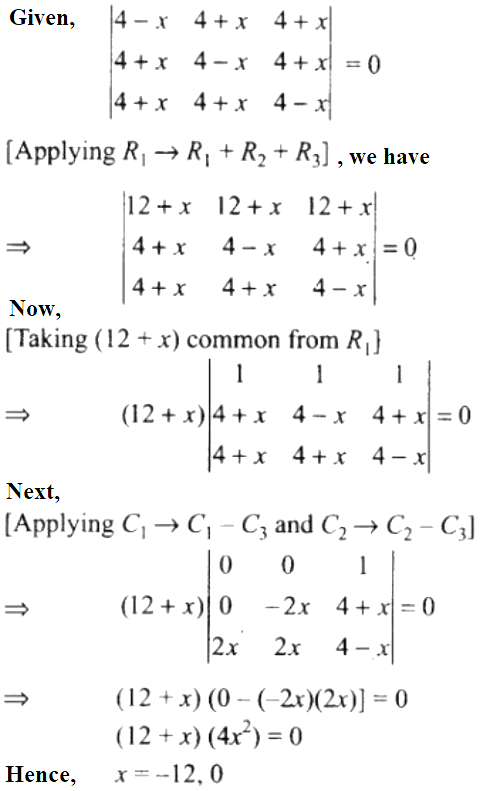
If , then find values of x.
If a1, a2, a3, …, ar are in G.P., then prove that the determinant
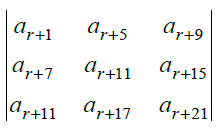
is independent of r.
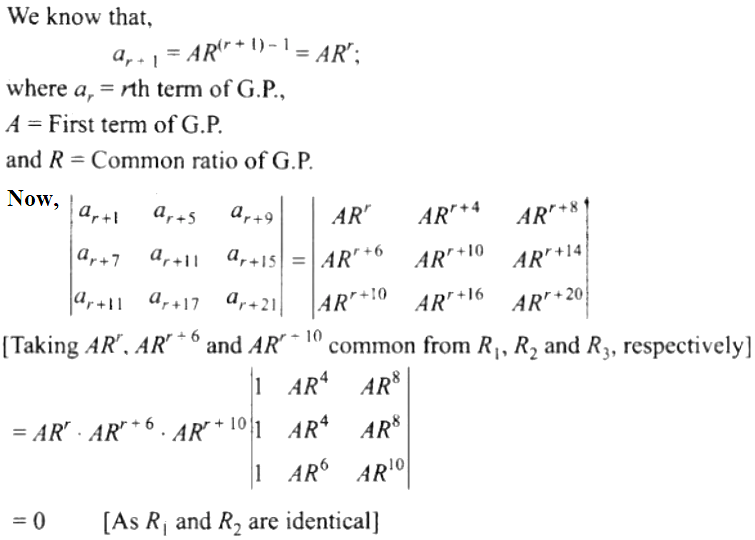
Hence, the determinant is independent of r.
Show that the points (a + 5, a – 4), (a – 2, a + 3) and (a, a) do not lie on a straight line for any value of a.
Given points are (a + 5, a – 4), (a – 2, a + 3) and (a, a).
Now, we have to prove that these points do not lie on a straight line.
So, if we prove that these points form a triangle then it can’t line on a straight line.
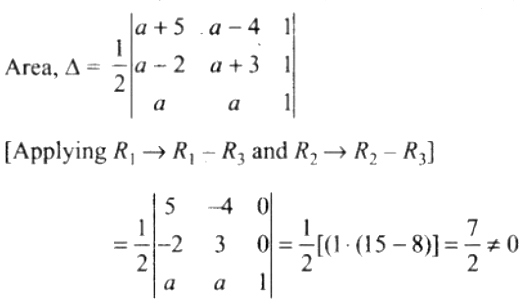
Hence, the given points form a triangle and can’t lie on a straight line.
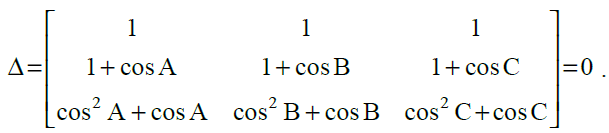
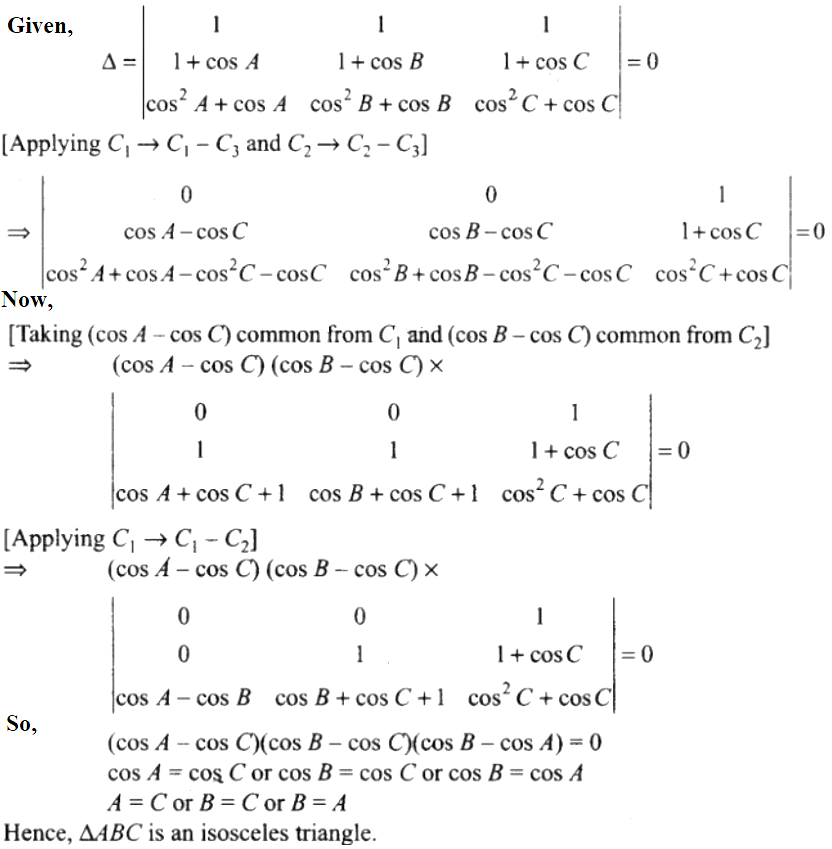
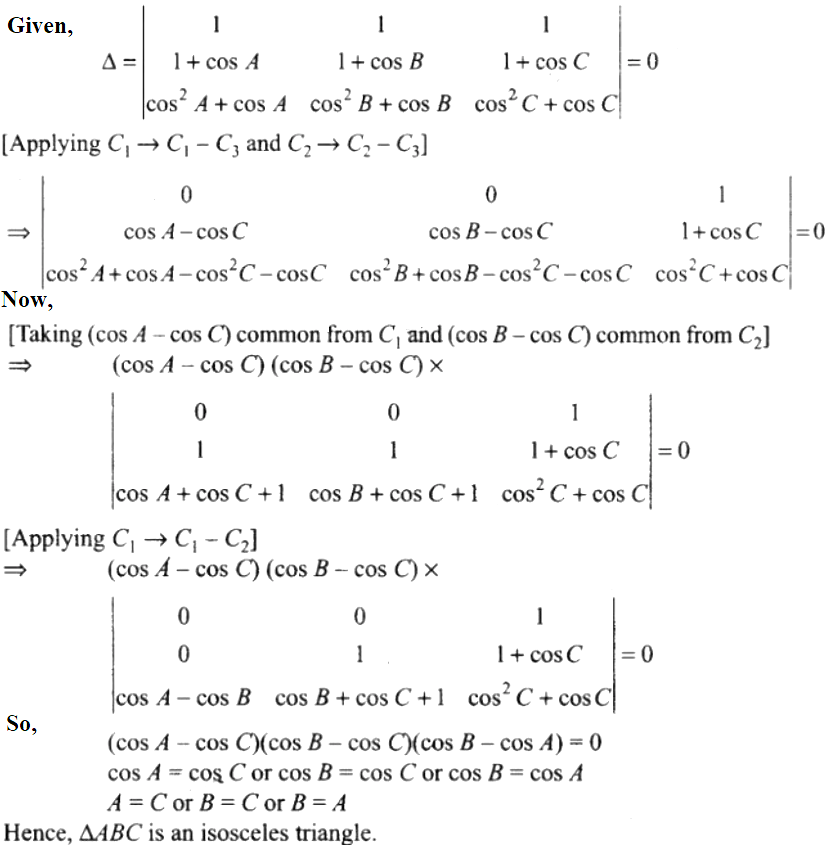
Show that the DABC is an isosceles triangle if the determinant
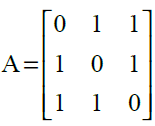
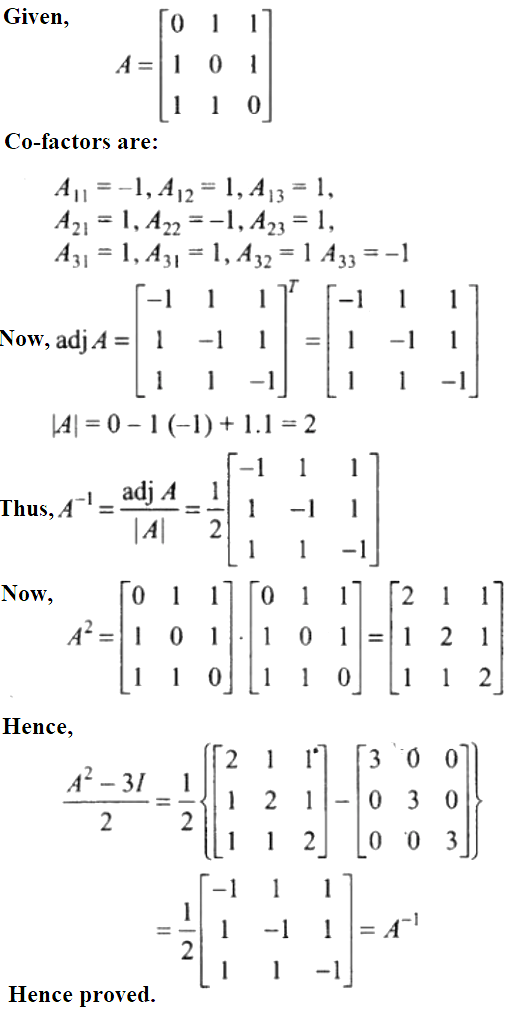
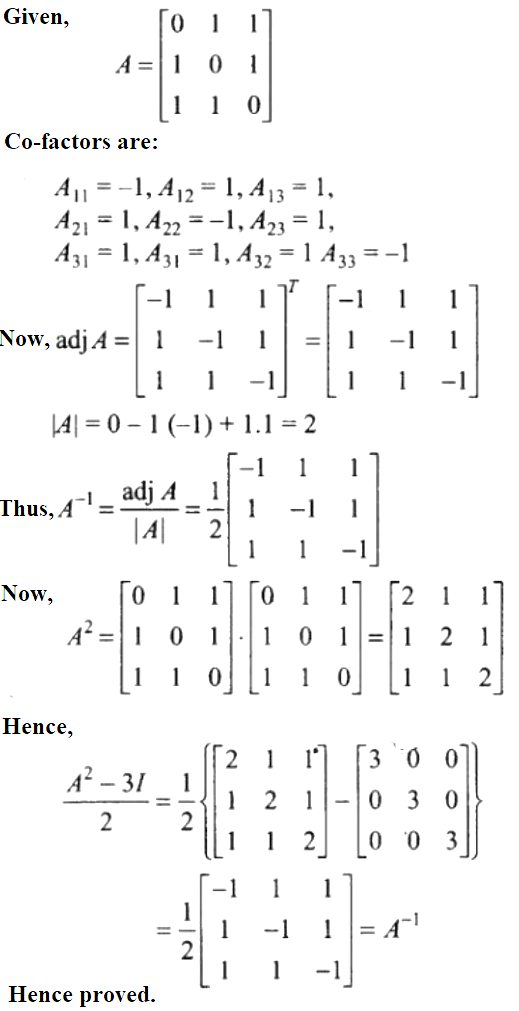
Find A–1 if and show that A-1 = (A2 – 3I)/ 2.
Long Answer (L.A.)
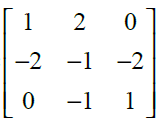
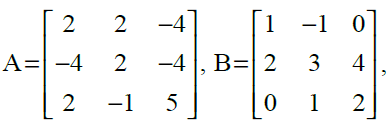
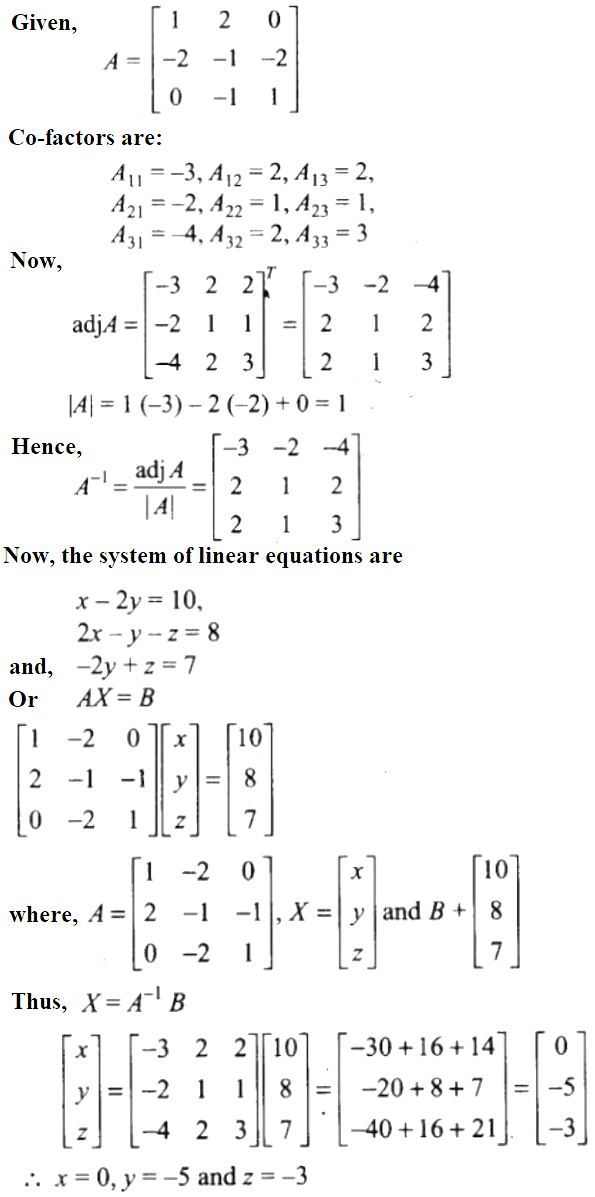
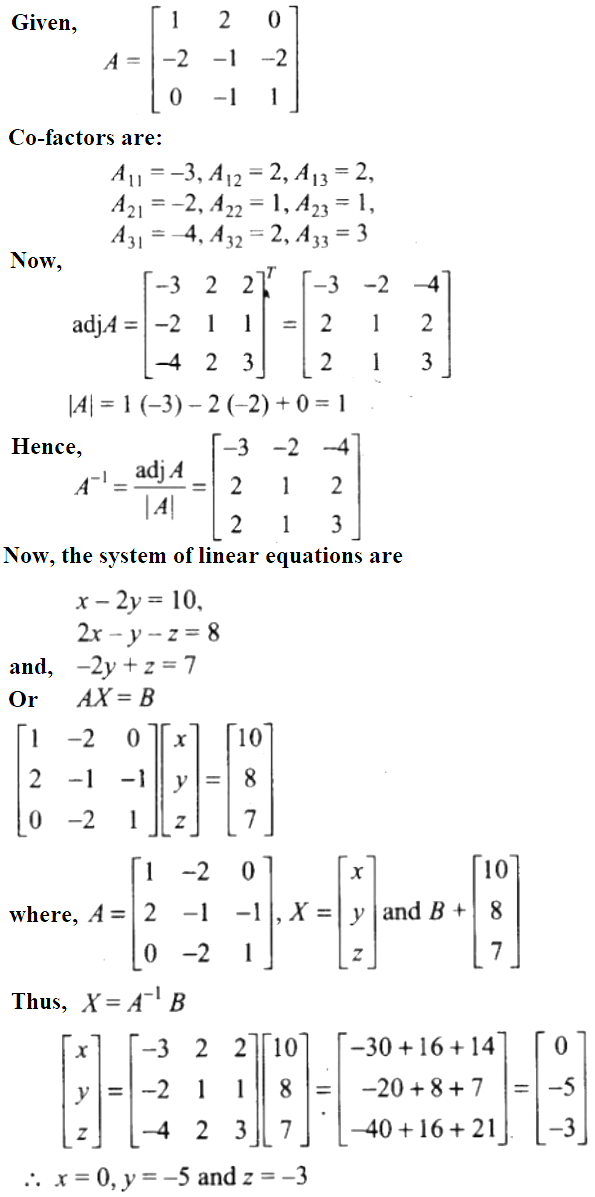
If A = , find A-1.
Using A–1, solve the system of linear equations
x – 2y = 10 , 2x – y – z = 8 , –2y + z = 7.
Using matrix method, solve the system of equations
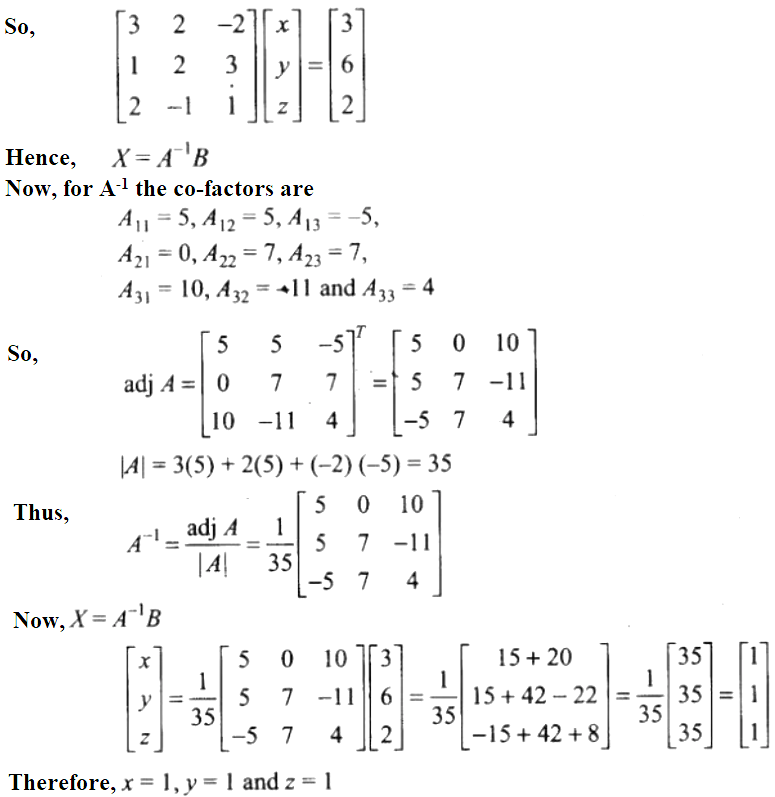
3x + 2y – 2z = 3, x + 2y + 3z = 6, 2x – y + z = 2.
Given system of equations are:
3x + 2y – 2z = 3
x + 2y + 3z = 6 and
2x – y + z = 2
Or,
AX = B