My Cart
Your Cart 0

    Your cart is empty.

  • Total (Amount) ₹0.00
NCERT Exemplar · Class 11 · Maths

Chapter 1: Sets

Practice each question, then open the answer or worked solution.

Exercise · Page 12

Textbook page 12 · 29 questions
Q11Written answer

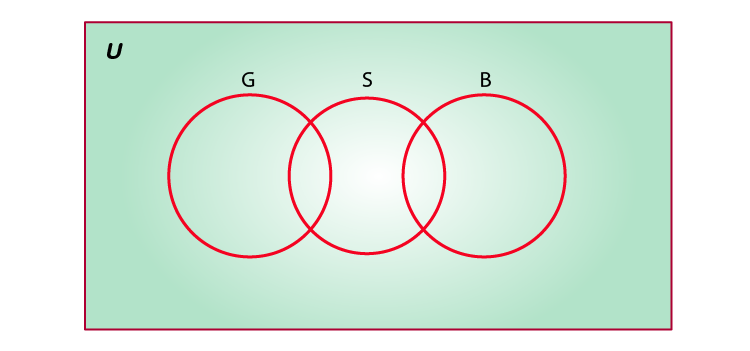
Let U be the set of all boys and girls in a school, G be the set of all girls in the school, B be the set of all boys in the school, and S be the set of all students in the school who take swimming. Some, but not all, students in the school take swimming. Draw a Venn diagram showing one of the possible interrelationship among sets U, G, B and S.

Show solutionHide solution
Worked solution

According to the question,

There are four sets U, G, B, S

Here,

U = a universal set containing set of all boys and girls in a school

G = set of all girls in the school

B = set of all boys in the school

S = set of all students in the school who take swimming

The Venn diagram showing relation of given sets is:
NCERT Exemplar Class 11 Maths Chapter 1-5

Q12Written answer

For all sets A, B and C, show that (A – B) ∩ (A – C) = A – (B ∪ C)

Show solutionHide solution
Worked solution

According to the question,

There are three sets A, B and C

To show:

(A – B) ∩ (A – C) = A – (B ∪ C)

Let x ∈ (A – B) ∩ (A – C)

⇒ x ∈ (A – B) and x ∈ (A – C)

⇒ (x ∈ A and x ∉ B) and (x ∈ A and x ∉ C)

⇒ x ∈ A and (x ∉ B and x ∉ C)

⇒ x ∈ A and x ∉ (B ∪ C)

⇒ x ∈ A – (B ∪ C)

⇒ (A – B) ∩ (A – C) ⊂ A – (B ∪ C) …(i)

Let y ∈ A – (B ∪ C)

⇒ y ∈ A and y ∉ (B ∪ C)

⇒ y ∈ A and (y ∉ B and y ∉ C)

⇒ (y ∈ A and y ∉ B) and (y ∈ A and y ∉ C)

⇒ y ∈ (A – B) and y ∈ (A – C)

⇒ y ∈ (A – B) ∩ (A – C)

⇒ A – (B ∪ C) ⊂ (A – B) ∩ (A – C) …(ii)

We know that,

If P ⊂ Q and Q ⊂ P

Then, P = Q

Therefore, from equations (i) and (ii),

A – (B ∪ C) = (A – B) ∩ (A – C)

Determine whether each of the statement in Exercises 13 – 17 is true or false. Justify your answer.

Q13Written answer

For all sets A and B, (A – B) ∪ (A ∩ B) = A

Show solutionHide solution
Worked solution

True

According to the question,

There are two sets A and B

To check: (A – B) ∪ (A ∩ B) = A is true or false

L.H.S = (A – B) ∪ (A ∩ B)

Since, A – B = A ∩ B’,

We get,

= (A ∩ B’) ∪ (A ∩ B)

Using distributive property of set:

We get,

(A ∩ B) ∪ (A ∩ C) = A ∩ (B ∪ C)

= A ∩ (B’ ∪ B)

= A ∩ U

= A

= R.H.S

Hence, the given statement “for all sets A and B, (A – B) ∪ (A ∩ B) = A” is true

Q14Written answer

For all sets A, B and C, A – (B – C) = (A – B) – C

Show solutionHide solution
Worked solution

False

According to the question,

There are three sets A, B and C

To check: A – (B – C) = (A – B) – C is true or false

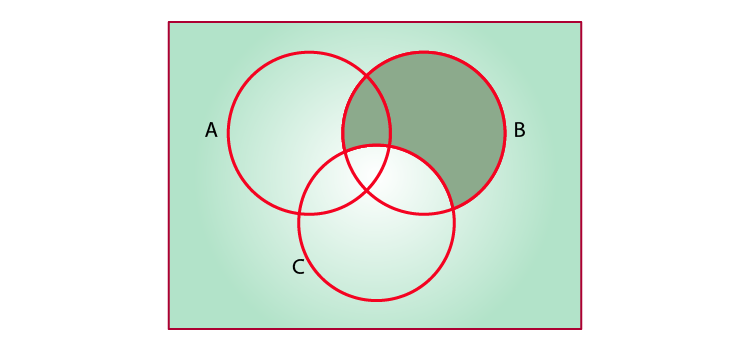
Step 1:

NCERT Exemplar Class 11 Maths Chapter 1-6

B – C

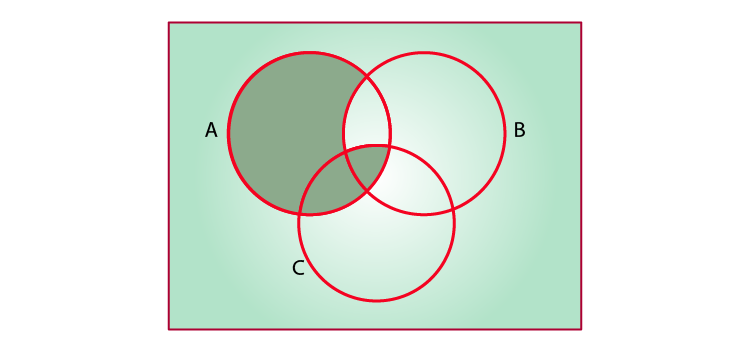
Step 2:

NCERT Exemplar Class 11 Maths Chapter 1- 7

A – (B – C)

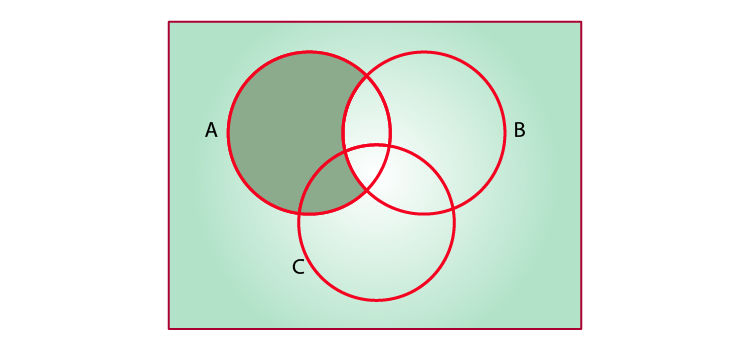
Step 3:

NCERT Exemplar Class 11 Maths Chapter 1-8

A – B

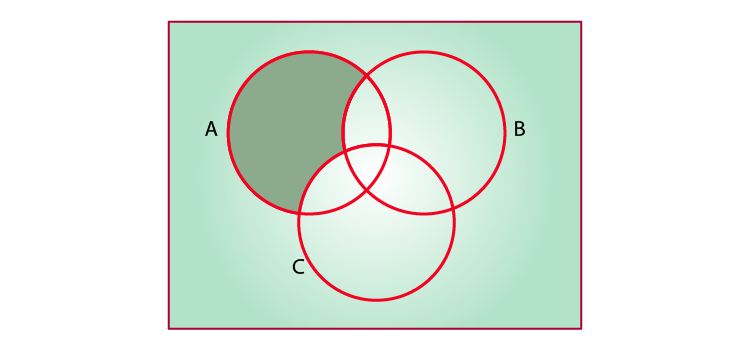
Step 4:

NCERT Exemplar Class 11 Maths Chapter 1-9

(A – B) – C

Now, from the Venn diagrams, we get,

Step 2 and Step 4 are not equal

Therefore, A – (B – C) ≠ (A – B) – C

Hence, the given statement “for all sets A, B and C, A – (B – C) = (A – B) – C” is false.

Q15Written answer

For all sets A, B and C, if A ⊂ B, then A ∩ C ⊂ B ∩ C

Show solutionHide solution
Worked solution

True

According to the question,

There are three sets A, B and C

To check: if A ⊂ B, then A ∩ C ⊂ B ∩ C is true or false

Let x ∈ A ∩ C

⇒ x ∈ A and x ∈ C

⇒ x ∈ B and x ∈ C {∵ A ⊂ B}

⇒ x ∈ B ∩ C

⇒ A ∩ C ⊂ B ∩ C

Hence, the given statement “for all sets A, B and C, if A ⊂ B, then A ∩ C ⊂ B ∩ C” is true.

Q16Written answer

For all sets A, B and C, if A ⊂ B, then A ∪ C ⊂ B ∪ C

Show solutionHide solution
Worked solution

True

According to the question,

There are three sets A, B and C

To check: if A ⊂ B, then A ∪ C ⊂ B ∪ C is true or false

Let x ∈ A ∪ C

⇒ x ∈ A or x ∈ C

⇒ x ∈ B or x ∈ C {∵ A ⊂ B}

⇒ x ∈ B ∪ C

⇒ A ∪ C ⊂ B ∪ C

Hence, the given statement “for all sets A, B and C, if A ⊂ B, then A ∪ C ⊂ B ∪ C” is true

Q17Written answer

For all sets A, B and C, if A ⊂ C and B ⊂ C, then A ∪ B ⊂ C

Show solutionHide solution
Worked solution

True

According to the question,

There are three sets A, B and C

To check: if A ⊂ C and B ⊂ C, then A ∪ B ⊂ C is true or false

Let x ∈ A ∪ B

⇒ x ∈ A or x ∈ C

⇒ x ∈ C or x ∈ C {∵ A ⊂ C and B ⊂ C}

⇒ x ∈ C

⇒ A ∪ B ⊂ C

Hence, the given statement “for all sets A, B and C, if A ⊂ C and B ⊂ C, then A ∪ B ⊂ C” is true

Using properties of sets prove the statements given in Exercises 18 to 22

Q18Written answer

For all sets A and B, A ∪ (B – A) = A ∪ B

Show solutionHide solution
Worked solution

According to the question,

There are two sets A and B

To prove: A ∪ (B – A) = A ∪ B

L.H.S = A ∪ (B – A)

Since, A – B = A ∩ B’, we get,

= A ∪ (B ∩ A’)

Since, distributive property of set ⇒ (A ∪ B) ∩ (A ∪ C) = A ∪ (B ∩ C), we get,

= (A ∪ B) ∩ (A ∪ A’)

Since, A ∪ A’ = U, we get,

= (A ∪ B) ∩ U

= A ∪ B

= R.H.S

Hence Proved

Q19Written answer

For all sets A and B, A – (A – B) = A ∩ B

Show solutionHide solution
Worked solution

According to the question,

There are two sets A and B

To prove: A – (A – B) = A ∩ B

L.H.S = A – (A – B)

Since, A – B = A ∩ B’, we get,

= A – (A ∩ B’)

= A ∩ (A ∩ B’)’

Since, (A ∩ B)’ = A’ ∪ B’, we get,

= A ∩ [A’ ∪ (B’)’]

Since, (B’)’ = B, we get,

= A ∩ (A’ ∪ B)

Since, distributive property of set ⇒ (A ∩ B) ∪ (A ∩ C) = A ∩ (B ∪ C), we get,

= (A ∩ A’) ∪ (A ∩ B)

Since, A ∩ A’ = Φ, we get,

= Φ ∪ (A ∩ B)

= A ∩ B

= R.H.S

Hence Proved

Q20Written answer

For all sets A and B, A – (A ∩ B) = A – B

Show solutionHide solution
Worked solution

According to the question,

There are two sets A and B

To prove: A – (A ∩ B) = A – B

L.H.S = A – (A ∩ B)

Since, A – B = A ∩ B’, we get,

= A ∩ (A ∩ B)’

= A ∩ (A ∩ B’)’

Since, (A ∩ B)’ = A’ ∪ B’, we get,

= A ∩ (A’ ∪ B’)

Since, Distributive property of set ⇒ (A ∩ B) ∪ (A ∩ C) = A ∩ (B ∪ C), we get,

= (A ∩ A’) ∪ (A ∩ B’)

Since, A ∩ A’ = Φ, we get,

= Φ ∪ (A ∩ B’)

= A ∩ B’

Since, A – B = A ∩ B’, we get,

= A – B

= R.H.S

Hence Proved