My Cart
Your Cart 0

    Your cart is empty.

  • Total (Amount) ₹0.00
NCERT Exemplar · Class 11 · Biology

Chapter 6: Anatomy of Flowering Plants

Practice each question, then open the answer or worked solution.

LONG ANSWER TYPE QUESTIONS

6 questions
Q1Written answer

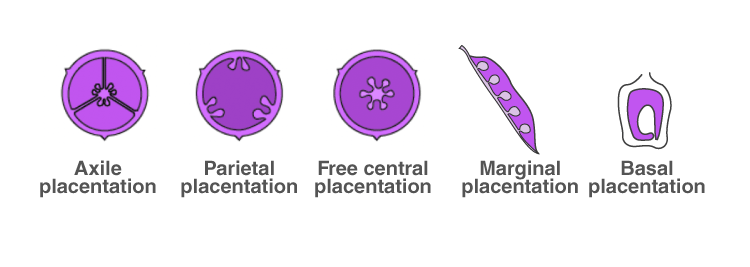
The arrangement of ovules within the ovary is known as placentation.

What does the term placenta refer to? Draw various types of placentations

in the flower as seen in T.S. and V.S.Solution:

The placenta is a tissue which is flattened, cushion-like tissue. Through the placenta, the ovule is attached to the wall of the ovary. Placentations are of many types like marginal, axile, parental, basal, central and free central.

NCERT Exemplar Solutions of Class 11 Biology Chapter 6 Anatomy of Flowering Plants-3

Show solutionHide solution
Worked solution

Solution coming soon.

Q2Written answer

Deciduous plants shed their leaves during summer or in autumn. This process of shedding of leaves is called abscission. Apart from physiological changes, what anatomical mechanism is involved in the abscission of leaves?

Show solutionHide solution
Worked solution

i. Structural: In deciduous trees, an abscission zone, also known as a separation zone, is formed at the base of the petiole. It is composed of a top layer and bottom layer. The cells in the top layer have weak cell walls, and the bottom layer expands in winter and breaks the cell walls of the top layer, this results in the shedding of leaves.

ii. The loss of chlorophyll may also result in the abscission process.

iii. Hormonal: Abscisic acid hormone stimulates abscission.

Q3Written answer

Is Pinus an evergreen tree? Comment.

Show solutionHide solution
Worked solution

Pinus does not shed its leaves during a particular season and is always evergreen. Hence, Pinus is considered as an evergreen tree belonging to gymnosperms. The leaves in gymnosperms can withstand in extreme temperatures, humidity and wind.

Q4Written answer

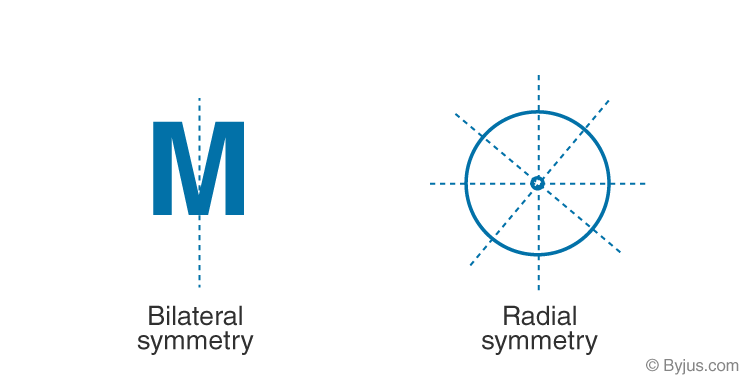
Assume that a pencil box held in your hand represents a plant cell. In how many possible planes can it be cut? Indicate these cuts with the help of line drawings.

Show solutionHide solution
Worked solution

When any plane passing through the central axis of the plant cell divides the cell into two identical halves called radial symmetry

NCERT Exemplar Solutions of Class 11 Biology Chapter 6 Anatomy of Flowering Plants-4

Q5Written answer

Each of the following terms has some anatomical significance. What do these terms mean? Explain with the help of line diagrams.

a. Plasmodesmata

b. Middle lamella

c. Secondary wall

Show solutionHide solution
Worked solution

a. Plasmodesmata – A microscopic channel between two cells through the cell wall are called Plasmodesmata.

b. Middle lamella – It is a layer in the cell wall and is made of calcium pectate (mainly) and magnesium pectate.

c. Secondary wall – this is a non-extensible layer. It is made of hemicelluloses. It provides rigidity to the cell.

Q6Written answer

Distinguish between the following:

a. Exarch and endarch

b. Stele and vascular bundle

c. Protoxylem and metaxylem

d. Interfascicular cambium and intrafascicular cambium

e. Open and closed vascular bundles

f. Stem hair and root hair

Show solutionHide solution
Worked solution

a. Exarch is a condition where the protoxylem is present towards the periphery and the metaxylem is present towards the centre. Endarch is where the protoxylem is present towards the centre and metaxylem is present towards the periphery

b. A stele is the central part of the root or stems whereas a vascular bundle is a part of stele.

c. Earlier formed xylem is called protoxylem and later formed xylem is called metaxylem

d. Interfascicular cambium is present in between the primary xylem and primary phloem, whereas intrafascicular cambium is present in between the two vascular bundles making the cambium continuous and forming a complete ring of cambium

e. Open vascular bundles are capable of secondary growth, whereas the closed vascular bundles are not capable of secondary growth

f. Stem hair is multicellular, and they are epidermal outgrowths known as trichomes, whereas root hair is unicellular, and they are unicellular elongations of epidermal cells.

Chapter 6, Anatomy of Flowering Plants, deals with different parts of a plant. The subject of Botany involves the close study of the science behind the parts of a plant. Plants are made of different groups of cells called tissues, which perform specific functions. The three categories of tissues are as follows:

  • Secretory tissues
  • Meristematic tissues
  • Permanent tissues