My Cart
Your Cart 0

    Your cart is empty.

  • Total (Amount) ₹0.00
NCERT Exemplar · Class 11 · Biology

Chapter 13: Photosynthesis in Higher Plants

Practice each question, then open the answer or worked solution.

LONG ANSWER TYPE QUESTIONS

13 questions
Q1Written answer

Is it correct to say that photosynthesis occurs only in leaves of a plant? Besides leaves, what are the other parts that may be capable of carrying out photosynthesis? Justify.

Show solutionHide solution
Worked solution

Any part of the plant which has green in colour can photosynthesize. So the statement is wrong. Examples include Chlorophyll roots of Trap and Timisoara and photosynthesis. The stem is changed into a fleshy green structure in Opuntia and the leaves are altered in spines to reduce transpiration. Photosynthesis occurs in the stem of these plants. Opuntia’s modified stem is named phylloclade. In most of the plants, sepals are green and they do perform photosynthesis.
Q2Written answer

The entire process of photosynthesis consists of a number of reactions. Where in the cell does each of these take place?

a. Synthesis of ATP & NADPH __________________________

b. Photolysis of water __________________________

c. Fixation of CO2 __________________________

d. Synthesis of sugar molecule __________________________

e. Synthesis of starch __________________________

Show solutionHide solution
Worked solution

(a) Outer side of thylakoid membrane

(b) Inner side of thylakoid membrane

(c) Stroma of chloroplast

(d) Chloroplast

(e) Chloroplast

Q3Written answer

Which property of the pigment is responsible for its ability to initiate the process of photosynthesis? Why is the rate of photosynthesis higher in the red and blue regions of the spectrum of light?

Show solutionHide solution
Worked solution

The most abundant pigment in plants is chlorophyll a. This pigment demonstrates the optimal efficiency between blue and red-light wavelengths. Pigments are capable of absorbing light with a certain wavelength so they absorb various colours of light. Pigments show optimal efficiency between the blue and red light. This is due to the chlorophyll and also can be due to the accessory pigments. This means that in the range of red and blue light the rate of photosynthesis is higher.

Q4Written answer

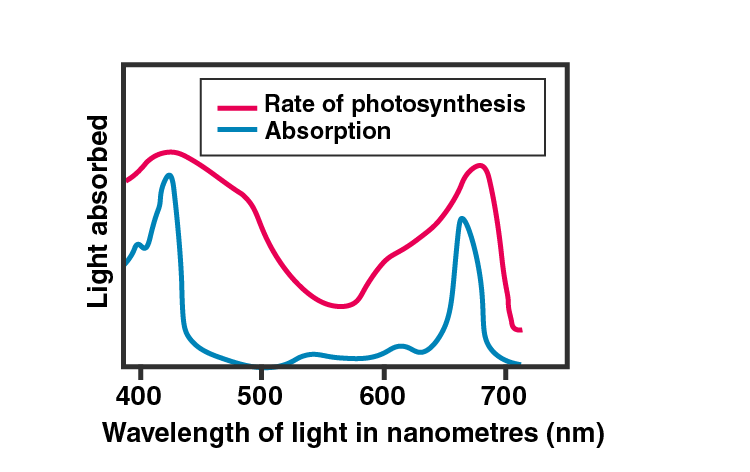
What can we conclude from the statement that the action and absorption spectrum of photosynthesis overlap? At which wavelength do they show peaks?

Show solutionHide solution
Worked solution

In the blue and region there is maximum absorption by the chlorophyll and also shows a higher rate of photosynthesis. Thus we can say that the chief pigment associated with photosynthesis is chlorophyll a.

The diagram peak is of 400nm wavelength which is equal to blue and peaks again between 600 and 700nm which is of red. Therefore shows that the spectrum of action and absorption overlaps. The black line shows the photosynthesis action spectrum, while the blue line displays the spectrum of absorption.

Q5Written answer

Under what conditions are C4 plants superior to C3?

Show solutionHide solution
Worked solution

C4 plants are superior to C3 due to the following conditions

a) They have a characteristic leaf anatomy

b) They withstand higher temperatures.

c) They show response to high light intensities

d) They have greater productivity of biomass

Q6Written answer

In the figure given below, the black line (upper) indicates the action spectrum for photosynthesis and the lighter line (lower) indicates the absorption spectrum of chlorophyll a. Answer the following

NCERT Exemplar Solution of Class 11 Biology Chapter 13 Photosynthesis in Higher Plants-5

a. What does the action spectrum indicate? How can we plot an action spectrum?

b. How can we derive an absorption spectrum for any substance?

Show solutionHide solution
Worked solution

a. The action spectrum indicates the rate of photosynthesis. The measurement is oxygen release the oxygen releases on the y-axis and the wavelength on the x-axis can be compared to the action spectrum.

b) The absorption of various wavelengths for a particular pigment can be done by the processing, such as chlorophyll-a, or chlorophyll b, or any other pigment.

Q7Written answer

List the important events and end products of the light reaction?

Show solutionHide solution
Worked solution

Water division: sunlight energy is used to divide the water molecule into hydrogen ion and

NADP+ to NADPH is used for the extra electron released after the split.

Oxygen release: after the division of the water molecule oxygen discharges into the stomach.

High-energy intermediate formation (ATP and NADPH): two energy-rich combinations ATP and NADPH are formed at the end of an electricity reaction.

Q8Written answer

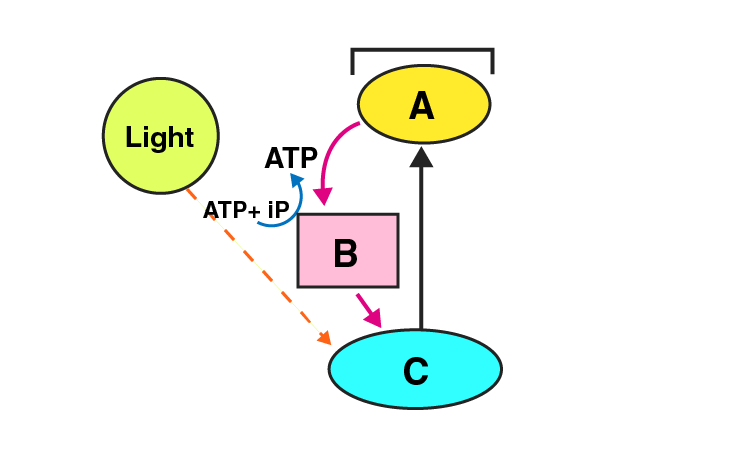
In the diagram given below what is label A, B and C. What type of phosphorylation is possible in this?

NCERT Exemplar Solution of Class 11 Biology Chapter 13 Photosynthesis in Higher Plants-6

Show solutionHide solution
Worked solution

NCERT Exemplar Solution of Class 11 Biology Chapter 13 Photosynthesis in Higher Plants-7

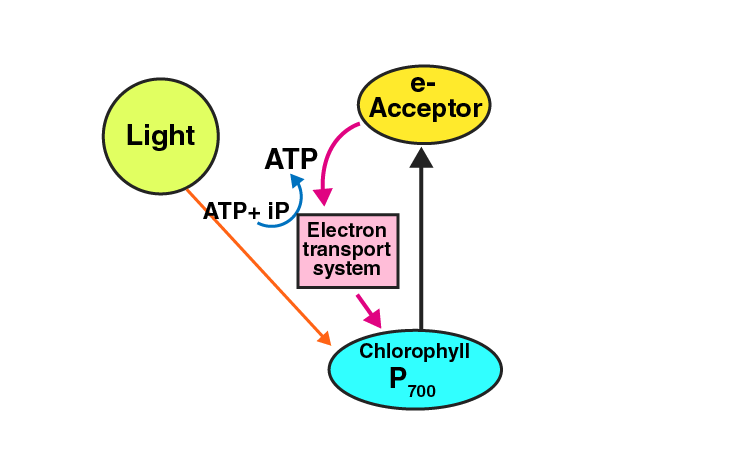
cyclic photophosphorylation is possible here. Photophosphorylation is the synthesis of ATP from ADP and inorganic phosphate in the presence of light.

Q9Written answer

Why is the Rubisco enzyme more appropriately called RUBP Carboxylase-Oxygenase and what important role does it play in photosynthesis?

Show solutionHide solution
Worked solution

It acts as both carboxylase and oxygenase, so it is referred to as RUBP carboxylase–Oxygenase.

Rubisco binds CO2 to 3PGA in C3 plants. In C3 plants, Rubisco is binding with O2 in a process known photorespiration to generate phosphoglycerate and phosphoglycerate. Photo vacuum reduces carbon attachment in C3 plants.

Q10Written answer

What special anatomical features are displayed by leaves of C4 plants? How do they provide an advantage over the structure of C3 plants?

Show solutionHide solution
Worked solution

The vascular bundles in leaves contain a sheath of large cells. In particular, chloroplast impregnates several layers of cells around the bundle cell. These cell thick walls cannot be exchanged for gasses. The sheath is without intercellular space. C4 plants over C4 plants are securely fastened with the bundle sheath. It helps to increase the level of carbon dioxide in the leaves. We know that it is competitive to bind Rubisco to CO2 and oxygen. C4 plants lack photorespiration. C4 plants are superior to C3 due to the following conditions

a) They have a characteristic leaf anatomy

b) They withstand high temperatures.

c) They show response to high light intensities