My Cart
Your Cart 0

    Your cart is empty.

  • Total (Amount) ₹0.00
NCERT · Class 6 · Maths

Chapter 11: Algebra

Practice each question, then open the answer or worked solution.

Exercise 11.2

Textbook page 230 · 5 questions
Q1Written answer

The side of an equilateral triangle is shown by l. Express the perimeter of the equilateral triangle using l.

Show solutionHide solution
Worked solution

Side of equilateral triangle = l

Perimeter = l + l + l

= 3l

Q2Written answer

The side of the regular hexagon (Fig 11.10) is denoted by l. Express the perimeter of the hexagon using l.

(Hint: A regular hexagon has all its six sides equal in length.)

NCERT Solutions for Class 6 Maths Chapter 11 Exercise 11.2 - 1

Show solutionHide solution
Worked solution

Side of a regular hexagon = l

Perimeter = l + l + l + l + l + 1

= 6l

Q3Written answer

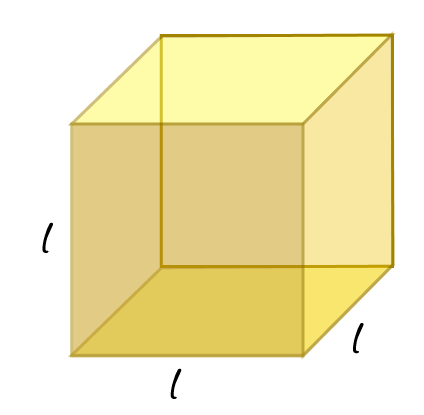
A cube is three dimensional figure as shown in Fig 11.11. It has six faces and all of them are identical squares. The length of an edge of the cube is given by l. Find the formula for the total length of the edges of a cube.

NCERT Solutions for Class 6 Maths Chapter 11 Exercise 11.2 - 2

Show solutionHide solution
Worked solution

Length of an edge of the cube = l

Number of edges = 12

Total length of the edges = Number of edges × length of an edge

=12l

Q4Written answer

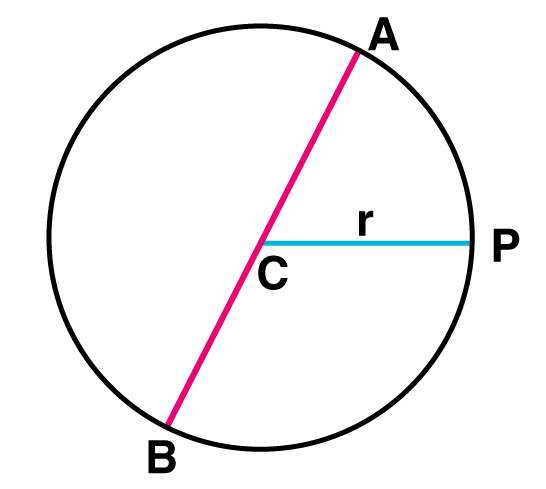
The diameter of a circle is a line which joins two points on the circle and also passes through the centre of the circle. (In the adjoining figure (Fig 11.2) AB is a diameter of a circle; C is its centre.) Express the diameter of the circle (d) in terms of its radius (r).

NCERT Solutions for Class 6 Maths Chapter 11 Exercise 11.2 - 3

Show solutionHide solution
Worked solution

Diameter = AB

= AC + CB

= r + r

= 2r

Hence, the diameter of the circle in terms of its radius is 2r

Q5Written answer

To find sum of three numbers 14, 27 and 13 we can have two ways:

(a) We may first add 14 and 27 to get 41and then add 13 to it to get the total sum 54 or

(b) We may add 27 and 13 to get 40 and then add 14 to get the sum 54. Thus, (14 + 27) + 13 = 14 + (27 + 13)

Show solutionHide solution
Worked solution

For any three whole numbers a, b and c

(a + b) + c = a + (b + c)