My Cart
Your Cart 0

    Your cart is empty.

  • Total (Amount) ₹0.00
NCERT · Class 12 · Chemistry

Chapter 6: Haloalkanes and Haloarenes

Practice each question, then open the answer or worked solution.

Questions

21 questions
Q10.12Written answer

Explain why

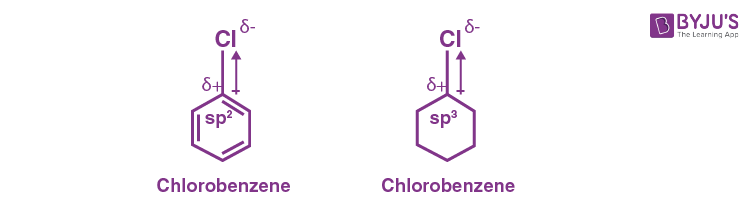
(i) the dipole moment of chlorobenzene is lower than that of cyclohexyl chloride
(ii) alkyl halides, though polar, are immiscible with water
(iii) Grignard reagents should be prepared under anhydrous conditions

Show solutionHide solution
Worked solution

Solution:
(i)

NCERT Solutions for Class 12 Chemistry Chapter 10 Haloalkanes and Haloarenes Q 10.12(i)

The Cl- atom in chlorobenzene is linked to sp2 hybridized carbon atom, whereas in cyclohexyl chloride it is linked to sp3 hybridized carbon atom. Now, as sp2 hybridized carbon has more s-character, it is more electronegative than sp3 hybridized carbon atom. Hence, the density of electrons of C-Cl bond near the Cl atom is less in chlorobenzene than in cyclohexyl chloride.

Moreover, the electron density is reduced by the –R effect of the benzene ring of chlorobenzene. Hence, chlorobenze has a decreased polarity of C-Cl bond, also the dipole moment is lower than that of cyclohexyl chloride.

(ii) When the solute water force o attraction is stronger than solute-solute and water-water force of attraction, detmines the miscibility with water. Dipole – dipole interactions hold the polar molecules of alkyl halides together. Now, the alkyl halide- alkyl halide and water-water forces of attraction are stronger than the new force of attraction between alkyl halides and water molecules. As a result, alkyl halides (though polar) are immiscible with water.

(iii) Grignard reagents are very reactive. In the presence of moisture, they react to give alkanes.
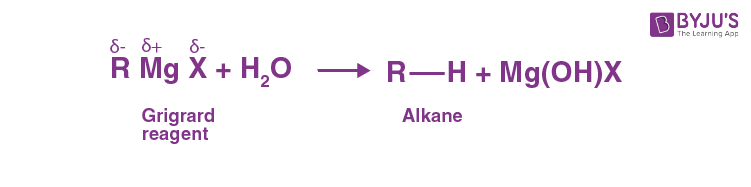
NCERT Solutions for Class 12 Chemistry Chapter 10 Haloalkanes and Haloarenes Q 10.12(iii)

Therefore, Grignard reagents should be prepared under anhydrous conditions.
Q10.13Written answer

Give the uses of freon 12, DDT, carbon tetrachloride and iodoform.

Show solutionHide solution
Worked solution

Solution:
Uses of Freon -12

 Common name given to Freon-12 (dichlorodifluoromethane, CF2Cl2) is CFC. It is used in aerosol spray propellants such as deodorants, hair sprays, etc. It is also used in refrigerators and air-conditioners as a refrigerant. It’s manufacturing was banned in United States and many other countries in 1994 as it was severely damaging the ozone layer.

Uses of DDT

The most commonly used insecticide is DDT (p, p−dichlorodiphenyltrichloroethane). It has various harmful effects due to which it was banned in United States in 1973, though it is very effective aganst mosquitoes and lice.

Uses of carbontetrachloride (CCl4 )

(i) Refrigerants and propellant for aerosol cans are manufactured using CCl4.

(ii) Chloroflourocarbons and other chemicals are synthesized.

(iii) Used as a solvent in the manufacture of pharmaceutical products.

(iv) Used as cleaning fluid, a spot reamer in homes and a fire extinguisher during the mid 1960s.

Uses of Iodoform (CHI3)

Iodoform was used earlier as an antiseptic, but now it has been replaced by other formulations-containing iodine-due to its objectionable smell.

Q10.14Written answer

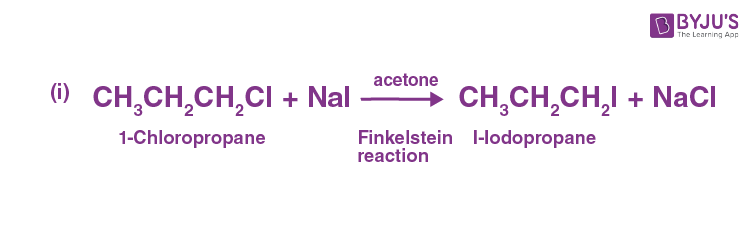
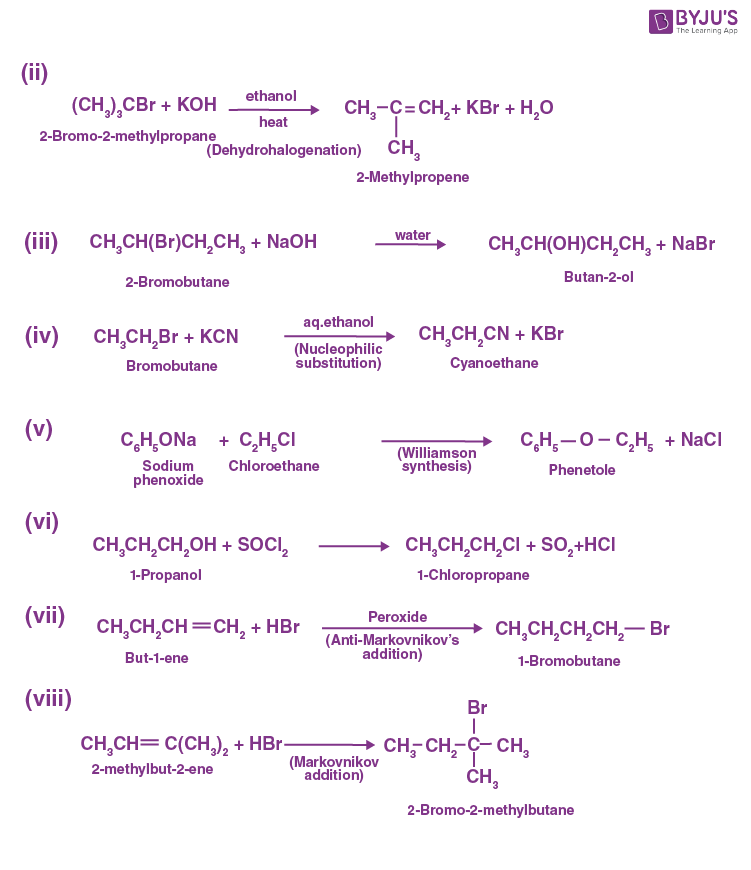
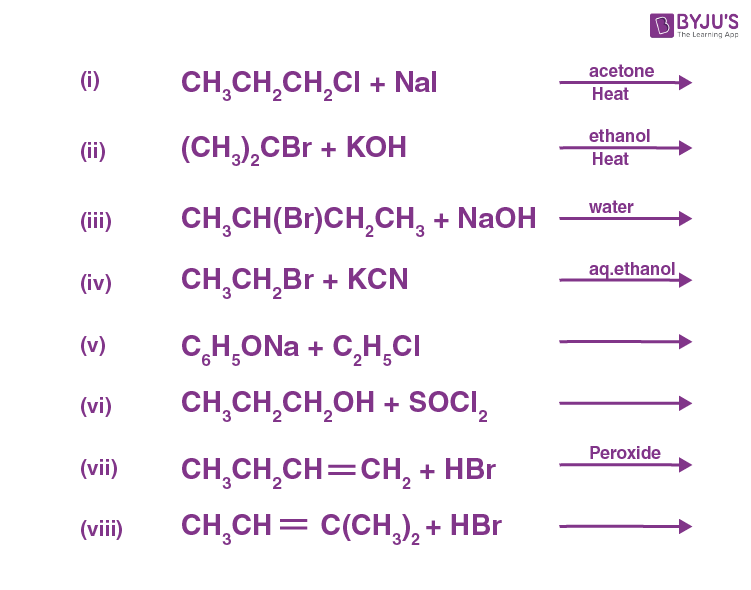
Write the structure of the major organic product in each of the following reactions:

NCERT Solutions for Class 12 Chemistry Chapter 10 Haloalkanes and Haloarenes Q 10.14

Show solutionHide solution
Worked solution

NCERT Solutions for Class 12 Chemistry Chapter 10 Haloalkanes and Haloarenes Q 10.14-1

NCERT Solutions for Class 12 Chemistry Chapter 10 Haloalkanes and Haloarenes Q 10.14-2

Q10.15Written answer

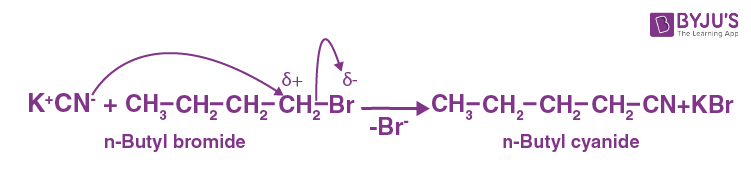
What will be the mechanism for the following reaction?

NCERT Solutions for Class 12 Chemistry Chapter 10 Haloalkanes and Haloarenes Q 10.15

Show solutionHide solution
Worked solution

Solution:
The given reaction is

NCERT Solutions for Class 12 Chemistry Chapter 10 Haloalkanes and Haloarenes Q 10.15

CN– acts as the nuclephile and attacks the carbon atom on which the Br is attached. CN– ion is an ambient nucleophile and can attack through both C and N positions. It attacks through C atom, in this case.

NCERT Solutions for Class 12 Chemistry Chapter 10 Haloalkanes and Haloarenes Q 10.15-1

Q10.16Written answer

Arrange the compounds of each set in order of reactivity towards SN2 displacement:

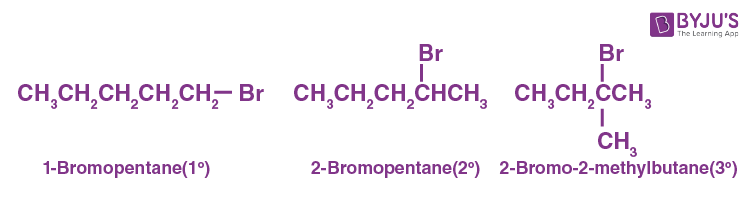
 (i) 2-Bromo-2-methylbutane, 1-Bromopentane, 2-Bromopentane

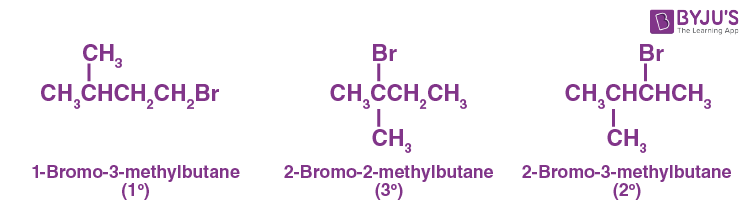
(ii) 1-Bromo-3-methylbutane, 2-Bromo-2-methylbutane, 3-Bromo-2- methylbutane

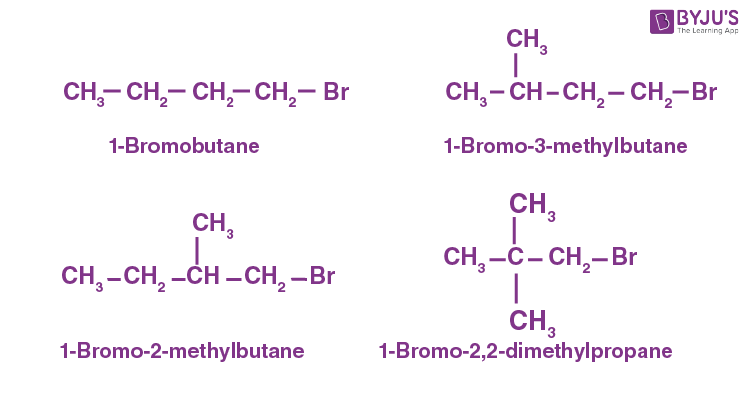
(iii) 1-Bromobutane, 1-Bromo-2,2-dimethylpropane, 1-Bromo-2-methylbutane, 1Bromo-3- methylbutane.

Show solutionHide solution
Worked solution

(i)

NCERT Solutions for Class 12 Chemistry Chapter 10 Haloalkanes and Haloarenes Q 10.16(i)

An SN2 reaction involves the approaching of the nucleophile to the carbon atom to which the leaving group is attached. When the nucleophile is sterically hindered, then the reactivity towards SN2 displacement decreases. Due to the presence of substituents, hindrance to the approaching nucleophile increases in the following order.

1-Bromopentane < 2-bromopentane < 2-Bromo-2-methylbutane

Hence, the increasing order of reactivity towards SN2 displacement is:

2-Bromo-2-methylbutane < 2-Bromopentane < 1-Bromopentane

(ii)

NCERT Solutions for Class 12 Chemistry Chapter 10 Haloalkanes and Haloarenes Q 10.16(ii)

Since steric hindrance in alkyl halides increases in the order of 1° < 2° < 3°, the increasing order of reactivity towards SN2 displacement is 3° < 2° < 1°.

Hence, the given set of compounds can be arranged in the increasing order of their reactivity towards SN2 displacement as:

2-Bromo-2-methylbutane < 2-Bromo-3-methylbutane < 1-Bromo-3-methylbutane

(iii)

NCERT Solutions for Class 12 Chemistry Chapter 10 Haloalkanes and Haloarenes Q 10.16(iii)

The steric hindrance to the nucleophile in the SN2 mechanism increases with a decrease in the distance of the substituents from the atom containing the leaving group. Further, the steric hindrance increases with an increase in the number of substituents. Therefore, the increasing order of steric hindrances in the given compounds is as below:

1-Bromobutane < 1-Bromo-3-methylbutane < 1-Bromo-2-methylbutane < 1-Bromo-2, 2-dimethylpropane

Hence, the increasing order of reactivity of the given compounds towards SN2 displacement is:

1-Bromo-2, 2-dimethylpropane < 1-Bromo-2-methylbutane < 1-Bromo-3- methylbutane < 1-Bromobutane

Q10.17Written answer

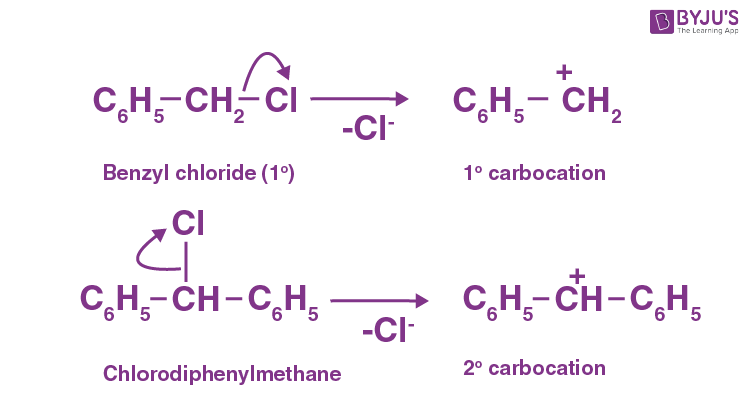
Out of C6H5CH2Cl and C6H5CHClC6H5, which is more easily hydrolysed by aqueous KOH?

Show solutionHide solution
Worked solution

NCERT Solutions for Class 12 Chemistry Chapter 10 Haloalkanes and Haloarenes Q 10.17

Hydrolysis by aqueous KOH proceeds through the formation of carbocation. If carbocation is stable, then the compound is easily hydrolyzed by aqueous KOH. Now,

C6H5CH2Cl forms 1o– carbocation, while C6H5CHClC6H5 forms 2o– carbocation, which is more stable than 1o– carbcation. Hence, C6H5CHClC6H5 is hydrolyzed more easily than C6H5CH2Cl by aqueous KOH.

Q10.18Written answer

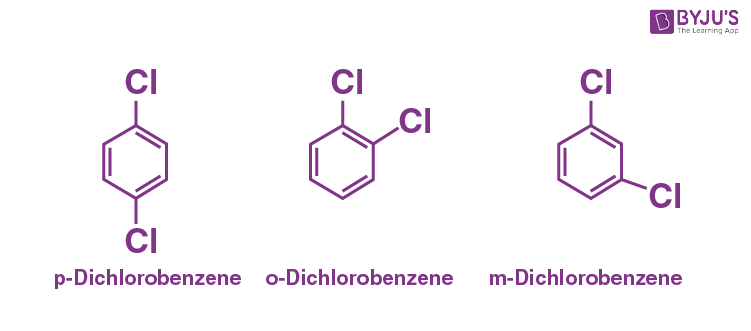
p-Dichlorobenzene has higher m.p. and lower solubility than those of o- and m-isomers. Discuss.

Show solutionHide solution
Worked solution

NCERT Solutions for Class 12 Chemistry Chapter 10 Haloalkanes and Haloarenes Q 10.18

p-Dichlorobenzene is more symmetrical than o-and m-isomers. For this reason, it fits more closely than o-and m-isomers in the crystal lattice. Therefore, more energy is required to break the crystal lattice of p-dichlorobenzene. As a result, p-dichlorobenzene has a higher melting point and lower solubility than o-and m-isomers.

Q10.19Written answer

How can the following conversions be carried out?

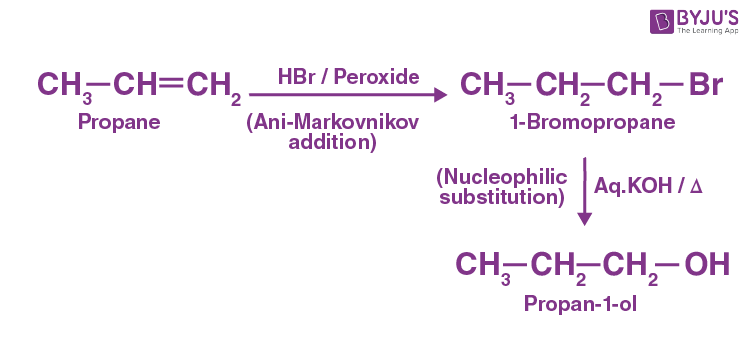
(i) Propene to propan-1-ol

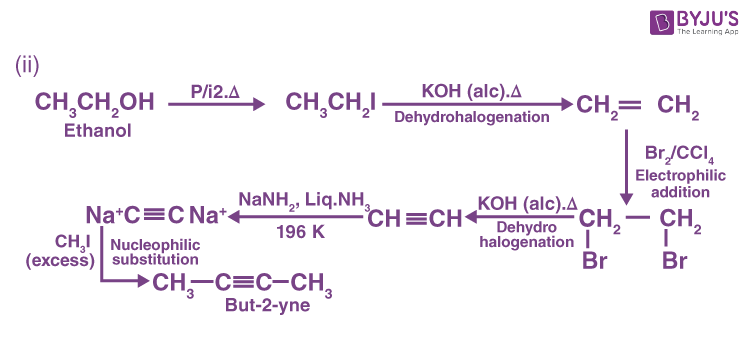
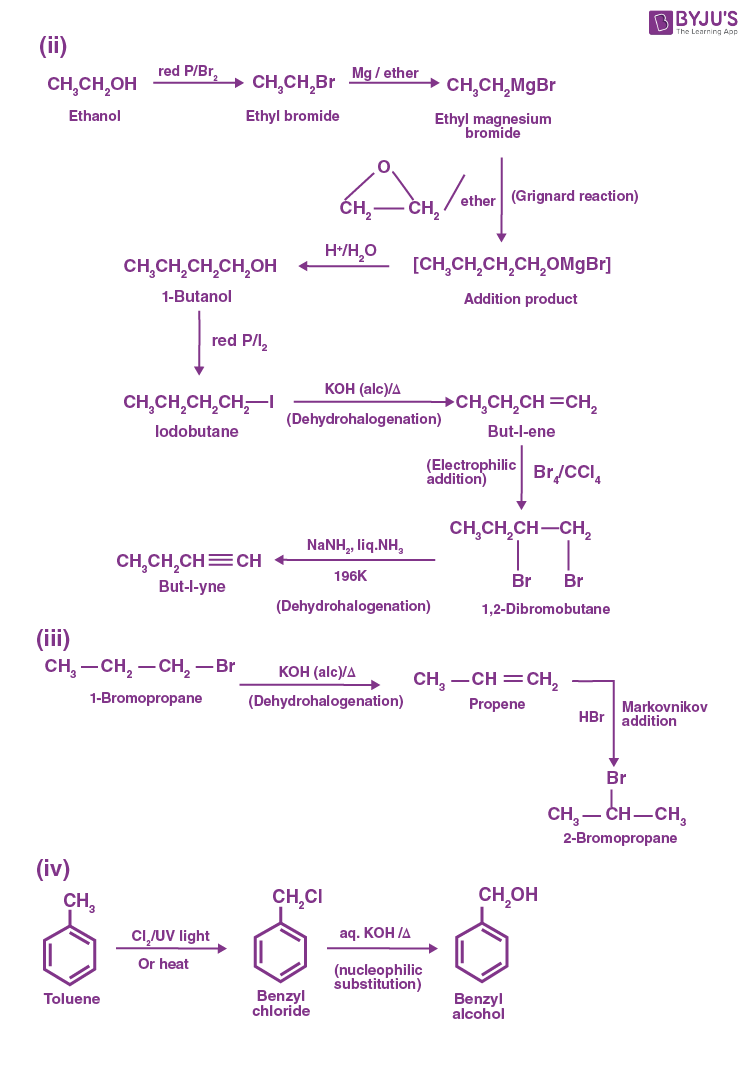
(ii) Ethanol to but-1-yne

(iii) 1-Bromopropane to 2-bromopropane

(iv) Toluene to benzyl alcohol

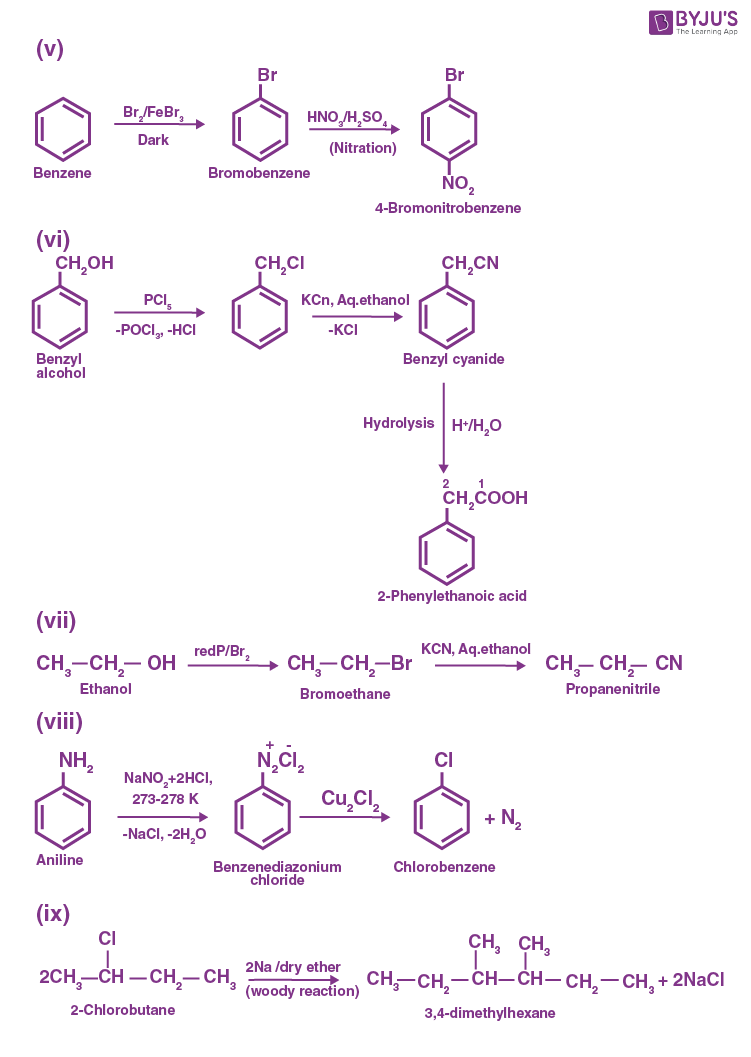
(v) Benzene to 4-bromonitrobenzene

(vi) Benzyl alcohol to 2-phenylethanoic acid

(vii) Ethanol to propanenitrile

(viii) Aniline to chlorobenzene

(ix) 2-Chlorobutane to 3, 4-dimethylhexane

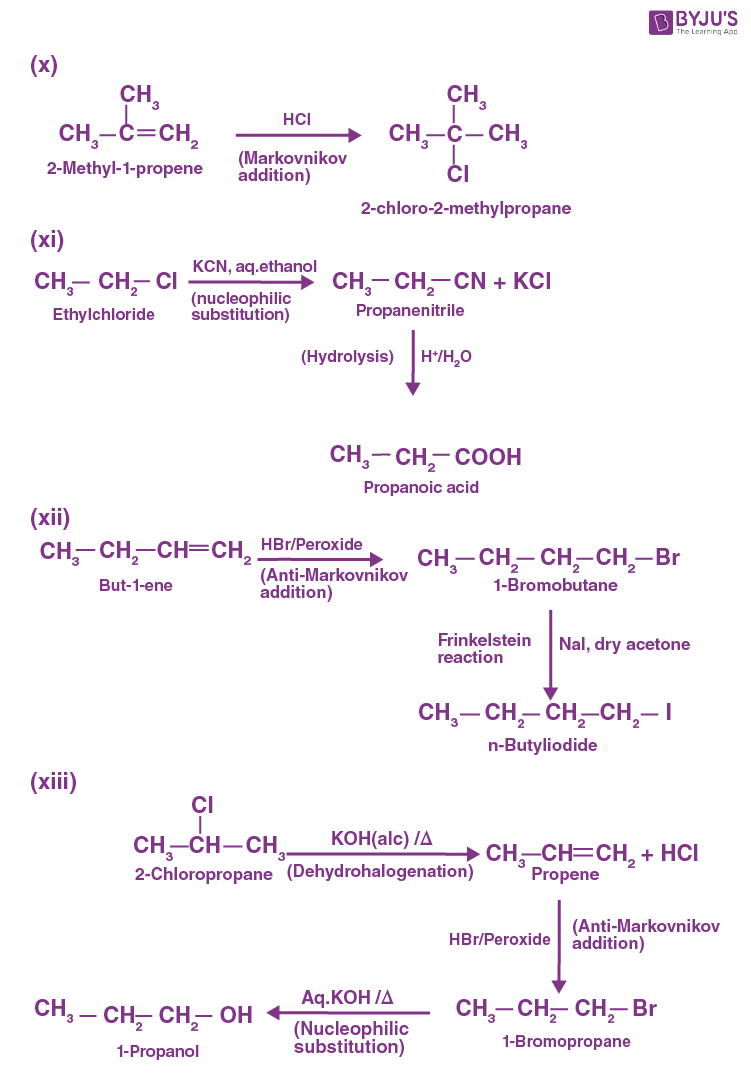
(x) 2-Methyl-1-propene to 2-chloro-2-methylpropane

(xi) Ethyl chloride to propanoic acid

(xii) But-1-ene to n-butyliodide

(xiii) 2-Chloropropane to 1-propanol

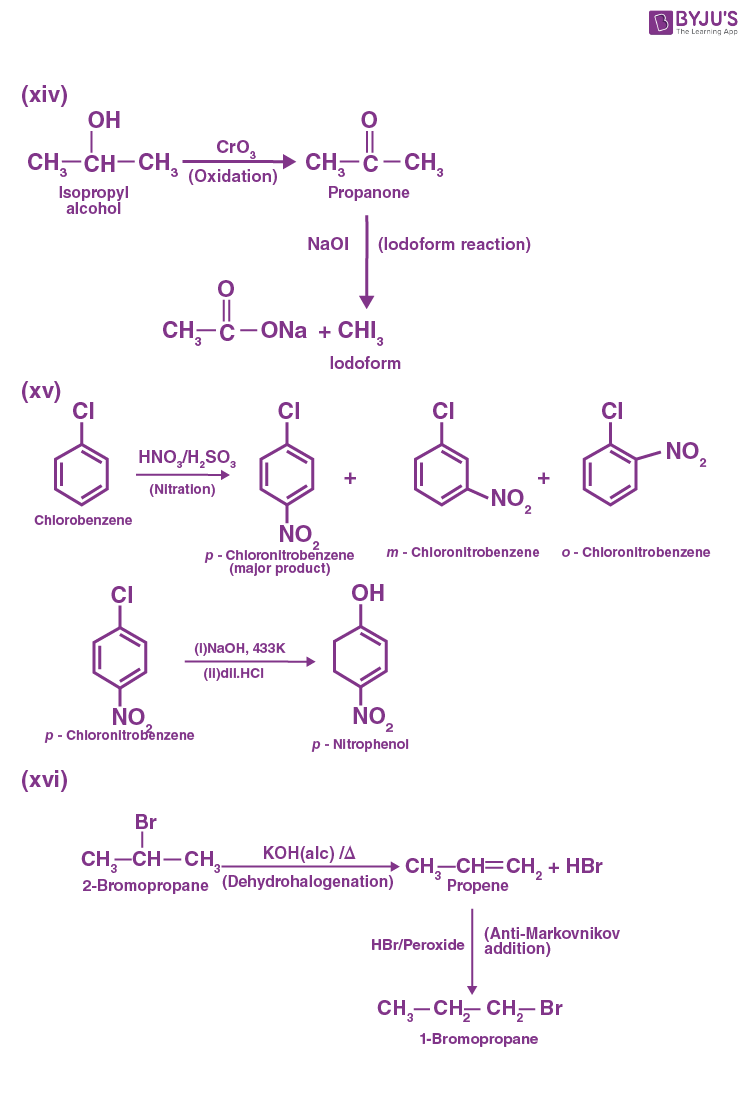
(xiv) Isopropyl alcohol to iodoform

(xv) Chlorobenzene to p-nitrophenol

(xvi) 2-Bromopropane to 1-bromopropane

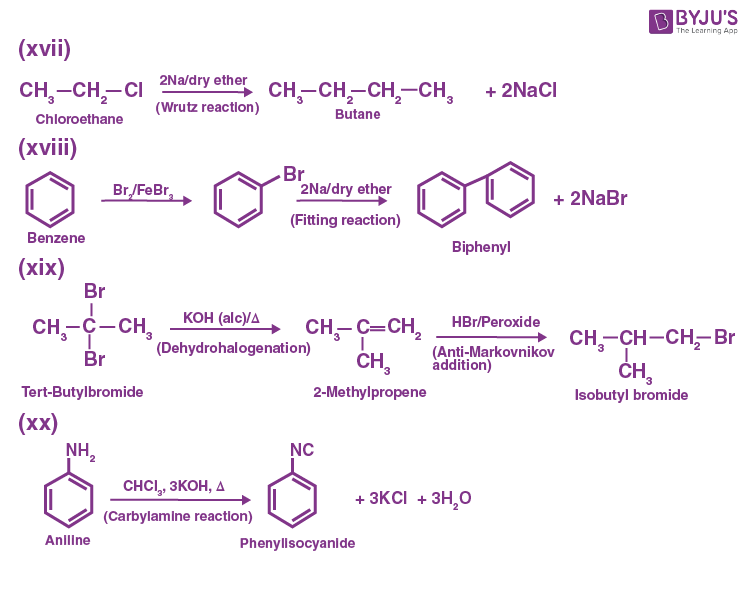
(xvii) Chloroethane to butane

(xviii) Benzene to diphenyl

(xix) tert-Butyl bromide to isobutyl bromide

(xx) Aniline to phenylisocyanide

Show solutionHide solution
Worked solution

(i)

NCERT Solutions for Class 12 Chemistry Chapter 10 Haloalkanes and Haloarenes Q 10.19(i)

Ethanol to but-1-yne

or

NCERT Solutions for Class 12 Chemistry Chapter 10 Haloalkanes and Haloarenes Q 10.19-1

NCERT Solutions for Class 12 Chemistry Chapter 10 Haloalkanes and Haloarenes Q 10.19-2

NCERT Solutions for Class 12 Chemistry Chapter 10 Haloalkanes and Haloarenes Q 10.19-3

NCERT Solutions for Class 12 Chemistry Chapter 10 Haloalkanes and Haloarenes Q 10.19-4

NCERT Solutions for Class 12 Chemistry Chapter 10 Haloalkanes and Haloarenes Q 10.19-5

Q10.20Written answer

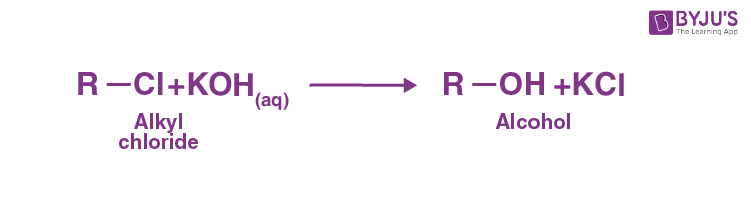
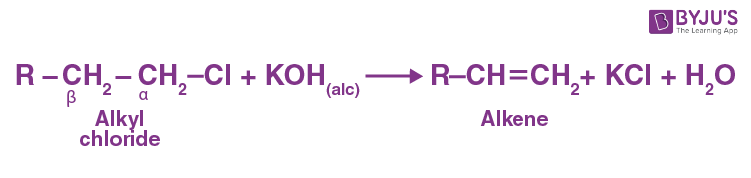
The treatment of alkyl chlorides with aqueous KOH leads to the formation of alcohols but in the presence of alcoholic KOH, alkenes are major products. Explain.

Show solutionHide solution
Worked solution

In an aqueous solution, KOH almost completely ionizes to give OH− ions. OH− ion is a strong nucleophile, which leads the alkyl chloride to undergo a substitution reaction to form alcohol.

NCERT Solutions for Class 12 Chemistry Chapter 10 Haloalkanes and Haloarenes Q 10.20-1

On the other hand, an alcoholic solution of KOH contains alkoxide (RO−) ion, which is a strong base. Thus, it can abstract a hydrogen from the β-carbon of the alkyl chloride and form an alkene by eliminating a molecule of HCl.

NCERT Solutions for Class 12 Chemistry Chapter 10 Haloalkanes and Haloarenes Q 10.20-2

OH− ion is a much weaker base than RO− ion. Also, OH− ion is highly solvated in an aqueous solution and as a result, the basic character of OH− ion decreases. Therefore, it cannot abstract a hydrogen from the β-carbon.

Q10.21Written answer

Primary alkyl halide C4H9Br (a) reacted with alcoholic KOH to give compound (b). Compound (b) is reacted with HBr to give (c) which is an isomer of (a). When (a) is reacted with sodium metal it gives compound (d), C8H18 which is different from the compound formed when n-butyl bromide is reacted with sodium. Give the structural formula of (a) and write the equations for all the reactions.

Show solutionHide solution
Worked solution

Solution:
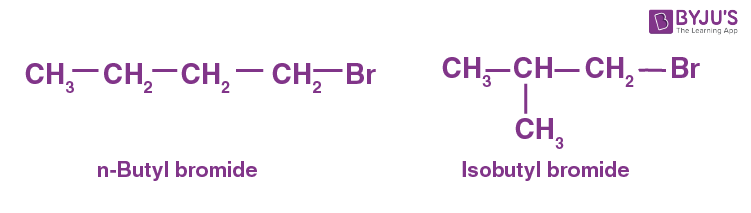
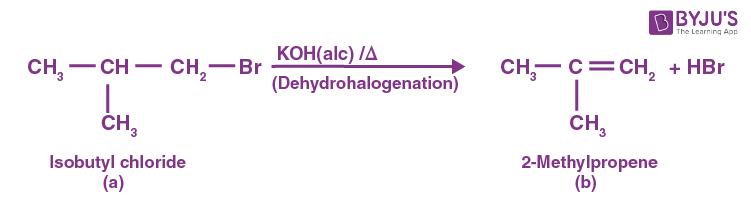
There are two primary alkyl halides having the formula, C4H9Br. They are n − bulyl bromide and isobutyl bromide.

NCERT Solutions for Class 12 Chemistry Chapter 10 Haloalkanes and Haloarenes Q 10.21-1

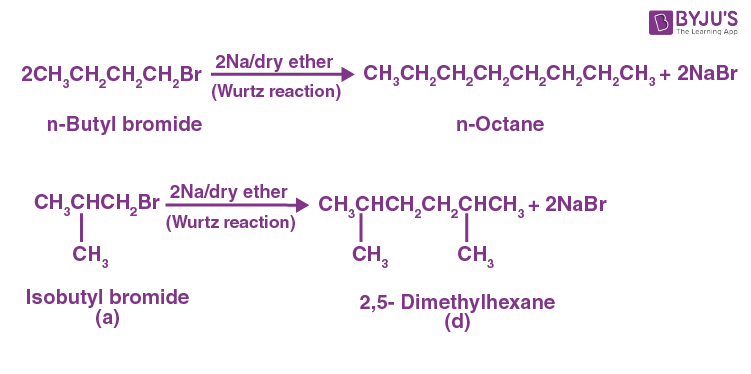
Therefore, compound (a) is either n−butyl bromide or isobutyl bromide. Now, compound (a) reacts with Na metal to give compound (b) of molecular formula, C8H18, which is different from the compound formed when n−butyl bromide reacts with Na metal. Hence, compound (a) must be isobutyl bromide.

NCERT Solutions for Class 12 Chemistry Chapter 10 Haloalkanes and Haloarenes Q 10.21-2

Thus, compound (d) is 2, 5−dimethylhexane.

It is given that compound (a) reacts with alcoholic KOH to give compound (b). Hence, compound (b) is 2−methylpropene.

NCERT Solutions for Class 12 Chemistry Chapter 10 Haloalkanes and Haloarenes Q 10.21-3

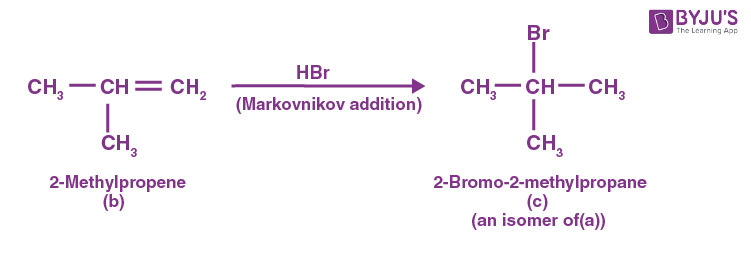
Also, compound (b) reacts with HBr to give compound (c) which is an isomer of (a). Hence, compound (c) is 2−bromo−2−methylpropane.

NCERT Solutions for Class 12 Chemistry Chapter 10 Haloalkanes and Haloarenes Q 10.21-4