My Cart
Your Cart 0

    Your cart is empty.

  • Total (Amount) ₹0.00
NCERT · Class 12 · Accountancy

Unit 5: Accounting Ratios

Practice each question, then open the answer or worked solution.

Numerical Questions for NCERT Accountancy Solutions Part 2 Class 12 Chapter 5

22 questions
Q1Written answer

Following is the Balance Sheet of Raj Oil Mills Limited as at March 31, 2017. Calculate Current Ratio.

Particulars (₹)
I. Equity and Liabilities:  
1. Shareholders’ funds  
a) Share capital 7,90,000
b) Reserves and surplus 35,000
2. Current Liabilities  
a) Trade Payables 72,000
Total 8,97,000
II. Assets  
1. Non-current Assets  
a) Fixed assets  
Tangible assets 7,53,000
2. Current Assets  
a) Inventories 55,800
b) Trade Receivables 28,800
c) Cash and cash equivalents 59,400
Total 8,97,000
   

NCERT Act Class 12 Chp 5-26

Show solutionHide solution
Worked solution

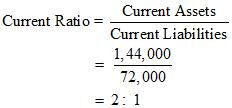
Current Assets = Inventories +Trade Receivables + Cash

= 55,800 + 28,800 + 59,400

= ₹ 1, 44,000

Current Liabilities = Trade Payables = ₹ 72,000
Q2Written answer

Following is the Balance Sheet of Title Machine Ltd. as at March 31, 2017.

Particulars   Amount

₹. 

I. Equity and Liabilities    
1. Shareholders’ funds    
a) Share capital 24,00,000
b) Reserves and surplus 6,00,000
2. Non-current liabilities    
a) Long-term borrowings 9,00,000
3. Current liabilities  
a) Short-term borrowings   6,00,000
b) Trade payables 23,40,000
c) Short-term provisions   60,000
Total 69,00,000
II. Assets  
1. Non-current Assets    
a) Fixed assets  
Tangible assets 45,00,000
2. Current Assets  
a) Inventories 12,00,000
b) Trade receivables 9,00,000
c) Cash and cash equivalents 2,28,000
d) Short-term loans and advances 72,000
Total 69,00,000
   

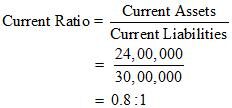
Calculate Current Ratio and Liquid Ratio.

Show solutionHide solution
Worked solution

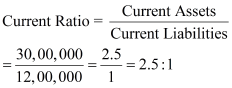
1. Current Ratio

NCERT Act Class 12 Chp 5-27

Current Assets = Inventories +Trade Receivables + Cash + Short term Loans and Advances

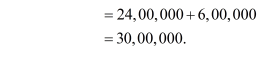
= 12, 00,000 + 9, 00,000 + 2, 28,000 + 72,000

= ₹ 24, 00,000

Current Liabilities = Trade Payables + Short-term Borrowings + Short-term Provisions

= 23, 40,000 + 6, 00,000 + 60,000

= ₹ 30, 00,000

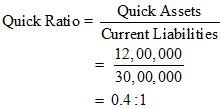
2. Quick Ratio

NCERT Act Class 12 Chp 5-28

Quick Assets = Trade Receivables + Cash + Short term Loans and Advances

= 9, 00,000 + 2, 28,000 + 72,000

= ₹ 12, 00,000

Q3Written answer

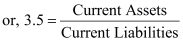
Current Ratio is 3.5:1. Working Capital is ₹ 90,000. Calculate the amount of Current Assets and Current Liabilities.

NCERT Act Class 12 Chp 5-29

NCERT Act Class 12 Chp 5-30

Show solutionHide solution
Worked solution

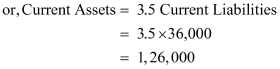
or, Current Assets = 3.5 Current Liabilities (1)

Working Capital = Current Assets − Current Liabilities

Working Capital = 90,000

or, Current Assets − Current Liabilities = 90,000

or, 3.5 Current Liabilities − Current Liabilities = 90,000 (from 1)

or, 2.5 Current Liabilities = 90,000

NCERT Act Class 12 Chp 5-31

NCERT Act Class 12 Chp 5-32

Q4Written answer

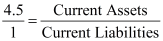
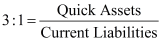
Shine Limited has a current ratio 4.5:1 and quick ratio 3:1; if the inventory is 36,000, calculate current liabilities and current assets.

NCERT Act Class 12 Chp 5-33

Show solutionHide solution
Worked solution

or,
NCERT Act Class 12 Chp 5-34

or, 4.5 Current Liabilities = Current Assets

NCERT Act Class 12 Chp 5-35

or,
NCERT Act Class 12 Chp 5-36

or, 3 Current Liabilities = Quick Assets

Quick Assets = Current Assets − Inventory = Current Assets − 36,000Quick Assets = Current Assets – Inventory = Current Assets – 36,000

Current Assets − Quick Assets = 36,000

or, 4.5 Current Liabilities − 3 Current Liabilities = 36,000

or, 1.5 Current Liabilities = 36,000

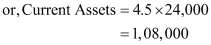
or, Current Liabilities = 24,000

Current Assets = 4.5 Current Liabilities

NCERT Act Class 12 Chp 5-37

Q5Written answer

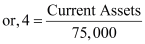
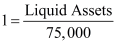
Current liabilities of a company are ₹ 75,000. If current ratio is 4:1 and liquid ratio is 1:1, calculate value of current assets, liquid assets and inventory.

NCERT Act Class 12 Chp 5-38

NCERT Act Class 12 Chp 5-39

Show solutionHide solution
Worked solution

Or, 4 × 75,000 = Current Assets

Or, Current Assets = 3, 00,000

NCERT Act Class 12 Chp 5-40

Or,
NCERT Act Class 12 Chp 5-41

Liquid Assets = 75,000

Inventory = Current Assets − Liquid Assets

= 3, 00,000 − 75,000

= 2, 25,000

Q6Written answer

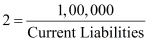
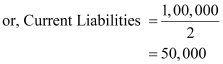
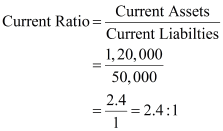
Handa Ltd. has inventory of ₹ 20,000. Total liquid assets are ₹ 1, 00,000 and quick ratio is 2:1. Calculate current ratio.

NCERT Act Class 12 Chp 5-42

Show solutionHide solution
Worked solution

or,
NCERT Act Class 12 Chp 5-43

NCERT Act Class 12 Chp 5-45

Current Assets = Liquid Assets + Inventory

= 1, 00,000 + 20,000

= 1, 20,000

NCERT Act Class 12 Chp 5-46

Q7Written answer

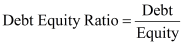
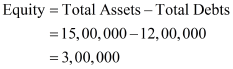
Calculate debt equity ratio from the following information:

  ₹
Total Assets 15,00,000
Current Liabilities 6,00,000
Total Debts 12,00,000

NCERT Act Class 12 Chp 5-48

NCERT Act Class 12 Chp 5-49

Show solutionHide solution
Worked solution

Long Term Debts = Total Debts − Current Liabilities

NCERT Act Class 12 Chp 5-50

Or,
NCERT Act Class 12 Chp 5-51

Q8Written answer

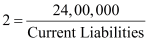
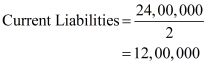
Calculate Current Ratio if:

Inventory is ₹ 6, 00,000; Liquid Assets ₹ 24, 00,000; Quick Ratio 2:1.

NCERT Act Class 12 Chp 5-52

Show solutionHide solution
Worked solution

Or,
NCERT Act Class 12 Chp 5-53

NCERT Act Class 12 Chp 5-54

Current Assets = Liquid Assets + Inventory

https://img-nm.mnimgs.com/img/study_content/editlive_ncert/304/2015_02_23_16_13_42/Capture.PNG

NCERT Act Class 12 Chp 5-55

Q9Written answer

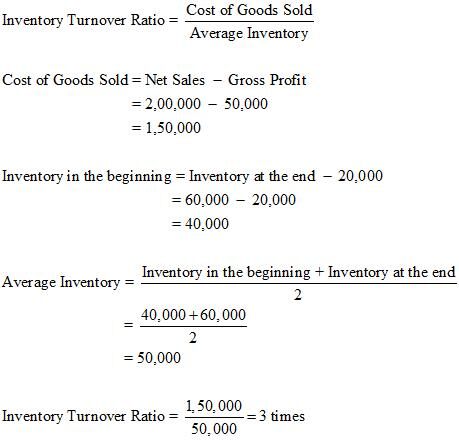
Compute Stock Turnover Ratio from the following information:

  ₹
Net Revenue from Operations 2,00,000
Gross Profit 50,000
Inventory at the end 60,000
Excess of inventory at the end over inventory in the beginning 20,000

NCERT Act Class 12 Chp 5-55

Show solutionHide solution
Worked solution

Solution coming soon.

Q10Written answer

Calculate following ratios from the following information:

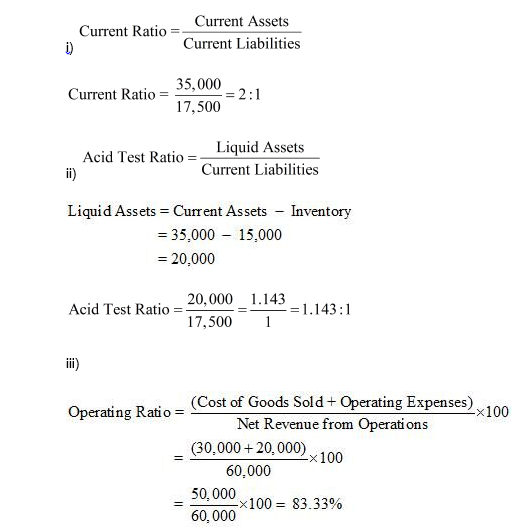
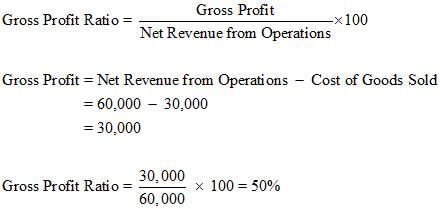
(i) Current ratio (ii) Acid test ratio (iii) Operating Ratio (iv) Gross Profit Ratio

₹
Current Assets 35,000
Current Liabilities 17,500
Inventory 15,000
Operating Expenses 20,000
Revenue from Operations 60,000
Cost of Goods Sold 30,000

NCERT Act Class 12 Chp 5-56

Show solutionHide solution
Worked solution

iv)

NCERT Act Class 12 Chp 5-57