My Cart
Your Cart 0

    Your cart is empty.

  • Total (Amount) ₹0.00
NCERT · Class 12 · Accountancy

Unit 5: Accounting Ratios

Practice each question, then open the answer or worked solution.

Long Questions for NCERT Accountancy Solutions Part 2 Class 12 Chapter 5

4 questions
Q1Written answer

What are liquidity ratios? Discuss the importance of current and liquid ratio.

Show solutionHide solution
Worked solution

For determining the short-term solvency of a business liquidity ratios are essential. There are two types of liquidity ratios:

1. Current Ratio

2. Liquid Ratio/ Quick Ratio

1. Current Ratio: This ratio deals with the relationship between current assets and liabilities. It is calculated as:

NCERT Act Class 12 Chp 5-9

Current assets are those assets which can be easily converted into cash, whereas Current liabilities are liabilities that need to pay within that accounting period

Importance of Current Ratio

Current ratio helps in determining a firm’s ability to pay off the current liabilities on time. If there is more of current assets as compared to current liabilities, it provides a source of security to the creditors. The ideal ratio is 2:1 (Current Assets: Current Liabilities)

2. Liquid Ratio– It deals with the relationship between liquid assets and current liabilities. This ratio determines if the firm has sufficient funds for paying off the current liabilities on an immediate basis. It can be calculated as:

NCERT Act Class 12 Chp 5-10

Importance of Liquid Ratio

It is helpful in determining if a firm has funds that can be sufficient to pay off liabilities. It does not include stock or prepaid expenses as both these are not easily converted to cash. A ratio of 1:1 is ideal for maintaining the liquid ratio.


Q2Written answer

How would you study the solvency position of the firm?

Show solutionHide solution
Worked solution

A firm’s solvency position can be best studied with the help of a group of ratios called Solvency Ratios. These ratios measure the financial position of the firm by measuring its ability to pay long-term liabilities, these long-term liabilities include principal amount payments on the due date and interest payments on a regular basis. The following ratios are used to determine the long-term solvency of a business.

1. Debt-Equity Ratio: This ratio shows the relationship between owner funds (equity) and borrowed funds (debt). A lower debt-equity ratio provides more security to the people who are lending to the business. It also shows that a company is able to meet long-term dues or responsibilities.

NCERT Act Class 12 Chp 5-11

2. Total Assets to Debt Ratio: It is based on the relationship between total assets and long-term loans. It shows what percentage of the company’s total assets are financed by creditors. A higher total assets to debt ratio makes the firm able to meet long-term requirements and provides more security to lenders.

NCERT Act Class 12 Chp 5-12

3. Interest Coverage Ratio: This ratio is used to determine the easiness with which a company is able to pay interest on outstanding debts. It is calculated by dividing earnings before interest and taxes with interest payments. Having a higher interest coverage ratio means that company is able to meet its obligations skilfully.

NCERT Act Class 12 Chp 5-13.

d. Proprietary Ratio– This ratio shows the relationship between Total Assets and Shareholders’ funds. It is helpful in revealing the financial position of a business. A higher ratio ensures a greater degree of security for creditors. It is shown as:

NCERT Act Class 12 Chp 5-14

Q3Written answer

What are important profitability ratios? How are these worked out?

Show solutionHide solution
Worked solution

Profitability ratios are calculated on the basis of profit earned by a business. This ratio gives a percentage which is used to assess the financial condition of a business

1. Return on Assets: This ratio measures the earnings per rupee from assets which are invested in the company. A higher profit ratio is good for the company.

Return on Assets = Net Profit ÷ Total Assets

2. Return on Equity: This ratio deals with measuring the profitability of equity fund that is invested by the company. It also measures how the owner’s funds are utilised profitably to generate company revenues. A high ratio represents the better position of a company.

Return on Equity = Profit after Tax ÷ Net worth

Where Net worth = Equity share capital, and Reserve and Surplus

3. Earnings per share: This ratio helps in measuring profitability from an ordinary shareholder’s viewpoint. A high ratio represents a well off company.

Earnings per share = Net Profit ÷ Total no of shares outstanding

4. Dividend per share: This ratio measures the amount of dividend that is distributed by the company to its shareholders at the end of an accounting period. A high ratio represents that the company has surplus cash.

Dividend per share= Amount Distributed to Shareholders ÷ No of Shares outstanding

5. Price Earnings Ratio: A profitability ratio that is used by an investor to check for the share price of the company, which can be undervalued or overvalued. It also indicates an expectation about the company’s earnings and payback period for the investors.

Price Earnings Ratio = Market Price of Share ÷ Earnings per share

6. Return on capital employed: This ratio is all about the returns earned by the company from the funds invested in the business by its owners. A high ratio is indicative of a better position for the company.

Return on capital employed = Net Operating Profit ÷ Capital Employed × 100

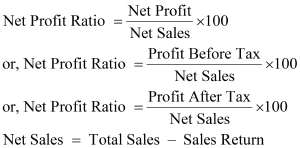
7. Gross Profit: Gross profit ratio or GP ratio is a profitability ratio that deals with the relationship between gross profit and the total net sales revenue. This ratio is used to evaluate the operational performance of the business.

NCERT Act Class 12 Chp 5

8. Net Profit: This is a profitability ratio that deals with the relationship between net profit after tax and net sales. It is calculated by dividing the net profit (after tax) by net sales.

NCERT Act Class 12 Chp 5

Q4Written answer

The current ratio provides a better measure of overall liquidity only when a firm’s inventory cannot easily be converted into cash. If inventory is liquid, the quick ratio is a preferred measure of overall liquidity. Explain.

Show solutionHide solution
Worked solution

Current Ratio: This ratio deals with the relationship between current assets and liabilities. It is calculated as:

NCERT Act Class 12 Chp 5-9

Current assets are those assets which can be easily converted into cash, whereas Current liabilities are liabilities that need to pay within that accounting period

Importance of Current Ratio

Current ratio helps in determining a firm’s ability to pay off the current liabilities on time. If there is more of current assets as compared to current liabilities, it provides a source of security to the creditors. The ideal ratio is 2:1 (Current Assets: Current Liabilities)

2. Liquid Ratio– It deals with the relationship between liquid assets and current liabilities. This ratio determines if the firm has sufficient funds to pay off the current liabilities on an immediate basis. It can be calculated as:

NCERT Act Class 12 Chp 5-10

Importance of Liquid Ratio

It is helpful in determining if a firm has funds that can be sufficient to pay off liabilities. It does not include stock or prepaid expenses as both these are not easily converted to cash. A ratio of 1:1 is ideal for maintaining the liquid ratio.

The current ratio is best suited for businesses where the available stock or inventories cannot be converted to cash easily. Examples of such industries can be locomotive companies, heavy machinery manufacturing companies etc., as heavy machinery, and tools cannot be sold easily. Similarly, businesses that can easily convert or get sold off prefer the liquid ratio as a measure to determine their liquidity. A service company is more likely to use liquid ratio as no stock is maintained.

There will be some instances when companies tend to change the ratio method used and choose accordingly. If a company is not maintaining any stock or inventory, liquid ratio is the best option, while if stock forms the majority of the company’s assets, then current ratio is the best choice, as the liquid ratio of such a firm will be very low and that can create a negative impact on creditors. In such a case, current ratio is a better choice to determine the overall liquidity.