My Cart
Your Cart 0

    Your cart is empty.

  • Total (Amount) ₹0.00
NCERT · Class 10 · Science

Chapter 4: Carbon and Its Compounds

Practice each question, then open the answer or worked solution.

Exercise questions,

Textbook page 77-78 · 15 questions
Q1Written answer

Ethane, with the molecular formula C2H6, has

(a) 6 covalent bonds

(b) 7 covalent bonds

(c) 8 covalent bonds

(d) 9 covalent bonds

Show solutionHide solution
Worked solution

Answer: (b) 7 covalent bonds

Solution: Ethane, with the molecular formula C2H6, has 7 covalent bonds.

Q2Written answer

Butanone is a four-carbon compound with the functional group
(a) carboxylic acid
(b) aldehyde
(c) ketone
(d) alcohol

Show solutionHide solution
Worked solution

Answer: (c) ketone

Q3Written answer

While cooking, if the bottom of the vessel is getting blackened on the outside, it means that

(a) the food is not cooked completely

(b) the fuel is not burning completely

(c) the fuel is wet

(d) the fuel is burning completely

Show solutionHide solution
Worked solution

Answer: (b) the fuel is not burning completely

Solution: While cooking, if the bottom of the vessel is getting blackened on the outside indicates that the fuel is not burning completely.

Q4Written answer

Explain the nature of the covalent bond using the bond formation in CH3Cl.

Show solutionHide solution
Worked solution

Solution: Carbon can neither lose 4 electrons nor gain four electrons as these processes make the system unstable due to the requirement of extra energy. Therefore, CH3Cl completes its octet configuration by sharing its 4 electrons with carbon atoms or with atoms of other elements. Hence, the bonding that exists in CH3Cl is a covalent bonding.

Here, carbon requires 4 electrons to complete its octet, while each hydrogen atom requires one electron to complete its duplet. Also, chlorine requires an electron to complete the octet. Therefore, all of these share electrons, and as a result, carbon forms 3 bonds with hydrogen and one with chlorine.

Q5Written answer

Draw the electron dot structures for

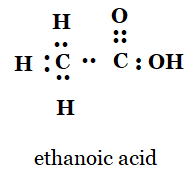
(a) ethanoic acid

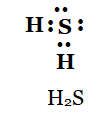
(b) H2 S

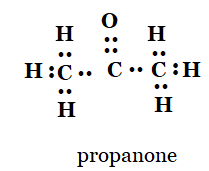
(c) propanone

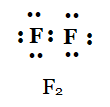
(d) F2


Show solutionHide solution
Worked solution

a)

ncert solution class 10 science chapter 4-13

b)

ncert solution class 10 science chapter 4-14

c)

ncert solution class 10 science chapter 4-15

d)

ncert solution class 10 science chapter 4-16

Q6Written answer

What is a homologous series? Explain with an example.

A homologous series is a series of compounds which has the same functional group. This also contains a similar general formula and chemical properties. Since there is a change in the physical properties, we can say that there would be an increase in molecular size and mass.

For example, methane, ethane, propane, butane, etc., are all part of the alkane homologous series. The general formula of this series is CnH2n+2. Methane CH4 Ethane CH3CH3 Propane CH3CH2CH3 Butane CH3CH2CH2CH3. It can be noticed that there is a difference of −CH2 unit between each successive compound.

Show solutionHide solution
Worked solution

Solution coming soon.

Q7Written answer

How can ethanol and ethanoic acid be differentiated on the basis of their physical and chemical properties?

Show solutionHide solution
Worked solution
Ethanol Ethanoic acid
It does not react with sodium hydrogen carbonate Bubbles and fizzes with sodium hydrogen carbonate
A good smell Smells like vinegar
No action in litmus paper Blue litmus paper to red
Burning taste Sour taste
Q8Written answer

Why does micelle formation take place when soap is added to water? Will a micelle be formed in other solvents, such as ethanol also?

Show solutionHide solution
Worked solution

Solution: Micelle formation takes place because of the dirt particles in water and clean water. There are two mediums that are involved: one is pure water, and the other is dirt, also called impurities. The soap also has two mediums:

(i) organic tail

(ii) ionic head

So the organic tail mixes and dissolves with the dirt, whereas the oil or grease and ionic head dissolve and mix with the water. Therefore, when the material to be cleaned is removed from the water, the dirt is taken off by the soap molecules in the water. Hence, the soap cleans by forming closed structures through the mutual repulsion of the micelles (positively charged heads).

Other solvents, such as ethanol, in which sodium salt of fatty acids does not dissolve, so not able to form such micelles.
Q9Written answer

Why are carbon and its compounds used as fuels for most applications?

Show solutionHide solution
Worked solution

Solution: Carbon and its compounds are used as fuels for most applications because they have high calorific values and give out a lot of energy. Most of carbon compounds give a lot of heat and light when burnt in the air.

Q10Written answer

Explain the formation of scum when hard water is treated with soap.

Show solutionHide solution
Worked solution

Solution: Scum is produced from the reaction of hard water with soap. Calcium and magnesium present in the hard water form an insoluble precipitate called scum.