My Cart
Your Cart 0

    Your cart is empty.

  • Total (Amount) ₹0.00
NCERT · Class 10 · Science

Chapter 4: Carbon and Its Compounds

Practice each question, then open the answer or worked solution.

In-text questions set 2,

Textbook page 61 · 5 questions
Q1Written answer

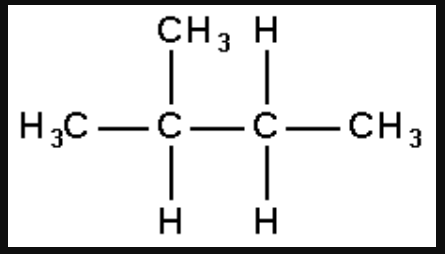
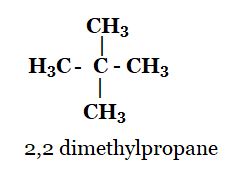
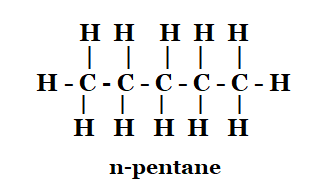
How many structural isomers can you draw for pentane?

Show solutionHide solution
Worked solution

Solution: The structural isomers of pentane are as follows:

n-pentane

2-methylbutane

2, 2-dimethylpropane
ncert solution class 10 science chapter 4-3


ncert solution class 10 science chapter 4-4

2-methylbutane


ncert solution class 10 science chapter 4-5

Q2Written answer

What are the two properties of carbon which lead to the huge number of carbon compounds we see around us?

Show solutionHide solution
Worked solution

Solution: Two properties of carbon which lead to the huge number of carbon compounds we see around us are as given below:

  • Carbon has six valence electrons which is actually a high number of valency.
  • Covalent bonding happens easily with carbon atoms and numerous others, such as oxygen, chlorine, nitrogen, sulphur, hydrogen, etc.
Q3Written answer

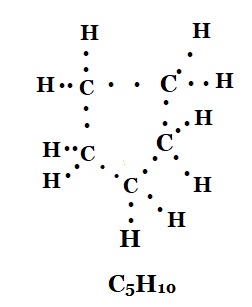
What will be the formula and electron dot structure of cyclopentane?

Show solutionHide solution
Worked solution

Solution: The formula and electron dot structure of cyclopentane is as given below:

ncert solution class 10 science chapter 4-6

Q4Written answer

Draw the structures for the following compounds.

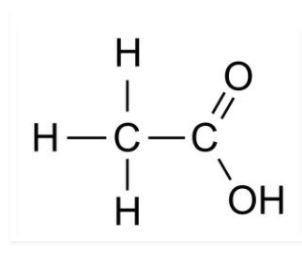
(i) Ethanoic acid

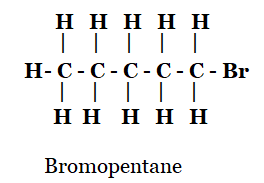
(ii) Bromopentane*

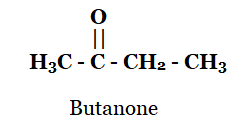
(iii) Butanone

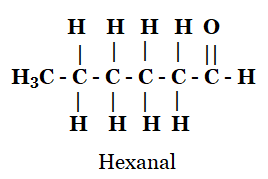
(iv) Hexanal

Show solutionHide solution
Worked solution

Solution: i)

Ethanoic acid


ii)

ncert solution class 10 science chapter 4-8

iii)

ncert solution class 10 science chapter 4-9

iv)

ncert solution class 10 science chapter 4-10

Q5Written answer

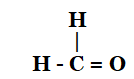
How would you name the following compounds?

  • CH3—CH2—Br
  • ncert solution class 10 science chapter 4-11
  • ncert solution class 10 science chapter 4-12
Show solutionHide solution
Worked solution
    1. Bromoethane
    2. Methanal or Formaldehyde
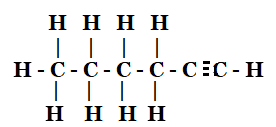
    3. 1 – Hexyne