My Cart
Your Cart 0

    Your cart is empty.

  • Total (Amount) ₹0.00
Previous year question hub

Logic - General Aptitude - General Aptitude (GA) Previous Year Questions

Practice Logic - General Aptitude - General Aptitude (GA) previous year questions organised from real papers, with year-wise coverage and clear topic navigation.

1Papers
1Years
3Questions
1Topics

Logic question pattern

Every graph below is calculated only from this selection.

Questions by year

Compare question counts across years.

Difficulty distribution

How the classified questions are distributed by difficulty.

Easy 2 66.7%
Medium 1 33.3%

Question type distribution

MCQ, numerical, multiple-select and other formats found in these papers.

MCQ 3 100%

Subject weightage

Top subjects by unique question coverage.

General Aptitude (GA)
3 Qs

Most asked topics

Top topics across the included previous year papers.

General Aptitude
3 Qs

Subtopic coverage

Top subtopics inside this exact selection.

Logic
3 Qs

Paper coverage

Question coverage for the most populated papers. Every active PYP paper remains listed below.

Production & Industrial Engineering (PI) 2015
3 Qs

Included previous year papers

Newest papers appear first. Search these papers or sort by year and name.

Paper nameYearPDFAttempt
Production & Industrial Engineering (PI) 20152015
3 questions in this view
2015

All Logic previous year questions

Practice every matching question in batches of 20, with every available option.

1
2015 · General Aptitude (GA) · General Aptitude · Logic
Production & Industrial Engineering (PI) 2015
Ishikawa diagram represents
Open complete paper
2
2015 · General Aptitude (GA) · General Aptitude · Logic
Production & Industrial Engineering (PI) 2015
As per the principles of motion economy, which one of the following is NOT a pivot for a classified movement of human body?
Open complete paper
3
2015 · General Aptitude (GA) · General Aptitude · Logic
Production & Industrial Engineering (PI) 2015
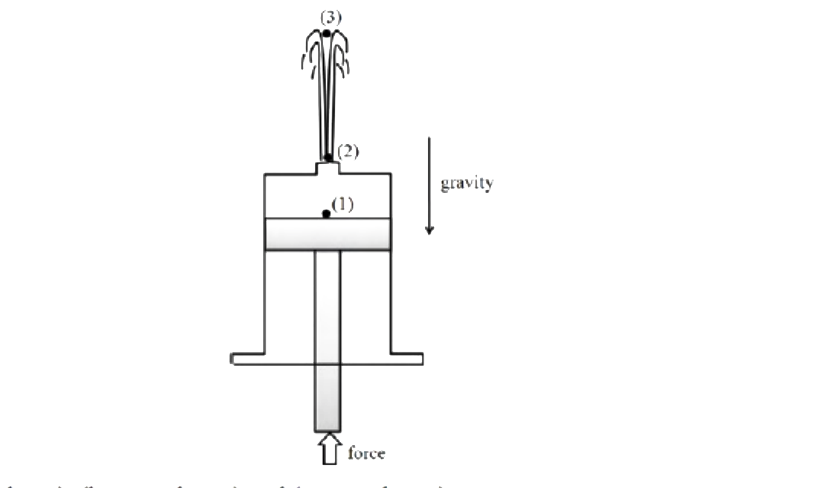
In a vertical piston-cylinder arrangement the force applied to the piston, pushes water through a nozzle as shown in the figure. The water flows out from the nozzle, and reaches the top of its trajectory. The kinetic and pressure energies at points (1), (2) and (3), respectively, are

Question diagram

Open complete paper