My Cart
Your Cart 0

    Your cart is empty.

  • Total (Amount) ₹0.00
Previous year question hub

Spatial Transformations and Paper Folding - General Aptitude - General Aptitude (GA) Previous Year Questions

Practice Spatial Transformations and Paper Folding - General Aptitude - General Aptitude (GA) previous year questions organised from real papers, with year-wise coverage and clear topic navigation.

8Papers
7Years
11Questions
1Topics

Spatial Transformations and Paper Folding question pattern

Every graph below is calculated only from this selection.

Questions by year

Compare question counts across years.

Difficulty distribution

How the classified questions are distributed by difficulty.

Medium 11 100%

Question type distribution

MCQ, numerical, multiple-select and other formats found in these papers.

MCQ 11 100%

Subject weightage

Top subjects by unique question coverage.

General Aptitude (GA)
11 Qs

Most asked topics

Top topics across the included previous year papers.

General Aptitude
11 Qs

Subtopic coverage

Top subtopics inside this exact selection.

Spatial Transformations and Paper Folding
11 Qs

Paper coverage

Question coverage for the most populated papers. Every active PYP paper remains listed below.

Civil Engineering (CE) 2026
2 Qs
Civil Engineering (CE) 2026
2 Qs
Civil Engineering (CE) 2025 [Session 1]
2 Qs
Civil Engineering (CE) 2024 [Session 2]
1 Qs
Civil Engineering (CE) 2023 [Session 2]
1 Qs
Civil Engineering (CE) 2022 [Session 2]
1 Qs
Civil Engineering (CE) 2021 [Session 2]
1 Qs
Civil Engineering (CE) 2015 [Session 1]
1 Qs

Included previous year papers

Newest papers appear first. Search these papers or sort by year and name.

Paper nameYearPDFAttempt
Civil Engineering (CE) 20262026
2 questions in this view
2026
Civil Engineering (CE) 20262026
2 questions in this view
2026
Civil Engineering (CE) 2025 [Session 1]2025
2 questions in this view
2025
Civil Engineering (CE) 2024 [Session 2]2024
1 questions in this view
2024
Civil Engineering (CE) 2023 [Session 2]2023
1 questions in this view
2023
Civil Engineering (CE) 2022 [Session 2]2022
1 questions in this view
2022
Civil Engineering (CE) 2021 [Session 2]2021
1 questions in this view
2021
Civil Engineering (CE) 2015 [Session 1]2015
1 questions in this view
2015

All Spatial Transformations and Paper Folding previous year questions

Practice every matching question in batches of 20, with every available option.

1
2015 · General Aptitude (GA) · General Aptitude · Spatial Transformations and Paper Folding
Civil Engineering (CE) 2015 [Session 1]
For the beam shown below, the stiffness coefficient \(K_{22}\) can be written as

Question diagram

Open complete paper
2
2021 · General Aptitude (GA) · General Aptitude · Spatial Transformations and Paper Folding
Civil Engineering (CE) 2021 [Session 2]

The mirror image of the above text about the x-axis is

Question diagram

Open complete paper
3
2022 · General Aptitude (GA) · General Aptitude · Spatial Transformations and Paper Folding
Civil Engineering (CE) 2022 [Session 2]
An ant walks in a straight line on a plane leaving behind a trace of its movement. The initial position of the ant is at point P facing east.
The ant first turns 72° anticlockwise at P, and then does the following two steps in sequence exactly FIVE times before halting.
1. moves forward for 10 cm.
2. turns 144° clockwise.
The pattern made by the trace left behind by the ant is

Question diagram

Open complete paper
4
2023 · General Aptitude (GA) · General Aptitude · Spatial Transformations and Paper Folding
Civil Engineering (CE) 2023 [Session 2]
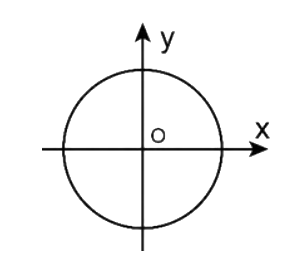
Consider a circle with its centre at the origin (O), as shown. Two operations are allowed on the circle.
Operation 1: Scale independently along the x and y axes.
Operation 2: Rotation in any direction about the origin.
Which figure among the options can be achieved through a combination of these two operations on the given circle?

Question diagram

Open complete paper
5
2024 · General Aptitude (GA) · General Aptitude · Spatial Transformations and Paper Folding
Civil Engineering (CE) 2024 [Session 2]
Five cubes of identical size and another smaller cube are assembled as shown in Figure A. If viewed from direction X, the planar image of the assembly appears as Figure B.
If viewed from direction Y, the planar image of the assembly (Figure A) will appear as

Question diagram

Open complete paper
6
2025 · General Aptitude (GA) · General Aptitude · Spatial Transformations and Paper Folding
Civil Engineering (CE) 2025 [Session 1]

A thin wire is used to construct all the edges of a cube of 1 m side by bending, cutting and soldering the wire. If the wire is 12 m long, what is the minimum number of cuts required to construct the wire frame to form the cube?

Open complete paper
7
2025 · General Aptitude (GA) · General Aptitude · Spatial Transformations and Paper Folding
Civil Engineering (CE) 2025 [Session 1]

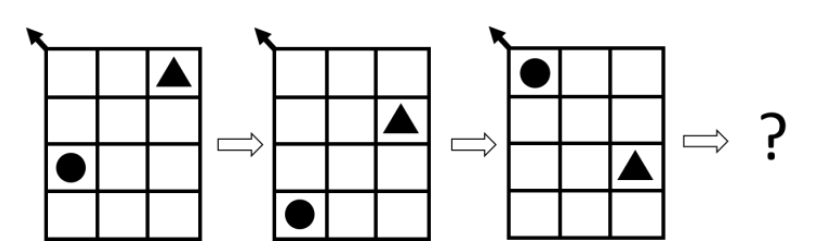
The figures I, II and III are parts of a sequence. Which one of the following options comes next in the sequence at IV?

Question diagram

Open complete paper
8
2026 · General Aptitude (GA) · General Aptitude · Spatial Transformations and Paper Folding
Civil Engineering (CE) 2026
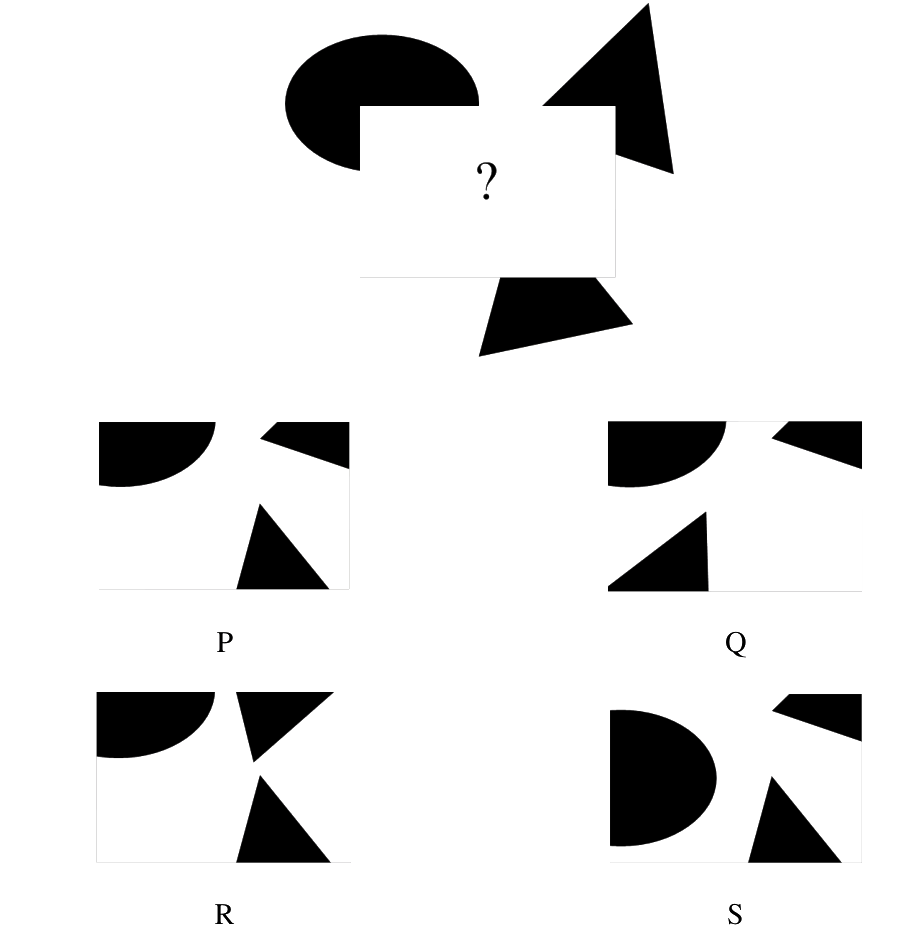
The figure below is supposed to show three non-overlapping shapes – one oval and two triangles. Which one of the following figures P, Q, R, or S fits the missing portion indicated by ‘?’ and completes the oval and the two triangles?

Question diagram

Open complete paper
9
2026 · General Aptitude (GA) · General Aptitude · Spatial Transformations and Paper Folding
Civil Engineering (CE) 2026
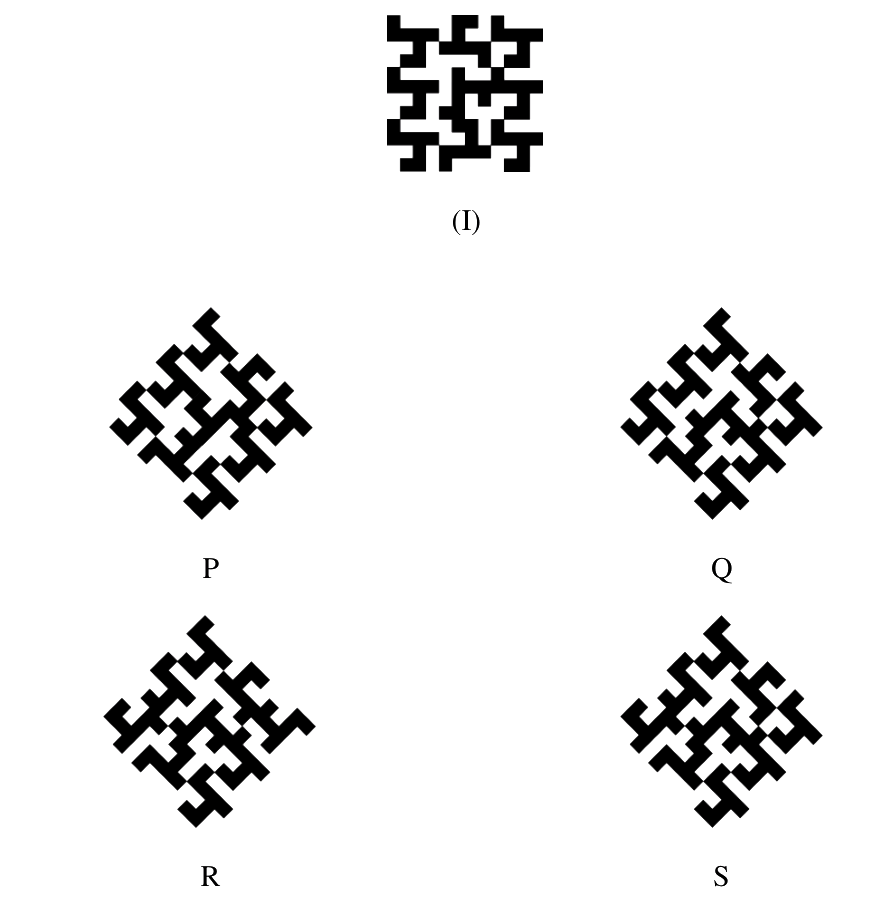
Which one of the following figures P, Q, R, or S, correctly shows the 45° clockwise-rotated version of figure (I)?

Question diagram

Open complete paper
10
2026 · General Aptitude (GA) · General Aptitude · Spatial Transformations and Paper Folding
Civil Engineering (CE) 2026
The next figure (indicated by '?') in the sequence is

Question source image

Open complete paper
11
2026 · General Aptitude (GA) · General Aptitude · Spatial Transformations and Paper Folding
Civil Engineering (CE) 2026
Which one of the patterns labelled P, Q, R, and S is used to generate the following figure?

Question diagram

Open complete paper