My Cart
Your Cart 0

    Your cart is empty.

  • Total (Amount) ₹0.00
Previous year question hub

Spatial Transformations and Paper Folding - General Aptitude - General Aptitude (GA) Previous Year Questions

Practice Spatial Transformations and Paper Folding - General Aptitude - General Aptitude (GA) previous year questions organised from real papers, with year-wise coverage and clear topic navigation.

5Papers
5Years
6Questions
1Topics

Spatial Transformations and Paper Folding question pattern

Every graph below is calculated only from this selection.

Questions by year

Compare question counts across years.

Difficulty distribution

How the classified questions are distributed by difficulty.

Medium 6 100%

Question type distribution

MCQ, numerical, multiple-select and other formats found in these papers.

MCQ 6 100%

Subject weightage

Top subjects by unique question coverage.

General Aptitude (GA)
6 Qs

Most asked topics

Top topics across the included previous year papers.

General Aptitude
6 Qs

Subtopic coverage

Top subtopics inside this exact selection.

Spatial Transformations and Paper Folding
6 Qs

Paper coverage

Question coverage for the most populated papers. Every active PYP paper remains listed below.

Biotechnology (BT) 2026
1 Qs
Biotechnology (BT) 2025
2 Qs
Biotechnology (BT) 2022
1 Qs
Biotechnology (BT) 2021
1 Qs
Biotechnology (BT) 2017
1 Qs

Included previous year papers

Newest papers appear first. Search these papers or sort by year and name.

Paper nameYearPDFAttempt
Biotechnology (BT) 20262026
1 questions in this view
2026
Biotechnology (BT) 20252025
2 questions in this view
2025
Biotechnology (BT) 20222022
1 questions in this view
2022
Biotechnology (BT) 20212021
1 questions in this view
2021
Biotechnology (BT) 20172017
1 questions in this view
2017

All Spatial Transformations and Paper Folding previous year questions

Practice every matching question in batches of 20, with every available option.

1
2017 · General Aptitude (GA) · General Aptitude · Spatial Transformations and Paper Folding
Biotechnology (BT) 2017
A contour line joins locations having the same height above the mean sea level. The following is a contour plot of a geographical region. Contour lines are shown at 25 m intervals in this plot.
The path from P to Q is best described by

Question diagram

Open complete paper
2
2021 · General Aptitude (GA) · General Aptitude · Spatial Transformations and Paper Folding
Biotechnology (BT) 2021
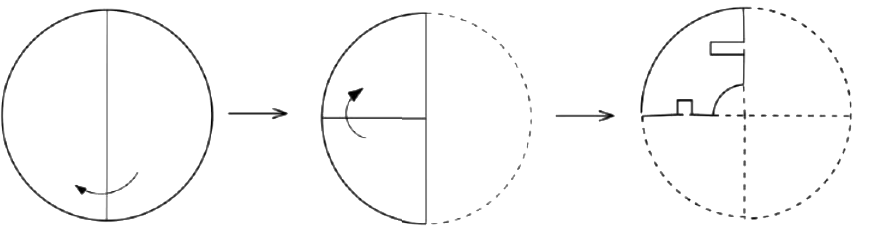
A circular sheet of paper is folded along the lines in the directions shown. The paper, after being punched in the final folded state as shown and unfolded in the reverse order of folding, will look like ____.

Question diagram

Open complete paper
3
2022 · General Aptitude (GA) · General Aptitude · Spatial Transformations and Paper Folding
Biotechnology (BT) 2022

Consider a cube made by folding a single sheet of paper of appropriate shape. The interior faces of the cube are all blank. However, the exterior faces that are not visible in the above view may not be blank. Which one of the following represents a possible unfolding of the cube?

Question diagram

Open complete paper
4
2025 · General Aptitude (GA) · General Aptitude · Spatial Transformations and Paper Folding
Biotechnology (BT) 2025

A thin wire is used to construct all the edges of a cube of 1 m side by bending, cutting and soldering the wire. If the wire is 12 m long, what is the minimum number of cuts required to construct the wire frame to form the cube?

Open complete paper
5
2025 · General Aptitude (GA) · General Aptitude · Spatial Transformations and Paper Folding
Biotechnology (BT) 2025

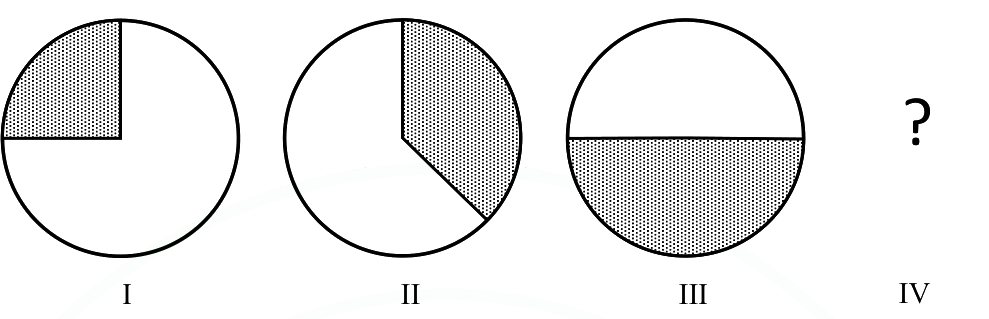
The figures I, II and III are parts of a sequence. Which one of the following options comes next in the sequence at IV?
Question diagram

Open complete paper
6
2026 · General Aptitude (GA) · General Aptitude · Spatial Transformations and Paper Folding
Biotechnology (BT) 2026
A paper shown in Panel I is folded along the dashed lines (- - -) to construct a cube. The shaded regions shown in Panel I appear on the outer surface of the cube. Referring to cubes shown in Panel II, which one of the options is correct?

Question source image

Open complete paper