My Cart
Your Cart 0

    Your cart is empty.

  • Total (Amount) ₹0.00
Previous year question hub

Compressible flows - Aerodynamics - Aerospace Engineering Previous Year Questions

Practice Compressible flows - Aerodynamics - Aerospace Engineering previous year questions organised from real papers, with year-wise coverage and clear topic navigation.

20Papers
20Years
90Questions
1Topics

Compressible flows question pattern

Every graph below is calculated only from this selection.

Questions by year

Compare question counts across years.

Difficulty distribution

How the classified questions are distributed by difficulty.

Medium 53 58.9%
Easy 32 35.6%
Hard 5 5.6%
Question type distribution

MCQ, numerical, multiple-select and other formats found in these papers.

MCQ 60 66.7%
Numerical Answer Type (NAT) 21 23.3%
MSQ 8 8.9%
Fill in the blanks 1 1.1%

Subject weightage

Top subjects by unique question coverage.

Aerospace Engineering
90 Qs

Most asked topics

Top topics across the included previous year papers.

Aerodynamics
90 Qs

Subtopic coverage

Top subtopics inside this exact selection.

Compressible flows
90 Qs

Paper coverage

Question coverage for the most populated papers. Every active PYP paper remains listed below.

Aerospace Engineering (AE) 2026
3 Qs
Aerospace Engineering (AE) 2025
4 Qs
Aerospace Engineering (AE) 2024
5 Qs
Aerospace Engineering (AE) 2023
4 Qs
Aerospace Engineering (AE) 2022
5 Qs
Aerospace Engineering (AE) 2021
5 Qs
Aerospace Engineering (AE) 2020
4 Qs
Aerospace Engineering (AE) 2019
3 Qs
Aerospace Engineering (AE) 2018
6 Qs
Aerospace Engineering (AE) 2017
4 Qs
Aerospace Engineering (AE) 2016
3 Qs
Aerospace Engineering (AE) 2015
1 Qs
Aerospace Engineering (AE) 2014
3 Qs
Aerospace Engineering (AE) 2013
5 Qs
Aerospace Engineering (AE) 2012
4 Qs
Aerospace Engineering (AE) 2011
8 Qs
Aerospace Engineering (AE) 2010
6 Qs
Aerospace Engineering (AE) 2009
4 Qs
Aerospace Engineering (AE) 2008
7 Qs
Aerospace Engineering (AE) 2007
6 Qs

Included previous year papers

Newest papers appear first. Search these papers or sort by year and name.

Paper nameYearPDFAttempt
Aerospace Engineering (AE) 20262026
3 questions in this view
2026
Aerospace Engineering (AE) 20252025
4 questions in this view
2025
Aerospace Engineering (AE) 20242024
5 questions in this view
2024
Aerospace Engineering (AE) 20232023
4 questions in this view
2023
Aerospace Engineering (AE) 20222022
5 questions in this view
2022
Aerospace Engineering (AE) 20212021
5 questions in this view
2021
Aerospace Engineering (AE) 20202020
4 questions in this view
2020
Aerospace Engineering (AE) 20192019
3 questions in this view
2019
Aerospace Engineering (AE) 20182018
6 questions in this view
2018
Aerospace Engineering (AE) 20172017
4 questions in this view
2017
Aerospace Engineering (AE) 20162016
3 questions in this view
2016
Aerospace Engineering (AE) 20152015
1 questions in this view
2015
Aerospace Engineering (AE) 20142014
3 questions in this view
2014
Aerospace Engineering (AE) 20132013
5 questions in this view
2013
Aerospace Engineering (AE) 20122012
4 questions in this view
2012
Aerospace Engineering (AE) 20112011
8 questions in this view
2011
Aerospace Engineering (AE) 20102010
6 questions in this view
2010
Aerospace Engineering (AE) 20092009
4 questions in this view
2009
Aerospace Engineering (AE) 20082008
7 questions in this view
2008
Aerospace Engineering (AE) 20072007
6 questions in this view
2007

All Compressible flows previous year questions

Practice every matching question in batches of 20, with every available option.

1
2007 · Aerospace Engineering · Aerodynamics · Compressible flows
Aerospace Engineering (AE) 2007

The drag divergence Mach number of an airfoil

Open complete paper
2
2007 · Aerospace Engineering · Aerodynamics · Compressible flows
Aerospace Engineering (AE) 2007

Across a normal shock

Open complete paper
3
2007 · Aerospace Engineering · Aerodynamics · Compressible flows
Aerospace Engineering (AE) 2007

One of the criteria for high-speed airplanes is that the critical Mach number should be as high as possible. Therefore, high-speed subsonic airplanes are usually designed with

Open complete paper
4
2007 · Aerospace Engineering · Aerodynamics · Compressible flows
Aerospace Engineering (AE) 2007

The diffuser of an airplane engine decelerates the airflow from the flight Mach number 0.85 to the compressor inlet Mach number 0.38. Assume that the ratio of the specific heats is constant and equal to 1.4. If the diffuser pressure recovery ratio is 0.92, then the isentropic efficiency of the diffuser is

Open complete paper
5
2007 · Aerospace Engineering · Aerodynamics · Compressible flows
Aerospace Engineering (AE) 2007
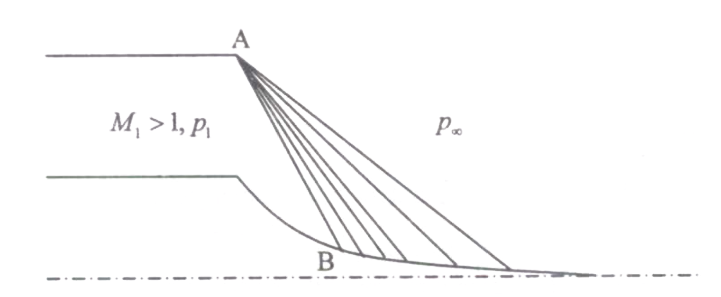
An aerospace system shown in the following figure is designed in such a way that the expansion generated at A is completely absorbed by wall B for \( p_i = p_d \), where \( p_d \) corresponds to the design condition. For \( p_i > p_e \), which of the following statements is NOT true?

Question diagram

Open complete paper
6
2007 · Aerospace Engineering · Aerodynamics · Compressible flows
Aerospace Engineering (AE) 2007

The span efficiency factor of this wing is

Open complete paper
7
2008 · Aerospace Engineering · Aerodynamics · Compressible flows
Aerospace Engineering (AE) 2008
In a scramjet engine, the Mach number at the entry to the combustion chamber is around
Open complete paper
8
2008 · Aerospace Engineering · Aerodynamics · Compressible flows
Aerospace Engineering (AE) 2008

Consider steady, inviscid flow in a convergent-divergent (CD) nozzle, with a normal shock in the divergent portion. The static pressure along the nozzle downstream of the normal shock

Open complete paper
9
2008 · Aerospace Engineering · Aerodynamics · Compressible flows
Aerospace Engineering (AE) 2008
For a free stream Mach number of 0.7 the critical pressure coefficient (\(C_{p,cr}\)) is −0.78. If the minimum pressure coefficient for a given airfoil in incompressible flow is −0.6, then the flow over the airfoil at a free stream Mach number of 0.7 is
Open complete paper
10
2008 · Aerospace Engineering · Aerodynamics · Compressible flows
Aerospace Engineering (AE) 2008
If the flow Mach number in a turbulent boundary layer over a flat plate is increased keeping the Reynolds number unchanged, the skin friction coefficient \(C_f\)
Open complete paper
11
2008 · Aerospace Engineering · Aerodynamics · Compressible flows
Aerospace Engineering (AE) 2008

In supersonic wind-tunnel design, an oblique shock diffuser is preferred over a normal shock diffuser because

Open complete paper
12
2008 · Aerospace Engineering · Aerodynamics · Compressible flows
Aerospace Engineering (AE) 2008
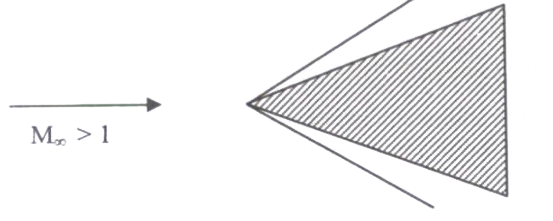
Consider a 2-D body in supersonic flow with an attached oblique shock as shown below An increase in free stream Mach number \(M_\infty\) will cause the oblique shock wave to

Question diagram

Open complete paper
13
2008 · Aerospace Engineering · Aerodynamics · Compressible flows
Aerospace Engineering (AE) 2008
An aircraft is cruising at a Mach number of 0.8 at an altitude where the ambient static pressure is 95 kPa. The diffuser exit total pressure is 140 kPa. Assuming there is no change in the specific heat at constant pressure across the diffuser, and ratio of specific heats is 1.4, the adiabatic efficiency of the intake is
Open complete paper
14
2009 · Aerospace Engineering · Aerodynamics · Compressible flows
Aerospace Engineering (AE) 2009
For a flow through a Prandtl-Meyer expansion wave
Open complete paper
15
2009 · Aerospace Engineering · Aerodynamics · Compressible flows
Aerospace Engineering (AE) 2009
An aircraft is flying at \(M = 2\) where the ambient temperature around the aircraft is 250 K. If the specific heat ratio for air \(\gamma = 1.4\), the stagnation temperature on the surface of the aircraft is
Open complete paper
16
2009 · Aerospace Engineering · Aerodynamics · Compressible flows
Aerospace Engineering (AE) 2009
Which of the following statements are true for flow across a stationary normal shock ? P. Stagnation temperature stays constant. Q. Stagnation pressure decreases. R. Entropy increases. S. Stagnation pressure increases. T. Stagnation temperature increases.
Open complete paper
17
2009 · Aerospace Engineering · Aerodynamics · Compressible flows
Aerospace Engineering (AE) 2009
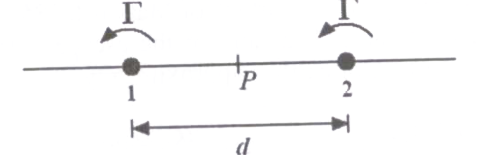
Two vortices of the same strength and sign are placed a distance \(d\) apart as shown below. Assume that the vortices are free to move and the fluid is ideal. Which of the following statements is true ?

Question diagram

Open complete paper
18
2010 · Aerospace Engineering · Aerodynamics · Compressible flows
Aerospace Engineering (AE) 2010
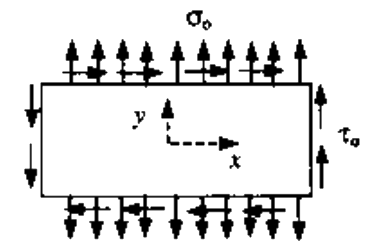
The thin rectangular plate shown in the figure is loaded with uniform shear, \(\tau_{xy}\) along all edges and uniform uniaxial tension in the y-direction. The appropriate Airy’s stress function to solve for stresses is given by

Question diagram

Open complete paper
19
2010 · Aerospace Engineering · Aerodynamics · Compressible flows
Aerospace Engineering (AE) 2010
Consider the flow of air (\(\rho = 1.23\) kg/m³) over a wing of chord length 0.5 m and span 3 m. Let the free stream velocity be \(U = 100\) m/s and the average circulation around the wing be \(\Gamma = 10\) m²/s per unit span. The lift force acting on the wing is
Open complete paper
20
2010 · Aerospace Engineering · Aerodynamics · Compressible flows
Aerospace Engineering (AE) 2010
Consider a 1-D adiabatic, inviscid, compressible flow of air (\(R = 287\) J/Kg·K, \(c_p = 718\) J/Kg·K) through a duct of constant cross-sectional area \(A = 1\) m². If the volumetric flow rate is \(\dot{Q} = 680\) m³/s and stagnation temperature is \(T_0 = 580.05\) K, then the air temperature inside the duct is
Open complete paper

Showing 20 of 90 questions