My Cart
Your Cart 0

    Your cart is empty.

  • Total (Amount) ₹0.00
Previous year question hub

Compensation and State-space Analysis - Control Systems - Electronics & Communication Engineering Previous Year Questions

Practice Compensation and State-space Analysis - Control Systems - Electronics & Communication Engineering previous year questions organised from real papers, with year-wise coverage and clear topic navigation.

7Papers
5Years
8Questions
1Topics

Compensation and State-space Analysis question pattern

Every graph below is calculated only from this selection.

Questions by year

Year-wise coverage for Compensation and State-space Analysis. Each bar uses a separate theme-derived color.

Difficulty distribution

How the classified questions are distributed by difficulty.

Medium 6 75%
Easy 2 25%

Question type distribution

MCQ, numerical, multiple-select and other formats found in these papers.

MCQ 8 100%

Subject weightage

Top subjects by unique question coverage.

Electronics & Communication Engineering
8 Qs

Most asked topics

Top topics across the included previous year papers.

Control Systems
8 Qs

Subtopic coverage

Top subtopics inside this exact selection.

Compensation and State-space Analysis
8 Qs

Paper coverage

Question coverage for the most populated papers. Every active PYP paper remains listed below.

Electronics & Communication Engineering (EC) 2017
1 Qs
Electronics & Communication Engineering (EC) 2014 [Session 1]
1 Qs
Electronics & Communication Engineering (EC) 2013 [Session 1]
1 Qs
Electronics & Communication Engineering (EC) 2013 [Session 2]
1 Qs
Electronics & Communication Engineering (EC) 2013 [Session 3]
1 Qs
Electronics & Communication Engineering (EC) 2012
2 Qs
Electronics & Communication Engineering (EC) 2008
1 Qs

Included previous year papers

Newest papers appear first. Sort by year, question coverage or name.

PaperYear / sessionQuestions in this viewOpen
Electronics & Communication Engineering (EC) 201720171View paper
Electronics & Communication Engineering (EC) 2014 [Session 1]20141View paper
Electronics & Communication Engineering (EC) 2013 [Session 1]20131View paper
Electronics & Communication Engineering (EC) 2013 [Session 2]20131View paper
Electronics & Communication Engineering (EC) 2013 [Session 3]20131View paper
Electronics & Communication Engineering (EC) 201220122View paper
Electronics & Communication Engineering (EC) 200820081View paper

All Compensation and State-space Analysis previous year questions

Practice every matching question in batches of 20, with every available option.

1
2008 · Electronics & Communication Engineering · Control Systems · Compensation and State-space Analysis
Electronics & Communication Engineering (EC) 2008
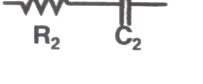
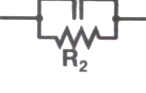
Group I gives two possible choices for the impedance Z in the diagram. The circuit elements in Z satisfy the condition \(R_2C_2 > R_1C_1\). The transfer function \[\frac{V_o}{V_i}\] represents a kind of controller. Match the impedances in Group I with the types of controllers in Group II.

Question diagram

Question diagram

Question diagram

Open complete paper
2
2012 · Electronics & Communication Engineering · Control Systems · Compensation and State-space Analysis
Electronics & Communication Engineering (EC) 2012
\( G_c(s) \) is a lead compensator if
Open complete paper
3
2012 · Electronics & Communication Engineering · Control Systems · Compensation and State-space Analysis
Electronics & Communication Engineering (EC) 2012

The phase of the above lead compensator is maximum at

Open complete paper
4
2013 · Electronics & Communication Engineering · Control Systems · Compensation and State-space Analysis
Electronics & Communication Engineering (EC) 2013 [Session 1]
The state-variable equations of the system shown in the figure above are
Open complete paper
5
2014 · Electronics & Communication Engineering · Control Systems · Compensation and State-space Analysis
Electronics & Communication Engineering (EC) 2014 [Session 1]
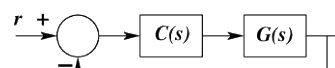
For the following feedback system \(G(s) = \frac{1}{(s+1)(s+2)}\). The 2%-settling time of the step response is required to be less than 2 seconds.
Which one of the following compensators \(C(s)\) achieves this?

Question diagram

Open complete paper
6
2017 · Electronics & Communication Engineering · Control Systems · Compensation and State-space Analysis
Electronics & Communication Engineering (EC) 2017
Correct: 1 Wrong: -0.33

Which of the following statements is incorrect?

Open complete paper