- Total number of questions: 65
- 30 questions carry one mark each
- 35 questions carry two marks each
- Negative marking: 1/3 of the marks allotted to the question
- Use of calculator is allowed
- This is a proctored examination
- All other browser applications will be automatically closed
- After three warnings, the examination window will close automatically
Exam Details
Biomedical Engineering (BM) 2022
Review the key details, then start the test when you are ready. You can also open the full package to see related papers.
Questions
65
Duration
180 mins
Package
Biomedical Engineering (BM) - Previous Year Papers
Paper pattern & analysis
Filter this paper by subject, topic or subtopic. Every graph updates from the selected questions.
Topic distribution
Subtopic distribution
Difficulty distribution
65questions
Easy
40
61.5%
Hard
25
38.5%
Question type distribution
65questions
Multiple Choices
45
69.2%
Fill in the blanks
20
30.8%
Instructions
Biomedical Engineering (BM) 2022 – Instructions
Syllabus
Full Syllabus
Sample questions from this paper
Questions are selected across the paper subjects wherever the paper contains that variety.
2022 · Unclassified
Biomedical Engineering (BM) 2022
Q.1 – Q.5 carry one mark each.
The _______ is too high for it to be considered _______.
2022 · Unclassified
Biomedical Engineering (BM) 2022
A function y(x) is defined in the interval [0, 1] on the x-axis as
y(x) = 2 if 0 ≤ x < 1/3 3 if 1/3 ≤ x < 3/4 1 if 3/4 ≤ x ≤ 1
Which one of the following is the area under the curve for the interval [0, 1] on the x-axis?
2022 · Unclassified
Biomedical Engineering (BM) 2022
Let r be a root of the equation x2 + 2x + 6 = 0. Then the value of the expression (r + 2)(r + 3)(r + 4)(r + 5) is
2022 · Unclassified
Biomedical Engineering (BM) 2022
Given below are four statements.
Statement 1: All students are inquisitive. Statement 2: Some students are inquisitive. Statement 3: No student is inquisitive. Statement 4: Some students are not inquisitive.
From the given four statements, find the two statements that CANNOT BE TRUE simultaneously, assuming that there is at least one student in the class.
2022 · Unclassified
Biomedical Engineering (BM) 2022
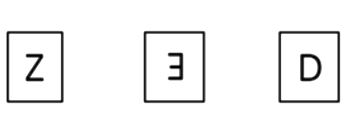
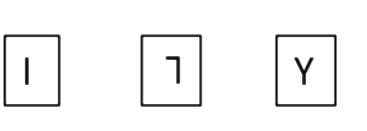
A palindrome is a word that reads the same forwards and backwards. In a game of words, a player has the following two plates painted with letters.
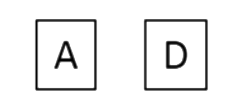
A
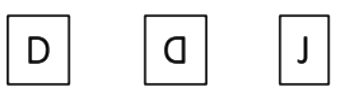
B

C
D
2022 · Unclassified
Biomedical Engineering (BM) 2022
Q.6 – Q.10 carry two marks each.
Some people believe that “what gets measured, improves”. Some others believe that “what gets measured, gets gamed”. One possible reason for the difference in the beliefs is the work culture in organizations. In organizations with good work culture, metrics help improve outcomes. However, the same metrics are counterproductive in organizations with poor work culture. Which one of the following is the CORRECT logical inference based on the information in the above passage?