My Cart
Your Cart 0

    Your cart is empty.

  • Total (Amount) ₹0.00
NCERT Exemplar · Class 11 · Chemistry

Chapter 7: Equilibrium

Practice each question, then open the answer or worked solution.

Short Answer Questions

29 questions
Q42Written answer

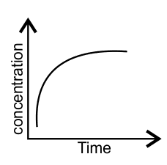
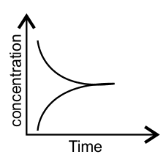
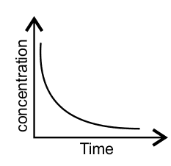
Match the following graphical variation with their description-

                A                                                                     B 


(i)
seo images


(a) Variation in product concentration with time


(ii)

seo images


(b) Reaction at equilibrium


(iii)

seo images


(c) Variation in reactant concentration with time


Show solutionHide solution
Worked solution

Ans: (i) $\to $ (c); (ii) $\to $ (a); (iii) $\to $ (b).


Q43Written answer

Match Column (I) with Column (II). Column I Column II-

(i) Equilibrium

(a) ∆G > 0, K < 1

(ii) Spontaneous reaction

(b) ∆G = 0

(iii) Nonspontaneous reaction

(c) $\Delta {{\mathbf{G}}^{\odot }}$= 0


(d) ∆G < 0, K > 1


Show solutionHide solution
Worked solution

Ans: (i) $\to $c; (ii) $\to $ (d); (iii) $\to $ (a).


Assertion and Reason Type

In the following questions a statement of Assertion (A) followed by a statement of Reason (R) is given. Choose the correct option out of the choices given below each question.

Q44Written answer

Assertion (A): Increasing order of acidity of hydrogen halides is HF < HCl < HBr < HI 

Reason (R): While comparing acids formed by the elements belonging to the same group of periodic table, H-A bond strength is a more important factor in determining acidity of an acid than the polar nature of the bond. (i) Both A and R are true and R is the correct explanation of A.

(ii) Both A and R are true but R is not the correct explanation of A. 

(iii) A is true but R is false. 

(iv) Both A and R are false. 

Show solutionHide solution
Worked solution

Ans: As, H-A bond strength is a more important factor in determining acidity than its polar nature. As the size of A increases down the group, H-A bond strength decreases. Hence, option(i) is the correct answer.


Q45Written answer

Assertion (A): A solution containing a mixture of acetic acid and sodium acetate maintains a constant value of pH on addition of small amounts of acid or alkali.

Reason (R): A solution containing a mixture of acetic acid and sodium acetate acts as a buffer solution around pH 4.75. 

(i) Both A and R are true and R is correct explanation of A. 

(ii) Both A and R are true but R is not the correct explanation of A.

(iii) A is true but R is false.

(iv) Both A and R are false.

Show solutionHide solution
Worked solution

Ans: The solutions which resist change in pH on dilution or with the addition of small amounts of acid or alkali are called buffer solutions. Hence, option(ii) is the correct answer.


Q46Written answer

Assertion (A): The ionisation of hydrogen sulphide in water is low in the presence of hydrochloric acid. 

Reason (R): Hydrogen sulphide is a weak acid.

 (i) Both A and R are true and R is correct explanation of A. 

(ii) Both A and R are true but R is not correct explanation of A. 

(iii) A is true but R is false. 

(iv) Both A and R are false. 

Show solutionHide solution
Worked solution

Ans: In presence of ${{\text{H}}^{\text{+}}}$ ion, equilibrium shifts in backward direction. Hence, option(ii) is the correct answer.


Q47Written answer

Assertion (A): For any chemical reaction at a particular temperature, the equilibrium constant is fixed and is a characteristic property. 

Reason (R): Equilibrium constant is independent of temperature. 

(i) Both A and R are true and R is correct explanation of A. 

(ii) Both A and R are true but R is not correct explanation of A. 

(iii) A is true but R is false. 

(iv) Both A and R are false. 

Show solutionHide solution
Worked solution

Ans: The equilibrium constant for an exothermic reaction (negative H) decreases as the temperature increases. The equilibrium constant for an endothermic reaction (positive H) increases as the temperature increases. Hence, option(iii) is the correct answer.


Q48Written answer

Assertion (A): Aqueous solution of ammonium carbonate is basic. Reason (R): Acidic/basic nature of a salt solution of a salt of weak acid and weak base depends on ${{\mathbf{K}}_{\mathbf{a}}}$ and ${{\mathbf{K}}_{\mathbf{b}}}$ value of the acid and the base forming it. (i) Both A and R are true and R is correct explanation of A.

 (ii) Both A and R are true but R is not correct explanation of A. 

(iii) A is true but R is false. 

(iv) Both A and R are false. 

Show solutionHide solution
Worked solution

Ans: ${{\text{K}}_{\text{a}}}$ and ${{\text{K}}_{\text{b}}}$ values are responsible for acidic and basic characters of substances. Hence option (i) is the correct answer.


Q49Written answer

Assertion (A): An aqueous solution of ammonium acetate can act as a buffer. Reason (R): Acetic acid is a weak acid and $\mathbf{N}{{\mathbf{H}}_{\mathbf{4}}}\mathbf{OH}$ is a weak base. (i) Both A and R are true and R is correct explanation of A.

 (ii) Both A and R are true but R is not correct explanation of A. 

(iii) A is false but R is true. 

(iv) Both A and R are false. 

Show solutionHide solution
Worked solution

Ans:  Salt of weak acid and weak base can form buffer solution. Hence option (iii) is the correct answer.


Q50Written answer

Assertion (A): In the dissociation of $\mathbf{PC}{{\mathbf{I}}_{\mathbf{5}}}$ at constant pressure and temperature addition of helium at equilibrium increases the dissociation of $\mathbf{PC}{{\mathbf{I}}_{\mathbf{5}}}$ . 

Reason (R): Helium removes $\mathbf{C}{{\mathbf{I}}_{\mathbf{2}}}$ from the field of action. 

(i) Both A and R are true and R is correct explanation of A. 

(ii) Both A and R are true but R is not correct explanation of A.

(iii) A is true but R is false.

(iv) Both A and R are false. 

Show solutionHide solution
Worked solution

Ans:  If the volume is kept constant and an inert gas such as argon is added which does not take part in the reaction, the equilibrium remains undisturbed. Hence, option(iv) is the correct answer.