My Cart
Your Cart 0

    Your cart is empty.

  • Total (Amount) ₹0.00
NCERT Exemplar · Class 11 · Biology

Chapter 18: Body Fluids and Circulation

Practice each question, then open the answer or worked solution.

LONG ANSWER TYPE QUESTIONS

5 questions
Q1Written answer

Explain Rh-incompatibility in humans.

Show solutionHide solution
Worked solution

There are many blood groups which are known mainly. There is another type of blood group known as Rh factor or Rhesus monkey factor which is an inherited factor. People who do not have Rh factor are called Rh-negative people (Rh-ve). Rh-incompatibility in humans may lead to a disorder called as Erythroblastosis foetal at the time of pregnancy if the foetus is Rh+ve and the mother is Rh-ve and if the blood from foetus enters the mother’s bloodstream, antibodies against the foetus blood are created. This is not affected at the first pregnancy but in subsequent if the baby is RH+ve the antibodies formed against Rh+ve blood during first pregnancy may enter the foetus through the placenta. This leads to death due to the destruction of foetus RBC’s.
Q2Written answer

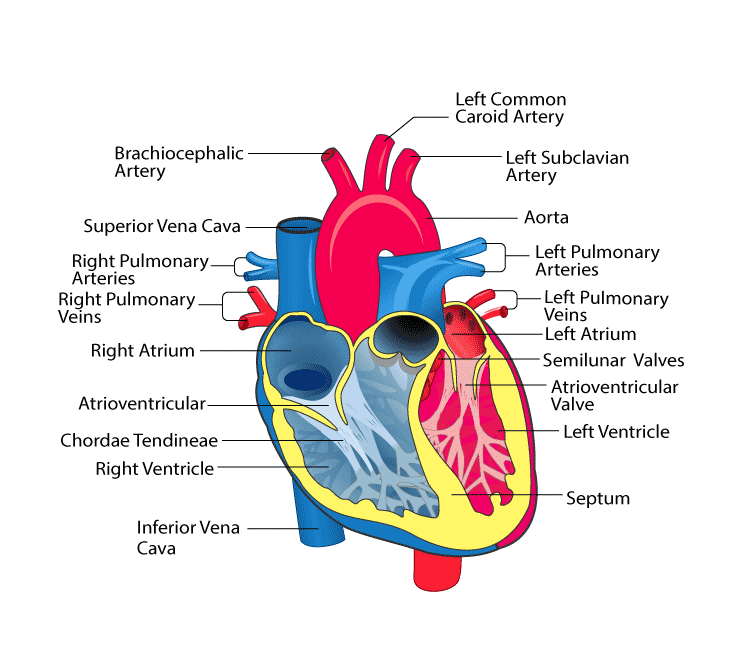
Describe the events in the cardiac cycle. Explain “double circulation”.

Show solutionHide solution
Worked solution

1. Atrial Systole (0.7 sec): In this event atria contracts due to the wave of contraction initiated by the SA node. The blood flow takes place in ventricles as the two valves are open.

2. Ventricle Systole (0.5 sec): After this, contraction of ventricles starts taking place due to the wave of contraction initiated by the AV node. Thus closing of the two valves occur and first heart sound is produced ‘club’.

3. Complete Ventricular Systole: After ventricular contraction, the blood flows into the pulmonary trunk and aorta as the semilunar valves are opened.

4. Ventricular Diastole: In this event, the ventricles relax and the semilunar valves close and the second heart sound is made ‘dub’

5. Complete Ventricular Diastole: The opening of bicuspid and tricuspid valves take place as the pressure of ventricles lowers down and blood flows from atria to the ventricles. 0.8seconds will take for the cycle to occur.

In double circulation, deoxygenated and oxygenated blood remains separated and do not mix.

Q3Written answer

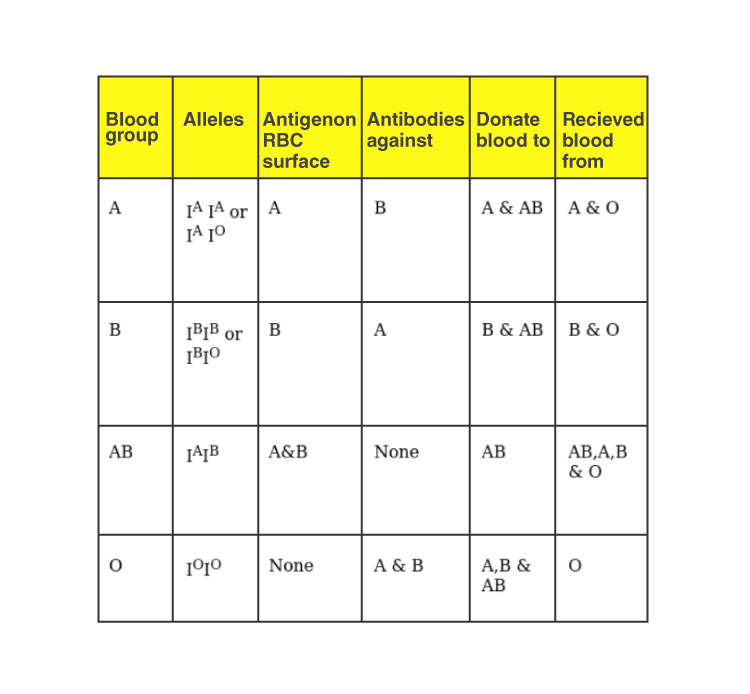
Explain different types of blood groups and donor compatibility by making a table.

Show solutionHide solution
Worked solution

NCERT Exemplar Solution of Class 11 Biology Chapter 18 Body Fluids and Circulation-3

Q4Written answer

Write a short note on the following

a. Hypertension:

b. Coronary Artery Disease:

Show solutionHide solution
Worked solution

a. Hypertension is the condition in which there is a constant increase in normal blood pressure (120/80mm Hg). Blood pressure equal to or above 140/90 mm Hg is considered hypertension. There are two types of hypertension. One is primary hypertension and the other one is secondary hypertension. Former is the Idiopathic Hypertension because the specific cause of the increased blood pressure is not known and the latter is the type of hypertension with a known cause

b. Coronary Artery Disease in which the arterial lumen get narrowed due to the buildup of fats and cholesterol which decreases the supply of oxygen to the body organs. It may also lead to the damaging of heart muscles. It is caused by smoking, obesity or can be hereditary. It can be prevented by regular exercise, eating healthy.

Q5Written answer

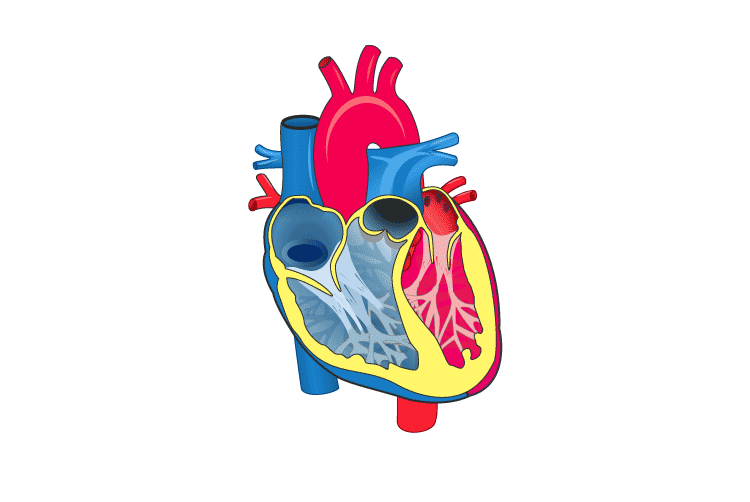
In the diagrammatic presentation of heart given below, mark and label, SAN, AVN, AV bundles, a bundle of His and Purkinje fibres

NCERT Exemplar Solution of Class 11 Biology Chapter 18 Body Fluids and Circulation-4

Show solutionHide solution
Worked solution

NCERT Exemplar Solution of Class 11 Biology Chapter 18 Body Fluids and Circulation-5

The chapter Body Fluids and Circulation discusses the different fluids present in the body and how the circulation of these different fluids is important to distribute nutrients to various body parts. The system that is responsible for circulation is termed the circulatory system, which is also known as the cardiovascular system. The heart is the major organ involved in pumping blood throughout the body.

Sub-topics of Class 11 Biology Chapter 18 Body Fluids and Circulation
  1. Respiratory Organs
    1. Human Respiratory System
  2. Mechanism of Breathing
    1. Respiratory Volumes and Capacities
  3. Exchange of Gases
  4. Transport of Gases
    1. Transport of Oxygen
    2. Transport of Carbon dioxide
  5. Regulation of Respiration
  6. Disorders of the Respiratory System