My Cart
Your Cart 0

    Your cart is empty.

  • Total (Amount) ₹0.00
NCERT · Class 7 · Social Science

Chapter 8: A Shirt in the Market

Practice each question, then open the answer or worked solution.

Questions

4 questions
Q1Written answer

What made Swapna sell the cotton to the trader instead of selling it at the Kurnool cotton market?

Show solutionHide solution
Worked solution

Solution: Swapna borrowed ₹ 2,500 at high interest from the local trader. The amount was borrowed in order to buy seeds, fertilisers and pesticides for cultivation. The other condition that Swapna had to agree to was that she would sell all her cotton to him instead.
Q2Written answer

Describe the conditions of employment as well as the wages of workers in the garment exporting factory. Do you think the workers get a fair deal?

Show solutionHide solution
Worked solution

Solution: The conditions of employment in the garment exporting factory are as follows:

I. Workers are employed on a temporary basis, which means that they can be dismissed as soon as the work is done or whenever the employer has no need of them.

II. They are under pressure to produce quality products in a limited time-frame

III. They are forced to work for long hours under extreme conditions

No, the workers don’t get a fair deal as they are paid very less for the work they do, in addition to being exploited by their employer. There is no job security as they can be asked to leave at a moment’s notice.

Q3Written answer

Think of something common that we use. It could be sugar, tea, milk, pen, pencil, paper, etc. Discuss through what chain of markets this reaches you. Can you think of the people that help in production or trade?

Show solutionHide solution
Worked solution

Solution: The chain of markets for milk production is as follows:

(i) Dairy cooperatives purchase milk from dairy farmers at different locations.

(ii) The milk is then transported to the factories run by the dairy cooperatives.

(iii) The milk is then pasteurised and packed in containers.

(iv) The packed milk containers are then given to traders working with the cooperatives, who transport them to locations where wholesale dealers will purchase them.

(v) Retailers then purchase the milk from the wholesalers, who then sell the packed milk at booths spread across the city.

Q4Written answer

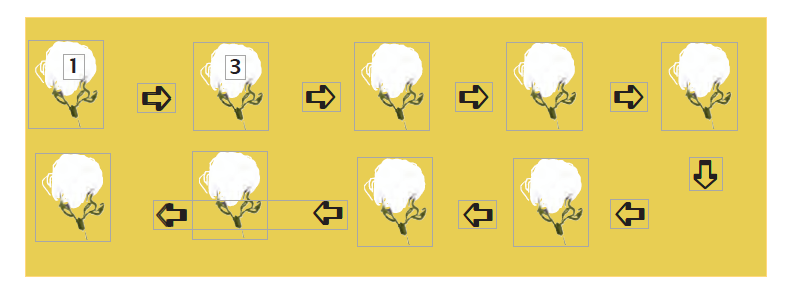
Arrange the statement given below in the correct order and then fill in the numbers in the cotton balls accordingly. The first two have been done for you.

  1. Swapna sells the cotton to the trader.
  2. Customer buy these shirts in a supermarket.
  3. The trader sells cotton to the Ginning Mill.
  4. Garment exporters buy the cloth from merchants making the shirts.
  5. Yarn dealers or merchants give the yarn to the weavers.
  6. The exporter sells shirts to the businessperson from the USA.
  7. Spinning mill buys the cotton and sells yarn to the yarn dealer.
  8. Weavers return with the cloth.
  9. Ginning mill cleans the cotton and makes it into bales.

Class 7 Chapter 8 A Shirt in the Market

Show solutionHide solution
Worked solution

1. Swapna sells the cotton to the trader.

3. The trader sells cotton to the Ginning Mill.

9. Ginning mill cleans the cotton and makes it into bales.

7. Spinning mill buys the cotton and sells yarn to the yarn dealer.

5. Yarn dealers or merchants give the yarn to the weavers.

8. Weavers return with the cloth.

4. Garment exporters buy the cloth from the merchants for making shirts.

6. The exporter sells shirts to the businessperson from the USA.

2. Customers buy these shirts in a supermarket.