My Cart
Your Cart 0

    Your cart is empty.

  • Total (Amount) ₹0.00
NCERT · Class 7 · Maths

Chapter 9: Perimeter and Area

Practice each question, then open the answer or worked solution.

Exercise 11.4

Textbook page 226 · 11 questions
Q1Written answer

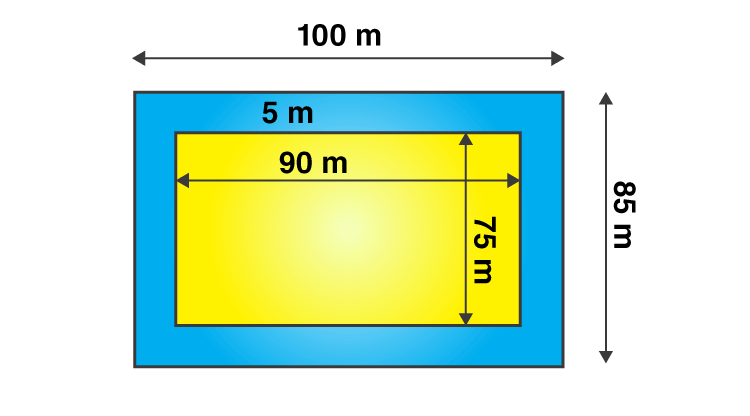
A garden is 90 m long and 75 m broad. A path 5 m wide is to be built outside and around it. Find the area of the path. Also, find the area of the garden in hectares.

Show solutionHide solution
Worked solution

Solution:-
NCERT Solutions for Class 7 Maths Chapter 11 Perimeter and Area Image 20

From the question, it is given that

Length of the garden (L) = 90 m

Breadth of the garden (B) = 75 m

Then,

Area of the garden = Length × Breadth

= 90 × 75

= 6750 m2

From the figure,

The new length and breadth of the garden when the path is included are 100 m and 85 m, respectively.

New area of the garden = 100 × 85

= 8500 m2

The area of path = New area of the garden including path – Area of garden

= 8500 – 6750

= 1750 m2

For 1 hectare = 10000 m2

Hence, the area of the garden in hectares = 6750/10000

= 0.675 hectare
Q2Written answer

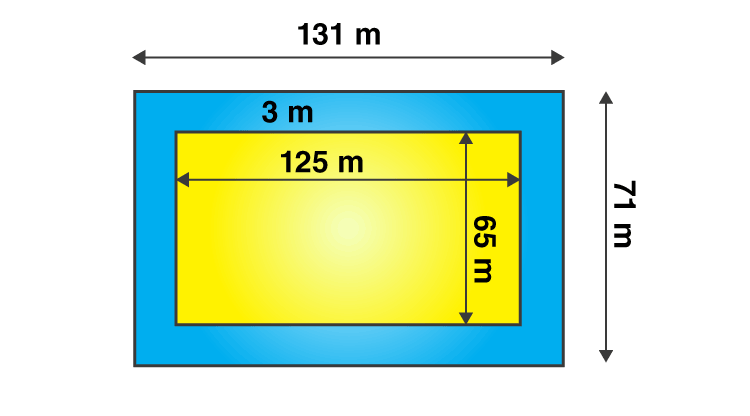
A 3 m wide path runs outside and around a rectangular park of length 125 m and breadth 65 m. Find the area of the path.

Show solutionHide solution
Worked solution

Solution:-

NCERT Solutions for Class 7 Maths Chapter 11 Perimeter and Area Image 21

From the question, it is given that

Length of the park (L) = 125 m

Breadth of the park (B) = 65 m

Then,

Area of the park = Length × Breadth

= 125 × 65

= 8125 m2

From the figure,

The new length and breadth of the park when the path is included are 131 m and 71 m, respectively.

New area of the park = 131 × 71

= 9301 m2

The area of path = New area of the park including path – Area of the park

= 9301 – 8125

= 1176 m2

Q3Written answer

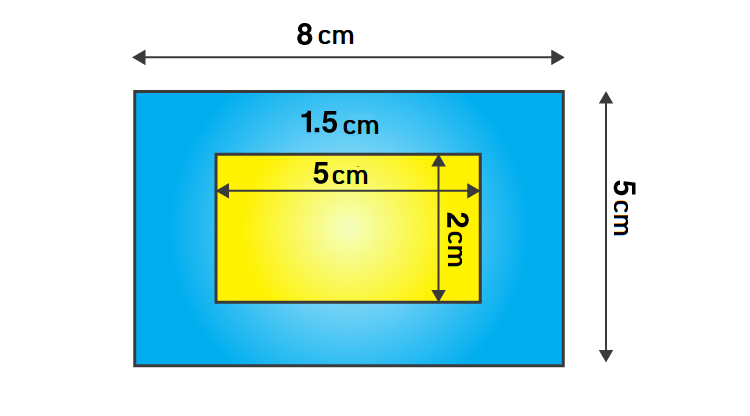
A picture is painted on a cardboard 8 cm long and 5 cm wide, such that there is a margin of 1.5 cm along each of its sides. Find the total area of the margin.

Show solutionHide solution
Worked solution

Solution:-

NCERT Solutions for Class 7 Maths Chapter 11 Perimeter and Area Image 22

From the question, it is given that

Length of the cardboard (L) = 8 cm

Breadth of the cardboard (B) = 5 cm

Then,

Area of the cardboard = Length × Breadth

= 8 × 5

= 40 cm2

From the figure,

The new length and breadth of the cardboard when the margin is not included are 5 cm and 2 cm, respectively.

New area of the cardboard = 5 × 2

= 10 cm2

The area of margin = Area of the cardboard when the margin is included – Area of the cardboard when the margin is not included

= 40 – 10

= 30 cm2

Q4Written answer

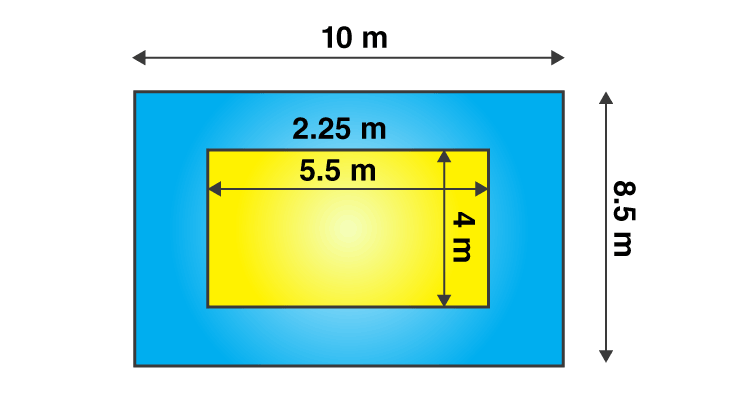
A verandah of width 2.25 m is constructed all along outside a room which is 5.5 m long and 4 m wide. Find:

(i) the area of the verandah.

(ii) the cost of cementing the floor of the verandah at the rate of ₹ 200 per m2.

Show solutionHide solution
Worked solution

Solution:-

NCERT Solutions for Class 7 Maths Chapter 11 Perimeter and Area Image 23

(i)

From the question, it is given that

Length of the room (L) = 5.5 m

Breadth of the room (B) = 4 m

Then,

Area of the room = Length × Breadth

= 5.5 × 4

= 22 m2

From the figure,

The new length and breadth of the room when the verandah is included are 10 m and 8.5 m, respectively.

The new area of the room when the verandah is included = 10 × 8.5

= 85 m2

The area of verandah = Area of the room when verandah is included – Area of the room

= 85 – 22

= 63 m2

(ii)

Given, the cost of cementing the floor of the verandah at the rate of ₹ 200 per m2

Then the cost of cementing the 63 m2 area of floor of the verandah = 200 × 63

= ₹ 12600

Q5Written answer

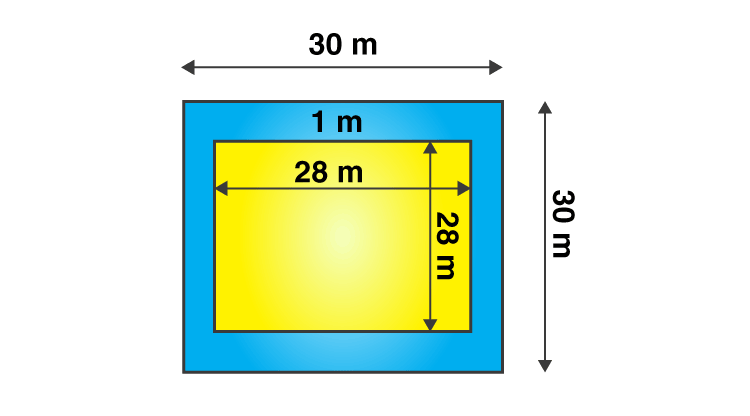
A path 1 m wide is built along the border and inside a square garden of side 30 m. Find:

(i) the area of the path.

(ii) the cost of planting grass in the remaining portion of the garden at the rate of ₹ 40 per m2.

Show solutionHide solution
Worked solution

Solution:-

NCERT Solutions for Class 7 Maths Chapter 11 Perimeter and Area Image 24

(i)

From the question, it is given that

Side of the square garden (s) = 30 m

Then,

Area of the square garden = S2

= 302

= 30 × 30

= 900 m2

From the figure,

The new side of the square garden, when the path is not included, is 28 m.

The new area of the room when the verandah is included = 282

= 28 × 28

= 784 m2

The area of the path = Area of the square garden when the path is included – Area of the square garden when the path is not included

= 900 – 784

= 116 m2

(ii)

Given, the cost of planting the grass in the remaining portion of the garden at the rate of

= ₹ 40 per m2

Then the cost of planting the grass in 784 m2 area of the garden = 784 × 40

= ₹ 31360

Q6Written answer

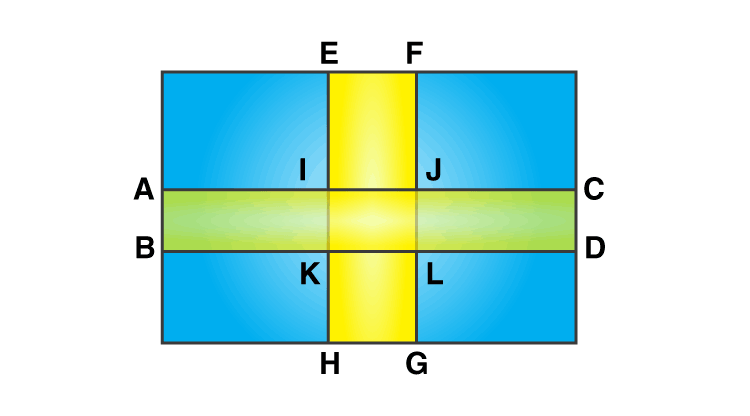
Two crossroads, each of width 10 m, cut at right angles through the centre of a rectangular park of length 700 m and breadth 300 m and parallel to its sides. Find the area of the roads. Also, find the area of the park excluding the crossroads. Give the answer in hectares.

Show solutionHide solution
Worked solution

Solution:-

NCERT Solutions for Class 7 Maths Chapter 11 Perimeter and Area Image 25

From the question, it is given that

Length of the park (L) = 700 m

Breadth of the park (B) = 300 m

Then,

Area of the park = Length × Breadth

= 700 × 300

= 210000 m2

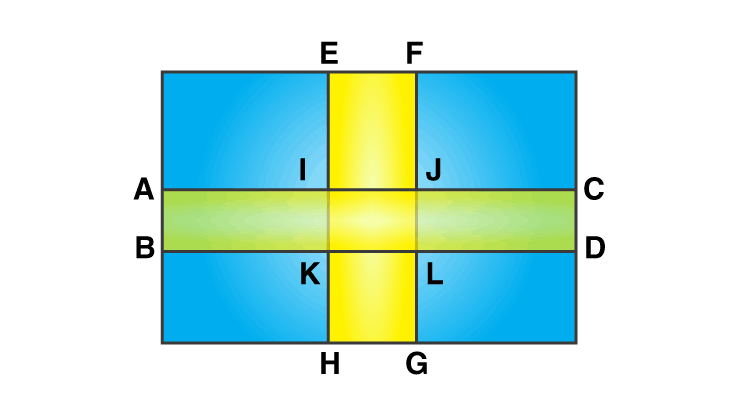
Let us assume that ABCD is the one crossroad and EFGH is another crossroad in the park.

The length of ABCD cross road = 700 m

The length of EFGH cross road = 300 m

Both crossroads have the same width = 10 m

Then,

Area of the ABCD cross road = Length × Breadth

= 700 × 10

= 7000 m2

Area of the EFGH cross road = Length × Breadth

= 300 × 10

= 3000 m2

Area of the IJKL at centre = Length × Breadth

= 10 × 10

= 100 m2

Area of the roads = Area of ABCD + Area of EFGH – Area of IJKL

= 7000 + 3000 – 100

= 10000 – 100

= 9900 m2

We know that for 1 hectare = 10000 m2

Hence, the area of roads in hectares = 9900/10000

= 0.99 hectare

Finally, the area of the park excluding roads = Area of the park – Area of the roads

= 210000 – 9900

= 200100 m2

= 200100/10000

= 20.01 hectare

Q7Written answer

Through a rectangular field of length 90 m and breadth 60 m, two roads are constructed which are parallel to the sides and cut each other at right angles through the centre of the fields. If the width of each road is 3 m, find

(i) the area covered by the roads.

(ii) the cost of constructing the roads at the rate of ₹ 110 per m2.

Show solutionHide solution
Worked solution

Solution:-

NCERT Solutions for Class 7 Maths Chapter 11 Perimeter and Area Image 26

(i)

From the question, it is given that

Length of the field (L) = 90 m

Breadth of the field (B) = 60 m

Then,

Area of the field = Length × Breadth

= 90 × 60

= 5400 m2

Let us assume that ABCD is the one crossroad and EFGH is another crossroad in the park.

The length of ABCD cross road = 90 m

The length of EFGH cross road = 60 m

Both crossroads have the same width = 3 m

Then,

Area of the ABCD cross road = Length × Breadth

= 90 × 3

= 270 m2

Area of the EFGH cross road = length × breadth

= 60 × 3

= 180 m2

Area of the IJKL at centre = Length × Breadth

= 3 × 3

= 9 m2

Area of the roads = Area of ABCD + Area of EFGH – Area of IJKL

= 270 + 180 – 9

= 450 – 9

= 441 m2

(ii)

Given, the cost of constructing the roads at the rate of ₹ 110 per m2.

Then the cost of constructing the 441 m2 roads = 441 × 110

= ₹ 48510

Q8Written answer

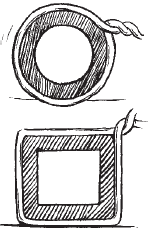
Pragya wrapped a cord around a circular pipe of radius 4 cm (adjoining figure) and cut off the length required of the cord. Then she wrapped it around a square box of side 4 cm (also shown). Did she have any cords left? (π = 3.14)

NCERT Solutions for Class 7 Maths Chapter 11 Perimeter and Area Image 27

Show solutionHide solution
Worked solution

Solution:-

From the question, it is given that

Radius of a circular pipe = 4 cm

Side of a square = 4 cm

Then,

Perimeter of the circular pipe = 2πr

= 2 × 3.14 × 4

= 25.12 cm

Perimeter of the square = 4 × Side of the square

= 4 × 4

= 16 cm

So, the length of cord left with Pragya = Perimeter of the circular pipe – Perimeter of the square

= 25.12 – 16

= 9.12 cm

Yes, 9.12 cm cord is left.

Q9Written answer

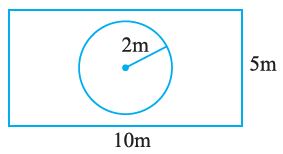
The adjoining figure represents a rectangular lawn with a circular flower bed in the middle. Find:

(i) the area of the whole land. (ii) the area of the flower bed.

(iii) the area of the lawn, excluding the area of the flower bed.

(iv) the circumference of the flower bed.

NCERT Solutions for Class 7 Maths Chapter 11 Perimeter and Area Image 28

Show solutionHide solution
Worked solution

Solution:-

(i)

From the figure,

Length of rectangular lawn = 10 m

Breadth of rectangular lawn = 5 m

Area of the rectangular lawn = Length × Breadth

= 10 × 5

= 50 m2

(ii)

From the figure,

Radius of the flower bed = 2 m

Area of the flower bed = πr2

= 3.14 × 22

= 3.14 × 4

= 12.56 m2

(iii)

The area of the lawn, excluding the area of the flower bed = Area of the rectangular lawn –

Area of the flower bed

= 50 – 12.56

= 37.44 m2

(iv)

The circumference of the flower bed = 2πr

= 2 × 3.14 × 2

= 12.56 m

Q10Written answer

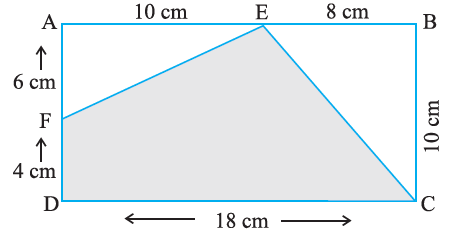
In the following figures, find the area of the shaded portions.

(i)

NCERT Solutions for Class 7 Maths Chapter 11 Perimeter and Area Image 29

Show solutionHide solution
Worked solution

Solution:-

To find the area of EFDC, first, we have to find the area of ΔAEF, ΔEBC and rectangle ABCD.

Area of ΔAEF = ½ × Base × Height

= ½ × 6 × 10

= 1 × 3 × 10

= 30 cm2

Area of ΔEBC = ½ × Base × Height

= ½ × 8 × 10

= 1 × 4 × 10

= 40 cm2

Area of rectangle ABCD = Length × Breadth

= 18 × 10

= 180 cm2

Then,

Area of EFDC = ABCD area – (ΔAEF + ΔEBC)

= 180 – (30 + 40)

= 180 – 70

= 110 cm2

(ii)

NCERT Solutions for Class 7 Maths Chapter 11 Perimeter and Area Image 30

Solution:-

To find the area of ΔQTU, first, we have to find the area of ΔSTU, ΔTPQ, ΔQRU and square PQRS.

Area of ΔSTU = ½ × Base × Height

= ½ × 10 × 10

= 1 × 5 × 10

= 50 cm2

Area of ΔTPQ = ½ × Base × Height

= ½ × 10 × 20

= 1 × 5 × 20

= 100 cm2

Area of ΔQRU = ½ × Base × Height

= ½ × 10 × 20

= 1 × 5 × 20

= 100 cm2

Area of square PQRS = Side2

= 20 × 20

= 400 cm2

Then,

Area of ΔQTU = PQRS area – (ΔSTU + ΔTPQ + ΔQRU)

= 400 – (50 + 100 + 100)

= 400 – 250

= 150 cm2