My Cart
Your Cart 0

    Your cart is empty.

  • Total (Amount) ₹0.00
NCERT · Class 12 · Physics

Chapter 2: Electrostatic Potential and Capacitance

Practice each question, then open the answer or worked solution.

Questions

35 questions
Q2.12Written answer

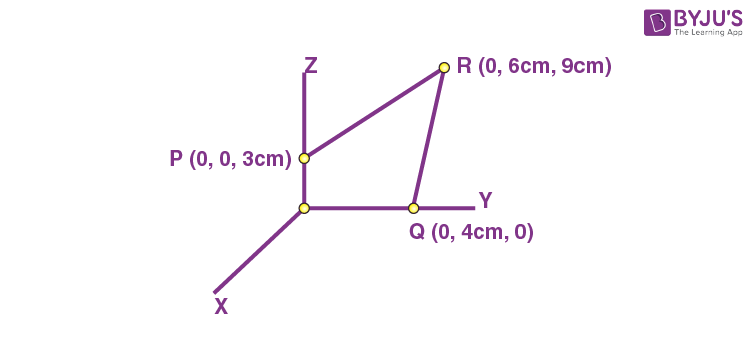
A charge of 8 mC is located at the origin. Calculate the work done in taking a small charge of –2 × 10⁻⁹ C from a point P (0, 0, 3 cm) to a point Q (0, 4 cm, 0) via a point R (0, 6 cm, 9 cm).

NCERT Class 12 - Chapter 2 - Image - Question 2.12

Show solutionHide solution
Worked solution

Charge located at the origin, q = 8 mC = 8 x 10⁻³ C

The magnitude of the charge taken from the point P to R and then to Q, q1 = – 2 x 10⁻⁹ C

Here, OP= d1= 3 cm = 3 x 10⁻² m

OQ = d2= 4 cm = 4 x 10⁻² m

Potential at the point P, 

\(\begin{array}{l}V_{1}=\frac{q}{4\pi \epsilon _{0}d_{1}}\end{array} \)

Potential at the point Q, 

\(\begin{array}{l}V_{2}=\frac{q}{4\pi \epsilon _{0}d_{2}}\end{array} \)

The work done (W) is independent of the path

Therefore, W = q1[V1 – V2]


\(\begin{array}{l}W=q_{1}\left [ \frac{q}{4\pi \epsilon _{0}d_{2}} – \frac{q}{4\pi \epsilon _{0}d_{1}} \right ]\end{array} \)


\(\begin{array}{l}W=\frac{qq_{1}}{4\pi \epsilon _{0}}\left [ \frac{1}{d_{2}} – \frac{1}{d_{1}} \right ]\end{array} \)

Where, 

\(\begin{array}{l}\frac{1}{4\pi \epsilon _{0}}=9 \times 10^{9}Nm^{2}C^{-2}\end{array} \)

Therefore,

\(\begin{array}{l}W = 9 \times 10^{9}\times 8\times 10^{-3}\times (-2\times 10^{-9})\left [ \frac{1}{4\times 10^{-2}}-\frac{1}{3\times 10^{-2}} \right ]\end{array} \)

= -144 x 10-3 x (-100/12)

= 1.2  Joule

Therefore, the work done during the process is 1.2 J

Q2.13Written answer

A cube of side b has a charge q at each of its vertices. Determine the potential and electric field due to this charge array at the centre of the cube.

Show solutionHide solution
Worked solution

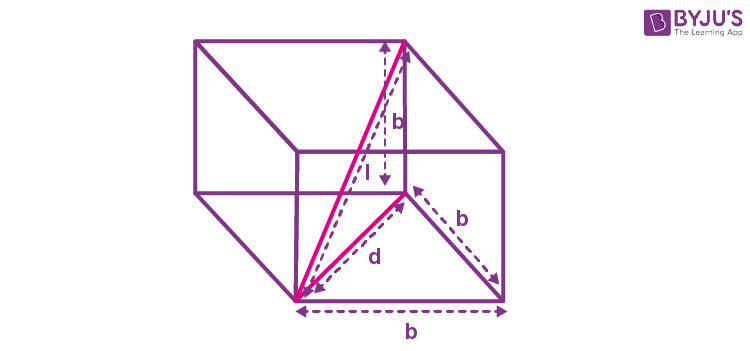
NCERT Class 12 - Chapter 2 - Image - Question 2.13

Sides of the cube = b

Charge at the vertices = q

Diagonal of one of the sides of the cube

\(\begin{array}{l}d^{2}= \sqrt{b^{2}+b^{2}}= \sqrt{2b^{2}}\end{array} \)

d = b√2

Length of the diagonal of the cube

\(\begin{array}{l}l^{2}= \sqrt{d^{2}+b^{2}}= \sqrt{2b^{2}+b^{2}}=\sqrt{3b^{2}}\end{array} \)

l = b√3

The distance between one of the vertices and the centre of the cube is

r = l/2 =(b√3/2)

The electric potential (V) at the centre of the cube is due to the eight charges at the vertices

V = 8q/4πε0

\(\begin{array}{l}V = \frac{8q}{4\pi \epsilon _{0}\left ( b\frac{\sqrt{3}}{2} \right )}\end{array} \)
\(\begin{array}{l}= \frac{4q}{\sqrt{3}\pi \epsilon _{0}b}\end{array} \)

Therefore, the potential at the centre of the cube is

\(\begin{array}{l}\frac{4q}{\sqrt{3}\pi \epsilon _{0}b}\end{array} \)

The electric field intensity at the centre of the cube, due to the eight charges, is zero.  The charges are distributed symmetrically with respect to the centre of the cube. Therefore, they get cancelled.

Q2.14Written answer

Two tiny spheres carrying charges 1.5 µC and 2.5 µC are located 30 cm apart. Find the potential and electric field:
(a) at the mid-point of the line joining the two charges
(b) at a point 10 cm from this midpoint in a plane normal to the line and passing through the mid-point.

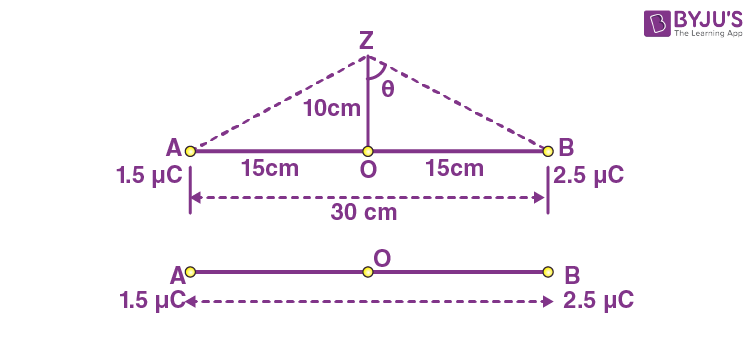
NCERT Class 12 - Chapter 2 - Image - Question 2.14

Show solutionHide solution
Worked solution

Two tiny spheres carrying charges are located at points A and B

The charge at point A, q1= 1.5 µC

The charge at point B, q2 = 2.5 µC

The distance between the two charges = 30 cm  = 0.3 m

(a) Let O be the midpoint. Let V1 and E1 be the potential and electric fields, respectively, at the midpoint.

V1 = Potential due to charge at A + Potential due to charge at B

\(\begin{array}{l}V_{1}=\frac{q_{1}}{4\pi \epsilon _{0}(\frac{d}{2})}+ \frac{q_{2}}{4\pi \epsilon _{0}(\frac{d}{2})}\end{array} \)
\(\begin{array}{l}V_{1}=\frac{1}{4\pi \epsilon _{0}(\frac{d}{2})}(q_{1}+q_{2})\end{array} \)

Here,

ε0 = Permittivity of the free space

\(\begin{array}{l}\frac{1}{4\pi \epsilon _{0}} = 9 \times 10^{9}NC^{2}m^{-2}\end{array} \)

Therefore,

\(\begin{array}{l}V_{1}=\frac{9\times 10^{9}\times 10^{-6}}{(\frac{0.30}{2})}(2.5+ 1.5)= 2.4\times 10^{5}V\end{array} \)

Electric field at O, E1 = Electric field due to q2 – Electric field due to q1

\(\begin{array}{l}=\frac{q_{2}}{4\pi \epsilon _{0}(\frac{d}{2})^{2}}- \frac{q_{1}}{4\pi \epsilon _{0}(\frac{d}{2})^{2}}\end{array} \)
\(\begin{array}{l}=\frac{9\times 10^{9}}{(\frac{0.30}{2})^{2}}\times 10^{-6}\times (2.5-1.5)\end{array} \)

= 400 x 103 V/m

Therefore, the potential at the midpoint is 2.4 x 10⁵ V, and the electric field at the midpoint is 400 x 103 V/m.

(b) Consider a point Z such that the distance OZ = 10 cm = 0.1 m, as shown in the figure.

Let V2 and E2 be the potential and electric field, respectively, at point Z.  The distance

\(\begin{array}{l}BZ = AZ = \sqrt{(0.1)^{2}+(0.15)^{2}}= 0.18 m\end{array} \)

The potential at V2 = Potential due to the charge at A + Potential due to the charge at B

\(\begin{array}{l}= \frac{q_{1}}{4\pi \epsilon _{0}(AZ)}+\frac{q_{2}}{4\pi \epsilon _{0}(BZ)}\end{array} \)


\(\begin{array}{l}=\frac{9\times 10^{9}\times 10^{-6}}{0.18}(1.5+2.5)\end{array} \)

= 2 x 10⁵ V

The electric field due to q1 at Z

\(\begin{array}{l}E_{A}=\frac{q_{1}}{4\pi \epsilon _{0}(AZ)^{2}}\end{array} \)
\(\begin{array}{l}= \frac{9\times 10^{9}\times 1.5\times 10^{-6}}{(0.18)^{2}}\end{array} \)

= 416 x 103 V/m

The electric field due to q2 at Z

\(\begin{array}{l}E_{B}=\frac{q_{2}}{4\pi \epsilon _{0}(BZ)^{2}}\end{array} \)
\(\begin{array}{l}= \frac{9\times 10^{9}\times 2.5\times 10^{-6}}{(0.18)^{2}}\end{array} \)

= 694 x 103 V/m

The resultant field intensity at Z

\(\begin{array}{l}E=\sqrt{E_{A}^{2}+E_{B}^{2}+2E_{A}E_{B}cos2\theta }\end{array} \)

From the figure we get cos θ = (0.10/0.18) = 5/9 = 0.5556

θ = cos -1 (0.5556) = 56.25

2θ = 2 x 56.25 = 112.50

cos 2θ = – 0.38

\(\begin{array}{l}E=\sqrt{(0.416\times 10^{6})^{2}+(0.69\times 10^{6})^{2}+2\times 0.416\times 0.69\times 10^{12}\times (-0.38)}\end{array} \)

= 6.6 x 10⁵ V/m

Therefore the potential at the point Z is 694 x 103 V/m, and the electric field is 6.6 x 10⁵ V/m.
Q2.15Written answer

A spherical conducting shell of inner radius r1 and outer radius r2 has a charge Q.
(a) A charge q is placed at the centre of the shell. What is the surface charge density on the inner and outer surfaces of the shell?
(b) Is the electric field inside a cavity (with no charge) zero, even if the shell is not spherical but has any irregular shape? Explain.

Show solutionHide solution
Worked solution

(a) If a charge +q is placed at the centre of the shell, a charge of magnitude -q is induced in the inner surface of the shell. Therefore, the surface charge density at the inner surface of the shell is given by the relation,

σ1 = Total charge / Inner surface area = – q/4πr12——–(1)

A charge +q is induced on the outer surface of the shell. The total charge on the outer surface of the shell is Q+q. Surface charge density at the outer surface of the shell,

σ2 = Total charge / Outer surface area = (Q+q)/4πr12————(2)

(b) Yes, the electric field inside a cavity (with no charge) will be zero, even if the shell is not spherical but has an irregular shape. Take a closed loop, part of which is inside the cavity along a field line and the rest inside the conductor. Since the field inside the conductor is zero, this gives a net work done by the field in carrying a test charge over a closed loop. We know this is impossible for an electrostatic field. Hence, there are no field lines inside the cavity (i.e., no field) and no charge on the inner surface of the conductor, whatever its shape.

Q2.16Written answer

(a) Show that the normal component of the electrostatic field has a discontinuity from one side of a charged surface to another given by

\(\begin{array}{l}\left ( E_{2}-E_{1} \right ).\hat{n}=\frac{\sigma }{\epsilon _{0}}\end{array} \)

where
\(\begin{array}{l}\hat{n}\end{array} \)
is a unit vector normal to the surface at a point, and σ is the surface charge density at that point. (The direction of  
\(\begin{array}{l}\hat{n}\end{array} \)
is from side 1 to side 2.) Hence, show that just outside a conductor, the electric field is
\(\begin{array}{l}\sigma \hat{n}/\epsilon _{0}\end{array} \)
. 

(b) Show that the tangential component of the electrostatic field is continuous from one side of a charged surface to another. [Hint: For (a), use Gauss’s law. For (b), use the fact that work done by the electrostatic field on a closed loop is zero.].

Show solutionHide solution
Worked solution

(a) Let E1 be the electric field on one side of the charged body and E2 is the electric field on the other side of the charged body. If the infinite plane charged body has a uniform thickness, the electric field due to one of the surfaces of the charged body is

\(\begin{array}{l}\vec{E_{1}}=-\frac{\sigma }{2\epsilon _{0}}\hat{n}\end{array} \)

Here,

\(\begin{array}{l}\hat{n}\end{array} \)

σ = surface charge density at that point

The electric field due to the other surface of the charged body is

\(\begin{array}{l}\vec{E_{2}}=\frac{\sigma }{2\epsilon _{0}}\hat{n}\end{array} \)

The electric field at any point due to the charge surfaces

\(\begin{array}{l}\vec{E_{2}}-\vec{E_{1}}=\frac{\sigma }{2\epsilon _{0}}\hat{n} + \frac{\sigma }{2\epsilon _{0}}\hat{n} = \frac{\sigma }{\epsilon _{0}}\hat{n}\end{array} \)

Since inside the conductor, 

\(\begin{array}{l}\vec{E_{1}}= 0\end{array} \)


\(\begin{array}{l}\vec{E_{2}}-\vec{E_{1}}= \frac{\sigma }{\epsilon _{0}}\hat{n}\end{array} \)

Therefore, the electric field just outside the conductor is 

\(\begin{array}{l}\frac{\sigma }{\epsilon _{0}}\hat{n}\end{array} \)

(b)  When a charged particle is moved from one point to the other on a closed loop, the work done by the electrostatic field is zero. Hence, the tangential component of the electrostatic field is continuous from one side of a charged surface to the other.

Q2.17Written answer

A long charged cylinder of linear charged density λ is surrounded by a hollow co-axial conducting cylinder. What is the electric field in the space between the two cylinders?

Show solutionHide solution
Worked solution

Let the length of the charged cylinder and the hollow co-axial conducting cylinder be L

The charge density of the long-charged cylinder is λ

Let E be the electric field in the space between the two cylinders

According to Gauss’s theorem, the electric flux through the Gaussian surface is given as Φ = E (2πd)L

Here,

d is the distance between the common axis of the cylinders

Therefore , Φ = E (2πd)L = q/ε0

Here, q is the charge on the inner surface of the outer cylinder

ε0  is the permittivity of the free space

E (2πd)L = λL/ε0

E = λ/2πdε0

Therefore, the electric field in the space between the two cylinders is λ/2πdε0

Q2.18Written answer

In a hydrogen atom, the electron and proton are bound at a distance of about 0.53 Å:
(a) Estimate the potential energy of the system in eV, taking the zero of the potential energy at the infinite separation of the electron from the proton.
(b) What is the minimum work required to free the electron, given that its kinetic energy in orbit is half the magnitude of potential energy obtained in (a)?
(c) What are the answers to (a) and (b) above if the zero of potential
energy is taken at 1.06 Å separation?

Show solutionHide solution
Worked solution

The distance between the proton and electron of the hydrogen atom, d = 0.53 Å

Charge of the electron, q1 = -1.6 x 10⁻¹⁹ C

Charge of the proton,  q2 = +1.6 x 10⁻¹⁹ C

(a) At an infinite separation of electron and proton, potential energy is zero

The potential energy of the system = Potential energy at infinity – Potential energy at distance d

= 0 – 

\(\begin{array}{l}\frac{q_{1}q_{2}}{4\pi \epsilon _{0}d}\end{array} \)

here,

ε0 is the permittivity of the free space

\(\begin{array}{l}\frac{1}{4\pi \epsilon _{0}}=9×10^{9}Nm^{2}C^{-2}\end{array} \)

Potential energy= 0 – 

\(\begin{array}{l}\frac{9\times 10^{9}\times (1.6 \times 10^{-19})^{2}}{0.53\times 10^{10}} = -43.7 x 10^{-19}J\end{array} \)

Potential energy = -43.7 x 10⁻¹⁹/1.6 x 10-19 = -27.2 eV [Since 1.6 x 10⁻¹⁹ J = 1 eV]

Therefore, the potential energy of the system is -27.2 eV

(b) Half of the magnitude of the potential energy is equal to the kinetic energy

Kinetic energy = |V|/2 = (1/2) x (27.2) = 13. 6 eV

Total energy = Kinetic energy + potential energy

= 13.6 eV – 27.2 eV

Total energy = – 13.6 eV

Therefore, the minimum work required to free an electron is – 13.6 eV

(c) When the zero of the potential energy is taken as d1= 1.06 Å

The potential energy of the system = Potential energy at d1 – Potential energy at d

= 

\(\begin{array}{l}\frac{q_{1}q_{2}}{4\pi \epsilon _{0}d_{1}}\end{array} \)

= 

\(\begin{array}{l}\frac{9\times 10^{9}\times (1.6 \times 10^{-19})^{2}}{1.06\times 10^{10}}\end{array} \)

= 21.73 x 10⁻¹⁹ J – 27.2 eV

= 13.58 eV -27.2 eV   [Since 1.6 x 10⁻¹⁹ J = 1 eV]

= -13.6 eV

Q2.19Written answer

If one of the two electrons of the H2 molecule is removed, we get a hydrogen molecular ion H2+. In the ground state of an H2+, the two protons are separated by roughly 1.5 Å, and the electron is roughly 1 Å from each proton. Determine the potential energy of the system. Specify your choice of the zero of potential energy.

Show solutionHide solution
Worked solution

Charge of the 1st proton, q1 = 1.6 x 10⁻¹⁹ C

Charge of the 2nd proton, q2 = 1.6 x 10⁻¹⁹ C

Charge of the electron, q3 = -1.6 x 10⁻¹⁹ C

Distance between the 1st and the 2nd proton, d1 = 1.5 x 10⁻¹⁰ m

Distance between the 1st proton and the electron, d2 = 1 x 10⁻¹⁰ m

Distance between the 2nd proton and the electron, d3 = 1 x 10⁻¹⁰ m

The potential energy at infinity is zero

Therefore, the potential energy of the system is

\(\begin{array}{l}V= \frac{q_{1}q_{2}}{4\pi \epsilon _{0}d_{1}}+\frac{q_{2}q_{3}}{4\pi \epsilon _{0}d_{3}}+ \frac{q_{3}q_{1}}{4\pi \epsilon _{0}d_{2}}\end{array} \)


\(\begin{array}{l}V = \frac{1}{4\pi \epsilon _{0}}\left [ \frac{q_{1}q_{2}}{d_{1}}+\frac{q_{2}q_{3}}{d_{3}}+\frac{q_{3}q_{1}}{d_{2}}\right ]\end{array} \)

Substituting (1/4πε0) = 9 x 10⁹ Nm2C-2 we get

\(\begin{array}{l}V= 9\times 10^{9}\left [ \frac{1.6\times 10^{-19}\times1.6\times 10^{-19} }{1.5\times 10^{-10}}+\frac{1.6\times 10^{-19}\times (-1.6\times 10^{-19})}{1\times 10^{-10}}+\frac{(-1.6\times 10^{-19})(1.6\times 10^{-19})}{1\times 10^{-10}}\right ]\end{array} \)


\(\begin{array}{l}V=\frac{9\times 10^{9}\times 10^{-19}\times 10^{-19}}{10^{-10}}\left [ \frac{(1.6)^{2}}{1.5}-(1.6)^{2}-(1.6)^{2} \right ]\end{array} \)

=-30.7 x 10⁻¹⁹ J

=-19.2 eV (1eV = 1.6 x 10⁻¹⁹ J)

Therefore, the potential energy of the system is -19.2 eV.

Q2.20Written answer

Two charged conducting spheres of radii a and b are connected to each other by a wire. What is the ratio of electric fields at the surfaces of the two spheres? Use the result obtained to explain why the charge density on the sharp and pointed ends of a conductor is higher than on its flatter portions.

Show solutionHide solution
Worked solution

Let A be the sphere of radius a, Charge QA and capacitance CA

Let B be the sphere of radius b, Charge QB and capacitance CB

The conducting spheres are connected by a wire; therefore, the potential of both capacitors will be V

The electric field due to a, 

\(\begin{array}{l}E_{A}=\frac{Q_{A}}{4\pi \epsilon _{0}a^{2}}\end{array} \)

The electric field due to b, 

\(\begin{array}{l}E_{B}=\frac{Q_{B}}{4\pi \epsilon _{0}b^{2}}\end{array} \)

The ratio of electric fields at the surface of the spheres is

\(\begin{array}{l}\frac{E_{A}}{E_{B}}=\frac{Q_{A}}{4\pi \epsilon _{0}a^{2}}\times \frac{b^{2}4\pi \epsilon _{0}}{Q_{B}}\end{array} \)


\(\begin{array}{l}\frac{E_{A}}{E_{B}}=\frac{Q_{A}}{Q_{B}}\times \frac{b^{2}}{a^{2}}\end{array} \)


\(\begin{array}{l}\frac{Q_{A}}{Q_{B}}=\frac{C_{A}V}{C_{B}V}\end{array} \)


\(\begin{array}{l}\frac{Q_{A}}{Q_{B}}=\frac{a}{b}\end{array} \)

Putting equation (2) in equation (1), we get

\(\begin{array}{l}\frac{E_{A}}{E_{B}}=\frac{a}{b}\times \frac{b^{2}}{a^{2}}\end{array} \)

Therefore, the ratio of the electric field at the surface is b/a

A sharp and pointed end is like a sphere of a very small radius, and the flat portion is like a sphere of a large radius. Therefore, the charge density of pointed ends is higher than the flat portion.

Q2.21Written answer

Two charges –q and +q, are located at points (0, 0, –a) and (0, 0, a), respectively.
(a) What is the electrostatic potential at the points (0, 0, z) and (x, y, 0)?
(b) Obtain the dependence of potential on the distance r of a point from the origin when r/a >> 1.
(c) How much work is done in moving a small test charge from the point (5,0,0) to (–7,0,0) along the x-axis? Does the answer change if the path of the test charge between the same points is not along the x-axis?

Show solutionHide solution
Worked solution

(a)  Two charges –q and +q, are located at points (0, 0, –a) and (0, 0, a), respectively. They will form a dipole. The point (0, 0, z) is on the axis of the dipole and (x,y,0) is normal to the dipole. The electrostatic potential at (x,y,0) is zero. The electrostatic potential at (0,0,z) is given by

\(\begin{array}{l}V = \frac{1}{4\pi \epsilon _{0}}\left ( \frac{q}{z-a} \right )+\frac{1}{4\pi \epsilon _{0}}\left ( -\frac{q}{z+a} \right )\end{array} \)


\(\begin{array}{l}V = \frac{q(z+a-z+a)}{4\pi \epsilon _{0}(z^{2}-a^{2})}\end{array} \)


\(\begin{array}{l}V = \frac{q(2a)}{4\pi \epsilon _{0}(z^{2}-a^{2})}\end{array} \)
\(\begin{array}{l}= \frac{p}{4\pi \epsilon _{0}(z^{2}-a^{2})}\end{array} \)

ε0 = Permittivity of free space

p = dipole moment of the system= q x 2a

(b) The distance “r” is much larger than half of the distance between the two charges. Therefore, the potential at the point r is inversely proportional to the square of the distance, i.e. V∝(1/r2).

(c) x,y plane is a equipotential surface and x-axis is a equipotential line. Therefore, the change in potential (dV) along the x-axis will be zero. The work done in moving a small test charge from the point (5,0,0) to (–7,0,0) along the x-axis is given by

Potential at (5,0,0)

\(\begin{array}{l}V_{1} = \frac{1}{4\pi \epsilon _{0}}\left ( \frac{q}{\sqrt{(5-0)^{2}-a^{2}}} \right )+\frac{1}{4\pi \epsilon _{0}}\left ( -\frac{q}{\sqrt{(5-0)^{2}-(-a)^{2}}} \right )=0\end{array} \)

Potential at (-7,0,0)

\(\begin{array}{l}V_{2} = \frac{1}{4\pi \epsilon _{0}}\left ( \frac{q}{\sqrt{((-7)-0)^{2}-a^{2}}} \right )+\frac{1}{4\pi \epsilon _{0}}\left ( -\frac{q}{\sqrt{((-7)-0)^{2}-(-a)^{2}}} \right )= 0\end{array} \)

V2 – V1 = 0

Work done = Charge (q) x Change in Potential (V2 – V1)

Since the change in potential is zero, the work done is also zero.

The change in potential is independent of the path taken between the two points. Therefore, the work done in moving a point charge will remain zero.