My Cart
Your Cart 0

    Your cart is empty.

  • Total (Amount) ₹0.00
NCERT · Class 12 · Accountancy

Unit 6: Cash Flow Statement

Practice each question, then open the answer or worked solution.

Long Questions for NCERT Accountancy Solutions Part 2 Class 12 Chapter 6

4 questions
Q1Written answer

Describe the procedure to prepare a cash flow statement.

Show solutionHide solution
Worked solution

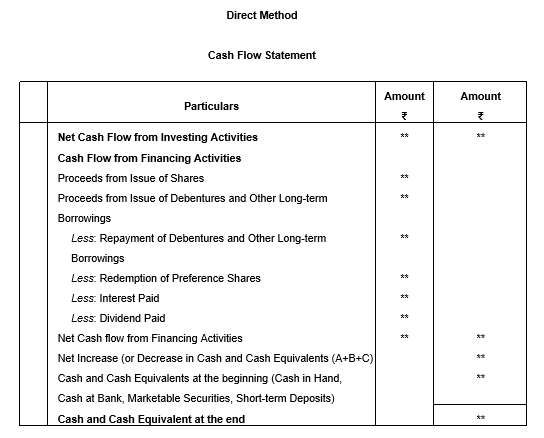
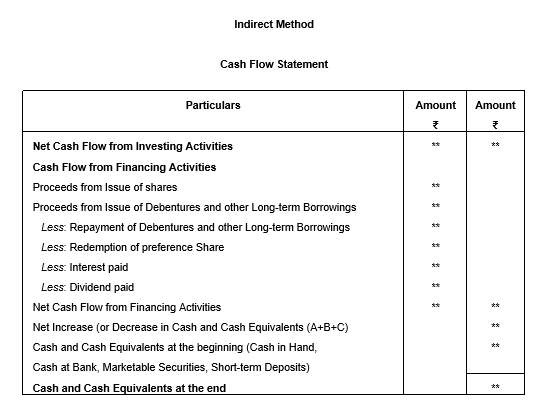
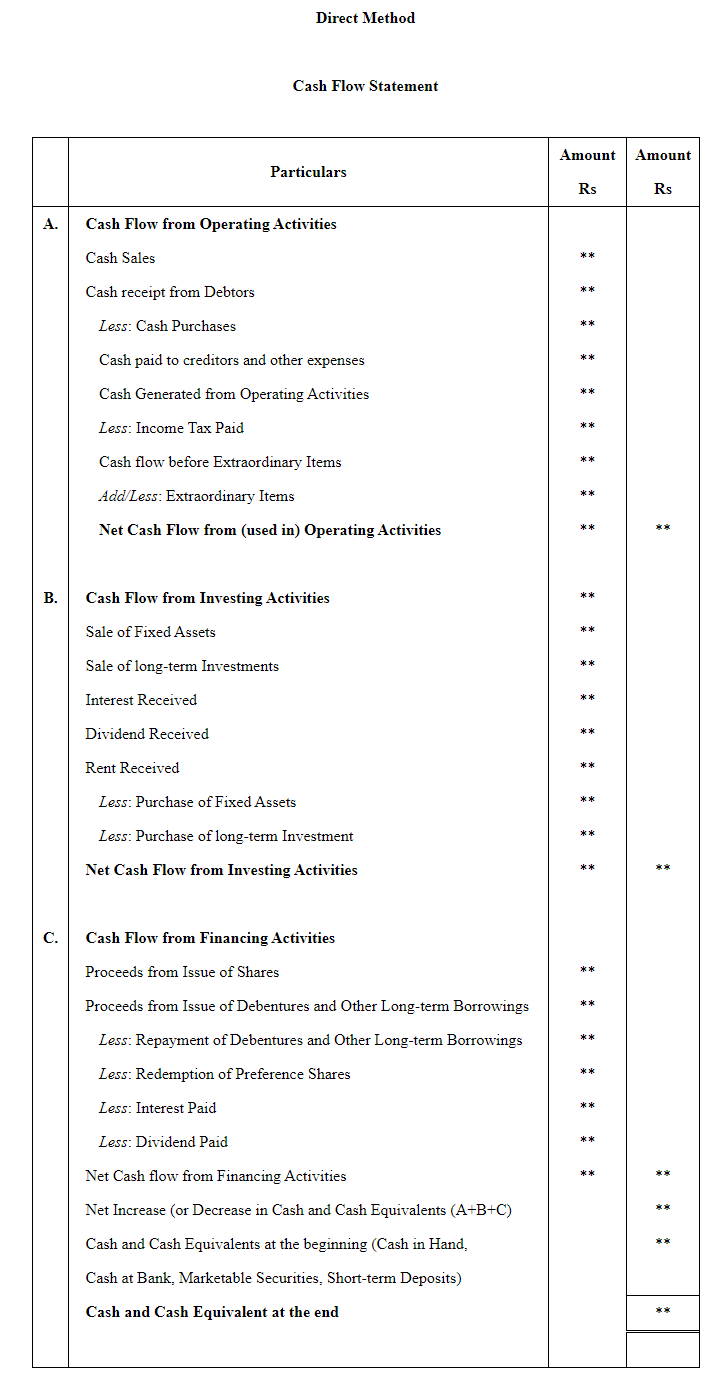
The following are the steps to prepare a cash flow statement:

i. Determine cash flows obtained from operating activities

ii. Determine cash flows obtained from financing activities

iii. Determine cash flow obtained from investing activities

iv. Determine net increase or decrease, which is obtained by adding amounts from all the cash flow activities.

5. Add the opening balance of cash and the cash equivalents and deduct the same from the amount determined in the previous step.

The two methods which are used for the preparation of a cash flow statement are listed below:

1. Direct Method

2. Indirect Method
NCERT ACT CLASS 12 Chp 6-2

NCERT ACT CLASS 12 Chp 6-3

Q2Written answer

Describe the “Indirect” method of ascertaining cash flow from operating activities.

Show solutionHide solution
Worked solution

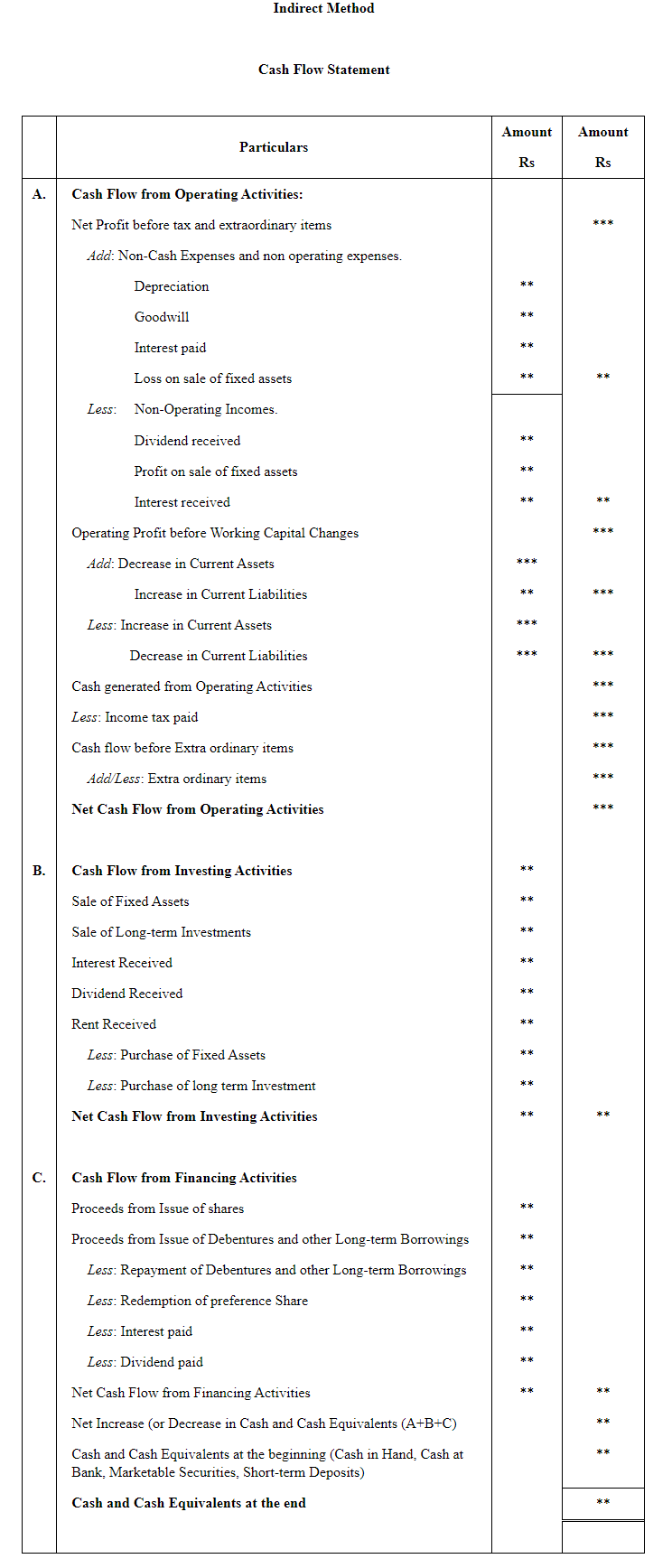
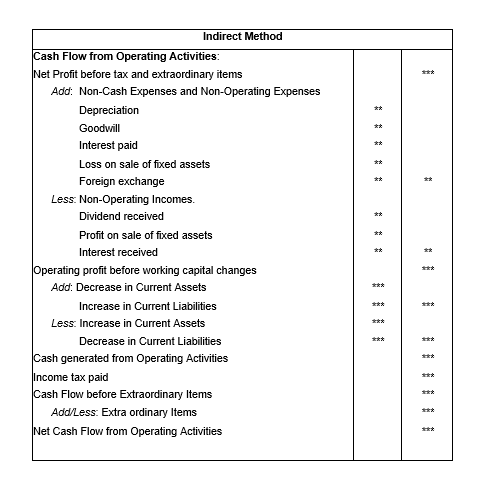
In the indirect method, the cash flow statement begins with net income or loss and subsequently adds or deducts non-cash expenses and revenue items, which results in cash flow from operating activities. And they include the following:

i. Items that are non-cash in nature, like goodwill and depreciation, added towards net profit

ii. Expenses that are non-operating in nature, like transfer to reserve and loss on sale of fixed assets which are added back to show the net profit earned

iii. Provisions such as discounts for debtors, doubtful debts, proposed dividends etc., should be added to net profit

iv. Any decrease in current assets and an increase in current liabilities is added to operating profit

The following items get deducted from the net profit of the P & L account

i. Incomes that are non-operating in nature, like the sale of fixed assets

ii. Non-trading incomes like the dividend received, tax refund and interest received

iii. Increase in current assets and decrease in current liabilities

NCERT ACT CLASS 12 Chp 6-4

Q3Written answer

Explain the major Cash Inflow and outflows from investing activities.

Show solutionHide solution
Worked solution

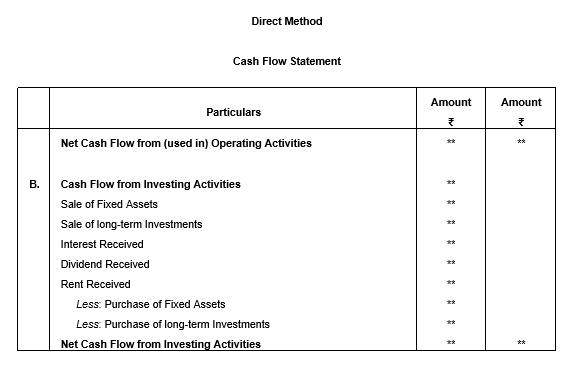
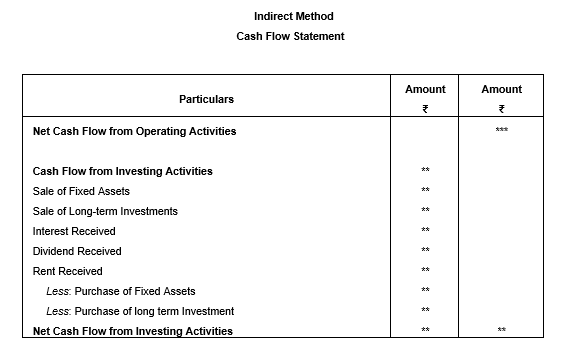
Investing activities consist of sales and purchase of fixed assets that are long-term in nature, like the building, land, furniture and plant and machinery etc. It also includes the sale and purchase of items that are not cash equivalents. If any income is received from these assets, it is regarded as a part of investing activities. The major cash inflows and outflows that are involved in investing activities are as follows:

i. Cash receipts that are obtained when fixed assets are sold off, and it includes intangible assets

ii. Acquiring fixed assets which also includes intangibles like goodwill using cash payments; the payments are for the research and development and assets that are self-constructed

iii. Acquiring shares, debt instruments or warrants using cash payments

iv. Disposal of shares and warrants that yield cash receipts

v. Loans and cash advances that are made to third parties (does not includes loans and advances made by the financial enterprise

vi. Cash receipts obtained from any insurance company for a property that is involved in an accident

vii. Cash receipts that are obtained for repayment of loans and cash advances made to third parties

viii. Any type of income that is obtained from fixed assets like interest, dividend and rent (not in the case of financial enterprises)

NCERT ACT CLASS 12 Chp 6-5

NCERT ACT CLASS 12 Chp 6-6

Q4Written answer

Explain the major cash inflows and outflows from financing activities.

Show solutionHide solution
Worked solution

In a firm, the financing activities are associated with capital or long-term funds of the firm, and the financing activities bring about change in capital and borrowed funds.

The following cash inflows and outflows as per AS3 can be mentioned:

i. Cash received from the issuing of shares and similar instruments causes cash inflow

ii. Cash received from issuing of debentures, obtaining loans, bonds, and similar instruments brings cash inflow.

iii. Repayments of debentures, loans and bonds in the form of cash are considered cash outflow

iv. Buying back shares and debentures which were issued is also a cash outflow

v. Interest payment for debentures, advances and loans

vi. Dividend payment to equity and preference shareholders

NCERT ACT CLASS 12 Chp 6-7

NCERT ACT CLASS 12 Chp 6-8