My Cart
Your Cart 0

    Your cart is empty.

  • Total (Amount) ₹0.00
NCERT · Class 11 · Chemistry

Chapter 8: Organic Chemistry – Some Basic Principles & Techniques

Practice each question, then open the answer or worked solution.

Questions

18 questions
Q12.11Written answer

Draw the resonance structures for the following compounds. Show the electron shift using curved-arrow notation.

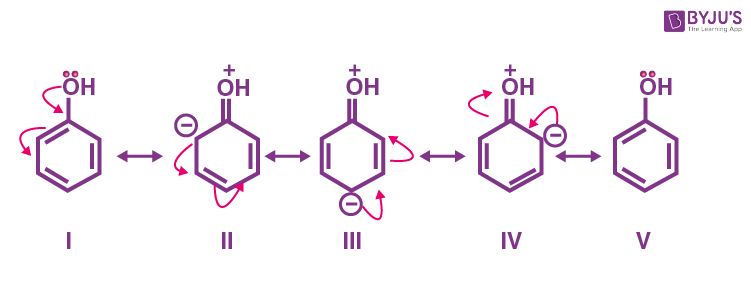
(a) C6H5OH

(b) C6H5NO2

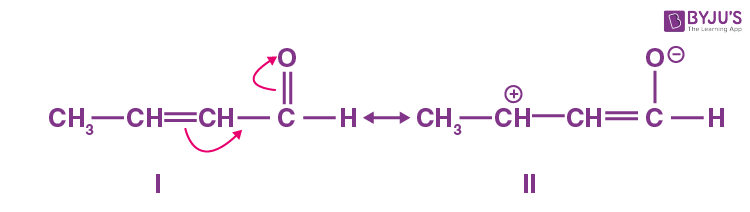
(c) CH3CH = CH – CHO

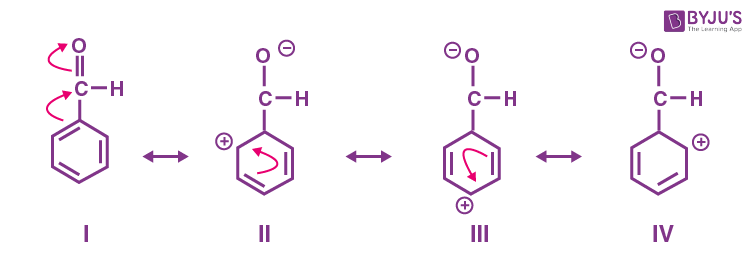
(d) C6H5CHO

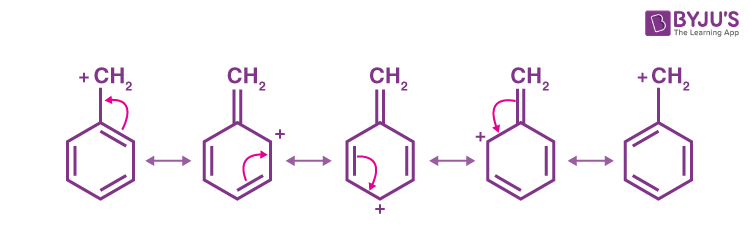
(e) C6H5-CH2

(f)CH3CH=CHCH2

Show solutionHide solution
Worked solution

(a) The structure of C6H5OH is: NCERT Solutions for Class 11 Chemistry Chapter 12 Organic Chemistry - Some Basic Principles and Techniques Q12.11(a)

Resonating structures: NCERT Solutions for Class 11 Chemistry Chapter 12 Organic Chemistry - Some Basic Principles and Techniques Q12.11(a)-1

(b) The structure of C6H5NO2 is: NCERT Solutions for Class 11 Chemistry Chapter 12 Organic Chemistry - Some Basic Principles and Techniques Q12.11(b)

Resonating structures: NCERT Solutions for Class 11 Chemistry Chapter 12 Organic Chemistry - Some Basic Principles and Techniques Q12.11(b)-1

(c) The structure of CH3CH = CH – CHO is: NCERT Solutions for Class 11 Chemistry Chapter 12 Organic Chemistry 3

Resonating structures: NCERT Solutions for Class 11 Chemistry Chapter 12 Organic Chemistry - Some Basic Principles and Techniques Q12.11(c)

(d) The structure of C6H5CHO is: NCERT Solutions for Class 11 Chemistry Chapter 12 Organic Chemistry - Some Basic Principles and Techniques Q12.11(d)

Resonating structures: NCERT Solutions for Class 11 Chemistry Chapter 12 Organic Chemistry - Some Basic Principles and Techniques Q12.11(d)-1

(e) C6H5-CH2+ NCERT Solutions for Class 11 Chemistry Chapter 12 Organic Chemistry 4

Resonating structures:
NCERT Solutions for Class 11 Chemistry Chapter 12 Organic Chemistry - Some Basic Principles and Techniques Q12.11(e)

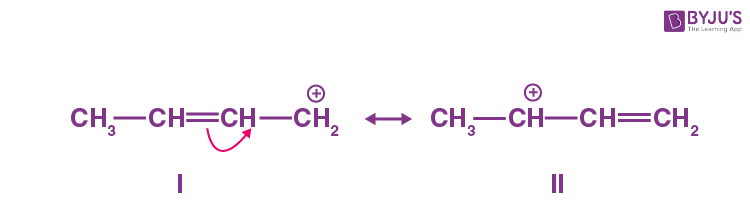
(f) The structure of CH3CH=CHCH2+ is: NCERT Solutions for Class 11 Chemistry Chapter 12 Organic Chemistry 2 1

Resonating structures: NCERT Solutions for Class 11 Chemistry Chapter 12 Organic Chemistry - Some Basic Principles and Techniques Q12.11(f)

Q12.12Written answer

What are electrophiles and nucleophiles? Explain with examples.

Show solutionHide solution
Worked solution

A nucleophile is a reagent that has an electron pair and is willing to donate it. It is also known as a nucleus-loving reagent. For example, NC–, OH–, R3C– (carbanions), etc.

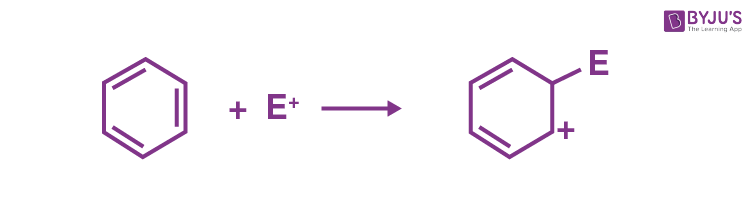
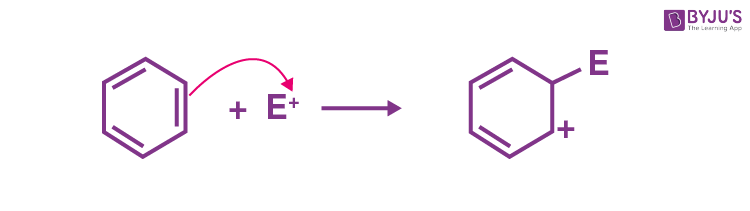
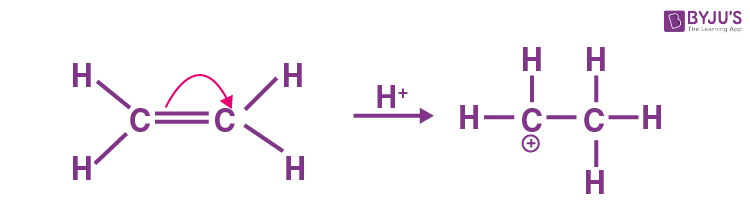
An electrophile is a reagent which is in need of an electron pair and is also known as an electron-loving pair. For example, carbonyl groups, CH3CH2+(Carbocations), and neutral molecules (due to the presence of electron deficiency atom).

Q12.13Written answer

Identify the reagents in the following equations as nucleophiles or electrophiles:

(a) CH3COOH + HO–

\(\begin{array}{l}\rightarrow\end{array} \)
CH3COO– + H2O

(b) CH3COCH3+ C–N

\(\begin{array}{l}\rightarrow\end{array} \)
(CH3)2C(CN) + (OH)–

(c) C6H5 + CH3C+O

\(\begin{array}{l}\rightarrow\end{array} \)
C6H5COCH3

Show solutionHide solution
Worked solution

A nucleophile is a reagent that has an electron pair and is willing to donate it. It is also known as a nucleus-loving reagent.

An electrophile is a reagent which is in need of an electron pair and is also known as an electron-loving pair.

(a) CH3COOH + HO–

\(\begin{array}{l}\rightarrow\end{array} \)
3–2

It is a nucleophile since HO- is electron rich in nature.

(b) CH3COCH3+ C–N

\(\begin{array}{l}\rightarrow\end{array} \)
32–

It is a nucleophile since C–N is electron rich in nature.

(c) C6H5 + CH3C+O

\(\begin{array}{l}\rightarrow\end{array} \)
653

It is an electrophile since CH3C+O is electron-deficient in nature.

Q12.14Written answer

Classify the following reactions in one of the reaction types studied in this unit.

(a) CH3CH2Br + HS–

\(\begin{array}{l}\rightarrow\end{array} \)
CH3CH2SH + Br–

(b) (CH3)2 C=CH2 + HCl

\(\begin{array}{l}\rightarrow\end{array} \)
(CH3)2ClC–CH3

(c) CH3CH2Br + HO–

\(\begin{array}{l}\rightarrow\end{array} \)
CH2=CH2 + H2O + Br–

(d) (CH3)3C–CH2 OH + HBr

\(\begin{array}{l}\rightarrow\end{array} \)
(CH3)2 CBrCH2CH3 + H2O

Show solutionHide solution
Worked solution

(a) Substitution (nucleophilic) reaction, since the bromine group gets substituted by the –SH group.

(b) Addition (electrophilic) reaction, since two reactant molecules combine to form a single product.

(c) Elimination (bimolecular) reaction, since reaction hydrogen and bromine are removed to form ethene.

(d) Substitution (nucleophilic) reaction, since rearrangement of atoms takes place.

Q12.15Written answer

What is the relationship between the members of the following pairs of structures? Are they structural or geometrical isomers or resonance contributors?

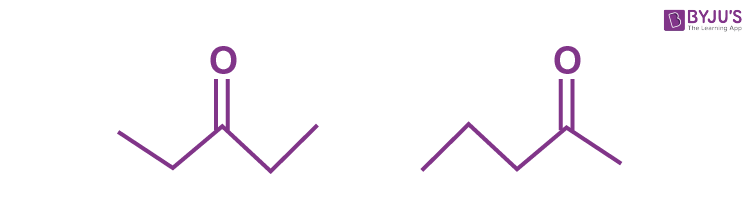
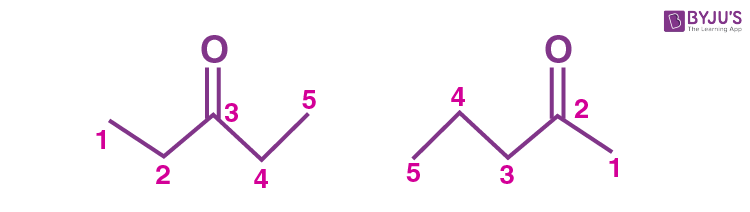
(a) NCERT Solutions for Class 11 Chemistry Chapter 12 Organic Chemistry - Some Basic Principles and Techniques Q12.15(a)

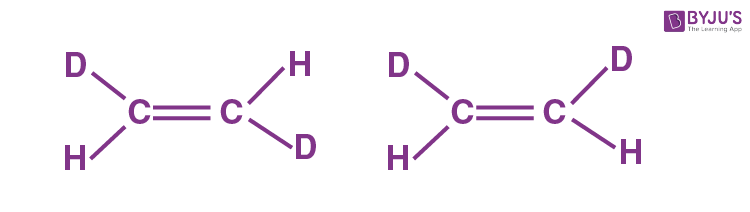
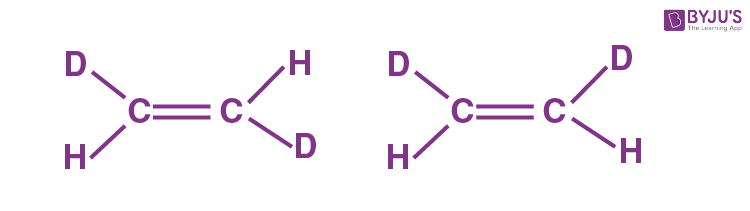
(b) NCERT Solutions for Class 11 Chemistry Chapter 12 Organic Chemistry - Some Basic Principles and Techniques Q12.15(b)

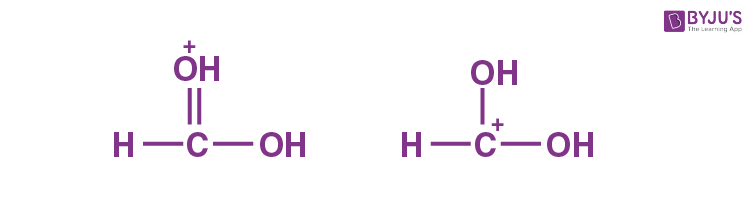
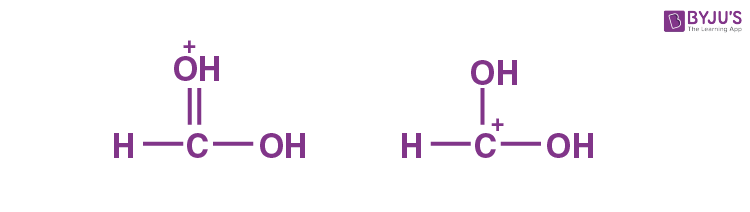
(c) NCERT Solutions for Class 11 Chemistry Chapter 12 Organic Chemistry - Some Basic Principles and Techniques Q12.15(c)

Show solutionHide solution
Worked solution

(a) The given compounds are a pair of structural isomers since they have the same molecular formula but have different structures. These compounds differ in the position of the ketone group. For the first structure, it is in C-3, whereas for the 2nd one, it is in C-2.

NCERT Solutions for Class 11 Chemistry Chapter 12 Organic Chemistry - Some Basic Principles and Techniques Q12.15(a) ans

(b) The given compounds are a pair of geometrical isomers since they have the same molecular formula, sequence of covalent bonds and same constitution but differ in the relative positioning of the atoms in space. These compounds differ in the positioning of the Deuterium and Hydrogen.

NCERT Solutions for Class 11 Chemistry Chapter 12 Organic Chemistry - Some Basic Principles and Techniques Q12.15(b) ans

(c) The given compounds are a pair of contributing structures or canonical structures. They do not represent any real molecule and are purely hypothetical. They are also called resonance isomers.

NCERT Solutions for Class 11 Chemistry Chapter 12 Organic Chemistry - Some Basic Principles and Techniques Q12.15(c) ans

Q12.16Written answer

For the following bond cleavages, use curved arrows to show the electron flow and classify each as homolysis or heterolysis. Identify reactive intermediate produced as free radical, carbocation and carbanion.

(a)NCERT Solutions for Class 11 Chemistry Chapter 12 Organic Chemistry - Some Basic Principles and Techniques Q12.16(a)

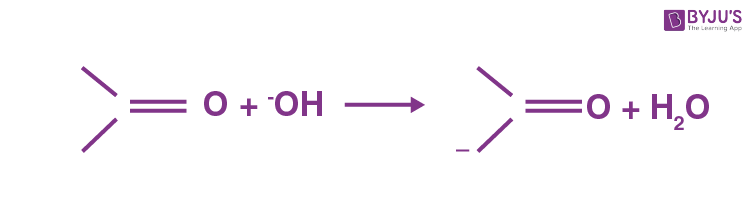
(b)NCERT Solutions for Class 11 Chemistry Chapter 12 Organic Chemistry - Some Basic Principles and Techniques Q12.16(b)

(c) NCERT Solutions for Class 11 Chemistry Chapter 12 Organic Chemistry - Some Basic Principles and Techniques Q12.16(c)

(d) NCERT Solutions for Class 11 Chemistry Chapter 12 Organic Chemistry - Some Basic Principles and Techniques Q12.16(d)

Show solutionHide solution
Worked solution

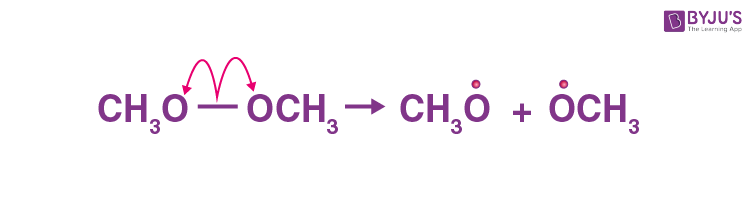
(a) The bond cleavage can be shown as:

NCERT Solutions for Class 11 Chemistry Chapter 12 Organic Chemistry - Some Basic Principles and Techniques Q12.16(a) ans

It comes under homolytic cleavage since one of the shared pairs in a covalent bond goes with the bonded atom. A free radical is formed as the reaction intermediate.

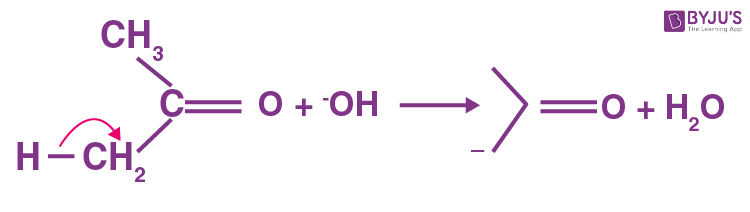
(b) The bond cleavage can be shown as:

NCERT Solutions for Class 11 Chemistry Chapter 12 Organic Chemistry - Some Basic Principles and Techniques Q12.16(b) ans
It comes under heterolytic cleavage since the shared remains with the carbon atom of propanone. A carbanion is formed as the reaction intermediate.

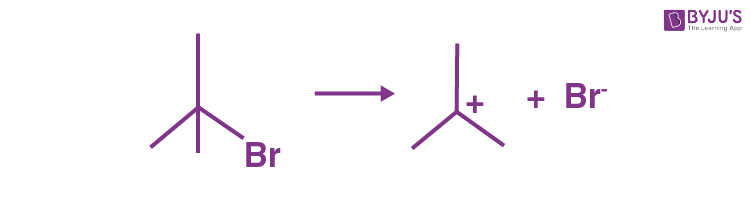
(c) The bond cleavage can be shown as:

NCERT Solutions for Class 11 Chemistry Chapter 12 Organic Chemistry - Some Basic Principles and Techniques Q12.16(c) ans

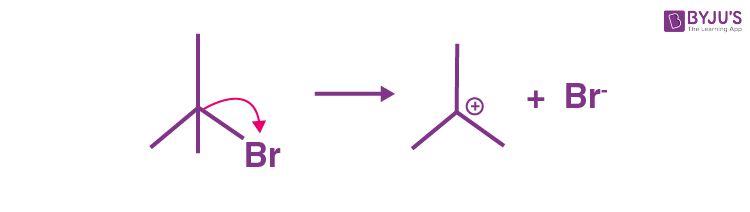
It comes under heterolytic cleavage since the shared remains with the bromine ion. A carbocation is formed as the reaction intermediate.

(d) The bond cleavage can be shown as:

NCERT Solutions for Class 11 Chemistry Chapter 12 Organic Chemistry - Some Basic Principles and Techniques Q12.16(d) ans

It comes under heterolytic cleavage since the shared remains with one of the fragments. A carbocation is formed as the reaction intermediate.

Q12.17Written answer

Explain the terms Inductive and Electromeric effects. Which electron displacement effect explains the following correct orders of acidity of the carboxylic acids?

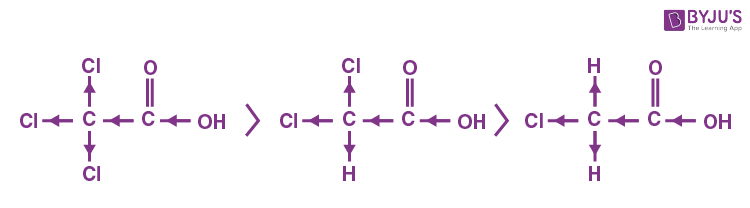
(a) Cl3CCOOH > Cl2CHCOOH > ClCH2COOH

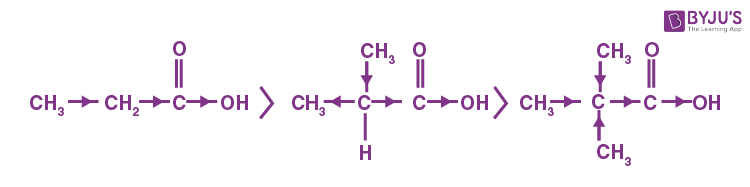
(b) CH3CH2COOH > (CH3)2CHCOOH > (CH3)3C.COOH

Show solutionHide solution
Worked solution

Electrometric effect

The complete transfer of the shared pair of π electrons to either of the two atoms linked by multiple bonds in the presence of an attacking agent is called the electrometric effect. It can either be the – E effect or the +E effect.

NCERT Solutions for Class 11 Chemistry Chapter 12 Organic Chemistry - Some Basic Principles and Techniques Q12.17

– E effect: Occurs when electrons are moved away from the attacking agent

+ E effect: Occurs when electrons are moved towards the attacking agent

Inductive effect

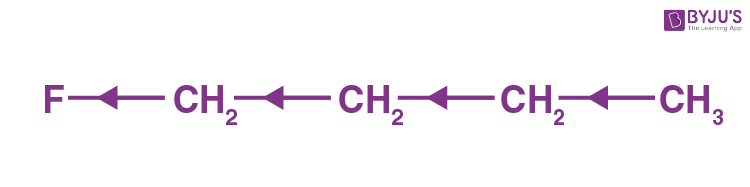
The inductive effect involves the permanent displacement of sigma (σ) electrons along a saturated chain, whenever an electron withdrawing or electron donating group is present.

It can either be +I effect or –I effect. When an atom or group attracts electrons towards itself more strongly than hydrogen, it is said to possess the –I effect.

NCERT Solutions for Class 11 Chemistry Chapter 12 Organic Chemistry - Some Basic Principles and Techniques Q12.17-1
When the force with which an atom attracts electrons towards itself is greater than that of hydrogen, it is said to exhibit the +I effect.

(a) Cl3CCOOH > Cl2CHCOOH > ClCH2COOH

The acidity increases with the increase in the –I effect, which is directly proportional to the number of chlorine atoms.

NCERT Solutions for Class 11 Chemistry Chapter 12 Organic Chemistry - Some Basic Principles and Techniques Q12.17(a)

(b) CH3CH2COOH > (CH3)2 CHCOOH > (CH3)3C.COOH

The acidity increases with the increase in the +I effect, which is directly proportional to the number of alkyl groups.

NCERT Solutions for Class 11 Chemistry Chapter 12 Organic Chemistry - Some Basic Principles and Techniques Q12.17(b)

Q12.18Written answer

Give a brief description of the principles of the following techniques taking an example in each case.

(a) Crystallisation

(b) Distillation

(c) Chromatography

Show solutionHide solution
Worked solution

(a) Crystallisation

Crystallisation is used to purify solid organic compounds.

Principle: The principle on which it works is the difference in the solubility of the compound and impurities in a given solvent. The impure compound is made to dissolve in the solvent at a higher temperature since it is sparingly soluble at lower temperatures. This is continued till we get an almost saturated solution. On cooling and filtering it, we get its’ crystals. For example, by crystallising 2-4 g of crude aspirin in 20 ml of ethyl alcohol, we get pure aspirin. It is heated if needed and left undisturbed until it crystallises. The crystals are then separated and dried.

(b) Distillation

This method is used to separate non-volatile liquids from volatile impurities. It is also used when the components have a considerable difference in their boiling points.

Principle: The principle on which it works is that liquids having different boiling points vaporise at different temperatures. They are then cooled, and the formed liquids are separated.

For example, a mixture of aniline (b.p = 457 K) and chloroform (b.p = 334 K) is taken in a round bottom flask having a condenser. When they are heated, chloroform vaporises first due to its high volatility and is made to pass through a condenser, where it cools down. The aniline is left behind in the round bottom flask.

(c) Chromatography

It is widely used for the separation and purification of organic compounds.

Principle: The principle on which it works is that individual components of a mixture move at different paces through the stationary phase under the influence of the mobile phase.

For example, Chromatography can be used to separate a mixture of blue and red ink. This mixture is placed on a chromatogram where the component which is less absorbed by the chromatogram moves faster up the paper than the other component, which is almost stationary.