My Cart
Your Cart 0

    Your cart is empty.

  • Total (Amount) ₹0.00
NCERT · Class 11 · Chemistry

Chapter 8: Organic Chemistry – Some Basic Principles & Techniques

Practice each question, then open the answer or worked solution.

Questions

18 questions
Q12.1Written answer

What are the hybridisation states of each carbon atom in the following compounds?

i. CH2=C=O, ii. CH3CH=CH2, iii. (CH3)2CO, iv. CH2=CHCN, v. C6H6

Show solutionHide solution
Worked solution

(i)NCERT Solutions for Class 11 Chemistry Chapter 12 Organic Chemistry - Some Basic Principles and Techniques Q12.1(i)

C–1 is sp2 hybridised.

C–2 is sp hybridised.

(ii)NCERT Solutions for Class 11 Chemistry Chapter 12 Organic Chemistry - Some Basic Principles and Techniques Q12.1(ii)

C–1 is sp3 hybridised.

C–2 is sp2 hybridised.

C–3 is sp2 hybridised.


(iii)NCERT Solutions for Class 11 Chemistry Chapter 12 Organic Chemistry - Some Basic Principles and Techniques Q12.1(iii)

C–1 and C–3 are sp3 hybridised.

C–2 is sp2 hybridised.


(iv)NCERT Solutions for Class 11 Chemistry Chapter 12 Organic Chemistry - Some Basic Principles and Techniques Q12.1(iv)

C–1 is sp2 hybridised.

C–2 is sp2 hybridised.

C–3 is sp hybridised.

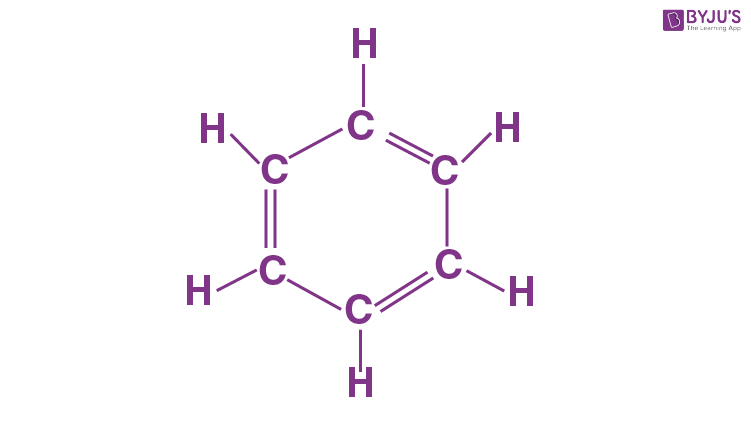
(v) C6H6

All the 6 carbon atoms in benzene are sp2 hybridised.
Q12.2Written answer

Indicate the σ and π bonds in the following molecules:

i. C6H6, ii. C6H12, iii. CH2Cl2, iv. CH2 = C = CH2, v. CH3NO2, vi. HCONHCH3

Show solutionHide solution
Worked solution

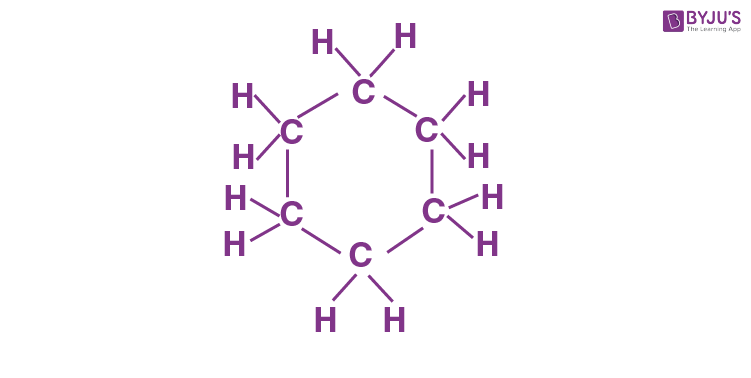
(i) C6H6

NCERT Solutions for Class 11 Chemistry Chapter 12 Organic Chemistry - Some Basic Principles and Techniques Q12.2(i)

There are six C–C sigma bonds, six C–H sigma bonds, and three C=C pi resonating bonds in the given compound.

(ii) C6H12

NCERT Solutions for Class 11 Chemistry Chapter 12 Organic Chemistry - Some Basic Principles and Techniques Q12.2(ii)
There are six C–C sigma bonds and twelve C–H sigma bonds in the given compound.

(iii) CH2Cl2

NCERT Solutions for Class 11 Chemistry Chapter 12 Organic Chemistry - Some Basic Principles and Techniques Q12.2(iii)
There are two C–Cl sigma bonds and two C–H sigma bonds in the given compound.

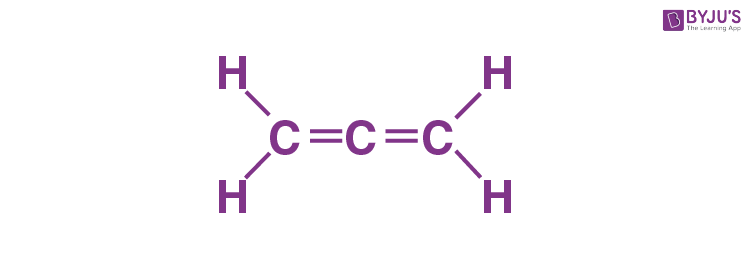
(iv) CH2 = C = CH2

NCERT Solutions for Class 11 Chemistry Chapter 12 Organic Chemistry - Some Basic Principles and Techniques Q12.2(iv)
There are two C–C sigma bonds, four C–H sigma bonds, and two C=C pi bonds in the given compound.

(v) CH3NO2

NCERT Solutions for Class 11 Chemistry Chapter 12 Organic Chemistry - Some Basic Principles and Techniques Q12.2(v)
There are three C–H sigma bonds, one C–N sigma bond, one N–O sigma bond, and one N=O pi bond in the given compound.

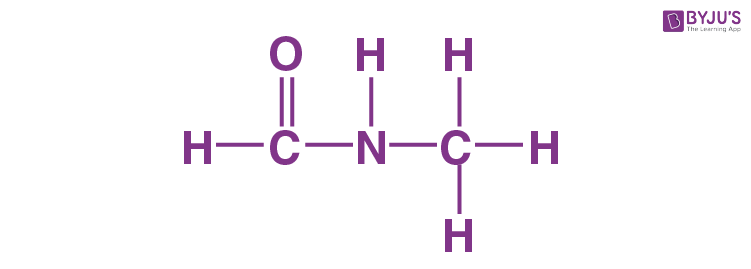
(vi) HCONHCH3

NCERT Solutions for Class 11 Chemistry Chapter 12 Organic Chemistry - Some Basic Principles and Techniques Q12.2(vi)

There are four C–H sigma bonds, two C–N sigma bonds, one N–H sigma bond, and one C=O pi bond in the given compound.

Q12.3Written answer

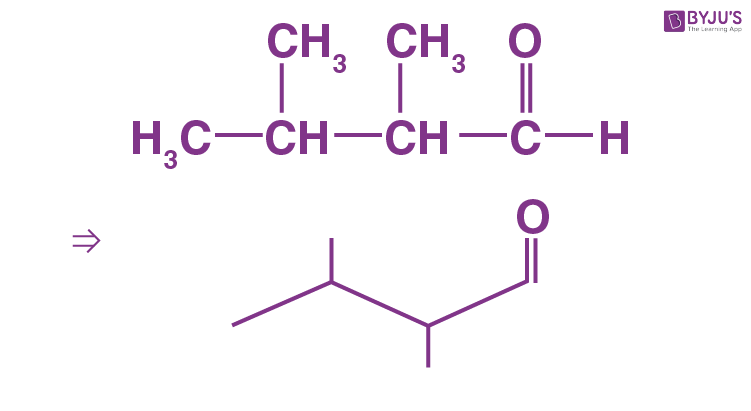
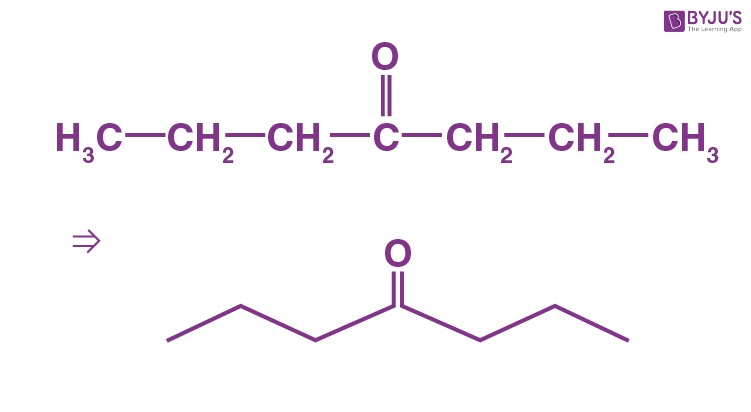
Write bond-line formulas for: Isopropyl alcohol, 2, 3–dimethyl butanal, Heptan–4–one.

Show solutionHide solution
Worked solution

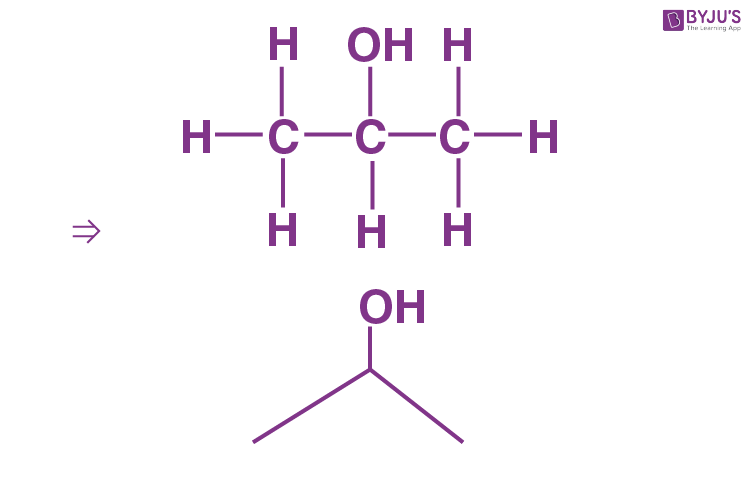
Isopropyl alcohol

NCERT Solutions for Class 11 Chemistry Chapter 12 Organic Chemistry - Some Basic Principles and Techniques Q12.3-1
2, 3–dimethyl butanal

NCERT Solutions for Class 11 Chemistry Chapter 12 Organic Chemistry - Some Basic Principles and Techniques Q12.3-2
Heptan–4–one

NCERT Solutions for Class 11 Chemistry Chapter 12 Organic Chemistry - Some Basic Principles and Techniques Q12.3-3

Q12.4Written answer

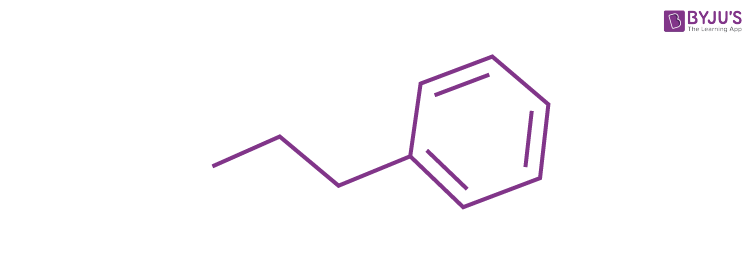
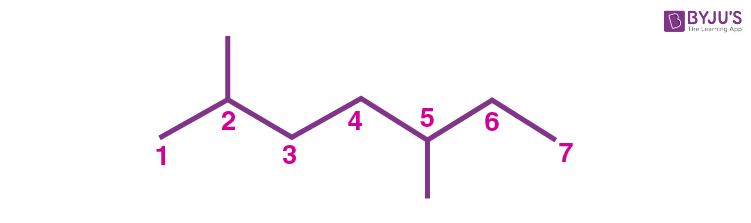
Give the IUPAC names of the following compounds:

(a)NCERT Solutions for Class 11 Chemistry Chapter 12 Organic Chemistry - Some Basic Principles and Techniques Q12.4(a)

 (b)NCERT Solutions for Class 11 Chemistry Chapter 12 Organic Chemistry - Some Basic Principles and Techniques Q12.4(b)

 (c)NCERT Solutions for Class 11 Chemistry Chapter 12 Organic Chemistry - Some Basic Principles and Techniques Q12.4(c)

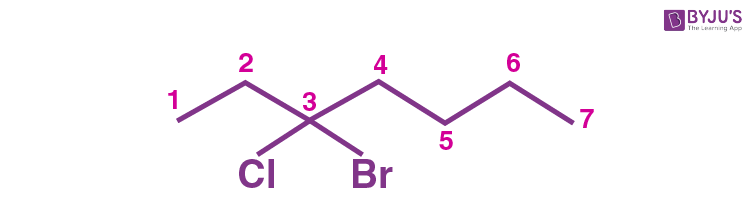
 (d)NCERT Solutions for Class 11 Chemistry Chapter 12 Organic Chemistry - Some Basic Principles and Techniques Q12.4(d)

 (e)NCERT Solutions for Class 11 Chemistry Chapter 12 Organic Chemistry - Some Basic Principles and Techniques Q12.4(e)

(f) Cl2CHCH2OH

Show solutionHide solution
Worked solution

(a)

NCERT Solutions for Class 11 Chemistry Chapter 12 Organic Chemistry - Some Basic Principles and Techniques Q12.4(a) ans

Propylbenzene

(b)

NCERT Solutions for Class 11 Chemistry Chapter 12 Organic Chemistry - Some Basic Principles and Techniques Q12.4(b) ans

3–methylpentanenitrite

(c)

NCERT Solutions for Class 11 Chemistry Chapter 12 Organic Chemistry - Some Basic Principles and Techniques Q12.4(c) ans

2,5–dimethyl heptane

(d)

NCERT Solutions for Class 11 Chemistry Chapter 12 Organic Chemistry - Some Basic Principles and Techniques Q12.4(d) ans

3–bromo–3–chloroheptane

(e)

NCERT Solutions for Class 11 Chemistry Chapter 12 Organic Chemistry - Some Basic Principles and Techniques Q12.4(e) ans

3–chloropropanal

(f) Cl2CHCH2OH

2,2–dichloroethanol

Q12.5Multiple choice

Which of the following represents the correct IUPAC name for the compounds concerned?

Show answerHide answer
Correct option: A
Show solutionHide solution
Worked solution

(a) The prefix di shows that there are two methyl groups in the chain. Thus, the correct IUPAC name would be 2,2-Dimethylpentane.

(b) The locant number should start from the minimum. Here, 2,4,7 is lower than 2,5,7. Thus, the correct IUPAC name would be 2,4,7-Trimethyloctane.

(c) If the substituents in the chain are in equivalent positions, then the lower number is given to the substituent group in alphabetical order. Thus, the correct IUPAC name would be 2-Chloro-4-methylpentane.

(d) Out of the two functional groups present in the given compound, the alcoholic group is the principal functional group. Thus, the parent chain will have an –ol suffix. Since the alkyne group is in C–3, the IUPAC name would be But–3–yn–1–ol.

Q12.6Written answer

Draw formulas for the first five members of each homologous series beginning with the following compounds

(a) H–COOH

(b) CH3COCH3

(c) H–CH=CH2

Show solutionHide solution
Worked solution

The first five members of each homologous series beginning with the given compounds, are

(a)

H–COOH: Methanoic acid

CH3–COOH: Ethanoic acid

CH3–CH2–COOH: Propanoic acid

CH3–CH2–CH2–COOH: Butanoic acid

CH3–CH2–CH2–CH2–COOH: Pentanoic acid

(b)

CH3COCH3: Propanone

CH3COCH2CH3: Butanone

CH3COCH2CH2CH3 : Pentan-2-one

CH3COCH2CH2CH2CH3: Hexan-2-one

CH3COCH2CH2CH2CH2CH3 : Heptan-2-one

(c)

H–CH=CH2: Ethene

CH3–CH=CH2: Propene

CH3–CH2–CH=CH2: 1-Butene

CH3–CH2–CH2–CH=CH2: 1-Pentene

CH3–CH2–CH2–CH2–CH=CH2: 1-Hexene

Q12.7Written answer

Give condensed and bond line structural formulas and identify the functional group(s) present, if any, for :

(a) 2,2,4-Trimethylpentane

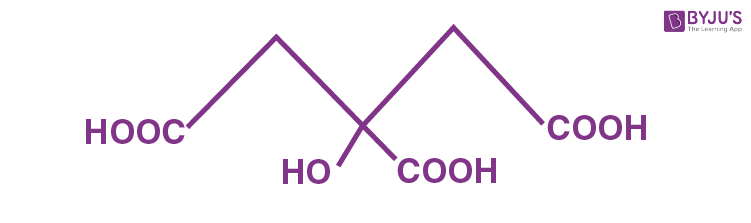
(b) 2-Hydroxy-1,2,3-propanetricarboxylic acid

(c) Hexanedial

Show solutionHide solution
Worked solution

(a) 2, 2, 4–Trimethylpentane

Condensed formula

(CH3)2CHCH2C (CH3)3

Bond line formula :

NCERT Solutions for Class 11 Chemistry Chapter 12 Organic Chemistry - Some Basic Principles and Techniques Q12.7(a)

(b) 2–Hydroxy–1, 2, 3–propanetricarboxylic acid

Condensed formula

(COOH)CH2C(OH) (COOH)CH2(COOH)

Bond line formula:
NCERT Solutions for Class 11 Chemistry Chapter 12 Organic Chemistry - Some Basic Principles and Techniques Q12.7(b)

Functional groups:

Carboxylic acid (-COOH) and Hydroxyl (-OH) groups

(c) Hexanedial

Condensed formula

(CHO)(CH2)4(CHO)

Bond line formula:
NCERT Solutions for Class 11 Chemistry Chapter 12 Organic Chemistry - Some Basic Principles and Techniques Q12.7(c)

Functional groups:

Aldehyde (-CHO)

Q12.8Written answer

Identify the functional groups in the following compounds.

(a) NCERT Solutions for Class 11 Chemistry Chapter 12 Organic Chemistry - Some Basic Principles and Techniques Q12.8(a)

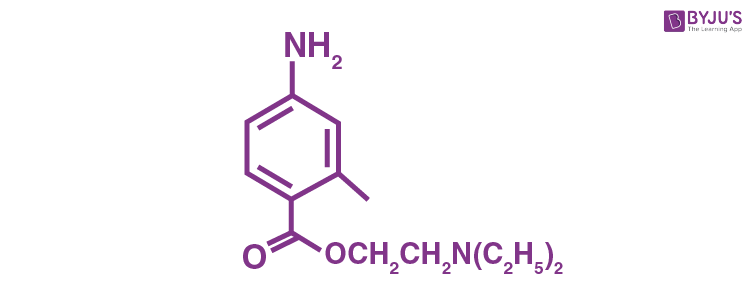
(b)NCERT Solutions for Class 11 Chemistry Chapter 12 Organic Chemistry - Some Basic Principles and Techniques Q12.8(b)

(c)NCERT Solutions for Class 11 Chemistry Chapter 12 Organic Chemistry - Some Basic Principles and Techniques Q12.8(c)

Show solutionHide solution
Worked solution

(a) Hydroxyl (–OH), Aldehyde (–CHO), Methoxy (–OMe),

C=C double bond

NCERT Solutions for Class 11 Chemistry Chapter 12 Organic Chemistry - Some Basic Principles and Techniques Q12.8(a) ans

(b) Ester -(O = C – O)-, 1oAmino (–NH2) (aromatic), Diethylamine CH2N(C2H5)2 – 30 Amine group

(c) Nitro (–NO2),

C=C Ethylenic double bond

NCERT Solutions for Class 11 Chemistry Chapter 12 Organic Chemistry - Some Basic Principles and Techniques Q12.8(c) ans

Q12.9Written answer

Which one of the two, O2NCH2CH2O– or CH3CH2O– is expected to be more stable and why?

Show solutionHide solution
Worked solution

Since NO2 belongs to the electron-withdrawing group, it shows the –I effect. NO2 tries to decrease the negative charge on the compound by withdrawing the electrons towards it. This stabilises the compound, whereas the ethyl group belongs to the electron-releasing group and shows the +I effect. This results in an increase in the negative charge on the compound, thus destabilising the compound. Hence, O2NCH2CH2O– is expected to be more stable than CH3CH2O–.

Q12.10Written answer

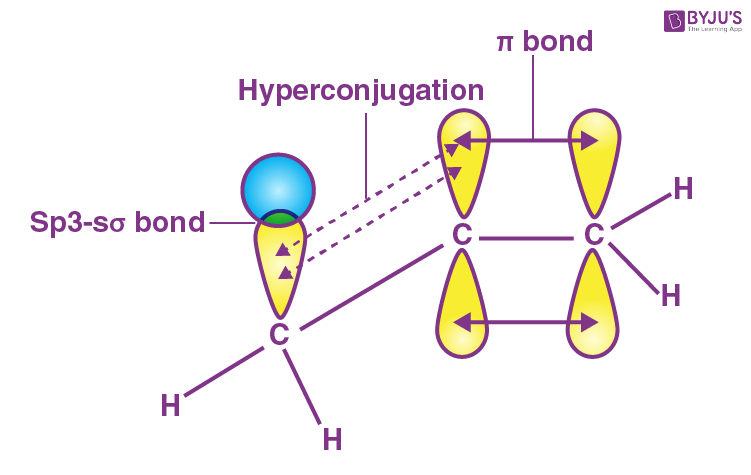
Explain why alkyl groups act as electron donors when attached to a π system.

Show solutionHide solution
Worked solution

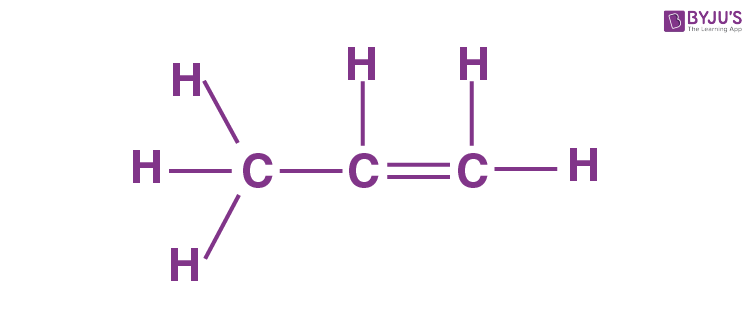
NCERT Solutions for Class 11 Chemistry Chapter 12 Organic Chemistry - Some Basic Principles and Techniques Q12.10

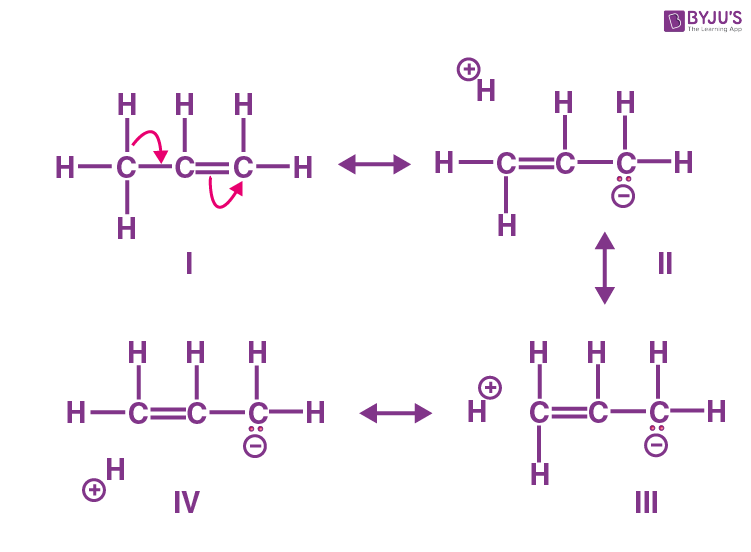
Due to hyperconjugation, an alkyl group behaves as an electron-donor group when attached to a π system. For example, propane (see the figure above).

The sigma electrons of the C-H bond get delocalised due to hyperconjugation. The alkyl is attached directly to an unsaturated system. The delocalisation happens due to the partial overlap of an sp3-s sigma bond orbital with an empty p orbital of the n bond of an adjacent carbon atom.

This process can be shown as follows:

NCERT Solutions for Class 11 Chemistry Chapter 12 Organic Chemistry - Some Basic Principles and Techniques Q12.10 Hyperconjugation

The overlap, as shown above, results in delocalisation, making the compounds more stable.

NCERT Solutions for Class 11 Chemistry Chapter 12 Organic Chemistry - Some Basic Principles and Techniques Q12.10 Delocalization